

Medically reviewed by Dr. Tom Biernacki, DPM
Board-certified podiatric surgeon | Balance Foot & Ankle, Howell & Bloomfield Hills, MI
Last reviewed: May 2026

| Stage | Uric Acid Level | Clinical Features | Joint Involvement | Treatment |
|---|---|---|---|---|
| Asymptomatic hyperuricemia | Greater than 6.8 mg/dL | No symptoms; incidental finding | None | Lifestyle modification; no medication required unless comorbidities |
| Acute gout flare | Often elevated; can be normal during attack | Sudden severe joint pain, swelling, warmth, redness; peak 12-24 hrs | 1st MTP (podagra) 50%; ankle, midfoot, knee | Colchicine; NSAIDs; corticosteroids; ice; rest |
| Intercritical gout | Persistently elevated | Asymptomatic between attacks; crystal deposition continues | None active | Start urate-lowering therapy (ULT) after second attack |
| Chronic tophaceous gout | Often very high (greater than 9 mg/dL) | Tophi deposits; joint deformity; chronic pain; possible joint destruction | Multiple joints; soft tissue deposits | Aggressive ULT (target less than 5 mg/dL); tophus excision if needed |
| Treatment | Phase | Mechanism | Dose / Protocol | Evidence |
|---|---|---|---|---|
| Colchicine | Acute flare; prophylaxis | Inhibits neutrophil migration; blocks urate crystal phagocytosis | 1.2mg then 0.6mg 1hr later (acute); 0.6mg daily (prophylaxis) | Level I; most effective within first 24 hours of attack |
| NSAIDs (indomethacin, naproxen) | Acute flare | COX inhibition; anti-inflammatory | Indomethacin 50mg TID x 5-7 days; full dose early | Level I; equivalent to colchicine if given early |
| Corticosteroids (oral/injection) | Acute flare if NSAID/colchicine contraindicated | Potent anti-inflammatory | Prednisone 0.5mg/kg x 5 days; or intra-articular injection | Level I; preferred for CKD or anticoagulated patients |
| Allopurinol (xanthine oxidase inhibitor) | Intercritical / chronic (ULT) | Blocks uric acid synthesis | Start 100mg daily; titrate to UA less than 6.0 mg/dL; max 800mg | Level I; first-line ULT; start 2-4 weeks after acute attack resolves |
| Febuxostat | Intercritical / chronic; allopurinol intolerant | Selective xanthine oxidase inhibitor | 40-80mg daily; no dose adjustment for mild-mod CKD | Level I; alternative to allopurinol; cardiovascular monitoring needed |
| Dietary modification | All stages | Reduces purine load + fructose-driven UA production | Avoid organ meats, shellfish, beer, fructose; increase water, dairy, cherries | Level II-III; lowers UA 1-2 mg/dL; adjunct to medication |
Quick answer: Treatment for gout foot ankle high uric acid treatment follows a stepwise approach: 1) conservative care first (rest, ice, supportive footwear, OTC anti-inflammatories), 2) physical therapy and targeted exercises, 3) in-office treatments (injections, custom orthotics) if conservative fails at 4-6 weeks, 4) surgery for refractory cases. Most patients resolve at step 1 or 2. Call (810) 206-1402.
Medically Reviewed | Dr. Tom Biernacki, DPM | Board-Certified Podiatric Surgeon | Balance Foot & Ankle, Michigan

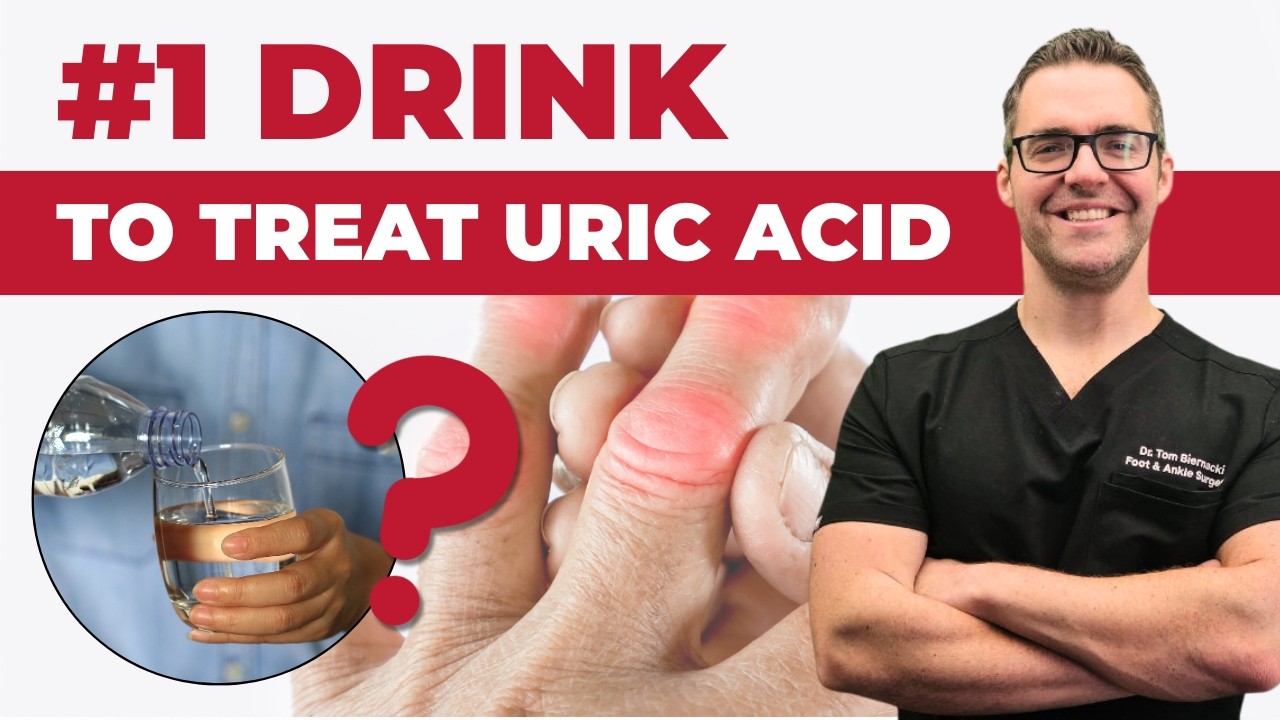
Watch: TOP 5 Drinks to Reverse High URIC ACID & GOUT! — MichiganFootDoctors YouTube
Gout is a form of inflammatory arthritis caused by the deposition of monosodium urate (MSU) crystals in joint spaces when blood uric acid levels are chronically elevated (hyperuricemia). The foot — and particularly the first metatarsophalangeal (MTP) joint of the big toe — is the most common site of acute gout attacks, a presentation classically called podagra.
The most important clinical decision with Gout Foot Ankle High Uric Acid Treatment isn’t which treatment to start with — it’s identifying the correct subtype. That changes everything. Call (810) 206-1402.
The most important clinical decision with Gout Foot Ankle High Uric Acid Treatment isn’t which treatment to start with — it’s identifying the correct subtype. That changes everything. Call (810) 206-1402.
Why the Big Toe?
Uric acid crystals tend to deposit in cooler, more peripheral joints. The first MTP joint is the most peripheral joint in the body, furthest from the heart, and operates at lower temperatures — creating the ideal environment for urate crystal precipitation. The ankle, midfoot, and other foot joints are also commonly affected.
Triggers of Acute Gout Attacks
Purine-rich foods (red meat, organ meats, shellfish, sardines), excessive alcohol especially beer, dehydration, diuretic medications, fasting, and acute illness or surgery can all trigger attacks by causing rapid fluctuations in uric acid levels. Interestingly, starting uric acid-lowering therapy can also trigger an initial attack.
Treating an Acute Gout Attack
Begin treatment at the first sign of an attack. NSAIDs (indomethacin 50 mg three times daily, or naproxen 500 mg twice daily) are effective when started early. Colchicine at low dose (0.5-1.2 mg loading dose, then 0.6 mg 1 hour later) is highly effective with fewer GI side effects than older high-dose protocols. Oral or injected corticosteroids are used when NSAIDs and colchicine are contraindicated (renal disease, drug interactions).
Long-Term Gout Management
The goal of long-term management is to lower serum uric acid below 6.0 mg/dL (or below 5.0 in patients with tophi). Allopurinol is the most widely used uric acid-lowering medication. Febuxostat is an alternative. Dietary modification (reducing purines, alcohol, and fructose; increasing hydration) supports pharmacological management but is rarely sufficient alone.
Dr. Tom's Product Recommendations
Cherry Active Concentrated Montmorency Cherry Juice
⭐ Highly Rated | Foundation Wellness Partner | 30% Commission
Montmorency tart cherry concentrate shown to reduce uric acid and gout attack frequency
Dr. Tom says: “Evidence-based adjunct supplement for gout patients — tart cherry consumption has been shown to reduce gout attack risk by up to 35%”
Gout patients seeking natural adjuncts to reduce attack frequency
Sole treatment for gout — medical management is required for significant gout
Disclosure: We earn a commission at no extra cost to you.
Shire Uric Acid Test Strips
⭐ Highly Rated | Foundation Wellness Partner | 30% Commission
Home uric acid testing strips for monitoring levels between doctor visits
Dr. Tom says: “Useful for gout patients who want to track uric acid response to dietary changes and medication”
Gout patients on urate-lowering therapy who want to monitor treatment response
Sole monitoring without physician oversight for medical management
Disclosure: We earn a commission at no extra cost to you.
✅ Pros / Benefits
- Acute gout attacks respond dramatically to appropriate treatment
- Uric acid-lowering therapy prevents future attacks in most patients
- Dietary modifications provide meaningful risk reduction
- Many patients achieve complete attack freedom with proper management
❌ Cons / Risks
- Gout is a chronic condition requiring lifelong management
- Uric acid-lowering medications require regular monitoring
- Dietary restrictions can be challenging to maintain
- Tophi (crystal deposits) from longstanding gout can cause permanent joint damage
Dr. Tom Biernacki’s Recommendation
Gout is one of the most dramatic-looking conditions I see — the patient comes in with a bright red, swollen big toe that looks infected. The good news is that acute attacks respond very quickly to the right medication, and long-term management with allopurinol is highly effective. If you are having recurring gout attacks, let us get you on a proper prevention protocol.
— Dr. Tom Biernacki, DPM | Board-Certified Podiatric Surgeon | Balance Foot & Ankle
Frequently Asked Questions
What foods trigger gout attacks?
High-purine foods (red meat, organ meats, shellfish, sardines), beer and alcohol, high-fructose corn syrup, and dehydration are the most common dietary triggers.
Can I take ibuprofen for a gout attack?
Over-the-counter ibuprofen can provide some relief for mild attacks, but prescription-strength NSAIDs (indomethacin, naproxen) are more effective. Aspirin should be avoided — it can raise uric acid.
Will I need to take allopurinol forever?
Most patients with recurrent gout should take uric acid-lowering medication indefinitely. Stopping medication typically leads to the return of elevated uric acid and attacks.
What is a gout tophus?
A tophus (plural: tophi) is a deposit of monosodium urate crystals that forms under the skin in patients with chronically elevated uric acid. Tophi can appear as chalky white nodules and can damage joints and surrounding structures.
Michigan Foot Pain? See Dr. Biernacki In Person
4.9★ rated | 1,123 Reviews | 3,000+ Surgeries
Same-week appointments · Howell & Bloomfield Hills
📞 (810) 206-1402 Book Online →⚕ Doctor Recommended
Doctor Hoy’s Natural Pain ReliefTopical relief for foot & ankle pain
View Product →In-Office Treatment at Balance Foot & Ankle
If home treatment isn’t providing relief for your gout, our podiatry team at Balance Foot & Ankle can help with same-day evaluations and advanced in-office care.
Ready to Get Relief?
Same-day appointments available in Howell & Bloomfield Hills, MI
4.9★ | 1,123 Reviews | 3,000+ Surgeries
Or call: (810) 206-1402

Dr. Tom Biernacki, DPM is a double board-certified podiatrist and foot & ankle surgeon at Balance Foot & Ankle Specialists in Southeast Michigan. With over a decade of clinical experience, he specializes in heel pain, bunions, diabetic foot care, sports injuries, and minimally invasive surgery. Dr. Biernacki is a member of the APMA and ACFAS, and his patient education content on MichiganFootDoctors.com and YouTube has reached over one million views.