
Quick answer: Hammertoe Surgery Types Procedures Recovery Timeline is a common foot/ankle topic that affects many patients. Effective treatment starts with a targeted diagnosis, conservative-first treatment, and escalation only when needed. We treat this regularly at our Howell and Bloomfield Hills practices. Call (810) 206-1402.
Medically reviewed by Dr. Tom Biernacki, DPM · Board-Certified Podiatric Surgeon · Last reviewed: April 2026 · Editorial Policy
The most important clinical decision with Hammertoe Surgery Types Procedures Recovery Timeline isn’t which treatment to start with — it’s identifying the correct subtype. That changes everything. Call (810) 206-1402.
Quick Answer
Hammertoe Surgery: Types, Procedures & Recovery Timelin relates to toe deformity — typically caused by imbalanced muscles + footwear. Most patients improve in depends on severity with conservative care. Same-week appointments in Howell + Bloomfield Hills: (810) 206-1402.

Medically reviewed by Dr. Tom Biernacki, DPM — Board-Certified Podiatric Surgeon — Balance Foot & Ankle, Howell & Bloomfield Hills, MI. Last updated April 2026.
▶ Watch
Medically Reviewed by Dr. Tom Biernacki, DPM — Board-Certified Podiatrist, Balance Foot & Ankle Specialists, Michigan. Last updated April 2026.
Hammertoe surgery is one of the most common elective foot procedures — and one of the most misunderstood. Patients often arrive with the same question: “Will my toe be perfectly straight after surgery?” The honest answer requires understanding what hammertoe surgery actually achieves, the two main surgical approaches, and what realistic outcomes look like.
What Is a Hammertoe?
A hammertoe is a flexion deformity at the proximal interphalangeal (PIP) joint — the middle joint of the toe — causing the toe to buckle downward into a hammer shape. Lesser toes (2nd through 5th) are affected; the 2nd toe most frequently. Hammertoes are classified as:
- Flexible: The deformity can be passively corrected — the toe straightens with manual pressure. Represents the earlier stage when soft tissue contracture is present but the joint is not fixed.
- Semi-rigid: Partial passive correction possible; some structural joint changes present.
- Rigid: Fixed deformity that cannot be passively corrected; joint contracture and articular changes are established.
Most symptomatic hammertoes presenting for surgical consideration are semi-rigid or rigid.
Conservative Treatment First
Before surgery is considered, conservative options should be exhausted:
- Footwear with deeper toe boxes to reduce dorsal PIP pressure
- Hammertoe pads and cushioned corn pads over bony prominences
- Toe splints or buddy-taping for flexible deformities
- Custom orthotics to address underlying biomechanical drivers (metatarsus adductus, first ray insufficiency)
- Periodic professional corn and callus debridement
Surgery becomes appropriate when pain, skin breakdown, or functional limitation persists despite conservative management, or when the deformity is severe enough that conservative care cannot provide meaningful relief.
Surgical Approach: Arthroplasty vs. Arthrodesis
Proximal Interphalangeal Joint Arthroplasty (Resection Arthroplasty)
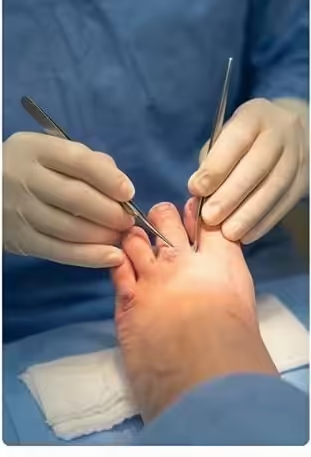
Arthroplasty removes a portion of the proximal phalanx head — “decompressing” the PIP joint and allowing the toe to straighten. A temporary K-wire holds alignment during healing, typically removed at 4–6 weeks. Arthroplasty preserves some PIP joint motion (though usually minimal after healing).
Pros: Simpler procedure, preserves theoretical joint motion, faster bone healing (no fusion required)
Cons: Higher recurrence rate than arthrodesis (10–25%), toe may feel “floppy” (floating toe) if extensor tendon balance is not carefully maintained
Proximal Interphalangeal Joint Arthrodesis (Fusion)
Arthrodesis removes the articular cartilage from both sides of the PIP joint and fixes the joint in a straight position using a K-wire, titanium pin, or intramedullary implant (e.g., Smart Toe, ProPel) until bone fusion occurs. The fused joint is permanently straight and mechanically stable.
Pros: Lower recurrence rate (5–10%), durable correction, no “floppy toe” risk
Cons: Permanent loss of PIP joint motion (clinically minimal in daily function), requires bony healing (6–10 weeks), implant cost with intramedullary devices
Additional Procedures Often Performed Simultaneously
Hammertoe correction frequently requires addressing additional deformities at the same operation:
- Extensor tendon lengthening or tenotomy: Releases extensor tendon contracture contributing to MTP joint hyperextension
- MTP joint capsulotomy: Releases contracted MTP joint capsule in subluxed or dislocated MTP joints
- Flexor tendon transfer (Girdlestone-Taylor): Transfers the flexor digitorum longus tendon to the extensor hood — most effective for flexible deformities
- Metatarsal shortening osteotomy (Weil osteotomy): Shortens and plantarflexes an overlength metatarsal — commonly combined with hammertoe correction when metatarsalgia or crossover toe deformity is present
Recovery Timeline
Most patients walk in a surgical shoe immediately after hammertoe surgery. Swelling and moderate pain are expected for 4–8 weeks. K-wires (when used) are removed at the office at 4–6 weeks. Return to regular shoes typically occurs at 6–10 weeks depending on swelling resolution. Full recovery — including final shape and sensory normalization — takes 3–6 months.
Toe Pain from Hammertoe? Find Out If You’re a Surgical Candidate.
Dr. Biernacki at Balance Foot & Ankle evaluates hammertoe severity with weight-bearing X-rays and explains all surgical options — arthroplasty, arthrodesis, and combined corrections. Same-week appointments at Bloomfield Hills and Howell.
📞 (810) 206-1402 | Request an Appointment →
📧 Get Dr. Tom’s Free Lab Test Guide
Discover the 5 lab tests every person over 35 should ask their doctor about — explained in plain English by a board-certified physician.
📍 Located in Michigan?
Our board-certified podiatrists treat this condition at two convenient locations. Same-day appointments often available.
Insurance Accepted
BCBS · Medicare · Aetna · Cigna · United Healthcare · HAP · Priority Health · Humana · View All →
Howell Office
4330 E Grand River Ave
Howell, MI 48843
Get Directions →
Bloomfield Hills Office
43494 Woodward Ave, #208
Bloomfield Hills, MI 48302
Get Directions →
Your Board-Certified Podiatrists



Ready to Get Back on Your Feet?
Same-week appointments available at both locations.
Book Your AppointmentMore Podiatrist-Recommended Hammertoe Essentials
Extra-Depth Orthopedic Shoe
Orthofeet Sprint — tall toe box prevents hammertoe rubbing and friction.
Wide-Toe-Box Walking Shoe
New Balance 990v6 — accommodates curled toes without pressure.
Supportive Insole


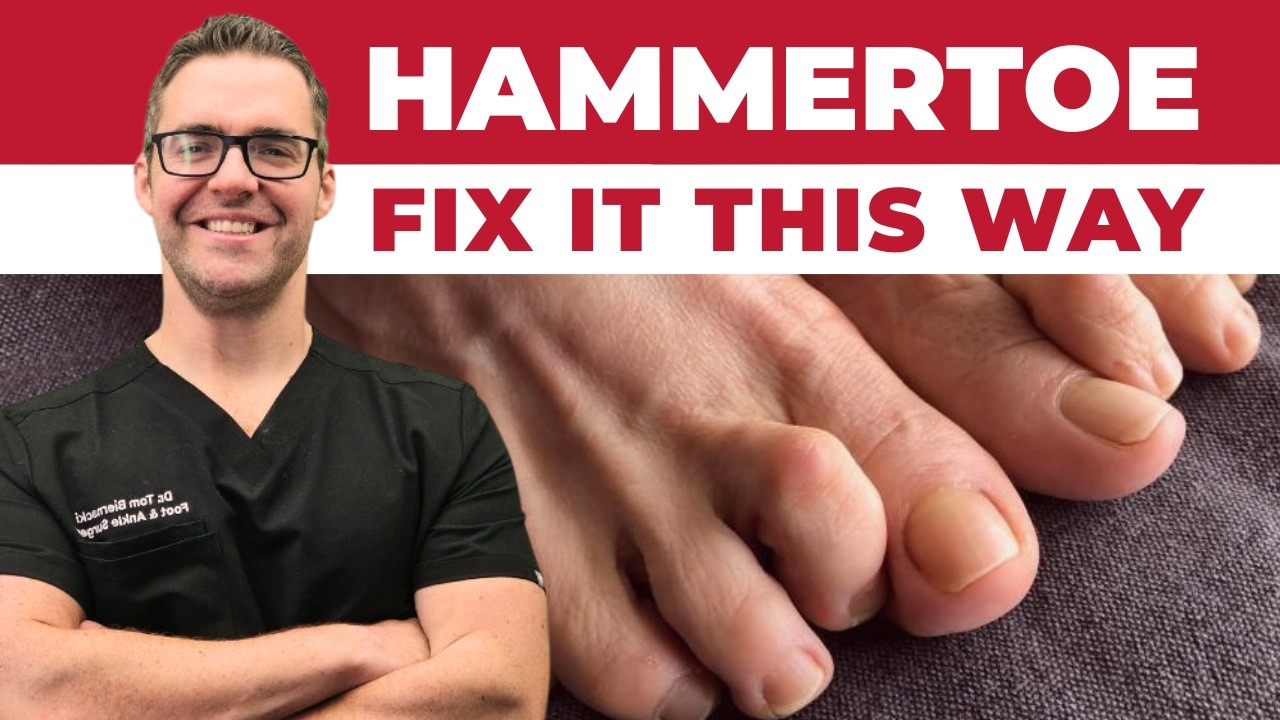
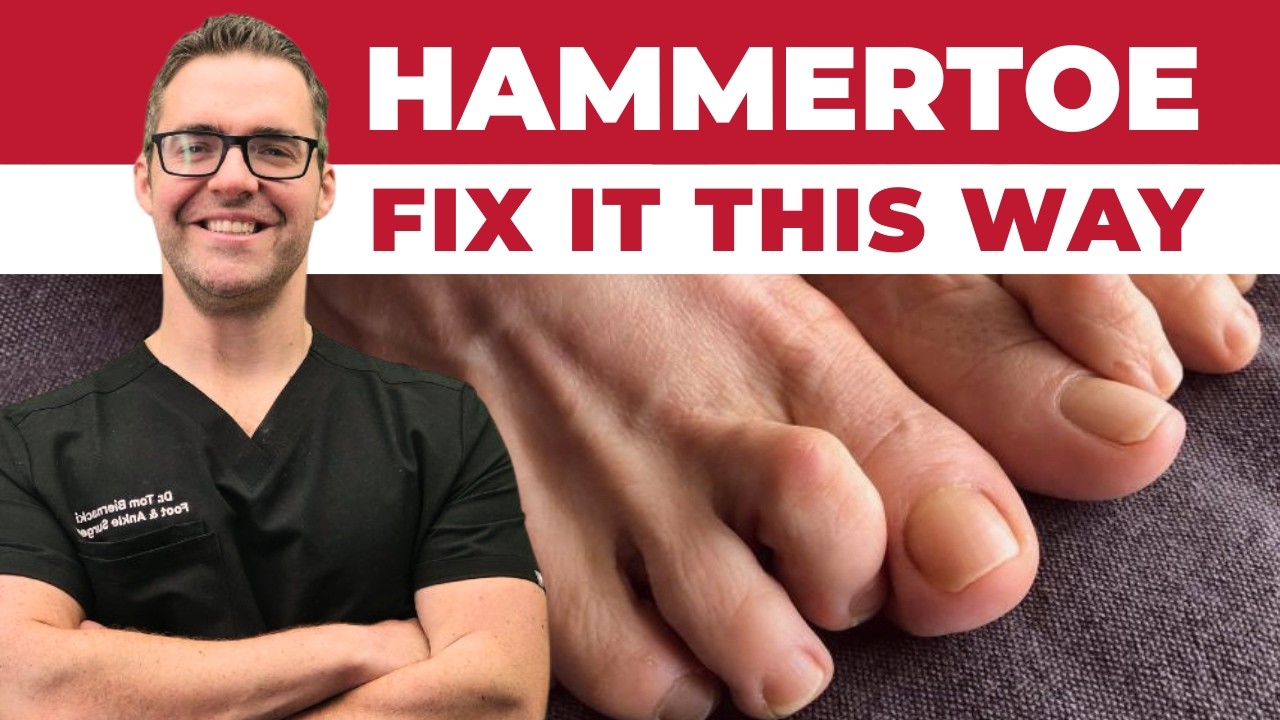
Watch: How to Fix Hammer Toes at Home [Overlapping & Crossover Toes]! — MichiganFootDoctors YouTube
PowerStep Pinnacle — reduces forefoot pressure that drives hammertoe.
As an Amazon Associate, Balance Foot & Ankle earns from qualifying purchases. Product recommendations are based on clinical experience; prices and availability shown above update live from Amazon.

When to See a Podiatrist
Rigid hammertoes don’t reduce with splinting alone — the tendon and capsule have contracted. If the toe no longer straightens passively, surgical correction restores alignment in one short outpatient visit. Call Balance Foot & Ankle to see whether your deformity is still flexible (and responsive to the conservative tools above) or if it’s time for a 20-minute in-office correction.
Call Balance Foot & Ankle: (810) 206-1402 · Book online · Offices in Howell & Bloomfield Hills
In Our Clinic
Hammertoes come to our clinic in two flavors: flexible (the toe still passively straightens) and rigid (it doesn’t). For flexible hammertoes we use gel toe crests, roomier toe boxes, custom orthotics to address the underlying instability, and sometimes night splints. Rigid hammertoes with a corn on top of the PIP joint, or a callus under the metatarsal head, usually need a minor outpatient procedure (PIP arthroplasty or fusion) to straighten the toe. The patients who wait too long develop fixed deformities and skin breakdown — we would much rather address a flexible hammertoe early.
In-Office Treatment at Balance Foot & Ankle
When conservative care isn’t enough, Dr. Tom Biernacki and the team at Balance Foot & Ankle offer advanced, same-day options — including Hammertoe Treatment Michigan at our Howell and Bloomfield Hills clinics.
Same-day appointments available. Call (810) 206-1402 or book online.
Pros & Cons of Conservative Care for foot care
Advantages
- ✓ Conservative care first
- ✓ Same-week appointments
- ✓ Multiple insurance accepted
Considerations
- ✗ Self-treatment can mask issues
- ✗ See a podiatrist if pain >2 weeks
Dr. Tom’s Recommended Products for foot care
Affiliate disclosure: As an Amazon Associate, Balance Foot & Ankle earns from qualifying purchases. We only recommend products we use with patients.
Footnanny Heel Cream Dr. Tom’s Pick
Best for: Daily moisturizer for cracked heels
Ready to Get Back on Your Feet?
Same-day appointments in Howell + Bloomfield Hills. Most insurance accepted. Dr. Tom Biernacki, DPM & team.
Book Today — Same-Day Appointments Available
Call Now: (810) 206-1402
About Your Care Team at Balance Foot & Ankle
Dr. Tom Biernacki, DPM · Board-Certified Foot & Ankle Surgeon. Specializes in conservative-first care, minimally invasive bunion surgery, and complex reconstruction.
Dr. Carl Jay, DPM · Accepting new patients. Specializes in sports medicine, athletic injuries, and routine podiatric care.
Dr. Daria Gutkin, DPM, AACFAS · Accepting new patients. Specializes in surgical reconstruction and pediatric podiatry.
Locations: 4330 E Grand River Ave, Howell, MI 48843 · 43494 Woodward Ave Suite 208, Bloomfield Hills, MI 48302
Hours: Mon–Fri 8:00 AM – 5:00 PM · (810) 206-1402
In-Office Treatment at Balance Foot & Ankle
If home treatment isn’t providing relief for your hammertoes, our podiatry team at Balance Foot & Ankle can help with same-day evaluations and advanced in-office care.
Same-day appointments available. (810) 206-1402
Doctor Hoy’s Natural Pain Relief Gel
Natural topical pain relief I use in our clinic. Arnica + camphor formula — apply directly to the area 3–4x daily. ($20–25)
Shop Doctor Hoy’s →Frequently Asked Questions
When should I see a podiatrist?
If symptoms persist past 2 weeks, affect your normal activity, or are accompanied by red-flag symptoms (warmth, redness, swelling, inability to bear weight).
What does treatment cost?
Most diagnostic visits and conservative treatments are covered by Medicare and major insurers. Out-of-pocket costs vary by your specific plan.
How quickly can I get an appointment?
Most non-urgent cases see us within 5 business days. Urgent cases (sudden pain, possible fracture) typically same or next business day.
What is Hammertoe?
Hammertoe is a common foot/ankle condition that affects mobility and quality of life. Understanding the underlying cause is the first step in successful treatment. Our podiatrists at Balance Foot & Ankle perform a hands-on biomechanical exam, review your activity history, and use diagnostic imaging when appropriate to identify the root cause—not just treat the symptom. Many patients have been told to “rest and ice” without a deeper diagnostic workup; our approach is different.
Symptoms and warning signs
Common signs of hammertoe include pain that worsens with activity, morning stiffness, swelling, tenderness when palpated, and difficulty bearing weight. If you experience sudden severe pain, inability to walk, visible deformity, numbness or color change, contact our office the same day or visit urgent care—these can signal a more serious injury such as a fracture, tendon rupture, or vascular compromise. Diabetics with any foot wound should seek same-day care.
Conservative treatment options
Most cases of hammertoe respond to non-surgical care: structured rest, supportive footwear changes, custom orthotics, targeted stretching and strengthening protocols, anti-inflammatory medications when medically appropriate, and in-office procedures such as ultrasound-guided injections. We also offer advanced therapies including MLS laser therapy, EPAT/shockwave, regenerative injections, and image-guided procedures. Treatment is sequenced from least invasive to most invasive, and we explain the rationale at every step.
When is surgery considered?
Surgery is reserved for cases that fail 3-6 months of well-structured conservative care, when there is structural pathology (severe deformity, complete tear, advanced arthritis), or when imaging shows damage that will not heal without intervention. Our surgeons have performed 3,000+ foot and ankle procedures and prioritize minimally-invasive techniques whenever appropriate. We discuss recovery timelines, return-to-activity milestones, and realistic outcome expectations before any procedure is scheduled.
Recovery timeline and prevention
Recovery from hammertoe varies based on severity and chosen treatment path. Conservative cases often improve within 4-8 weeks with consistent adherence to the protocol. Post-procedural recovery may range from a few days (in-office procedures) to several months (reconstructive surgery). Long-term prevention involves footwear assessment, activity modification, structured strengthening, and regular check-ins with your podiatrist if you have a history of recurrence. We provide written home-exercise plans and digital follow-up support.
Ready to feel better?
Same-week appointments available in Howell and Bloomfield Hills, Michigan.
Book Your VisitGet Expert Care at Balance Foot & Ankle
Same-week appointments at our Howell and Bloomfield Hills offices. Board-certified podiatric surgeons. Most insurance accepted.
Ready for Expert Care?
Same-day appointments in Howell & Bloomfield Hills, MI.
4.9★ | 1,123 Reviews | 3,000+ Surgeries
Or call: (810) 206-1402

Dr. Tom Biernacki, DPM is a board-certified foot & ankle surgeon (ABFAS & ABPM) at Balance Foot & Ankle Specialists in Southeast Michigan. With over a decade of clinical experience, he specializes in heel pain, bunions, diabetic foot care, sports injuries, and minimally invasive surgery. Dr. Biernacki is a member of the APMA and ACFAS, and his patient education content on MichiganFootDoctors.com and YouTube has made him one of the most-followed foot & ankle educators on YouTube.