

Quick answer: Melanoma Skin Cancer Foot Warning Signs is a common foot/ankle topic that affects many patients. Effective treatment starts with a targeted diagnosis, conservative-first treatment, and escalation only when needed. We treat this regularly at our Howell and Bloomfield Township practices. Call (810) 206-1402.

Medically Reviewed by Dr. Tom Biernacki, DPM, FACFAS — Board-certified podiatrist & foot surgeon | Balance Foot & Ankle | Last updated: May 2026
Quick Answer: Melanoma and Skin Cancer of the Foot
Skin cancer of the foot — including melanoma, squamous cell carcinoma, and basal cell carcinoma — is frequently diagnosed late because the feet are rarely examined closely or exposed to clinical screening. Subungual melanoma (under the nail) and plantar melanoma (on the sole) are the most dangerous presentations and are often mistaken for bruising, fungal infection, or warts. Any unexplained dark spot, non-healing sore, or unusual growth on the foot lasting more than 4 weeks warrants podiatric or dermatologic evaluation.
The foot is one of the most under-examined areas of the body for skin cancer surveillance. Most patients never think to look at the bottom of their feet or under their toenails during self-skin checks, and routine medical physicals rarely include foot skin examination. Yet melanoma of the foot — particularly acral lentiginous melanoma on the plantar surface and subungual melanoma under the nail — carries some of the worst outcomes of any melanoma subtype, largely because of delayed diagnosis. At Balance Foot & Ankle, routine foot skin examination is part of every hands-on exam plus imaging when needed, and we have identified multiple skin cancers in patients who came in for entirely different concerns.
Types of Skin Cancer Found on the Foot
| Type | Appearance | Common Location | Prognosis |
|---|---|---|---|
| Acral Lentiginous Melanoma | Dark brown/black irregular patch | Plantar surface, heel, ball | Serious — 5-yr survival 80% (early) vs 15% (late) |
| Subungual Melanoma | Dark streak or band in nail | Under great toenail | Often diagnosed late; poor if delayed |
| Squamous Cell Carcinoma | Firm, raised scaly lesion or ulcer | Dorsal foot, toes | Good if treated early; spreads if neglected |
| Basal Cell Carcinoma | Pearly nodule, ulcerated center | Dorsal foot, ankle | Excellent if treated; rarely metastasizes |
| Kaposi Sarcoma | Red/purple patches, plaques | Plantar surface, toes | Variable — associated with immune status |
Warning Signs: The ABCDE Rule Applied to Foot Lesions
The ABCDE melanoma warning signs apply directly to foot skin lesions. Asymmetry: one half of the lesion does not match the other half. Border: irregular, ragged, notched, or blurred edges. Color: multiple shades of brown, black, red, or white within the same lesion. Diameter: larger than 6mm (pencil eraser), though melanomas can be smaller. Evolution: any change in size, shape, color, or new symptoms (bleeding, itching) over weeks. For subungual lesions specifically, Hutchinson’s sign — dark pigmentation spreading from the nail onto the adjacent skin fold — is a critical melanoma indicator requiring immediate biopsy.
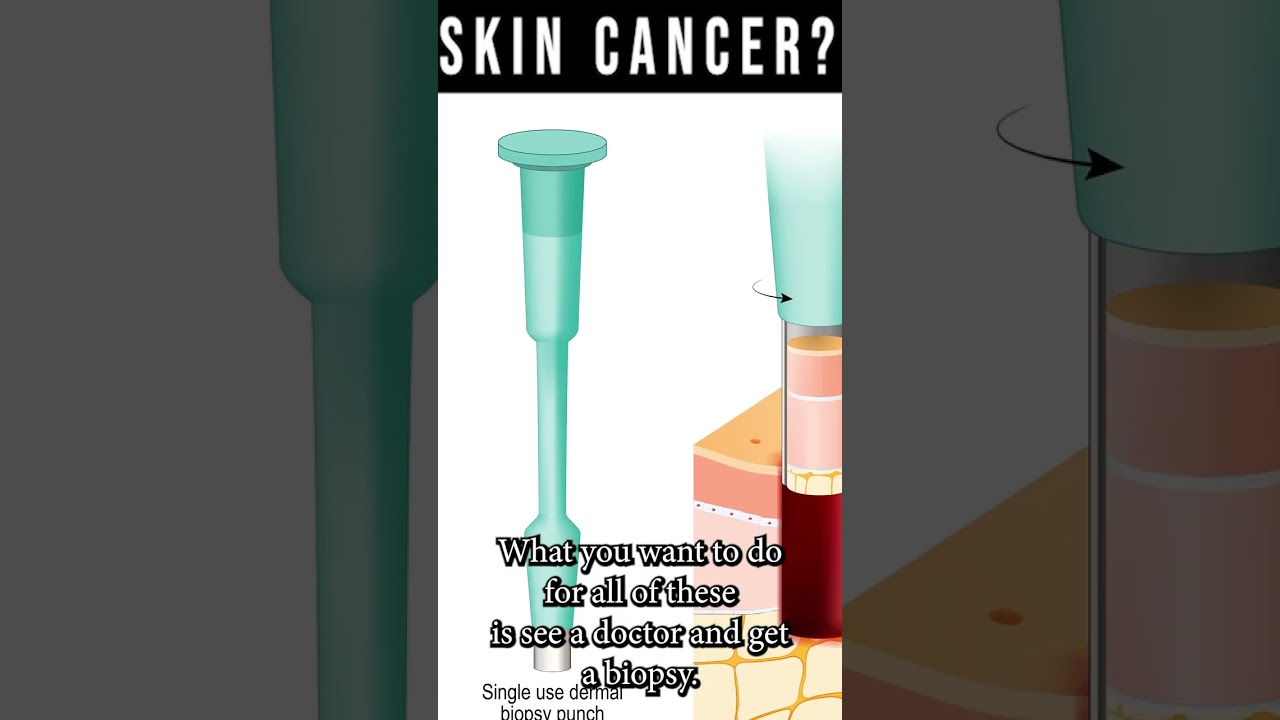
Watch Dr. Tom explain skin cancer warning signs, biopsy procedures, and what not to ignore on your feet.
Subungual Melanoma vs. Subungual Hematoma
Subungual melanoma — melanoma originating under the nail — is most commonly misdiagnosed as a bruise (subungual hematoma) or fungal nail infection. The critical distinction: a hematoma grows out with the nail at approximately 3mm per month and becomes visibly closer to the nail tip over time. A subungual melanoma does not move distally with nail growth — it stays in the same position relative to the nail matrix. Additional red flags: dark pigment extending onto the proximal nail fold (Hutchinson’s sign), irregular or variegated color (not uniform dark red/black of a bruise), and history of no trauma preceding the dark area. Any dark nail streak without a clear trauma history warrants dermatoscopy or nail matrix biopsy.
⚠ Most Common Mistake with Foot Skin Cancer
The most common mistake I see is treating a suspicious lesion as something benign for months before getting a biopsy. A wart that doesn’t respond to treatment. A dark spot under the nail that “must be from the stubbed toe six months ago.” A callus with an irregular dark center. In dermatology, a biopsy costs very little and tells you everything. In foot skin cancer, every month of delay is meaningful because depth of invasion directly determines staging and survival. The rule I apply in my practice: any lesion that doesn’t behave like what you think it is gets biopsied — not watched, not treated empirically, biopsied.
Diagnosis and Biopsy of Foot Skin Lesions
Diagnosis begins with clinical dermoscopy — polarized light examination that reveals subsurface vascular patterns and pigment architecture invisible to the naked eye. Suspicious lesions require tissue biopsy for histopathologic diagnosis. Excisional biopsy (complete removal with 1–2mm margins) is preferred for small lesions; punch or incisional biopsy is used for large lesions or subungual lesions requiring nail removal. Biopsy results determine staging, and staging determines the extent of required surgical excision: in-situ melanoma requires 5mm margins, T1 melanoma requires 1cm margins, and T2+ melanoma requires 1–2cm margins with sentinel lymph node biopsy. Our office coordinates with dermatology and surgical oncology for comprehensive management of confirmed foot skin malignancies.
Frequently Asked Questions
Can melanoma really develop on the sole of the foot if it’s not exposed to sun?
Yes — acral lentiginous melanoma (ALM), the most common melanoma subtype in people with darker skin tones, develops on palms, soles, and under nails regardless of sun exposure. ALM accounts for approximately 5% of all melanomas in fair-skinned populations but represents the majority of melanomas in darker-skinned individuals. The exact cause of ALM is not fully understood but appears to involve mechanical stress and genetic factors rather than UV exposure. This is why foot skin self-examination and regular podiatric surveillance are important for everyone, not just fair-skinned sun-exposed patients.
How is subungual melanoma different from a bruised toenail?
A subungual hematoma (bruise) grows out with the nail at roughly 3mm per month — a mark present at the base today will be closer to the tip in 6 weeks. Subungual melanoma stays fixed relative to the nail matrix and may spread onto the surrounding skin (Hutchinson’s sign). Hematomas are typically dark red, brown, or black with uniform color; melanoma often shows irregular variegated pigmentation. Any dark nail streak without clear trauma, any streak that does not grow out as expected, or any periungual pigment spread requires immediate evaluation and possible biopsy.
What does a squamous cell carcinoma of the foot look like?
Squamous cell carcinoma (SCC) of the foot typically appears as a firm, raised, flesh-colored or reddened plaque or nodule with a scaly or crusted surface. It may ulcerate centrally and bleed easily. SCC often develops in areas of chronic irritation, previous radiation, or longstanding inflammation. Importantly, SCC of the foot frequently masquerades as a chronic wart, non-healing callus, or persistent ulcer that fails standard treatment. Any hyperkeratotic lesion that doesn’t respond to conventional wart or callus treatment within 3 months warrants biopsy to exclude malignancy.
Do I need to see a dermatologist or a podiatrist for a suspicious foot lesion?
Both specialties can evaluate and biopsy suspicious foot skin lesions. A podiatrist has specific expertise in foot and nail anatomy, making us particularly well-positioned to evaluate subungual lesions, plantar surface findings, and lesions involving the nail matrix. For confirmed diagnoses requiring wider excision, reconstruction, or sentinel node biopsy, we coordinate directly with dermatology and surgical oncology. The most important thing is not to delay evaluation waiting to determine the right specialist — call us or your dermatologist at the first sign of a concerning lesion.
When should I see a podiatrist about a suspicious lesion on my foot?
See a podiatrist for any foot skin or nail finding that is new and changing, doesn’t match the ABCDE criteria for a normal mole, fails to resolve within 4 weeks, looks different from your other moles, or bleeds without injury. At Balance Foot & Ankle, we evaluate suspicious lesions at our Howell and Bloomfield Township locations — same-week appointments available at (810) 206-1402 or book online.
Foot Skin Cancer Evaluation — Howell & Bloomfield Township, MI
Dr. Tom Biernacki DPM FACFAS | Same-week appointments available | (810) 206-1402
Book Appointment Call (810) 206-1402Related Resources
- Diabetic Foot Care — Skin and Wound Prevention
- Wound Care — Non-Healing Sores and Ulcers
- Toenail Fungus vs. Other Nail Changes — What’s Different
- New Patient Information — Balance Foot & Ankle
Dr. Tom’s Foot Skin Health Picks
FLAT SOCKS — Antimicrobial, moisture-wicking barefoot liner. Eliminates the warm, moist environment where bacteria and fungi thrive. Unique product — no real competitor.
Doctor Hoy’s Natural Pain Relief Gel — Plant-based arnica formula for soreness accompanying skin conditions. FSA-eligible. No greasy residue.
Disclosure: We earn a commission if you purchase — at no extra cost to you. We only recommend what we use in our clinic.
In-Office Treatment at Balance Foot & Ankle

If home treatment isn’t providing relief for your foot skin conditions, our podiatry team at Balance Foot & Ankle can help with same-week evaluations and advanced in-office care.
Same-week appointments available. (810) 206-1402

Dr. Tom Biernacki, DPM is a board-certified foot & ankle surgeon (ABFAS & ABPM) at Balance Foot & Ankle Specialists in Southeast Michigan. With over a decade of clinical experience, he specializes in heel pain, bunions, diabetic foot care, sports injuries, and minimally invasive surgery. Dr. Biernacki is a member of the APMA and ACFAS, and his patient education content on MichiganFootDoctors.com and YouTube has made him one of the most-followed foot & ankle educators on YouTube.