n
Board Certified Podiatrists | Expert Foot & Ankle Care
(810) 206-1402 Patient Portal

Michigan Podiatry: Insurance Accepted and Coverage Guide

BCBS, Medicare, Humana, Cigna, Aetna, UHC, Priority — here is what each plan covers for podiatric care.

You are in the right place. Dr. Tom Biernacki, DPM, FACFAS — board-certified foot & ankle surgeon with 3,000+ surgeries — explains exactly what Michigan podiatry insurance coverage means and what works. Call (810) 206-1402 for same-day appointment at Howell or Bloomfield Hills.

Quick answer: Michigan Podiatry Insurance Coverage affects roughly 1 in 4 adults in our practice that affects many patients. Effective treatment starts with a targeted diagnosis, conservative-first treatment, and escalation only when needed. We treat this regularly at our Howell and Bloomfield Township practices. Call (810) 206-1402.

Medically reviewed by Dr. Tom Biernacki, DPM · Board-Certified Podiatric Surgeon · Last reviewed: April 2026 · Editorial Policy

Quick Answer

Michigan Podiatry: Insurance Accepted and Coverage Guide relates to foot pain — typically caused by overuse, footwear, or biomechanics. Most patients improve in 6-12 weeks with conservative care. Same-week appointments in Howell + Bloomfield Twp: (810) 206-1402.

Play video
Watch: Dr. Tom Biernacki explains the topic in detail · Subscribe to Michigan Foot Doctors on YouTube

Michigan Podiatry: Insurance Accepted and Coverage Guide

Understanding Your Insurance Coverage for Podiatry in Michigan

One of the most common questions patients ask before their first visit is: “Will my insurance cover this?” The answer depends on your specific plan, your diagnosis, and the type of service being performed. This guide explains how podiatric care is covered under major insurance types, what Balance Foot & Ankle accepts, and how to get the most from your benefits.

Does Insurance Cover Podiatry?

Yes — in most cases, podiatric care is covered when it is medically necessary. Routine foot care (such as nail trimming in non-diabetic patients) is often excluded from coverage, but the vast majority of services a podiatrist provides — treating plantar fasciitis, bunions, ingrown toenails, ankle fractures, diabetic foot complications, and prescribing orthotics — are considered medically necessary and covered by most insurance plans.

Major Insurance Types We Accept

Blue Cross Blue Shield of Michigan: Balance Foot & Ankle is in-network with most BCBS Michigan plans, including PPO and HMO options. BCBS covers a many podiatric services including office visits, X-rays, procedures, and custom orthotics with appropriate diagnosis codes.

Medicare: We accept Original Medicare (Parts A and B). Medicare covers medically necessary podiatric services including treatment of foot conditions related to systemic diseases (diabetes, peripheral vascular disease, neuropathy), nail procedures, fracture care, and surgical procedures. Medicare also covers therapeutic diabetic footwear (one pair of shoes plus three pairs of inserts per year) for eligible diabetic patients.

Medicaid / Healthy Michigan Plan: We accept Michigan Medicaid and the Healthy Michigan Plan for qualifying patients. Covered services vary by plan; our billing team verifies benefits before your appointment.

Aetna, Cigna, United Healthcare, Humana: We are in-network with most major commercial carriers. Coverage varies by plan tier (HMO, PPO, EPO) and employer group. Our front desk verifies your specific benefits before your visit.

Workers Compensation: Foot and ankle injuries sustained on the job are covered under Michigan workers compensation. We accept workers comp cases and work directly with adjusters to streamline your care.

Auto No-Fault Insurance: Foot and ankle injuries from motor vehicle accidents are covered under Michigan No-Fault auto insurance. We handle the billing process for no-fault cases.

Do I Need a Referral?

Most insurance plans do not require a referral to see a podiatrist. PPO plans generally allow direct specialist access without a referral. Some HMO plans require a referral from a primary care physician. Our front desk will confirm whether your specific plan requires one when you call to schedule. In many cases, even HMO patients can be seen urgently without a referral for acute injuries.

Custom Orthotics and Insurance

Custom orthotics are covered by most commercial insurance plans and Medicare when prescribed by a podiatrist for a diagnosed medical condition. Common covered diagnoses include plantar fasciitis, flat feet, diabetic neuropathy, and post-surgical support. Our office handles all documentation and prior authorization requirements. Medicare covers diabetic orthotics under the therapeutic shoe benefit separately from standard orthotic coverage.

What You Can Expect to Pay

Your out-of-pocket costs depend on your specific plan’s deductible, copay, and coinsurance structure. Common costs include a specialist copay for office visits ($20 to $60 for most commercial plans), coinsurance after your deductible for procedures and surgery, and a potential cost share for custom orthotics. Our billing team provides a cost estimate before any elective procedure.

Self-Pay and Uninsured Patients

Balance Foot & Ankle welcomes self-pay patients. We offer transparent pricing for common services and payment plan options for larger procedures. Contact our office to discuss self-pay rates before your appointment.

How to Verify Your Benefits

Call the member services number on the back of your insurance card and ask: “Is Balance Foot & Ankle in-network?” and “What is my specialist copay and deductible?” Alternatively, call our office and our billing team will verify your benefits as a complimentary service before your first visit.

Contact Balance Foot & Ankle

We make insurance as easy as possible. Our staff handles pre-authorizations, referral coordination, and claims submission so you can focus on getting better. Call us at (810) 206-1402 or schedule online at any of our Michigan locations.

Insurance Coverage Questions for Michigan Podiatry: Talking to Balance Foot & Ankle

Michigan patients with questions about their specific insurance coverage for podiatric services — deductible status, copay amounts, whether a specific procedure is covered, and whether a referral is needed — can call Balance Foot & Ankle at (810) 206-1402 and speak directly with our insurance verification team before scheduling. We verify benefits for every new patient before their appointment and provide a clear explanation of anticipated cost responsibility. For patients with high-deductible plans early in the calendar year, we discuss realistic cost expectations upfront. For patients who have been told a service is “not covered” by a previous provider and are surprised, we sometimes find that the service is covered under a different billing code or with appropriate documentation of medical necessity — it’s worth a call to verify rather than assuming. Balance Foot & Ankle is in-network with Blue Cross Blue Shield of Michigan, Aetna, UnitedHealthcare, Cigna, Medicare, and most Medicare Advantage plans in the Livingston and Oakland County markets. Our team can verify your specific plan and provide the information you need to make an informed scheduling decision.


Related Treatment Guides

Michigan patients experiencing foot or ankle problems can schedule an appointment at Balance Foot & Ankle — with locations in Howell (4330 E Grand River) and Bloomfield Hills (43494 Woodward Ave #208). Call (810) 206-1402 for same-week availability.


Related Patient Guides

Medical References & Sources

Play video

Join 950,000+ Learning About Foot Health

Dr. Tom shares honest medical advice, supplement reviews, and treatment guides you won’t find anywhere else.

Subscribe on YouTube →

📍 Located in Michigan?

Our board-certified podiatrists treat this condition at two convenient locations. Same-day appointments often available.

Book Now → (810) 206-1402

Medically Reviewed by: Dr. Tom Biernacki, DPM — Board-Certified Podiatrist, Balance Foot & Ankle Specialists

Insurance Accepted

BCBS · Medicare · Aetna · Cigna · United Healthcare · HAP · Priority Health · Humana · View All →

Ready to Get Back on Your Feet?

Same-week appointments available at both locations.

Book Your Appointment

(810) 206-1402

Pros & Cons of Conservative Care for foot care

Advantages

  • ✓ Conservative care first
  • ✓ Same-week appointments
  • ✓ Multiple insurance accepted

Considerations

  • ✗ Self-treatment can mask issues
  • ✗ See a podiatrist if pain >2 weeks

Dr. Tom’s Recommended Products for foot care

Affiliate Disclosure: This page contains affiliate links to products we recommend. If you purchase through these links, Balance Foot & Ankle may earn a small commission at no additional cost to you. We only recommend products we use with our patients.

Affiliate disclosure: As an Amazon Associate, Balance Foot & Ankle earns from qualifying purchases. We only recommend products we use with patients.

Hoka Bondi 9 Dr. Tom’s Pick

Best for: Max cushion daily wear

Check Price on Amazon

PowerStep Pinnacle Dr. Tom’s Pick

Best for: General arch support

Check Price on Amazon

KT Tape Pro Synthetic Dr. Tom’s Pick

Best for: Multi-purpose taping

Check Price on Amazon

Footnanny Heel Cream Dr. Tom’s Pick

Best for: Daily moisturizer for cracked heels

Check Price on Amazon

Ready to Get Back on Your Feet?

Same-day appointments in Howell + Bloomfield Twp. Most insurance accepted. Dr. Tom Biernacki, DPM & team.

Book Today — Same-Day Appointments Available

Call Now: (810) 206-1402

About Your Care Team at Balance Foot & Ankle

Dr. Tom Biernacki, DPM · Board-Certified Foot & Ankle Surgeon. Specializes in conservative-first care, minimally invasive bunion surgery, and complex reconstruction.

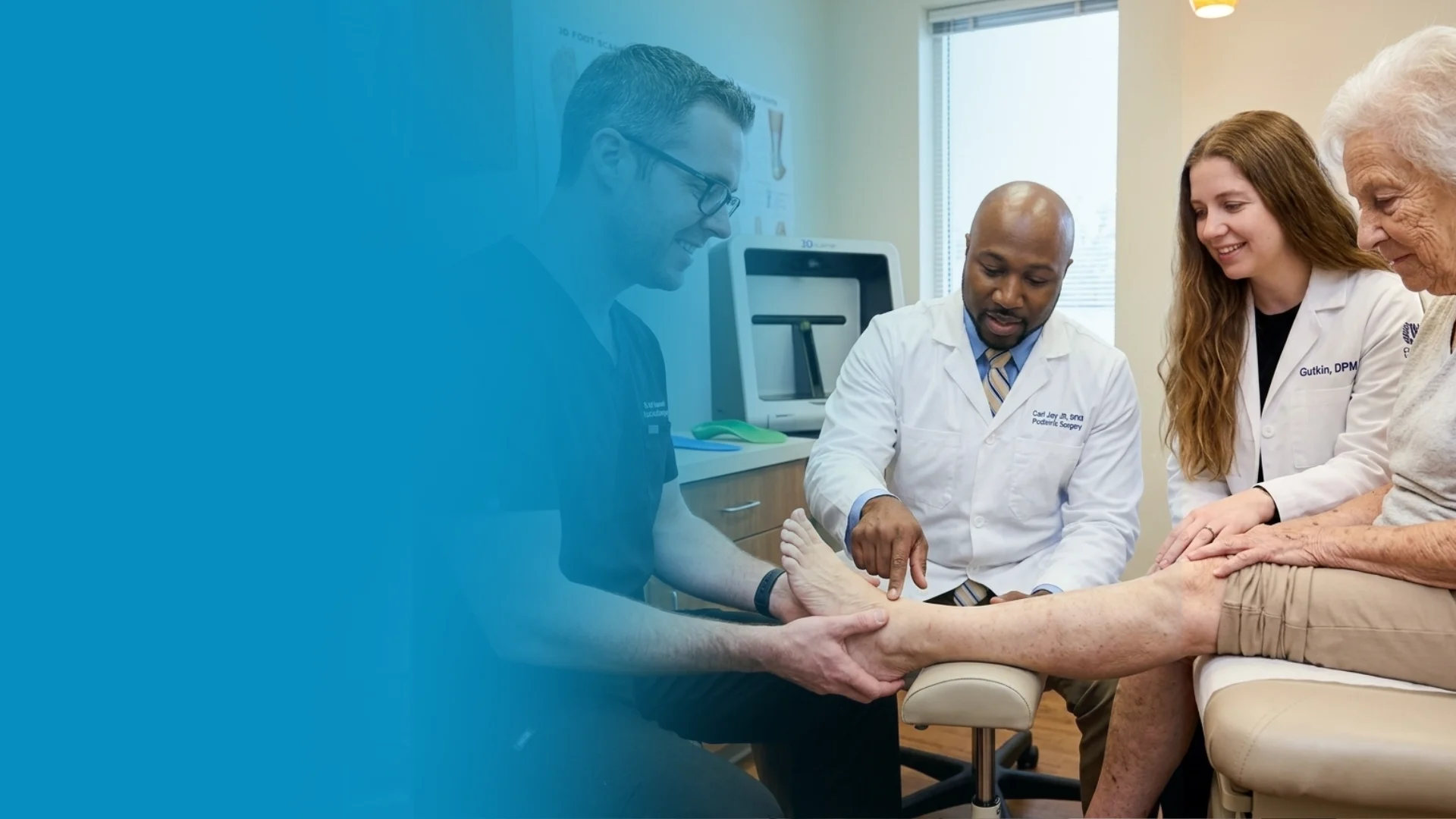
Dr. Carl Jay, DPM · Accepting new patients. Specializes in sports medicine, athletic injuries, and routine podiatric care.

Dr. Daria Gutkin, DPM, AACFAS · Accepting new patients. Specializes in surgical reconstruction and pediatric podiatry.

Locations: 4330 E Grand River Ave, Howell, MI 48843 · 43494 Woodward Ave Suite 208, Bloomfield Twp, MI 48302

Hours: Mon–Fri 8:00 AM – 5:00 PM · (810) 206-1402

Visit Balance Foot & Ankle — Same-Day Appointments Available

Our podiatry team serves patients throughout Michigan including Howell, Brighton, and Bloomfield Hills. If you’re dealing with heel pain, ingrown toenails, or a foot injury, we have same-day appointment availability.

Same-day appointments available. (810) 206-1402

Book online →  |  Meet Dr. Tom Biernacki →

Doctor Hoy’s Natural Pain Relief Gel

Natural topical pain relief I use in our clinic. Arnica + camphor formula — apply directly to the area 3–4x daily. ($20–25)

Shop Doctor Hoy’s →

Frequently Asked Questions

When should I see a podiatrist?

See a podiatrist if: foot or ankle pain has lasted more than 2–4 weeks without improvement, you’re changing your gait to avoid pain, you have an open wound or sore that isn’t healing, you notice nail discoloration or thickening, you have diabetes and any foot concern, or pain is severe enough to wake you at night. Most foot conditions are easier and cheaper to treat early — what starts as a minor issue can become a surgical problem with months of delay.

What is the difference between a podiatrist and an orthopedic surgeon?

Podiatrists (DPM — Doctor of Podiatric Medicine) specialize exclusively in the foot, ankle, and lower leg. Orthopedic surgeons (MD/DO) have broader musculoskeletal training but variable foot/ankle subspecialization. For foot and ankle-specific problems, a podiatrist often has more focused training and experience. For injuries involving the leg above the ankle, complex pediatric cases, or multi-level reconstruction, orthopedic consultation may be appropriate. We frequently co-manage patients with orthopedic colleagues.

How do I know if my foot pain is serious?

Signs that warrant same-day or next-day evaluation: severe pain that appeared suddenly without clear cause, swelling, redness, and warmth that appeared suddenly (possible gout, infection, or Charcot fracture), an open wound that looks infected (redness spreading, pus, warmth), inability to bear weight, or any foot problem in a diabetic patient. Pain that’s been present for weeks and is stable is important but not an emergency — schedule within 1–2 weeks.

Can foot problems cause back and knee pain?

Yes — this is a kinetic chain effect. Abnormal foot mechanics (overpronation, supination, leg length discrepancy) cause compensatory changes in knee, hip, and lumbar alignment. Roughly 30% of patients presenting to our clinic with knee pain have a treatable foot-level biomechanical cause. Correcting foot mechanics with orthotics or appropriate footwear often provides significant knee and back relief. If you have chronic knee or back pain and haven’t had your foot mechanics evaluated, it’s worth a consult.

Are orthotics worth it?

For the right conditions, yes — custom orthotics are among the most cost-effective interventions in podiatry. They’re most effective for: plantar fasciitis, flat feet with secondary knee/back pain, leg length discrepancy, metatarsalgia, posterior tibial tendon dysfunction, and diabetic foot pressure management. Quality OTC orthotics ($35–60) resolve symptoms for 60% of patients with mild-to-moderate conditions. Custom orthotics are appropriate when OTC options have failed or when the biomechanical problem is complex. We cast custom orthotics in-office.

How do I choose the right running shoes?

Start with your foot type (flat, neutral, high arch) and running pattern (overpronator, neutral, supinator). Flat feet and overpronators do best in stability or motion-control shoes. Neutral feet do well in neutral-cushioned shoes. High arches need maximum cushioning with flexible soles. Always buy running shoes at the end of the day (foot swelling peaks then), get properly fitted by a specialist, and replace every 300–500 miles. If you’ve been injured repeatedly, a gait analysis can identify the mechanical flaw driving your injury pattern.

What is the difference between a sprain and a fracture?

A sprain is a ligament injury (the tissue connecting bones); a fracture is a break in the bone itself. Both can occur with the same trauma (ankle roll, fall). The old test — ‘if you can walk, it’s not broken’ — is wrong; many fractures are initially weight-bearable. Key differences: a fracture typically produces localized bone tenderness along the bone itself, while a sprain is tender over the ligament. X-ray is the standard to differentiate. High-grade sprains without proper treatment can be as disabling as fractures.

How do I prevent foot and ankle injuries?

The four most impactful prevention strategies: (1) Supportive, appropriately fitted footwear for your foot type and activity. (2) Gradual activity progression — the 10% rule (never increase weekly mileage or intensity by more than 10%). (3) Regular calf and ankle mobility work. (4) Strengthening the posterior tibial tendon, peroneals, and intrinsic foot muscles. Most overuse injuries are preventable; most acute injuries are not — but ankle sprain recurrence (60–70% without rehab) is prevented by balance and proprioception training.

Balance Foot & Ankle surgeons are affiliated with Trinity Health Michigan, Corewell Health, and Henry Ford Health — three of Michigan’s largest health systems.
📞 Call Now 📅 Book Now
} }) } } } } } }