

Quick answer: Mortons Neuroma Surgery Recovery is a common foot/ankle topic that affects many patients. Effective treatment starts with a targeted diagnosis, conservative-first treatment, and escalation only when needed. We treat this regularly at our Howell and Bloomfield Township practices. Call (810) 206-1402.
Medically reviewed by Dr. Tom Biernacki, DPM · Board-Certified Podiatric Surgeon · Last reviewed: April 2026 · Editorial Policy
The most important clinical decision with Mortons Neuroma Surgery Recovery isn’t which treatment to start with — it’s identifying the correct subtype. That changes everything. Call (810) 206-1402.
Quick Answer
Morton’s Neuroma Surgery: What to Expect and When It&# relates to Morton’s neuroma — typically caused by nerve compression between toes. Most patients improve in 8-12 weeks conservative with conservative care. Same-week appointments in Howell + Bloomfield Twp: (810) 206-1402.
Medically reviewed by Dr. Tom Biernacki, DPM — Board-Certified Podiatric Surgeon — Balance Foot & Ankle, Howell & Bloomfield Hills, MI. Last updated April 2026.
▶ Watch
👟 Dr. Tom Also Recommends
Podiatrist Recommended Shoes 2026: Dr. Tom’s Top Picks for Every Condition
The right footwear can make or break your recovery. Dr. Tom’s complete guide to the best shoes for plantar fasciitis, flat feet, neuropathy, bunions & more — with clinical picks for every foot type.
See Dr. Tom’s Top Shoe Picks →Medically Reviewed by Dr. Tom Biernacki, DPM — Board-Certified Podiatrist, Balance Foot & Ankle Specialists, Michigan. Last updated April 2026.
Morton’s neuroma surgery is one of the more common minor foot surgeries performed by podiatric surgeons — yet it is rarely the first-line treatment. Understanding when surgery is appropriate, what the procedure involves, and what outcomes to expect helps patients make informed decisions about their care.
Conservative Treatment First
The vast majority of Morton’s neuroma cases respond adequately to conservative management — surgery is reserved for the minority who do not. Conservative treatment includes: wide toe box footwear, metatarsal pad placement to splay and offload the affected metatarsal heads, custom orthotics with metatarsal accommodation, cortisone injections (typically 1–3 injections, 2–3 months apart), and sclerosing alcohol injections (a series of 4–7 injections has been shown to achieve symptom relief in 60–80% of appropriate cases).
When Surgery Is Indicated
Surgical evaluation becomes appropriate when: (1) symptoms persist after 6 months of comprehensive conservative care including at least one cortisone injection series, (2) symptoms are severe enough to significantly limit daily activities or cause rest pain, (3) imaging confirms a neuroma of sufficient size (typically >5mm on ultrasound), or (4) sclerosing injection series has been completed without adequate benefit.
Surgical Options
Neurectomy (Most Common)
Neurectomy — surgical resection of the affected digital nerve — is the most commonly performed procedure and produces the highest rates of symptom resolution. The nerve is approached through a dorsal (top of the foot) or plantar (bottom of the foot) incision between the affected metatarsal heads. The neuroma is identified, traced proximally into the interspace, and divided proximally (above the level of the neuroma).
Success rates of 80–90% are reported in appropriately selected patients. The known consequence is permanent numbness in the web space between the affected toes — most patients find this preferable to the pre-operative burning/stabbing pain.
Nerve Decompression
Intermetatarsal ligament release — releasing the transverse intermetatarsal ligament above the neuroma — decompresses the nerve without excising it, theoretically preserving sensation. This approach is preferred when the neuroma is small and the nerve appears otherwise healthy. Success rates approach neurectomy in selected patients.
Recovery After Morton’s Neuroma Surgery
Recovery is typically straightforward:
- Days 0–2: Surgical dressing, partial weight-bearing in a surgical shoe or boot
- Days 3–14: Progressive weight-bearing in a stiff-soled surgical shoe; suture removal at 10–14 days
- Weeks 2–4: Transition to supportive athletic footwear with metatarsal pad
- Weeks 4–6: Return to full activity including most exercise
- Months 2–3: Full resolution of post-surgical swelling and return to all footwear
The most common post-surgical complaint is temporary stump neuroma formation at the proximal nerve end — a hypersensitive area that typically resolves with desensitization therapy over 2–3 months.
Ball of Foot Pain That Won’t Go Away?
Dr. Biernacki at Balance Foot & Ankle diagnoses and treats Morton’s neuroma with injections, orthotics, and surgery when necessary. Same-week appointments available.
or call (810) 206-1402
📧 Get Dr. Tom’s Free Lab Test Guide
Discover the 5 lab tests every person over 35 should ask their doctor about — explained in plain English by a board-certified physician.
📍 Located in Michigan?
Our board-certified podiatrists treat this condition at two convenient locations. Same-day appointments often available.
Insurance Accepted
BCBS · Medicare · Aetna · Cigna · United Healthcare · HAP · Priority Health · Humana · View All →
Howell Office
3980 E Grand River Ave, Suite 140
Howell, MI 48843
Get Directions →
Bloomfield Hills Office
43700 Woodward Ave, Suite 207
Bloomfield Hills, MI 48302
Get Directions →
Your Board-Certified Podiatrists



Ready to Get Back on Your Feet?
Same-week appointments available at both locations.
Book Your AppointmentWatch: Dr. Tom explains
Podiatrist-recommended products
As an Amazon Associate, Dr. Tom earns from qualifying purchases.
Protect the surgical site 2-3 weeks post-neurectomy.
View on Amazon →Offload the web space during conservative care before surgery.
View on Amazon →Wide-forefoot orthotics reduce nerve compression.
View on Amazon →Ice the forefoot pre- and post-op to calm inflammation.
View on Amazon →Related resources
Ready to solve this? Book today.
Same-week appointments · Howell & Bloomfield Hills · 4.9★ (1,123+ reviews)
☎ (810) 206-1402Book Online →In Our Clinic
The classic Morton’s neuroma patient in our clinic is a 40- to 60-year-old woman who describes burning or “walking on a marble” in the 3rd intermetatarsal web space, often worsening in narrow or high-heeled shoes. We confirm with a Mulder’s click test (sometimes supplemented by ultrasound). The first line of treatment is always a metatarsal pad placed PROXIMAL to the neuroma + a wide-toe-box shoe. Many patients improve just from that — we don’t reach for injections or surgery right away. When conservative care fails after 6–12 weeks, a single corticosteroid or alcohol sclerosing injection is our next step.
More Podiatrist-Recommended Neuroma Essentials
Wide Neutral Cushion Shoe
New Balance 1080 V14 — max forefoot room decompresses the pinched nerve.
Wide-Toe-Box Walking Shoe
New Balance 990v6 — prevents the forefoot compression that triggers Morton’s neuroma.
Orthotic with Met Pad Built-In


Watch: CURE Morton’s Neuroma, Metatarsalgia & Ball of the Foot Pain FAST! — MichiganFootDoctors YouTube
PowerStep Pinnacle — arch support reduces nerve irritation between metatarsals.
As an Amazon Associate, Balance Foot & Ankle earns from qualifying purchases. Product recommendations are based on clinical experience; prices and availability shown above update live from Amazon.
When to See a Podiatrist
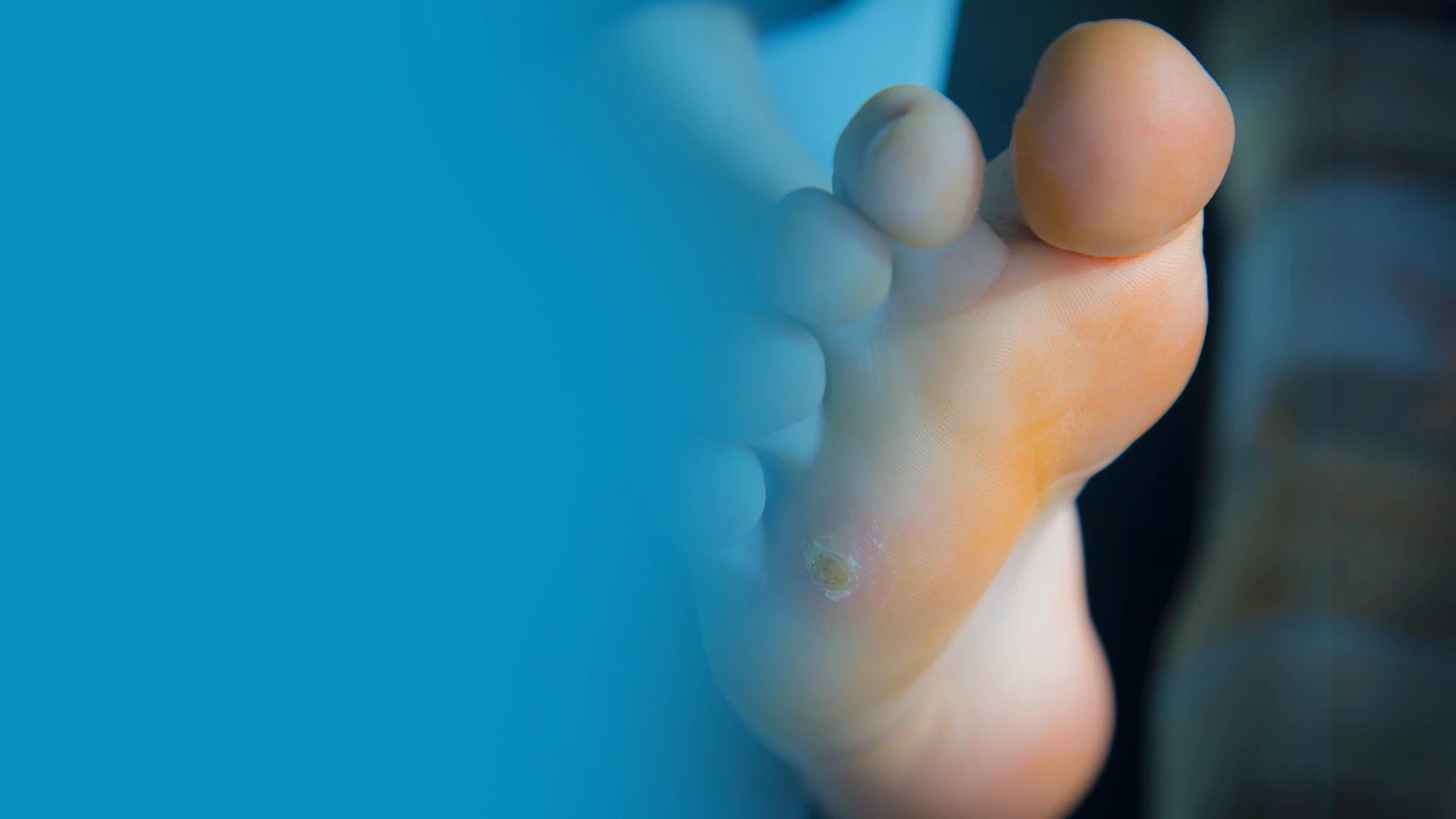
A Morton’s neuroma that doesn’t respond to metatarsal pads and wider shoes within 6-8 weeks usually needs a cortisone injection or — for stubborn cases — alcohol sclerosing or nerve decompression. Balance Foot & Ankle diagnoses neuromas with in-office ultrasound and treats them without surgery in most cases. Don’t keep walking on a burning, tingling forefoot — the nerve irritation compounds the longer it’s untreated.
Call Balance Foot & Ankle: (810) 206-1402 · Book online · Offices in Howell & Bloomfield Hills
In-Office Treatment at Balance Foot & Ankle
When conservative care isn’t enough, Dr. Tom Biernacki and the team at Balance Foot & Ankle offer advanced, same-day options — including Morton’s Neuroma Treatment Michigan at our Howell and Bloomfield Hills clinics.
Same-day appointments available. Call (810) 206-1402 or book online.
Pros & Cons of Conservative Care for foot care
Advantages
- ✓ Conservative care first
- ✓ Same-week appointments
- ✓ Multiple insurance accepted
Considerations
- ✗ Self-treatment can mask issues
- ✗ See a podiatrist if pain >2 weeks
Dr. Tom’s Recommended Products for foot care
Affiliate disclosure: As an Amazon Associate, Balance Foot & Ankle earns from qualifying purchases. We only recommend products we use with patients.
Footnanny Heel Cream Dr. Tom’s Pick
Best for: Daily moisturizer for cracked heels
Ready to Get Back on Your Feet?
Same-day appointments in Howell + Bloomfield Twp. Most insurance accepted. Dr. Tom Biernacki, DPM & team.
Book Today — Same-Day Appointments Available
Call Now: (810) 206-1402
About Your Care Team at Balance Foot & Ankle
Dr. Tom Biernacki, DPM · Board-Certified Foot & Ankle Surgeon. Specializes in conservative-first care, minimally invasive bunion surgery, and complex reconstruction.
Dr. Carl Jay, DPM · Accepting new patients. Specializes in sports medicine, athletic injuries, and routine podiatric care.
Dr. Daria Gutkin, DPM, AACFAS · Accepting new patients. Specializes in surgical reconstruction and pediatric podiatry.
Locations: 4330 E Grand River Ave, Howell, MI 48843 · 43494 Woodward Ave Suite 208, Bloomfield Twp, MI 48302
Hours: Mon–Fri 8:00 AM – 5:00 PM · (810) 206-1402
In-Office Treatment at Balance Foot & Ankle
If home treatment isn’t providing relief for your metatarsalgia, our podiatry team at Balance Foot & Ankle can help with same-day evaluations and advanced in-office care.
Same-day appointments available. (810) 206-1402
Doctor Hoy’s Natural Pain Relief Gel
Natural topical pain relief I use in our clinic. Arnica + camphor formula — apply directly to the area 3–4x daily. ($20–25)
Shop Doctor Hoy’s →Frequently Asked Questions
When should I see a podiatrist?
If symptoms persist past 2 weeks, affect your normal activity, or are accompanied by red-flag symptoms (warmth, redness, swelling, inability to bear weight).
What does treatment cost?
Most diagnostic visits and conservative treatments are covered by Medicare and major insurers. Out-of-pocket costs vary by your specific plan.
How quickly can I get an appointment?
Most non-urgent cases see us within 5 business days. Urgent cases (sudden pain, possible fracture) typically same or next business day.
Ready for Expert Care?
Same-day appointments in Howell & Bloomfield Hills, MI.
4.9★ | 1,123 Reviews | 3,000+ Surgeries
Or call: (810) 206-1402

Dr. Tom Biernacki, DPM is a double board-certified podiatrist and foot & ankle surgeon at Balance Foot & Ankle Specialists in Southeast Michigan. With over a decade of clinical experience, he specializes in heel pain, bunions, diabetic foot care, sports injuries, and minimally invasive surgery. Dr. Biernacki is a member of the APMA and ACFAS, and his patient education content on MichiganFootDoctors.com and YouTube has reached over one million views.