
✅ Medically reviewed by Dr. Thomas Biernacki, DPM — Board-Certified Podiatrist · Last updated April 7, 2026

Medically reviewed by Dr. Carl Jay, DPM
Board-Certified Podiatric Surgeon · Balance Foot & Ankle
Last reviewed: April 2026
Quick Answer: Why Does the Ball of Your Foot Hurt Near the Second Toe?
Pain in the ball of the foot under the second toe is most commonly caused by metatarsalgia (inflammation of the metatarsal head), plantar plate tear (ligament damage at the base of the second toe), or Morton’s neuroma (nerve irritation between the second and third toes). A long second metatarsal bone, tight shoes, and high-impact activities are the main risk factors. Treatment starts with metatarsal pads, proper orthotics, and wide shoes — most patients improve within 4–6 weeks of conservative care.
Treatment at Balance Foot & Ankle: Morton's Neuroma Treatment →
Table of Contents
- 5 Causes of Pain Under the Second Toe
- Plantar Plate Tear — The Most Missed Diagnosis
- Morton’s Neuroma vs. Metatarsalgia
- How We Diagnose the Cause
- Home Treatment That Works
- Best Products for Ball-of-Foot Pain
- Professional Treatment Options
- Warning Signs — When to See a Podiatrist
- Frequently Asked Questions
- The Bottom Line
Every step sends a sharp jolt through the ball of your foot, right under the second toe. It feels like you’re walking on a pebble — except there’s nothing there. The pain started gradually, maybe after increasing your walking or switching shoes, and now it’s there every time you push off your foot.
Ball-of-foot pain localized to the second toe area is one of the most common complaints we evaluate at Balance Foot & Ankle, and it’s also one of the most frequently misdiagnosed. The second metatarsal takes more force than any other during walking — and when the structures around it fail, the pain can be disabling. Below, we’ll help you understand what’s causing your pain and exactly how to fix it.
5 Causes of Pain Under the Second Toe
1. Metatarsalgia (Metatarsal Head Inflammation)
The most common cause of ball-of-foot pain under the second toe. Metatarsalgia is a general term for inflammation and pain at the metatarsal heads — the rounded bone ends that form the “ball” of the foot. The second metatarsal head bears more load than any other during the push-off phase of walking. When that load becomes excessive (from tight shoes, high heels, increased activity, or a naturally long second metatarsal), the tissue becomes inflamed and painful.
2. Plantar Plate Tear
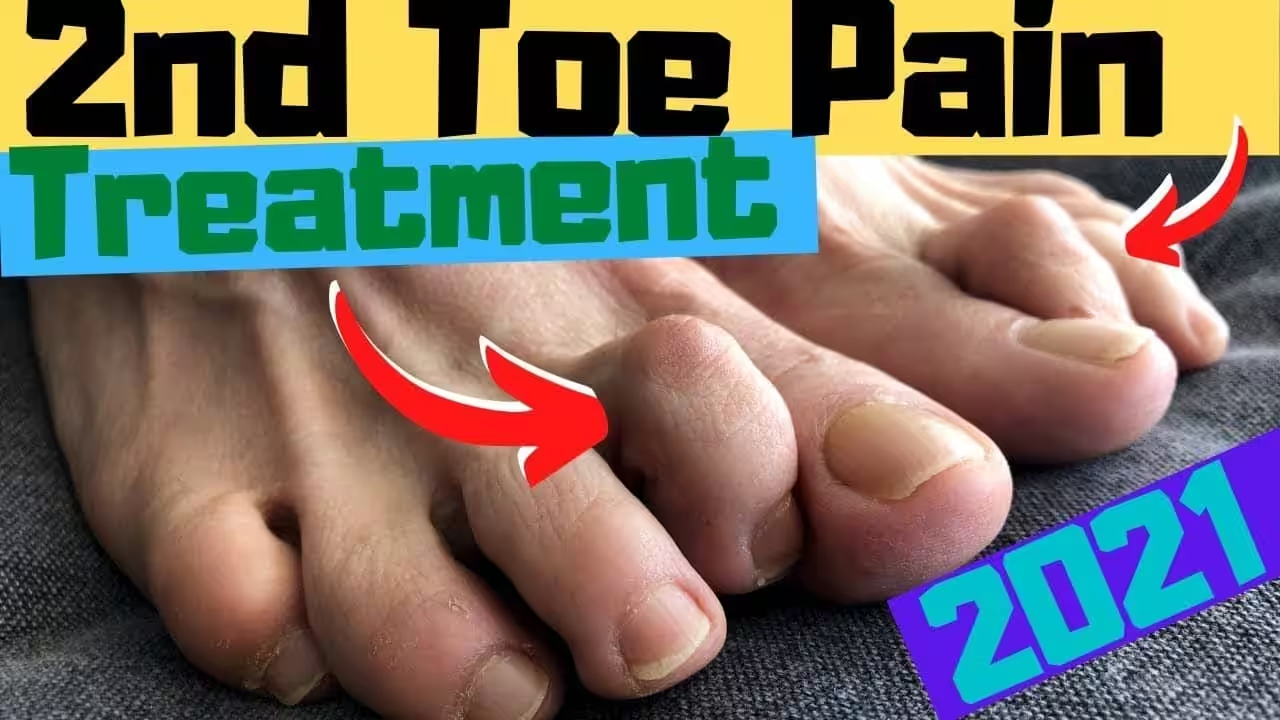
The plantar plate is a thick ligament on the bottom of the second metatarsophalangeal (MTP) joint that stabilizes the toe and prevents hyperextension. When this ligament tears — either from acute injury or chronic overuse — the result is sharp pain directly under the second MTP joint, often with a feeling that the toe is “floating” or drifting upward. Plantar plate tears are the most underdiagnosed cause of second toe ball-of-foot pain. If your second toe seems to be riding up or crossing over the big toe, a plantar plate tear is the likely culprit.
3. Morton’s Neuroma
A Morton’s neuroma is a thickening of the interdigital nerve, most commonly between the second and third or third and fourth metatarsals. It produces a burning, tingling, or electrical-shock pain in the ball of the foot that radiates into the affected toes. Tight shoes and high heels compress the nerve, worsening symptoms. Unlike metatarsalgia (which feels like a bruise), neuroma pain is more electric or shooting.
4. Second Metatarsal Stress Fracture
The second metatarsal is the most common location for foot stress fractures, particularly in runners, military recruits, and anyone who has rapidly increased their activity level. The pain is localized to the shaft of the metatarsal (slightly behind the ball of the foot), worsens progressively with activity, and is accompanied by localized swelling. Unlike soft tissue causes, stress fracture pain doesn’t improve with shoe changes — it requires rest.
5. Freiberg’s Disease
Freiberg’s disease is avascular necrosis (loss of blood supply) of the second metatarsal head, most common in adolescent females. The metatarsal head collapses, causing pain, swelling, and limited range of motion at the second MTP joint. It’s less common than the other causes but should be considered in younger patients with persistent second metatarsal head pain that doesn’t respond to conservative treatment.
Plantar Plate Tear — The Most Missed Diagnosis
We highlight the plantar plate because it’s the diagnosis most often missed by general practitioners and even some orthopedists. The plantar plate is a small (about the size of a kidney bean) but critical ligament that keeps your second toe aligned and prevents it from hyperextending during push-off.
How to suspect a plantar plate tear:
The paper pull-out test is the clinical test we use. Place a piece of paper under the tip of the affected toe while standing. If you can’t hold the paper down when someone pulls it away — but you can hold it with the other foot’s corresponding toe — the plantar plate is likely compromised. A positive test has high specificity for plantar plate insufficiency.
Additional signs include the second toe drifting medially (toward the big toe), the second toe sitting higher than the other toes at rest, pain that’s worse with barefoot walking on hard floors, and a sensation of instability at the joint — like the toe could “pop out of place.”
MRI is the gold standard for confirming a plantar plate tear. It shows the tear location (proximal, central, or distal) and grade, which guides treatment decisions. Ultrasound can also detect plantar plate pathology and is more accessible and less expensive.
Morton’s Neuroma vs. Metatarsalgia — How to Tell the Difference
| Feature | Metatarsalgia | Morton’s Neuroma | Plantar Plate Tear |
|---|---|---|---|
| Pain type | Aching, bruised feeling | Burning, electric, shooting | Sharp, stabbing at push-off |
| Location | Under metatarsal head | Between metatarsal heads | Directly under MTP joint |
| Numbness/tingling | No | Yes — into toes | No |
| Toe position change | No | No (unless chronic) | Yes — toe drifts up or medially |
| Worse with | Walking, standing, tight shoes | Tight/narrow shoes, squeezing forefoot | Barefoot on hard floors, push-off |
| Mulder’s click | Negative | Positive (audible click when squeezing forefoot) | Negative |
| Paper pull-out test | Negative | Negative | Positive |
How We Diagnose the Cause
At Balance Foot & Ankle, we use a systematic approach to pinpoint the cause of your second toe pain:
Physical examination: We assess toe alignment, perform the paper pull-out test, check for Mulder’s click (neuroma), palpate each metatarsal head, and evaluate your gait pattern. We examine your shoe wear pattern — asymmetric wear under the second metatarsal head is a telltale sign of overloading.
X-rays: Taken weight-bearing to evaluate metatarsal length, alignment, and to check for stress fractures or Freiberg’s disease. A long second metatarsal relative to the first (common variant called Morton’s foot) predisposes to second metatarsal overload.
Ultrasound or MRI: If we suspect a plantar plate tear or neuroma, advanced imaging confirms the diagnosis. Ultrasound is available in our office for real-time evaluation. MRI provides the most detailed view of soft tissue injury.
Home Treatment That Works
The first-line treatment for all causes of second metatarsal pain focuses on offloading the affected area. Here’s the protocol we give our patients:
Metatarsal pads: A dome-shaped metatarsal pad placed just behind (not under) the second metatarsal head redistributes pressure away from the painful area. This is the single most effective first step for all causes of ball-of-foot pain. Proper placement is critical — the pad should sit proximal to the metatarsal heads, lifting and spreading the metatarsals to reduce direct loading.
Wide toe box shoes: Narrow shoes compress the metatarsal heads together, increasing pressure at the second MTP joint. Switch to shoes with a wide forefoot immediately. Avoid high heels — even 1-inch heels increase forefoot pressure by 22%; 2-inch heels increase it by 57%.
Activity modification: Reduce high-impact activities (running, jumping, prolonged walking) for 2–4 weeks while the inflammation resolves. Switch to cycling or swimming for cardiovascular exercise during this period.
Ice and anti-inflammatories: Ice the ball of the foot for 15 minutes after activity. OTC ibuprofen (400mg with food, 3 times daily for 5–7 days) reduces inflammation. This combination addresses the acute inflammatory component while the offloading measures address the mechanical cause.
Taping for plantar plate support: If plantar plate tear is suspected, taping the second toe in slight plantar flexion (pointed downward) takes tension off the damaged ligament. Use athletic tape to gently hold the toe in alignment. Tape before walking and remove at night.
Best Products for Ball-of-Foot Pain at the Second Toe
🏆 #1 Pick: Metatarsal Pads
Best for: Immediate relief of second metatarsal head pain
Why we recommend it: Adhesive metatarsal pads are the first treatment we recommend for virtually every patient with ball-of-foot pain. They work by redistributing weight from the painful metatarsal head to the metatarsal shaft — an area with more soft tissue cushioning. Position the pad so its peak sits just behind the second and third metatarsal heads (approximately 1cm proximal to the pain point). The relief is often immediate. Stick them to your insoles or orthotics so they stay in place.
PowerStep Orthotic Insoles
Best for: Comprehensive forefoot offloading and arch support
Why we recommend it: PowerStep insoles combine structured arch support with a metatarsal platform that offloads the ball of the foot. The arch support reduces the percentage of body weight transferred to the forefoot during push-off, which directly decreases second metatarsal loading. Use these as the base layer in your shoes, with a metatarsal pad added on top for maximum offloading. They’re our go-to OTC orthotic recommendation for metatarsalgia patients.
Hoka Bondi (Maximum Cushion)
Best for: Patients who need maximum forefoot cushioning for walking and standing
Why we recommend it: The Hoka Bondi has the most forefoot cushioning of any major brand shoe — 33mm of EVA foam under the ball of the foot. For metatarsalgia patients, this cushioning absorbs the impact forces that aggravate the second metatarsal head. The meta-rocker geometry rolls through the push-off phase rather than loading the forefoot with peak force. Combined with a metatarsal pad and PowerStep insole, this shoe creates a comprehensive offloading system.
Correct Toes Toe Spacers
Best for: Morton’s neuroma relief and toe realignment
Why we recommend it: Correct Toes spacers spread the metatarsal heads apart, directly decompressing the interdigital nerve in Morton’s neuroma. They also help maintain proper second toe alignment in plantar plate insufficiency. Worn inside wide shoes, they create space between the metatarsals that reduces the mechanical compression driving neuroma and metatarsalgia symptoms.
Disclosure: Some links above are affiliate links. We only recommend products we use in our practice or have vetted for our patients. Affiliate commissions help support our free educational content. Your price is not affected.
Professional Treatment Options
If conservative treatment doesn’t resolve symptoms within 4–6 weeks, professional intervention may be needed:
Custom orthotics with precision metatarsal offloading: Unlike OTC insoles, custom orthotics are molded to your specific foot architecture and can incorporate a targeted metatarsal cutout that completely eliminates pressure under the second metatarsal head. For patients with a long second metatarsal or abnormal foot mechanics, custom orthotics often succeed where OTC options couldn’t.
Corticosteroid injection: A targeted injection of corticosteroid into the inflamed MTP joint or around the neuroma provides rapid anti-inflammatory relief. This is typically a bridge treatment — it buys time for the offloading measures to take effect. We limit cortisone injections to 2–3 per year per site to avoid tissue weakening.
Plantar plate repair surgery: For confirmed plantar plate tears that don’t respond to conservative treatment, surgical repair restores the stabilizing ligament and realigns the second toe. This is a minimally invasive procedure with a 4–6 week recovery in a surgical shoe. Success rates exceed 90%.
Neuroma excision or alcohol sclerosing injections: For Morton’s neuroma that doesn’t respond to spacers, shoes, and injections, either a series of 4% alcohol sclerosing injections (to shrink the nerve) or surgical excision of the neuroma provides definitive relief. We prefer the sclerosing injection series as a first-line approach before considering surgery.
Warning Signs — When to See a Podiatrist
⚠️ Schedule an Evaluation If:
- Pain persists for more than 4 weeks despite metatarsal pads and shoe changes — persistent pain may indicate a plantar plate tear or stress fracture that needs imaging.
- Your second toe is drifting upward or crossing over the big toe — this progression suggests plantar plate failure that will worsen without treatment.
- Numbness, tingling, or electric-shock sensations into the toes — nerve symptoms suggest Morton’s neuroma, which benefits from targeted treatment.
- Pain that worsens progressively with each day of activity — escalating pain with continued use is the hallmark of stress fracture.
- Swelling on the top of the foot over the second metatarsal — localized dorsal swelling points to stress fracture or capsulitis requiring imaging.
- Diabetes and any ball-of-foot pain or pressure changes — altered forefoot mechanics in diabetic patients can lead to ulceration; needs professional evaluation.
Frequently Asked Questions
What does a plantar plate tear feel like?
A plantar plate tear typically feels like a sharp pain directly under the second toe joint at the ball of the foot, worst during push-off while walking. It’s often described as walking on a marble or a rolled-up sock. The second toe may feel unstable, like it could “pop out,” and you may notice it sitting higher than the other toes or drifting toward the big toe. Pain is worst barefoot on hard surfaces.
Where do you place a metatarsal pad for second toe pain?
Place the metatarsal pad just behind (proximal to) the second and third metatarsal heads — approximately 1cm behind the most painful spot. The pad should not sit directly under the metatarsal head. Its purpose is to lift and spread the metatarsals so they clear the ground, redistributing weight to the metatarsal shafts. Incorrect placement (directly under the head) can actually worsen pain.
Can ball-of-foot pain heal on its own?
Mild metatarsalgia from temporary overuse can resolve on its own with rest and appropriate footwear. However, plantar plate tears and Morton’s neuroma do not heal on their own — they require targeted treatment (offloading, taping, injections, or surgery). If your pain has persisted for more than 4 weeks, the underlying cause likely needs active intervention rather than passive rest alone.
Is ball-of-foot pain a sign of something serious?
In most cases, ball-of-foot pain is a mechanical issue — not a sign of serious systemic disease. However, stress fractures need to be ruled out (especially with progressive pain during activity), and in rare cases, ball-of-foot pain can be associated with rheumatoid arthritis, gout, or vascular insufficiency. Any ball-of-foot pain that doesn’t respond to 4 weeks of conservative care warrants professional evaluation.
The Bottom Line
Pain in the ball of the foot under the second toe is most often caused by metatarsalgia, plantar plate damage, or Morton’s neuroma — all of which respond well to proper treatment. Start with metatarsal pads (correctly placed behind the metatarsal heads), wide shoes, and orthotic insoles. If the pain persists beyond 4 weeks or your second toe is drifting out of position, get a professional evaluation to determine the specific cause. The sooner you address the underlying problem, the simpler the treatment and the better the outcome.
Sources
- Espinosa N, Brodsky JW, Maceira E. “Metatarsalgia.” J Am Acad Orthop Surg. 2010;18(8):474-485.
- Nery C, Coughlin MJ, Baumfeld D, Mann TS. “Prospective evaluation of protocol for surgical treatment of lesser MTP joint plantar plate tears.” Foot Ankle Int. 2014;35(9):876-885.
- Bhatia D, Myerson MS, Curtis MJ, et al. “Anatomical restraints to dislocation of the second MTP joint.” Foot Ankle Int. 1994;15(7):371-375.
- Adams WR. “Morton’s neuroma.” Clin Podiatr Med Surg. 2010;27(4):535-545.
Ball-of-Foot Pain Not Going Away? We Can Help.
In-office ultrasound · Custom orthotics · Howell & Bloomfield Hills, MI
⭐ 4.9 Stars · 1,123 Reviews · 3,000+ Surgeries
Pain in the Ball of Your Foot Near the Second Toe?
Ball-of-foot pain near the second toe often indicates metatarsalgia, Morton’s neuroma, or capsulitis. Our podiatrists use precise diagnostics to pinpoint the cause and deliver effective relief.
📞 Or call us directly: (810) 206-1402
Clinical References
- Espinosa N, et al. Metatarsalgia. Journal of the American Academy of Orthopaedic Surgeons. 2010;18(8):474-485.
- Bhatia D, et al. Current concepts review: metatarsalgia. Foot & Ankle International. 2013;34(11):1564-1572.
- Nery C, et al. Lesser metatarsophalangeal joint instability: prospective evaluation and repair. Foot & Ankle International. 2012;33(4):301-311.

Dr. Tom Biernacki, DPM is a double board-certified podiatrist and foot & ankle surgeon at Balance Foot & Ankle Specialists in Southeast Michigan. With over a decade of clinical experience, he specializes in heel pain, bunions, diabetic foot care, sports injuries, and minimally invasive surgery. Dr. Biernacki is a member of the APMA and ACFAS, and his patient education content on MichiganFootDoctors.com and YouTube has reached over one million views.
- Diagnosis and Treatment of Plantar Fasciitis (PubMed / AAFP)
- Heel Pain (APMA)
- Hallux Valgus (Bunions): Evaluation and Management (PubMed)
- Bunions (Mayo Clinic)