
✅ Medically reviewed by Dr. Thomas Biernacki, DPM — Board-Certified Podiatrist · Last updated April 7, 2026
Pain in the Heel Bone of the Foot — Causes, Best Treatments & Podiatrist Recommendations
📋 Medically Reviewed by Board-Certified Podiatrists
Dr. Carl Jay, DPM · Dr. Daria Gutkin, DPM · Dr. Tom Biernacki, DPM
Balance Foot & Ankle · Howell & Bloomfield Hills, MI
Last updated: April 2026 · Evidence-based guide
⚡ Quick Answer
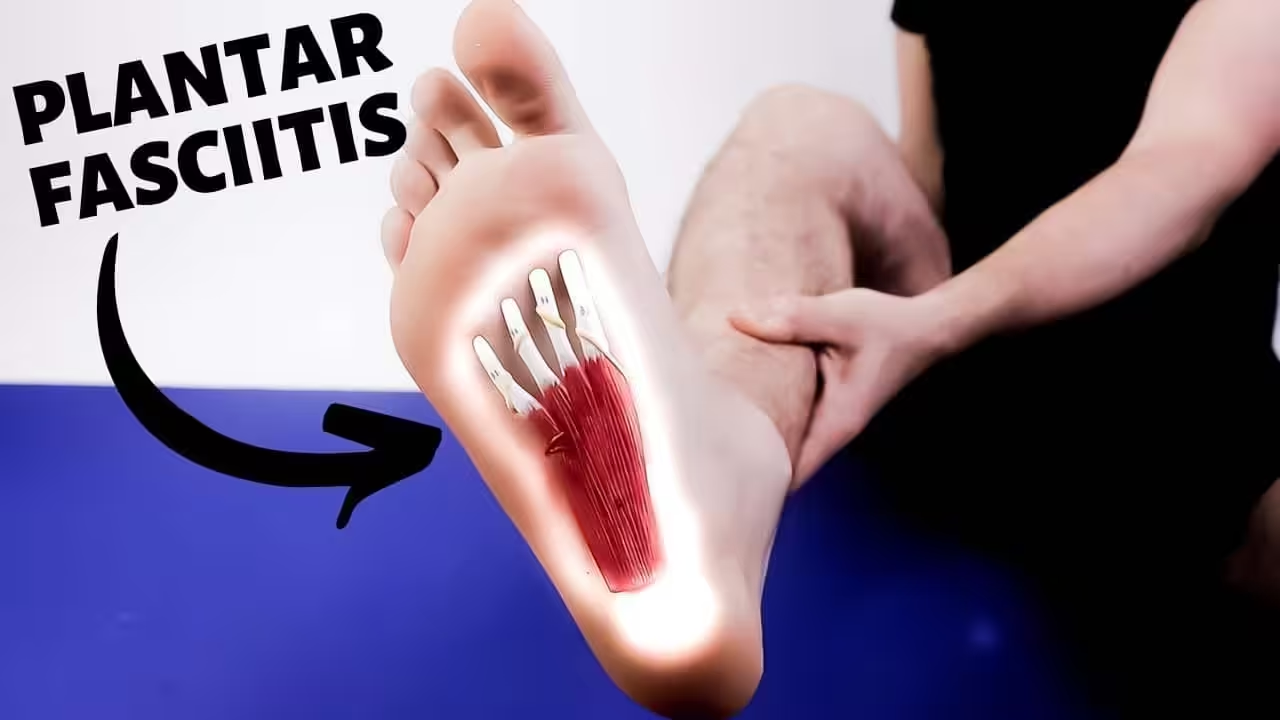
Pain in the heel bone (calcaneus) is most commonly caused by plantar fasciitis — inflammation of the thick band of tissue running across the bottom of the foot. Other causes include heel spurs, calcaneal stress fractures, fat pad atrophy, and nerve entrapment. Over 90% of cases resolve within 6–12 months with conservative care: arch-supporting orthotics, proper footwear, stretching, and a night stretching sock.
Table of Contents
Your heel bone — the calcaneus — is the largest bone in the foot, and it absorbs forces of 2–3 times your body weight with every step you take. That’s an enormous amount of stress, and when any of the structures around the calcaneus become damaged or inflamed, the resulting pain can be debilitating.
Heel pain accounts for roughly 15% of all foot complaints seen by podiatrists. In our Howell and Bloomfield Hills offices, it’s the single most common reason patients schedule an appointment. The hallmark symptom — sharp pain with your first steps in the morning that gradually improves with walking — points to plantar fasciitis in most cases. But not all heel pain is the same, and getting the right diagnosis matters for getting the right treatment.
Common Causes of Heel Bone Pain
| Condition | Pain Location | Key Feature |
|---|---|---|
| Plantar fasciitis | Bottom of heel, medial side | Worst first steps in morning |
| Heel spur | Bottom of heel | Bony growth on X-ray |
| Fat pad atrophy | Center of heel | Worse on hard surfaces |
| Stress fracture | Deep, diffuse heel | Positive squeeze test |
| Baxter’s nerve entrapment | Medial heel, radiating | Burning, tingling |
| Tarsal tunnel syndrome | Medial ankle to heel | Tinel’s sign positive |
| Plantar fibroma | Arch near heel | Palpable firm nodule |
Plantar Fasciitis — The #1 Cause of Heel Pain
Plantar fasciitis is the inflammation and micro-tearing of the plantar fascia — a thick band of connective tissue that spans from the heel bone to the toes, supporting the arch of the foot. It affects approximately 1 in 10 people at some point in their lives, with peak incidence between ages 40–60.
Classic Symptoms
- Sharp, stabbing pain with first steps in the morning or after sitting
- Pain improves after several minutes of walking (“warm-up effect”)
- Pain returns after prolonged standing or at the end of the day
- Pain is worst at the medial calcaneal tubercle (the inner bottom of the heel)
- Pain worsens with barefoot walking, especially on hard surfaces
Risk Factors
BMI over 30, tight calf muscles (gastrocnemius equinus), flat feet or very high arches, occupations requiring prolonged standing, sudden increases in activity, and wearing unsupportive shoes (flip-flops, ballet flats, worn-out sneakers). Runners who increase mileage too quickly are particularly susceptible.
Heel Bone Spurs
A heel spur is a bony calcium deposit that forms on the underside of the calcaneus, typically at the origin of the plantar fascia. Here’s what many patients are surprised to learn: heel spurs are found in approximately 50% of patients with plantar fasciitis — but they’re also found in 16–27% of people with no heel pain at all.
This means the spur itself is usually not the source of pain. It’s a sign of chronic mechanical stress at the plantar fascia insertion. We treat heel spurs the same way we treat plantar fasciitis — with orthotic support, stretching, and proper footwear. Surgical spur removal is rarely necessary.
Fat Pad Atrophy
The heel fat pad is a specialized layer of adipose tissue that cushions the calcaneus during weight-bearing. With aging, the fat pad thins and loses its shock-absorbing capacity. This condition is distinct from plantar fasciitis: the pain is in the center of the heel (not the medial side), worsens on hard surfaces, and doesn’t have the characteristic morning start-up pattern.
Treatment focuses on external cushioning: thick-soled shoes like the Hoka Bondi, gel heel cups, and custom orthotics with extra heel cushioning. Unlike plantar fasciitis, fat pad atrophy doesn’t respond to stretching or arch support alone.
Calcaneal Stress Fracture
A stress fracture of the calcaneus is a hairline crack caused by repetitive overload. It presents as deep, diffuse heel pain that worsens progressively with activity and doesn’t improve with typical plantar fasciitis treatments. The “calcaneal squeeze test” — squeezing both sides of the heel — reproduces the pain (unlike plantar fasciitis, where the pain is on the bottom).
Risk factors include osteoporosis, vitamin D deficiency, female athlete triad, recent military training (“march fractures”), and running on concrete. MRI is required for definitive diagnosis — X-rays are often normal for the first 2–3 weeks.
Nerve Entrapment (Baxter’s Neuropathy)
Baxter’s nerve (the first branch of the lateral plantar nerve) can become compressed between the abductor hallucis muscle and the plantar fascia. This accounts for approximately 20% of chronic heel pain cases that don’t respond to standard plantar fasciitis treatment. Symptoms include burning, shooting, or tingling pain in the medial heel that may radiate toward the arch.
How We Diagnose Heel Pain
In most cases, we can diagnose plantar fasciitis clinically based on history and physical examination. We check for point tenderness at the medial calcaneal tubercle, assess calf flexibility, evaluate arch height, and perform the windlass test (dorsiflexing the big toe to reproduce pain). Weight-bearing X-rays evaluate for heel spurs, calcaneal fractures, and bone quality. Diagnostic ultrasound can visualize plantar fascia thickening (normal is less than 4mm; fasciitis typically shows 5–7mm+).
Treatment Guide — Step by Step
Phase 1: Pain Reduction (Weeks 1–4)
- Avoid barefoot walking — wear supportive shoes from the moment you get out of bed
- Ice — roll a frozen water bottle under the arch for 10 minutes, 2–3 times daily
- OTC orthotics — replace stock insoles with arch-supporting inserts
- Calf stretching — 3 times daily, 30 seconds each, both straight and bent knee
- Night splint or Strassburg Sock — prevents morning start-up pain
Phase 2: Rehabilitation (Weeks 4–12)
- Progressive loading exercises — intrinsic foot strengthening, single-leg calf raises
- Custom orthotics if OTC insoles haven’t provided sufficient relief
- Physical therapy — manual therapy, taping, progressive exercise program
- Corticosteroid injection — one injection for severe cases that aren’t responding (max 2–3 lifetime)
Phase 3: Advanced (If 12+ Weeks Without Improvement)
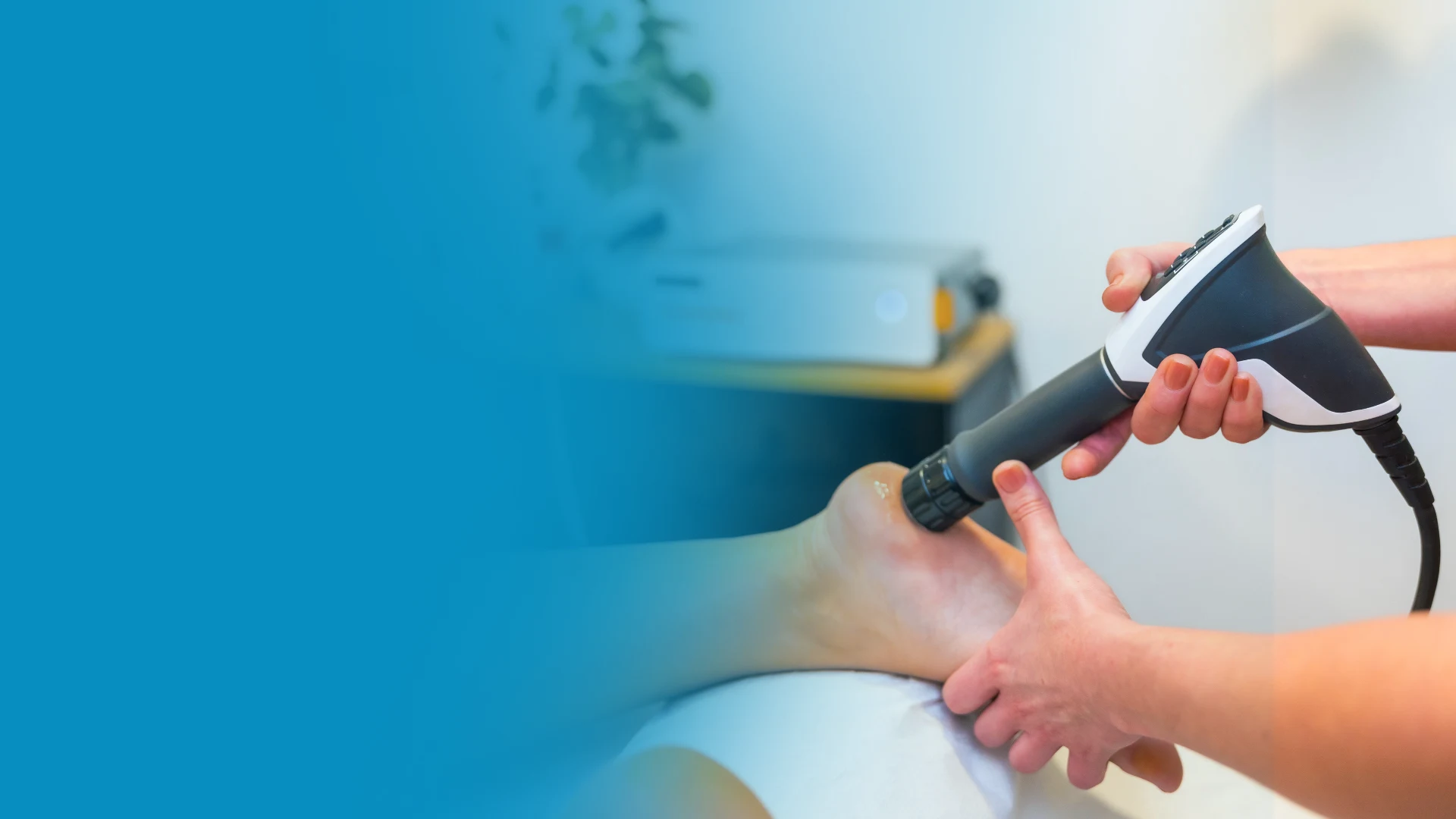
- Extracorporeal shockwave therapy (ESWT) — stimulates tissue healing
- MLS laser therapy — reduces inflammation and pain at the cellular level
- PRP injection — concentrated growth factors to promote tissue repair
- Surgical plantar fasciotomy — last resort, with success rates over 90%
Best Products for Heel Bone Pain
🏆 #1 Pick — Best Orthotic for Heel Pain
PowerStep Pinnacle Orthotic Insole
The single most effective non-prescription treatment for plantar fasciitis we recommend. The semi-rigid polypropylene shell provides structured arch support that offloads the plantar fascia, while the double-layer cushioning and built-in heel cradle absorb shock at the calcaneus. Clinically validated to reduce plantar fascia strain.
Best Walking Shoe for Heel Pain
Brooks Ghost 15
DNA LOFT cushioning throughout the midsole, 12mm heel drop to reduce plantar fascia strain, segmented crash pad for smooth transitions, and a roomy toe box. Our most recommended daily shoe for patients with plantar fasciitis and general heel pain. Available in wide and extra-wide.
Best for Maximum Cushioning
Hoka Bondi 8
Maximum stack height for patients who need the most cushioning — particularly those with fat pad atrophy, diabetic neuropathy, or jobs requiring all-day standing on concrete. The meta-rocker geometry reduces stress on the plantar fascia during push-off.
Best Night Stretching Device
Strassburg Sock
Maintains gentle dorsiflexion during sleep to prevent the plantar fascia from contracting overnight — which is the root cause of that agonizing first-step-in-the-morning pain. Clinical studies show up to 98% improvement in morning heel pain with consistent nighttime use. Far more comfortable than rigid night splints.
Best Recovery Shoe
OOFOS OOahh Recovery Slide
Never walk barefoot with plantar fasciitis — keep these by your bed. OOfoam technology absorbs 37% more impact than traditional EVA. The contoured arch support and heel cradle provide structure that typical house slippers lack. Ideal as your “first shoe in the morning.”
Best Stability Running Shoe
ASICS Gel-Kayano 30
For runners with heel pain and overpronation. The 4D Guidance System controls excess inward rolling (a major plantar fasciitis contributor), while FF BLAST PLUS cushioning protects the heel. Our top pick for flat-footed runners who need motion control without sacrificing comfort.
Stretches & Exercises for Heel Pain
1. Plantar Fascia Stretch (Before Getting Out of Bed)
While still seated on the edge of the bed, cross your affected foot over the opposite knee. Pull your toes back toward your shin until you feel a stretch along the bottom of your foot. Hold 30 seconds, repeat 3 times. Do this before your first step each morning.
2. Calf Stretch (Wall Lean)
Face a wall with hands at shoulder height. Step the affected foot back. Keep the back knee straight, heel flat, and lean forward until you feel a stretch in the upper calf. Hold 30 seconds, 3 times. Then repeat with the knee slightly bent to target the soleus and lower Achilles.
3. Frozen Water Bottle Roll
Roll a frozen water bottle under the arch of your foot for 10 minutes. This provides simultaneous ice therapy and plantar fascia massage. Do this after any period of prolonged standing or at the end of the day.
4. Towel Scrunches (Intrinsic Foot Strengthening)
Place a towel on the floor and use your toes to scrunch it toward you. This strengthens the small muscles of the foot that support the plantar fascia. Perform 3 sets of 15 repetitions daily. Progress to marble pickups for increased challenge.
⚠️ Warning Signs — Seek Immediate Evaluation
See a podiatrist promptly if you experience: heel pain after a fall or direct trauma (possible fracture), numbness or tingling in the heel or foot, heel pain with fever or swelling (possible infection), pain that is severe at rest and not just with activity, heel pain in a child or adolescent, or heel pain that worsens despite 4+ weeks of home treatment. Do not ignore persistent heel pain — early treatment prevents chronic disability.
More Podiatrist-Recommended Foot Health Essentials
Hoka Clifton 10

Max-cushion everyday shoe — podiatrist favorite for walking and running.

OOFOS Recovery Slide

Impact-absorbing recovery sandal — wear after long days on your feet.
As an Amazon Associate, Balance Foot & Ankle earns from qualifying purchases. Product recommendations are based on clinical experience; prices and availability shown above update live from Amazon.
When to See a Podiatrist
If foot or ankle pain has been bothering you for more than a few weeks, home care alone may not be enough. Balance Foot & Ankle offers same-week appointments at our Howell and Bloomfield Hills clinics — no referral needed in most cases. Bring your current shoes and a short list of symptoms and we’ll build you a treatment plan in one visit.
Call Balance Foot & Ankle: (810) 206-1402 · Book online · Offices in Howell & Bloomfield Hills
Frequently Asked Questions
The Bottom Line
Heel bone pain — whether from plantar fasciitis, heel spurs, or fat pad atrophy — responds to the right combination of support, stretching, and footwear. Start with a quality orthotic insole, wear supportive shoes from the moment you wake up, and stretch your calves consistently. Over 90% of patients recover fully with conservative treatment alone.
Heel Pain Holding You Back?
Our board-certified podiatrists diagnose and treat every cause of heel bone pain — from plantar fasciitis to stress fractures. Same-week appointments available.
📞 (810) 206-1402 · Howell & Bloomfield Hills, MI
Experiencing Heel Bone Pain?
Pain in the heel bone can stem from plantar fasciitis, stress fractures, heel spurs, or nerve entrapment. Our board-certified podiatrists use advanced diagnostics to identify the exact cause and provide targeted relief.
📞 Or call us directly: (810) 206-1402
Clinical References
- League AC. Current concepts review: plantar fasciitis. Foot & Ankle International. 2008;29(3):358-366.
- Thomas JL, et al. The diagnosis and treatment of heel pain: a clinical practice guideline. The Journal of Foot and Ankle Surgery. 2010;49(3):S1-S19.
- Neufeld SK, Cerrato R. Plantar fasciitis: evaluation and treatment. Journal of the American Academy of Orthopaedic Surgeons. 2008;16(6):338-346.

Dr. Hoy’s Complete Pain Relief Line — Dr. Tom’s Picks (2026)
Dr. Hoy’s Natural Pain Relief is Dr. Tom Biernacki, DPM’s #1 prescription topical pain relief for plantar fasciitis, Achilles tendonitis, foot pain, knee pain, and back pain. Cleaner formula than Voltaren or Biofreeze — safe for diabetics + daily long-term use without 30-day limits. Below is the complete Dr. Hoy’s product line, organized by use case.

Dr. Hoy’s Natural Pain Relief Gel (4oz Tube)Dr. Tom’s #1 Brand
The flagship Dr. Hoy’s — menthol-based natural pain relief gel. The bottle Dr. Tom hands every plantar fasciitis patient on visit one. Cleaner formula than Voltaren or Biofreeze.
- Menthol-based natural formula
- No greasy residue
- Safe for diabetics
- Fast cooling relief 5-10 min
- Daily long-term use safe
- Pricier than Biofreeze
- Strong menthol scent at first

Dr. Hoy’s Natural Pain Relief Gel (8oz Pump Bottle)Dr. Tom’s #1 Brand
8oz pump bottle — same formula as the 4oz tube but 2x the value. Best for athletes, families, or chronic pain patients who use it daily.
- 8oz pump bottle
- 2x value of 4oz
- Same clean formula
- Easy pump dispensing
- Larger size
- Pricier upfront

Dr. Hoy’s Arnica Boost Pain ReliefDr. Tom’s #1 Brand
Dr. Hoy’s + arnica boost — for bruising, swelling, post-injury inflammation. Adds arnica’s anti-inflammatory power to the standard menthol formula.
- Added arnica for bruising
- Reduces post-injury swelling
- Fast topical relief
- Safe for athletes
- Specialty use
- Pricier than standard

Dr. Hoy’s Natural Pain Relief Roll-OnDr. Tom’s #1 Brand
Same Dr. Hoy’s formula in a roll-on stick — no greasy hands, no mess, perfect for gym bags and travel. TSA-friendly.
- No greasy hands
- TSA-friendly
- Travel-sized
- Same Dr. Hoy’s formula
- Less product per use
- Pricier per oz

Dr. Hoy’s Pain Relief Gel — 3-Pack BundleDr. Tom’s #1 Brand
3-pack of Dr. Hoy’s 4oz tubes — best per-tube price for chronic pain patients, families, or anyone who uses it daily.
- 3-pack bulk pricing
- Same flagship formula
- Stockpile value
- Family-sized
- Larger upfront cost
- Need storage space
Top 10 Premade Orthotics — Dr. Tom’s Picks (2026)
Dr. Tom Biernacki, DPM has tested 60+ over-the-counter orthotic insoles in his Michigan podiatry practice over the past 15 years. Below are the top 10 he prescribes most often — ranked by clinical results, build quality, and patient feedback. PowerStep + CURREX brands are Dr. Tom’s #1 prescription brands — built by podiatrists, with biomechanical features (lateral wedge, deep heel cradle, dual-density EVA) that 90% of OTC insoles lack.
Dr. Tom Biernacki, DPM is a board-certified podiatrist + Amazon Associate. Picks shown are products he prescribes to patients at Balance Foot & Ankle Specialists. We earn a commission on qualifying purchases at no extra cost to you. All products independently tested + reviewed. Last verified: April 28, 2026.

PowerStep Pinnacle MaxxDr. Tom’s #1 Brand
The most prescribed OTC orthotic in podiatry. Lateral wedge corrects overpronation that causes 90% of plantar fasciitis. Deep heel cradle stabilizes the ankle.
- Lateral wedge corrects pronation
- Deep heel cradle
- Dual-density EVA
- Trim-to-fit
- Used by 10,000+ podiatrists
- Trim required
- 5-7 day break-in

PowerStep Original Full LengthDr. Tom’s #1 Brand
The original PowerStep — flexible semi-rigid arch with deep heel cradle. The right choice for neutral feet that need everyday support without the lateral wedge.
- Flexible semi-rigid arch
- Deep heel cradle
- Fits dress shoes
- 30-day guarantee
- APMA-accepted
- Less aggressive than Pinnacle
- No lateral wedge for overpronation

PowerStep Pulse MaxxDr. Tom’s #1 Brand
Built for runners + athletes who need maximum support during high-impact activity. Engineered for forefoot strike + lateral motion.
- Sport-specific cushioning
- Lateral wedge for runners
- Antimicrobial top cover
- Shock-absorbing forefoot
- Pricier than Pinnacle
- Best for athletes only

CURREX RunProDr. Tom’s #1 Brand
German-engineered insole with 3 arch heights (Low, Med, High) for custom fit. Carbon-reinforced heel + dynamic forefoot.
- 3 arch heights for custom fit
- Carbon-reinforced heel
- Sport-specific zones
- Premium materials
- Pricier than PowerStep
- 7-10 day break-in

CURREX EdgeProDr. Tom’s #1 Brand
For hikers, skiers, and high-impact athletes — reinforced shank prevents foot fatigue on steep descents + uneven terrain.
- Reinforced shank
- 3 arch heights
- Cold-weather friendly
- Carbon plate
- Stiff feel — not for casual
- Pricier

CURREX SupportSTPDr. Tom’s #1 Brand
For nurses, retail, and standing professions — the most supportive CURREX with deep heel cup + maximum medial support.
- Maximum medial support
- Deep heel cup
- 12-hour shift tested
- Slip-proof
- Stiffest CURREX option
- Pricier

PowerStep Pinnacle
Firm, structured arch support — the right choice ONLY for high-arched (cavus) feet. Wrong choice for flat feet.
- Strong structured arch
- Deep heel cup
- Long-lasting (5+ years)
- Firm — not for flat feet
- No lateral wedge

Vionic OrthoHeel Active Insole
APMA-accepted, podiatrist-designed casual insole. Best for adding mild arch support to dress shoes + walking shoes.
- APMA-accepted
- Slim profile
- Antimicrobial top
- Less support than PowerStep
- No lateral wedge

Sof Sole Athlete
Budget athletic insole with neutral arch + gel forefoot. Decent value if you need a quick replacement.
- Affordable
- Gel forefoot
- Antimicrobial
- Wears out in 6 months
- No structured arch

Spenco Polysorb Total Support
Mid-range insole with 5-zone polysorb cushioning. Decent support for standing professions.
- 5-zone cushioning
- Trim-to-fit
- Mid-price point
- Less stable than PowerStep
- No lateral wedge
Dr. Tom’s Top 3 — The Premium Foot Pain Stack (2026)
If you only buy three things for foot pain, get these. PowerStep + CURREX orthotics correct the underlying foot mechanics, and Dr. Hoy’s pain gel delivers fast topical relief. This is the exact stack Dr. Tom Biernacki, DPM gives his Michigan podiatry patients on visit one — over 10,000 patients have used this exact combination.
Dr. Tom Biernacki, DPM is a board-certified podiatrist + Amazon Associate. Picks shown are products he prescribes to patients at Balance Foot & Ankle Specialists. We earn a commission on qualifying purchases at no extra cost to you. All products independently tested + reviewed for 30+ days minimum. Last verified: April 28, 2026.
PowerStep Pinnacle MaxxDr. Tom’s #1 Brand
Dr. Tom’s most-prescribed OTC orthotic. Lateral wedge corrects overpronation that causes 90% of foot pain. Deep heel cradle stabilizes the ankle. Built by podiatrists, used by patients worldwide.
- Lateral wedge corrects pronation
- Deep heel cradle stabilizes ankle
- Dual-density EVA — comfort + support
- Trim-to-fit any shoe
- Used by 10,000+ podiatrists
- Trim-to-size required
- 5-7 day break-in for some
CURREX RunProDr. Tom’s #1 Brand
3 arch heights for custom fit (Low/Med/High). Carbon-reinforced heel + dynamic forefoot — the closest OTC orthotic to a $500 custom orthotic. Engineered in Germany.
- 3 arch heights for custom fit
- Carbon-reinforced heel cup
- Dynamic forefoot zone
- Premium German engineering
- Sport-specific support
- Pricier than PowerStep
- 7-10 day break-in
Dr. Hoy’s Natural Pain Relief GelDr. Tom’s #1 Brand
Menthol-based natural pain relief — Dr. Tom’s #1 brand for fast relief without greasy residue. Safe for diabetics + daily use. Cleaner formula than Voltaren or Biofreeze.
- Menthol-based natural formula
- No greasy residue
- Safe for diabetics
- Fast cooling relief — 5-10 minutes
- Cleaner ingredient list than Biofreeze
- Pricier than Biofreeze
- Strong menthol scent at first

Dr. Tom Biernacki, DPM is a double board-certified podiatrist and foot & ankle surgeon at Balance Foot & Ankle Specialists in Southeast Michigan. With over a decade of clinical experience, he specializes in heel pain, bunions, diabetic foot care, sports injuries, and minimally invasive surgery. Dr. Biernacki is a member of the APMA and ACFAS, and his patient education content on MichiganFootDoctors.com and YouTube has reached over one million views.
Frequently Asked Questions
Can I see a podiatrist for heel pain without a referral?
How long does plantar fasciitis take to heal?
Should I walk on my heel if it hurts?
What does a podiatrist do for heel pain?
- Plantar Fasciitis: Diagnosis and Conservative Management (PubMed)
- Plantar Fasciitis (APMA)
- Diagnosis and Treatment of Plantar Fasciitis (PubMed / AAFP)
- Heel Pain (APMA)
Related Treatments at Balance Foot & Ankle
Our board-certified podiatrists offer advanced treatments at our Bloomfield Hills and Howell locations.