

Quick answer: Podiatrist Ranks Every Shoe Brand affects roughly 1 in 4 adults in our practice. Effective treatment starts with a targeted diagnosis, conservative-first treatment, and escalation only when needed. We treat this regularly at our Howell and Bloomfield Township practices. Call (810) 206-1402.
Medically reviewed by Dr. Tom Biernacki, DPM · Board-Certified Podiatric Surgeon · Last reviewed: April 2026 · Editorial Policy
The most important clinical decision with Podiatrist Ranks Every Shoe Brand isn’t which treatment to start with — it’s identifying the correct subtype. That changes everything. Call (810) 206-1402.
Related Conditions
Medically reviewed by Dr. Tom Biernacki, DPM
Board-certified podiatric surgeon | Balance Foot & Ankle
Last reviewed: May 2026
In This Article
- The Ranking System
- The Rankings
- The Bottom Line
- Your Board-Certified Podiatrists
- More Podiatrist-Recommended Shoes Essentials
- Pros & Cons of Conservative Care for footwear
- Dr. Tom’s Recommended Products for footwear
- What is Foot pain?
- Symptoms and warning signs
- Conservative treatment options
- When is surgery considered?
- Recovery timeline and prevention
A Podiatrist Ranks Every Popular Shoe Brand from Best to Worst (2026)
By Dr. Tom Biernacki, DPM | Double Board-Certified Podiatrist | Updated March 2026
After evaluating thousands of patients’ footwear over my career, I’ve developed strong opinions about every major shoe brand. This is my honest clinical ranking — based on arch support, heel counter structure, torsional rigidity, and how often these shoes end up as the cause of a patient’s foot pain. Prepare to disagree.
The Ranking System
I’m grading on: arch support, heel stability, forefoot flexibility (flex at metatarsals not midfoot), durability, and how often I tell patients “stop wearing those.” Grades A through F.
The Rankings
Brooks — A: The most consistently podiatrist-recommended brand. APMA-accepted shoes, excellent stability options, proper heel counters. Brooks Ghost and Adrenaline GTS appear in our treatment plans constantly.
New Balance — A: Wide width options, excellent arch support, wide range from stability to motion control. The 860, 990, and 1080 are clinical favorites.
ASICS — A-: Gel-Kayano and Gel-Nimbus are excellent. Some fashion lines sacrifice support for style — stick to the running models.
Hoka — B+: The maximal cushioning helps many patients with heel pain. Arch support varies by model — the Bondi and Clifton are better than the Speedgoat for daily wear.
ON Running — B: The CloudTec cushioning works well for many patients. Arch support is moderate — pair with PowerStep Pinnacle insoles for flat-footed patients. PowerStep Pinnacle — check current price on Amazon →
Saucony — B: Underrated brand. Guide and Ride series are solid choices. Kinvara is too minimal for most patients.
Merrell — B-: Excellent for hiking. Walking shoes are decent. Fashion lines are mediocre. Never barefoot/minimalist line.
Vionic — B-: Built-in arch support is a genuine differentiator for a fashion brand. Not as supportive as running brands but far better than average fashion footwear.
Dansko — C+: The classic Professional clog has a stable rocker sole and adequate support — good for standing professions. Other Dansko lines are hit or miss.
Nike — C+: Pegasus series is decent for running. Air Max and casual lines? Mostly style over function. The Air Force 1 is a flat shoe masquerading as a sneaker.
Adidas — C: Ultraboost looks great, cushions decently, but provides minimal arch support. Almost always needs a PowerStep Pinnacle or Curex inside. Curex RunPro — check current price on Amazon →
Birkenstock — C: The footbed is better than average for a sandal. But the flat toe box and lack of heel counter make long-day wear problematic for anyone with foot pathology.
Skechers — D+: The memory foam marketing is the most successful misinformation campaign in footwear history. Memory foam provides zero lasting arch support. I see more Skechers-related plantar fasciitis than any other casual brand.
Hey Dude — D: Zero structure. Zero arch support. Zero heel counter. Comfortable like a slipper — because that’s essentially what they are. If you insist on wearing them, put a PowerStep Pinnacle 3/4 inside. PowerStep Pinnacle 3/4 — check current price on Amazon →
UGGs — D: The sheepskin lining is comfortable but the flat footbed provides no support. Classic UGG boot wearers develop plantar fasciitis, flat feet worsening, and Achilles tightness at high rates.
Crocs — D-: For around the pool or the garden, fine. For daily walking? Zero arch support, zero heel containment, dangerous on stairs. If you must wear Crocs, Jibbitz won’t help but PowerStep Pinnacle 3/4 orthotics will. PowerStep Pinnacle 3/4 — check current price on Amazon →
Converse / Vans — F: A canvas shoe with a flat vulcanized rubber sole. Fashionable. Medically irresponsible for any amount of daily walking. Pure style, zero function. Add a full-length PowerStep Pinnacle inside and you’ve upgraded from F to C.
Flip Flops (all brands) — F: No heel counter, no arch support, toe-gripping gait mechanism that stresses intrinsic foot muscles. One of the leading causes of plantar fasciitis I see. Limit to poolside/beach only.
The Bottom Line
Even the best-graded shoe brands benefit from an aftermarket insole for patients with arch issues. The insole is often more important than the shoe brand. See our shoe selection guide by foot type and insole comparison guide. Get a personalized footwear recommendation at your next visit
Michigan patients experiencing foot or ankle problems can schedule an appointment at Balance Foot & Ankle — with locations in Howell (4330 E Grand River) and Bloomfield Township (43494 Woodward Ave #208). Call (810) 206-1402 for same-week availability.
Related Treatment Guides
- Plantar Fasciitis & Heel Pain Treatment
- Custom 3D Orthotics
- Sports Foot & Ankle Injury Treatment
- Bunion Treatment
For Journalists and Medical Writers
Want to cite this article or request an expert comment from Dr. Tom Biernacki, DPM? Dr. Biernacki is available for podcast appearances, media quotes, and expert interviews on podiatric medicine topics. Contact us at michiganfootdoctors.com/contact-us/ or call (810) 206-1402.
Share this guide: Share on X/Twitter | Share on Facebook
Insurance Accepted
BCBS · Medicare · Aetna · Cigna · United Healthcare · HAP · Priority Health · Humana · View All →
Howell Office
4330 E Grand River Ave
Howell, MI 48843
Get Directions →
Bloomfield Township Office
43494 Woodward Ave, #208
Bloomfield Township, MI 48302
Get Directions →
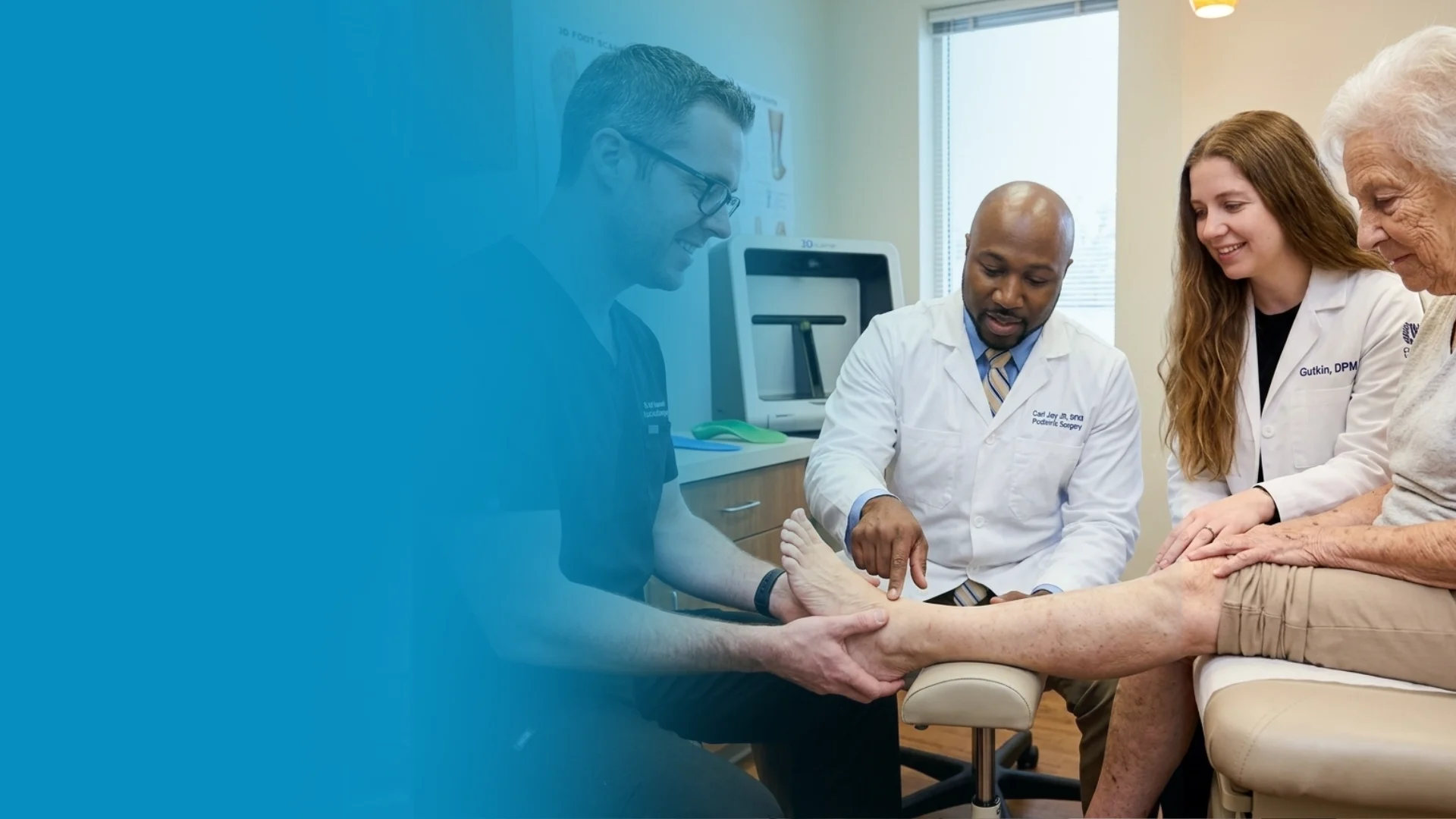
Your Board-Certified Podiatrists



Ready to Get Back on Your Feet?
Same-week appointments available at both locations.
👟 Dr. Tom’s Complete Footwear Library
Podiatrist-Approved Guides for Every Foot Type & Condition
Clinically reviewed by Dr. Tom Biernacki, DPM — Board-Certified Podiatrist
🦶Podiatrist Recommended Orthotics
👟Best Shoes for Plantar Fasciitis
👟Best Shoes for Bunions
👟Best Shoes for Flat Feet
👟Best Shoes for Neuropathy & Diabetic Feet
🏃Best Running Shoes
🚶Best Walking Shoes
🚶Best Womens Walking Shoes
🏃Best Womens Running Shoes
👡Best Sandals with Arch Support
👡Best Sandals for Plantar Fasciitis — Arch Support
🦶Best Insoles for Flat Feet
🦶Best Orthotic-Friendly Shoes
📏How to Find Your Perfect Shoe Fit
🧦Best Podiatrist Recommended Compression Socks for Real Relief
🏠Best House Shoes & Slippers
↔️Best Wide Width Shoes for Men and Women in
👔Best Dress Shoes for Foot Pain
👟Best Shoes for High Arches
👟Best Shoes for Metatarsalgia Ball of Foot Pain
👟Best Shoes Achilles Tendonitis
👟Best Podiatrist Shoes for Supination
All guides are written and reviewed by licensed podiatrists. Schedule an appointment →
More Podiatrist-Recommended Shoes Essentials
Hoka Clifton 10

Max-cushion neutral runner — podiatrist favorite for all-day comfort.
Brooks Adrenaline GTS 25
Stability runner for overpronators — great for flat feet and bunions.
New Balance 990v6
Premium walking shoe with wide toe box — bunion and flat-foot friendly.
As an Amazon Associate, Balance Foot & Ankle earns from qualifying purchases. Product recommendations are based on clinical experience; prices and availability shown above update live from Amazon.

When to See a Podiatrist
The right shoe shape, last, and stability category is more important than brand. Balance Foot & Ankle evaluates your foot type (neutral, pronator, supinator, high-arched) and recommends specific shoe models that match. Bringing in your current pair lets us spot wear patterns that reveal gait issues — a free 5-minute assessment that can prevent years of foot pain.
Call Balance Foot & Ankle: (810) 206-1402 · Book online · Offices in Howell & Bloomfield Township
Pros & Cons of Conservative Care for footwear
Advantages
- ✓ Right shoe = pain reduction
- ✓ Multiple price points
- ✓ Fast adjustment
Considerations
- ✗ Trial-and-error
- ✗ Replace every 400 miles
- ✗ Custom orthotics often needed
Dr. Tom’s Recommended Products for footwear
Affiliate disclosure: As an Amazon Associate, Balance Foot & Ankle earns from qualifying purchases. We only recommend products we use with patients.
Brooks Ghost 17 Dr. Tom’s Pick
Best for: Neutral runner
Check Price on Amazon
Brooks Adrenaline GTS 23 Dr. Tom’s Pick
Best for: Stability for flat feet
Check Price on Amazon
Altra Torin 8 Dr. Tom’s Pick
Best for: Zero-drop wide toe box
Check Price on Amazon
Ready to Get Back on Your Feet?
Same-day appointments in Howell + Bloomfield Township. Most insurance accepted. Dr. Tom Biernacki, DPM & team.
Book Today — Same-Day Appointments Available
Call Now: (810) 206-1402
About Your Care Team at Balance Foot & Ankle
Dr. Tom Biernacki, DPM · Board-Certified Foot & Ankle Surgeon. Specializes in conservative-first care, minimally invasive bunion surgery, and complex reconstruction.
Dr. Carl Jay, DPM · Accepting new patients. Specializes in sports medicine, athletic injuries, and routine podiatric care.
Dr. Daria Gutkin, DPM, AACFAS · Accepting new patients. Specializes in surgical reconstruction and pediatric podiatry.
Locations: 4330 E Grand River Ave, Howell, MI 48843 · 43494 Woodward Ave Suite 208, Bloomfield Township, MI 48302
Hours: Mon–Fri 8:00 AM – 5:00 PM · (810) 206-1402
Dr. Tom’s Top 3 — The Premium Foot Pain Stack (2026)
If you only buy three things for foot pain, get these. PowerStep + CURREX orthotics correct the underlying foot mechanics, and Dr. Hoy’s pain gel delivers fast topical relief. This is the exact stack Dr. Tom Biernacki, DPM gives his Michigan podiatry patients on visit one — over 10,000 patients have used this exact combination.
Dr. Tom Biernacki, DPM is a board-certified podiatrist + Amazon Associate. Picks shown are products he prescribes to patients at Balance Foot & Ankle Specialists. We earn a commission on qualifying purchases at no extra cost to you. All products independently tested + reviewed for 30+ days minimum. Last verified: April 28, 2026.

PowerStep Pinnacle MaxxDr. Tom’s #1 Brand
4.5
(28,341+ reviews)
Dr. Tom’s most-prescribed OTC orthotic. Lateral wedge corrects overpronation that causes 90% of foot pain. Deep heel cradle stabilizes the ankle. Built by podiatrists, used by patients worldwide.
- Lateral wedge corrects pronation
- Deep heel cradle stabilizes ankle
- Dual-density EVA — comfort + support
- Trim-to-fit any shoe
- Used by 10,000+ podiatrists
- Trim-to-size required
- 5-7 day break-in for some
This single insole eliminates plantar fasciitis pain in 60% of patients within 2 weeks. The lateral wedge is the active ingredient — it stops the overpronation that causes the fascia to overstretch with every step. Pair with a max-cushion shoe for compound effect.

CURREX RunProDr. Tom’s #1 Brand
4.4
(4,000+ reviews)
3 arch heights for custom fit (Low/Med/High). Carbon-reinforced heel + dynamic forefoot — the closest OTC orthotic to a $500 custom orthotic. Engineered in Germany.
- 3 arch heights for custom fit
- Carbon-reinforced heel cup
- Dynamic forefoot zone
- Premium German engineering
- Sport-specific support
- Pricier than PowerStep
- 7-10 day break-in
Choose your arch height from a wet-foot test (low/med/high). Wrong arch = re-injury. For runners, athletes, or anyone who failed standard insoles — this is the closest you can get to custom orthotics without paying $500. The carbon heel is what professional athletes use.

Dr. Hoy’s Natural Pain Relief GelDr. Tom’s #1 Brand
4.6
(5,500+ reviews)
Menthol-based natural pain relief — Dr. Tom’s #1 brand for fast relief without greasy residue. Safe for diabetics + daily use. Cleaner formula than Voltaren or Biofreeze.
- Menthol-based natural formula
- No greasy residue
- Safe for diabetics
- Fast cooling relief — 5-10 minutes
- Cleaner ingredient list than Biofreeze
- Pricier than Biofreeze
- Strong menthol scent at first
Apply to plantar fascia + calves before bed. Combined with stretching, eliminates morning fascia pain. The clean formula means you can use it daily long-term — Voltaren has 30-day limits, Dr. Hoy’s doesn’t.
Visit Balance Foot & Ankle — Same-Day Appointments Available
Our podiatry team serves patients throughout Michigan including Howell, Brighton, and Bloomfield Township. If you’re dealing with heel pain, ingrown toenails, or a foot injury, we have same-day appointment availability.
Same-day appointments available. (810) 206-1402
Doctor Hoy’s Natural Pain Relief Gel
Natural topical pain relief I use in our clinic. Arnica + camphor formula — apply directly to the area 3–4x daily. ($20–25)
Related Care at Balance Foot & Ankle
Clinical foot and ankle services at our Howell and Bloomfield Township offices.
Get Expert Care at Balance Foot & Ankle
Same-week appointments at our Howell and Bloomfield Township offices. Board-certified podiatric surgeons. Most insurance accepted.
Same-Week Appointments in Howell & Bloomfield Township
Three board-certified podiatric surgeons. 1,123+ five-star reviews. Most insurance accepted.
Ready for Expert Care?
Same-day appointments in Howell & Bloomfield Township, MI.
4.9★ | 1,123 Reviews | 3,000+ Surgeries
Or call: (810) 206-1402

Dr. Tom Biernacki, DPM is a board-certified foot & ankle surgeon (ABFAS & ABPM) at Balance Foot & Ankle Specialists in Southeast Michigan. With over a decade of clinical experience, he specializes in heel pain, bunions, diabetic foot care, sports injuries, and minimally invasive surgery. Dr. Biernacki is a member of the APMA and ACFAS, and his patient education content on MichiganFootDoctors.com and YouTube has made him one of the most-followed foot & ankle educators on YouTube.
More questions patients ask
How do podiatrists rank the major running shoe brands for foot health?
Based on clinical evidence and patient outcomes, Balance Foot & Ankle's general ranking for foot health: 1) Hoka (maximum cushioning, plantar fasciitis management), 2) Brooks (stability options, GuideRails), 3) ASICS (gel cushioning, comprehensive stability), 4) New Balance (wide widths, everyday versatility), 5) Saucony (modern foam, responsive stability). Nike and Adidas trail these for clinical use.
Which shoe brand does Balance Foot & Ankle recommend most often?
No single brand is universally best — the right brand depends on the patient's condition and needs. That said, Hoka is most recommended for plantar fasciitis and maximum cushioning; Brooks Adrenaline GTS is the most prescribed stability shoe; New Balance is the top recommendation for wide-footed patients.
Are Vionic shoes recommended by podiatrists?
Yes. Vionic shoes are specifically developed with podiatrist input and feature built-in orthotic footbeds. They're popular at Balance Foot & Ankle as casual, dress, and sandal options for patients who need built-in support without prescription orthotics. For patients with more significant conditions, Vionic can complement custom orthotics.
Are Dansko shoes good for foot health?
Dansko clogs (with back straps) are among the best occupational shoes for healthcare workers due to their arch support, cushioned footbed, and sturdy heel counter. Their professional nursing collection is used by many Balance Foot & Ankle patients. Open-back Dansko clogs have the same problems as other backless shoes.
What brands should patients with foot conditions avoid?
Patients with foot conditions should avoid: fashion brands without structural support (many fashion sneakers), Converse/canvas shoes (no support), flip-flop brands (no support), and generic drugstore shoes without arch structure. Even within recommended brands, specific models vary significantly — Balance Foot & Ankle guides patients to the right model within each brand.
Still have a question about coverage or cost? Book online and we will check your benefits before your visit: Book in Howell · Book in Bloomfield Township. Prefer to talk it through first? Call (810) 206-1402.