You are in the right place. Dr. Tom Biernacki, DPM, FACFAS — board-certified foot & ankle surgeon with 3,000+ surgeries — explains exactly what this foot or ankle issue means and what works. Call (810) 206-1402 for same-day appointment at Howell or Bloomfield Hills.
Medically reviewed by Dr. Tom Biernacki, DPM · Board-Certified Podiatric Surgeon · Last reviewed: April 2026 · Editorial Policy
The most important clinical decision with Posterior Tibial Tendon Dysfunction Stage Ii Reconstruction Fdb Transfer isn’t which treatment to start with — it’s identifying the correct subtype. That changes everything. Call (810) 206-1402.
Quick Answer
PTTD Stage II Reconstruction: FDL Transfer, Spring Ligament relates to tendon injury — typically caused by overuse or sudden strain. Most patients improve in 6-12 weeks with conservative care. Same-week appointments in Howell + Bloomfield Hills: (810) 206-1402.

Quick Answer
Most foot and ankle problems respond to conservative care — proper footwear, supportive inserts, activity modification, and targeted stretching — within 4-8 weeks. Persistent pain beyond that window, or any symptom that prevents walking, warrants a podiatric evaluation to rule out fracture, tendon tear, or systemic cause.
Medically reviewed by Dr. Tom Biernacki, DPM — Board-Certified Podiatric Surgeon — Balance Foot & Ankle, Howell & Bloomfield Hills, MI. Last updated April 2026.
Watch: Dr. Tom Biernacki, DPM
Medically Reviewed by Dr. Tom Biernacki, DPM — Board-Certified Podiatrist, Balance Foot & Ankle Specialists, Michigan. Last updated April 2026.
Stage II posterior tibial tendon dysfunction (PTTD) represents the most surgically complex stage of adult-acquired flatfoot deformity — the posterior tibial tendon has failed (degenerated or torn) but the hindfoot remains flexible and correctable. The standard of care for Stage II reconstruction combines three simultaneous procedures: flexor digitorum longus (FDL) tendon transfer, spring ligament repair, and medializing calcaneal osteotomy, with or without gastrocnemius recession.
Why the Posterior Tibial Tendon Fails
The posterior tibial tendon is the primary dynamic stabilizer of the medial longitudinal arch and the hindfoot inverter resisting eversion during midstance. Its watershed zone — the segment posterior and distal to the medial malleolus — is relatively avascular and subject to degenerative tendinosis under chronic eccentric load. Risk factors for accelerated failure include obesity, hypertension, diabetes, seronegative arthropathy, and corticosteroid injection. Early stage II presents with tenosynovitis and partial tearing; late stage II shows complete tendon substance degeneration with inability to perform a single-leg heel rise.
FDL Tendon Transfer Technique
The FDL is the preferred transfer tendon because it is synergistic with the posterior tibial tendon (both plantarflex and invert), it passes adjacent to the posterior tibial tendon in the same flexor retinaculum compartment, and sacrifice of the FDL produces minimal functional deficit (the flexor hallucis longus compensates for toe flexion). The FDL is harvested at the master knot of Henry on the plantar foot and transferred into a bone tunnel at the navicular tuberosity — the anatomic insertion of the failed posterior tibial tendon. Tenodesis tension is set with the foot in maximum inversion and plantarflexion.
Spring Ligament Repair
The superomedial and inferoplantar components of the spring ligament complex (calcaneonavicular ligament) are the primary static restraints to talonavicular sag. In Stage II PTTD, the spring ligament is invariably attenuated or torn — FDL transfer alone without spring ligament reconstruction has higher deformity recurrence rates. Direct repair is possible when ligament tissue quality is adequate; for attenuated tissue, augmentation with gracilis or plantaris allograft provides structural reinforcement. Spring ligament repair recreates the talar head “socket” that prevents medial column collapse.
Medializing Calcaneal Osteotomy
The calcaneus in Stage II flatfoot is in valgus (everted) — shifting the heel laterally relative to the ankle. Medializing calcaneal osteotomy (MCO) cuts the calcaneal body obliquely and slides the tuberosity medially 8–10 mm, restoring a neutral or slight varus heel alignment. MCO dramatically reduces the mechanical demand on the FDL transfer and spring ligament repair by correcting the valgus vector. It is fixed with one or two cannulated screws. When forefoot supination (first ray elevation) persists after hindfoot correction, a dorsiflexion osteotomy of the first metatarsal or medial column lengthening through the medial cuneiform is added.
Rehabilitation and Outcomes
Stage II reconstruction requires non-weight-bearing for 6–8 weeks followed by progressive weight-bearing in a boot, then custom orthotics, and physical therapy targeting posterior tibial muscle activation. Return to normal shoe wear typically occurs at 4–6 months; return to sport at 9–12 months. Well-selected Stage II patients achieve good-to-excellent outcomes in over 85% of cases — a plantigrade flexible foot with sustainable arch height and improved single-leg heel rise function.
📧 Get Dr. Tom’s Free Lab Test Guide
Discover the 5 lab tests every person over 35 should ask their doctor about — explained in plain English by a board-certified physician.
Adult Flatfoot Reconstruction — Balance Foot & Ankle
Dr. Biernacki performs complete Stage II flatfoot reconstruction. Serving Bloomfield Hills, Howell, and all of Michigan.
📞 (810) 206-1402 | Book Online →
📍 Located in Michigan?
Our board-certified podiatrists treat this condition at two convenient locations. Same-day appointments often available.
More Podiatrist-Recommended Foot Health Essentials
Hoka Clifton 10


![Heel Bursitis & Achilles Tendon Bursitis [Best HOME Treatment!]](https://www.michiganfootdoctors.com/wp-content/cache/flying-press/f2850da852ba9539b6bf4f72ae5062fe.jpg)
Watch: Heel Bursitis & Achilles Tendon Bursitis [Best HOME Treatment!] — MichiganFootDoctors YouTube
Max-cushion everyday shoe — podiatrist favorite for walking and running.

OOFOS Recovery Slide

Impact-absorbing recovery sandal — wear after long days on your feet.
As an Amazon Associate, Balance Foot & Ankle earns from qualifying purchases. Product recommendations are based on clinical experience; prices and availability shown above update live from Amazon.
When to See a Podiatrist
If foot or ankle pain has been bothering you for more than a few weeks, home care alone may not be enough. Balance Foot & Ankle offers same-week appointments at our Howell and Bloomfield Hills clinics — no referral needed in most cases. Bring your current shoes and a short list of symptoms and we’ll build you a treatment plan in one visit.
Call Balance Foot & Ankle: (810) 206-1402 · Book online · Offices in Howell & Bloomfield Hills
Frequently Asked Questions
Do flat feet always cause pain?
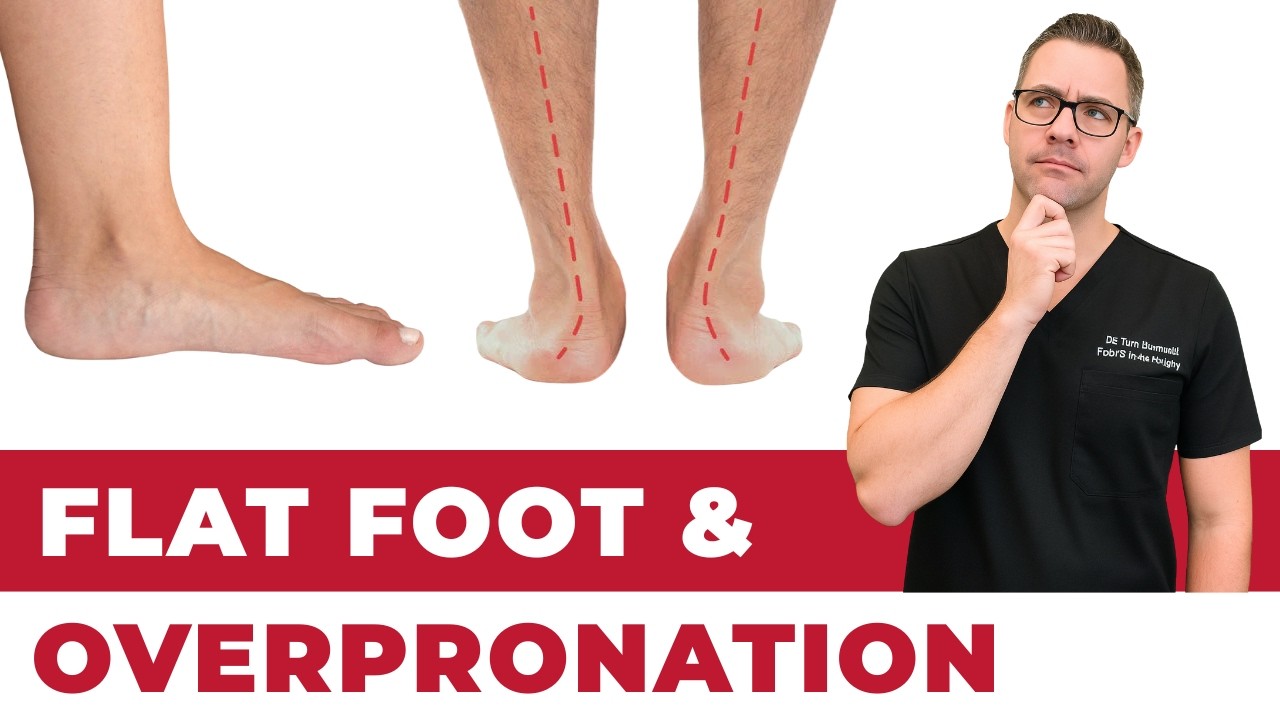
No — many people with flat feet have no pain at all. Pain develops when flat feet lead to excessive pronation that stresses tendons, ligaments, and joints. Risk factors for developing pain include obesity, prolonged standing, high-impact activities, and aging.
Can flat feet be corrected?
In children, arch development can sometimes be supported. In adults, the arch cannot be rebuilt without surgery, but custom orthotics, physical therapy, and appropriate footwear can effectively control symptoms and prevent progression.
What is the treatment for adult flatfoot deformity?
Early stages respond well to custom orthotics, physical therapy, and supportive footwear. Advanced cases with Achilles tightness may benefit from stretching and bracing. Severe cases — especially stage III-IV posterior tibial tendon dysfunction — may require reconstruction surgery.
Need Treatment at Balance Foot & Ankle?
Dr. Tom Biernacki, Dr. Carl Jay, and Dr. Daria Gutkin see patients at our Howell and Bloomfield Hills offices.
Book Online or call (810) 206-1402
Insurance Accepted
BCBS · Medicare · Aetna · Cigna · United Healthcare · HAP · Priority Health · Humana · View All →
Howell Office
4330 E Grand River Ave
Howell, MI 48843
Get Directions →
Bloomfield Hills Office
43494 Woodward Ave, #208
Bloomfield Hills, MI 48302
Get Directions →
Your Board-Certified Podiatrists



Ready to Get Back on Your Feet?
Same-week appointments available at both locations.
Book Your AppointmentMost Common Mistake We See
The most common mistake we see is: Waiting too long before seeking care. Fix: any foot pain lasting more than 4 weeks, or any sudden severe symptom, deserves a professional evaluation rather than more rest.
Warning Signs That Need Same-Day Care
Seek immediate evaluation at Balance Foot & Ankle if you experience any of the following:
- Unable to bear weight
- Severe swelling with skin colour change
- Fever with foot pain (possible infection)
- Diabetes plus any new foot symptom
Call (810) 206-1402 — same-day and next-day appointments at our Howell and Bloomfield Hills offices.
More Posterior Tibial Tendon (PTTD) Guides from Dr. Tom
- PTTD Stage II: Medializing Calcaneal Osteotomy, Flexor Digitorum Longus Transfer, and Spring Ligament Repair
- FDL Tendon Transfer for Adult Flatfoot: Stage II PTTD Reconstruction Technique and Outcomes
- Posterior Tibial Tendon Dysfunction (PTTD): Staging, Orthotic Management, and Reconstructive Surgery
Need treatment? Learn about in-office posterior tibial tendon (pttd) treatment at Balance Foot & Ankle, or call (810) 206-1402 for same-day appointments.