

Medically reviewed by Dr. Tom Biernacki, DPM · Board-Certified Podiatric Surgeon · Last reviewed: April 2026 · Editorial Policy
Quick Answer
Most foot and ankle problems respond to conservative care — proper footwear, supportive inserts, activity modification, and targeted stretching — within 4-8 weeks. Persistent pain beyond that window, or any symptom that prevents walking, warrants a podiatric evaluation to rule out fracture, tendon tear, or systemic cause.
Medically reviewed by Dr. Tom Biernacki, DPM — Board-Certified Podiatric Surgeon — Balance Foot & Ankle, Howell & Bloomfield Township, MI. Last updated April 2026.
Watch: Dr. Tom Biernacki, DPM
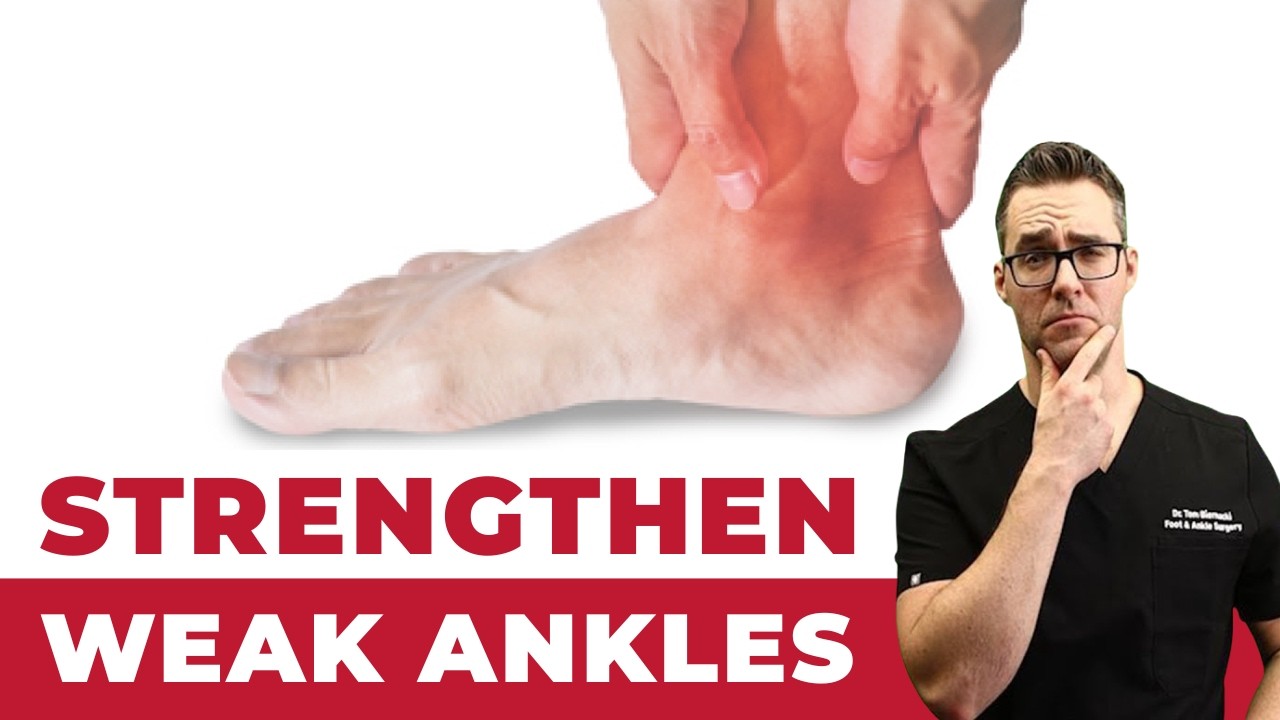
Medically Reviewed by Dr. Tom Biernacki, DPM — Board-Certified Podiatrist, Balance Foot & Ankle Specialists, Michigan. Last updated April 2026.
Chronic lateral ankle instability (CLAI) affects up to 40% of patients following acute lateral ankle sprains and is defined by recurrent giving-way episodes, functional instability, and failure of 3–6 months of conservative management including rehabilitation. Surgical management centers on anatomic ligament repair (Broström-Gould procedure) or non-anatomic ligament reconstruction for patients with tissue insufficiency or hyperlaxity syndromes.
Anatomy of the Lateral Ligament Complex
The lateral ankle stabilizers consist of three ligaments: the anterior talofibular ligament (ATFL), the calcaneofibular ligament (CFL), and the posterior talofibular ligament (PTFL). The ATFL — the weakest and most frequently injured — restrains anterior talar translation and internal rotation at low plantarflexion angles. The CFL restrains subtalar inversion across all ankle positions and is the primary restraint to hindfoot varus. Isolated ATFL insufficiency produces anterolateral instability; combined ATFL + CFL insufficiency produces both ankle and subtalar instability — the latter being critically important to address for lasting surgical success.
Broström-Gould Anatomic Repair
The modified Broström-Gould procedure is the gold standard surgical treatment for CLAI in patients with adequate ligament tissue. The attenuated ATFL is imbricated (shortened and reattached) to the fibular periosteum with suture anchors, restoring anatomic length and tension. Gould’s modification reinforces the repair with the inferior extensor retinaculum — a local tissue augment that adds constraint and addresses any subtalar component. The Broström-Gould preserves normal ankle kinematics, requires no tendon harvest, and allows predictable rehabilitation. Success rates exceed 85–90% at long-term follow-up in properly selected patients.
When Reconstruction Is Required
Patients not suitable for direct repair include those with generalized ligamentous laxity (Beighton score ≥ 4), Ehlers-Danlos syndrome, failed prior Broström repair, severely attenuated ligament tissue, or body habitus generating excessive ligament stress. Non-anatomic reconstruction historically used the peroneus brevis tendon (Chrisman-Snook, Evans procedures) — sacrificing a functional tendon to create a ligament substitute. Anatomic reconstruction with gracilis or plantaris tendon graft through fibular bone tunnels to anatomic attachment sites (Anatomic Reconstruction of Lateral Ankle Ligaments — ARLL) better restores normal biomechanics than non-anatomic procedures and is preferred when reconstruction is necessary.
Arthroscopic Augmentation
Arthroscopic-assisted Broström repair with internal brace augmentation (InternalBrace, Arthrex) has gained popularity — the InternalBrace provides immediate load-sharing with the repaired ligament during the healing phase, allowing earlier return to weight-bearing and activity. Combined with arthroscopic treatment of intra-articular pathology (anterolateral impingement, osteochondral lesions, loose bodies) present in up to 95% of CLAI patients, the all-arthroscopic approach minimizes soft tissue disruption while addressing both the instability and associated intra-articular pathology.
Rehabilitation Protocol
Post-Broström rehabilitation begins with 2 weeks non-weight-bearing in a splint, followed by progressive weight-bearing in a boot at 4–6 weeks, and formal physical therapy targeting proprioception and peroneal strengthening at 6–8 weeks. Athletes typically return to sport at 4–6 months with a functional brace. InternalBrace-augmented repairs allow accelerated protocols with full weight-bearing at 2–3 weeks and return to running at 8–10 weeks.
Ankle Instability Treatment — Balance Foot & Ankle
Dr. Biernacki treats chronic ankle instability with Broström-Gould repair and reconstruction. Serving Bloomfield Township, Howell, and all of Michigan.
📞 (810) 206-1402 | Book Online →
📍 Located in Michigan?
Our board-certified podiatrists treat this condition at two convenient locations. Most new patients are seen the same week.
More Podiatrist-Recommended Foot Health Essentials
Hoka Clifton 10


Max-cushion everyday shoe — podiatrist favorite for walking and running.

OOFOS Recovery Slide

Impact-absorbing recovery sandal — wear after long days on your feet.
As an Amazon Associate, Balance Foot & Ankle earns from qualifying purchases. Product recommendations are based on clinical experience; prices and availability shown above update live from Amazon.
When to See a Podiatrist
If foot or ankle pain has been bothering you for more than a few weeks, home care alone may not be enough. Balance Foot & Ankle offers same-week appointments at our Howell and Bloomfield Township clinics — no referral needed in most cases. Bring your current shoes and a short list of symptoms and we’ll build you a treatment plan in one visit.
Call Balance Foot & Ankle: (810) 206-1402 · Book online · Offices in Howell & Bloomfield Township
Frequently Asked Questions
How do I know if I sprained or broke my ankle?
Both cause pain, swelling, and difficulty walking. Key differences: fractures often cause more immediate severe pain, tenderness directly over bone (not just ligament), and inability to bear any weight. X-rays and the Ottawa Ankle Rules help determine if imaging is needed.
How long does an ankle sprain take to heal?
Grade I (mild): 1–2 weeks. Grade II (moderate): 3–6 weeks. Grade III (complete tear): 2–3 months. Chronic instability from improperly treated sprains can persist and may require surgery.
What is the best treatment for a sprained ankle?
RICE protocol (Rest, Ice, Compression, Elevation) for the first 48–72 hours, followed by protected weight-bearing as tolerated. Physical therapy rehabilitation is critical for high-grade sprains to restore strength and proprioception and prevent chronic instability.
Need Treatment at Balance Foot & Ankle?
Dr. Tom Biernacki, Dr. Carl Jay, and Dr. Daria Gutkin see patients at our Howell and Bloomfield Township offices.
Book Online or call (810) 206-1402

Insurance Accepted
BCBS · Medicare · Aetna · Cigna · United Healthcare · HAP · Priority Health · Humana · View All →
Howell Office
4330 E Grand River Ave
Howell, MI 48843
Get Directions →
Bloomfield Township Office
43494 Woodward Ave, #208
Bloomfield Township, MI 48302
Get Directions →
Your Board-Certified Podiatrists



Ready to Get Back on Your Feet?
Same-week appointments available at both locations.
Book Your AppointmentMost Common Mistake We See
The most common mistake we see is: Waiting too long before seeking care. Fix: any foot pain lasting more than 4 weeks, or any sudden severe symptom, deserves a professional evaluation rather than more rest.
Warning Signs That Need Same-Day Care
Seek immediate evaluation at Balance Foot & Ankle if you experience any of the following:
- Unable to bear weight
- Severe swelling with skin colour change
- Fever with foot pain (possible infection)
- Diabetes plus any new foot symptom
Call (810) 206-1402 — same-week appointments at our Howell and Bloomfield Township offices.
Watch: Dr. Tom explains

Podiatrist-recommended products
As an Amazon Associate, Dr. Tom earns from qualifying purchases.
Post-Brostrom support.
View on Amazon →Lateral post for stability.
View on Amazon →Post-op cold therapy.
View on Amazon →Topical relief during rehab.
View on Amazon →Related resources
Ready to solve this? Book today.
Same-week appointments · Howell & Bloomfield Township · 4.9★ (1,123+ reviews)
☎ (810) 206-1402Book Online →Pros & Cons of Conservative Care for foot care
Advantages
- ✓ Conservative care first
- ✓ Same-week appointments
- ✓ Multiple insurance accepted
Considerations
- ✗ Self-treatment can mask issues
- ✗ See a podiatrist if pain >2 weeks
Dr. Tom’s Recommended Products for foot care
Affiliate disclosure: As an Amazon Associate, Balance Foot & Ankle earns from qualifying purchases. We only recommend products we use with patients.
Footnanny Heel Cream Dr. Tom’s Pick
Best for: Daily moisturizer for cracked heels
Ready to Get Back on Your Feet?
Same-week appointments in Howell + Bloomfield Township. Most insurance accepted. Dr. Tom Biernacki, DPM & team.
Book Today — Same-Week Appointments Available
Call Now: (810) 206-1402
About Your Care Team at Balance Foot & Ankle
Dr. Tom Biernacki, DPM · Board-Certified Foot & Ankle Surgeon. Specializes in conservative-first care, minimally invasive bunion surgery, and complex reconstruction.
Dr. Carl Jay, DPM · Accepting new patients. Specializes in sports medicine, athletic injuries, and routine podiatric care.
Dr. Daria Gutkin, DPM, AACFAS · Accepting new patients. Specializes in surgical reconstruction and pediatric podiatry.
Locations: 4330 E Grand River Ave, Howell, MI 48843 · 43494 Woodward Ave Suite 208, Bloomfield Township, MI 48302
Hours: Mon–Fri 8:00 AM – 5:00 PM · (810) 206-1402

Dr. Tom Biernacki, DPM is a board-certified foot & ankle surgeon (ABFAS & ABPM) at Balance Foot & Ankle Specialists in Southeast Michigan. With over a decade of clinical experience, he specializes in heel pain, bunions, diabetic foot care, sports injuries, and minimally invasive surgery. Dr. Biernacki is a member of the APMA and ACFAS, and his patient education content on MichiganFootDoctors.com and YouTube has made him one of the most-followed foot & ankle educators on YouTube.