

Medically reviewed by Dr. Tom Biernacki, DPM — Board-Certified Podiatric Surgeon — Balance Foot & Ankle, Howell & Bloomfield Hills, MI. Last updated April 2026.
▶ Watch

Medically Reviewed by Dr. Tom Biernacki, DPM — Board-Certified Podiatrist, Balance Foot & Ankle Specialists, Michigan. Last updated April 2026.
What Is Posterior Tibial Tendon Dysfunction?
Posterior tibial tendon dysfunction (PTTD) is the progressive failure of the posterior tibial tendon — the primary dynamic support structure of the medial longitudinal arch. As this tendon weakens and ultimately tears, the arch collapses, the heel drifts into valgus (outward tipping), and the forefoot abducts — the entire foot rotates outward under the leg. This progressive deformity is adult acquired flatfoot, and PTTD is its most common cause in adults.
PTTD is most prevalent in women over 40, particularly those who are overweight or have a history of posterior tibial tendon overuse, systemic inflammatory arthritis, or steroid use. The deformity progresses without treatment, ultimately leading to fixed flatfoot deformity with subtalar and midfoot joint arthritis that severely limits function and requires complex surgical reconstruction.
The Four Stages of PTTD
Stage I: Tendinopathy Without Deformity
In Stage I, the tendon is inflamed and weakened but has not yet stretched enough to allow arch collapse. The foot alignment is normal or nearly normal. Patients present with medial ankle pain and swelling along the posterior tibial tendon course — behind the medial malleolus — exacerbated by activity. Single-leg heel raise is weak but possible. Treatment at Stage I — rest, immobilization, physical therapy, and orthotic support — is highly effective at preventing progression.
Stage II: Flexible Flatfoot Deformity
Stage II represents established flatfoot deformity that remains flexible — the subtalar and midfoot joints can still be passively corrected toward a neutral position. Patients have medial arch pain, lateral ankle pain from subtalar joint impingement (subfibular impingement), and difficulty with prolonged walking. The “too many toes” sign — more than two toes visible lateral to the heel when viewed from behind — is present. Single-leg heel raise is markedly weak or absent. Stage II responds to ankle-foot orthoses (AFO) and custom orthotics but typically requires surgical reconstruction in active patients seeking to avoid progressive deformity.
Stage III: Rigid Flatfoot Deformity
Stage III flatfoot is rigid — the subtalar and midfoot joints are fixed in their deformed position and cannot be passively corrected. Arthritis of the subtalar and talonavicular joints is typically present. Non-surgical management focuses on accommodative AFO to reduce symptoms. Surgical correction at this stage requires triple arthrodesis (fusion of the subtalar, talonavicular, and calcaneocuboid joints) rather than the tendon reconstruction and osteotomies appropriate for flexible Stage II deformity.
Stage IV: Tibiotalar Involvement
Stage IV includes all Stage III findings plus valgus deformity of the tibiotalar joint itself, with associated deltoid ligament insufficiency and ankle joint arthritis. This is the most severe stage, often requiring tibiotalar arthrodesis or total ankle replacement in addition to hindfoot fusion.
Treatment by Stage
Stage I: NSAIDs, immobilization in a walking boot for four to six weeks, followed by custom orthotic support and physical therapy. Success rates for halting progression at Stage I are high with compliance. Stage II: Custom orthotic or UCBL insert for mild-moderate deformity; ankle-foot orthosis for more severe deformity. Surgical reconstruction combines flexor digitorum longus tendon transfer to augment the failed posterior tibial tendon, medializing calcaneal osteotomy to correct heel valgus, and lateral column lengthening when significant forefoot abduction is present. Stage III: Accommodative bracing or triple arthrodesis. Stage IV: Tibiotalar arthrodesis or total ankle replacement with or without hindfoot fusion.
Early Evaluation Is Critical
PTTD caught at Stage I can be managed conservatively with high success. Stage II requires more intensive treatment but can often be managed without complex surgery if addressed early. Stages III and IV require major surgical reconstruction with longer recovery and less certain outcomes than early-stage intervention. If you have medial ankle pain, difficulty with single-leg balance, or a progressively collapsing arch, contact Balance Foot & Ankle for evaluation before deformity advances.
Ready to Relieve Your Foot Pain?
Board-certified podiatrists serving Southeast Michigan. Same-week appointments available.
Book Your AppointmentPTTD & Adult Flatfoot Treatment at Balance Foot & Ankle
Posterior tibial tendon dysfunction progresses through predictable stages, and early treatment produces the best outcomes. Dr. Tom Biernacki at Balance Foot & Ankle provides stage-appropriate treatment at our Howell and Bloomfield Hills offices.
Learn About Our Flatfoot Treatment Options | Book Your Appointment | Call (810) 206-1402
Clinical References
- Bluman EM, et al. “Posterior tibial tendon rupture: a refined classification system.” Foot and Ankle Clinics. 2007;12(2):233-249.
- Kohls-Gatzoulis J, et al. “Tibialis posterior dysfunction.” BMJ. 2004;329(7478):1328-1333.
- Myerson MS, et al. “Progressive collapsing foot deformity: consensus on goals for operative correction.” Foot and Ankle International. 2020;41(10):1299-1302.
Insurance Accepted
BCBS · Medicare · Aetna · Cigna · United Healthcare · HAP · Priority Health · Humana · View All →
Howell Office
3980 E Grand River Ave, Suite 140
Howell, MI 48843
Get Directions →
Bloomfield Hills Office
43700 Woodward Ave, Suite 207
Bloomfield Hills, MI 48302
Get Directions →
Your Board-Certified Podiatrists



Ready to Get Back on Your Feet?
Same-week appointments available at both locations.
Book Your AppointmentWatch: PTTD: Adult Flatfoot Staging
Dr. Tom on PTTD — stages I-IV (Johnson-Strom), single-heel-rise test, MRI confirmation, stage-based treatment (AFO/orthotic vs FDL transfer vs triple fusion), diabetic caution.

PTTD Conservative Kit
Early-stage support. Dr. Tom’s kit:
As an Amazon Associate, Balance Foot & Ankle earns from qualifying purchases. This supports our free patient education content.
Stage II/III offload.
Stage I alignment.
Flare inflammation.
Topical medial ankle relief.
Related: Flatfoot Reconstruction · Custom Orthotics · Book PTTD Eval
Differential Diagnosis: What Else Could It Be?
Not every case of posterior tibial tendon dysfunction (pttd) is straightforward. In our clinic we routinely rule out three look-alike conditions before confirming the diagnosis. If your symptoms don’t match the classic presentation, one of these may explain the pain — which is why physical exam matters more than self-diagnosis.
| Condition | How It Differs |
|---|---|
| Congenital flat foot | Lifelong, usually bilateral, no pain, normal single-leg heel-rise test. |
| Tarsal coalition | Rigid flat foot, adolescent/young adult onset, peroneal spastic flat foot, coalition visible on CT. |
| Charcot arthropathy | Diabetic with neuropathy, warm swollen midfoot, progressive collapse, temperature differential >2°C — URGENT. |
Red Flags — When to See a Podiatrist Now
Seek same-day evaluation at Balance Foot & Ankle if you notice any of the following:
- Sudden collapse of the arch in an adult
- Inability to perform a single-leg heel-rise
- Warm red swollen midfoot (rule out Charcot)
- Progressive deformity over weeks-months
Call (810) 206-1402 or request an appointment. Our Howell and Bloomfield Hills offices reserve same-day slots for urgent foot and ankle issues.
In Our Clinic: What We See
Clinical perspective from Dr. Tom Biernacki, DPM — Balance Foot & Ankle, Howell & Bloomfield Hills, MI:
In our clinic, adult acquired flatfoot from PTTD typically presents in women over 40, often with recent weight gain or a period of increased standing. They describe medial ankle pain and progressive “collapse” of the arch on one side. The gold-standard exam finding is an inability to perform a single-leg heel-rise on the affected side — the tendon can no longer invert the heel into a rigid lever. Early PTTD is staged and treated with custom orthoses and bracing, but progressive disease (Stage III-IV) typically requires surgical reconstruction to prevent rigid deformity.
More Podiatrist-Recommended Flat Feet Essentials
PowerStep Pinnacle Insole

- The Pinnacle Full length insoles for men & women provide maximum cushioning, from high activity to moderate support. The PowerStep arch support shape provides stability to the foot and ankle, helping to relieve foot pain.
- When you spend all day on your feet, every step counts. PowerStep insoles are a podiatrist-recommended orthotic to help relieve & prevent foot pain related to athletes, runners, Plantar Fasciitis, heel spurs & other common foot, ankle & knee injuries
- The Pinnacle plantar fasciitis insoles offer superior heel cushioning and arch support. The dual-layer cushioning is designed to reduce stress and fatigue, while PowerStep premium arch support is designed for plantar fasciitis relief.
- The PowerStep Pinnacle arch support inserts for men & women can be worn in a variety of shoe types such as; athletic, walking, running, work & some casual shoes. Orthotic Inserts are ordered by shoe size, no trimming required.
- Made in the USA & backed by a 30-day money-back guarantee. PowerStep orthotic inserts for men & women are designed for shoes where the factory insole can be removed. HSA & FSA Eligible
Top orthotic for flat feet — lifts the collapsed arch and controls pronation.
Stability Running Shoe

- Fresh Foam X midsole delivers our most cushioned Fresh Foam experience for incredible comfort
- Durable rubber outsole
- Lightweight synthetic material
- 8 mm drop; due to variances created during the development and manufacturing processes, all references to 8 mm drop are approximate
- Adjustable lace closure for a secure fit
New Balance Fresh Foam X 860 — designed for overpronators with flat feet.
Supportive Stability Shoe
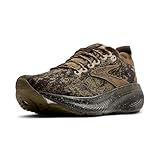
- THIS MEN’S SHOE IS FOR: The Adrenaline GTS 25 is perfect for runners and walkers seeking reliable support and a smooth ride. Featuring holistic GuideRails for Go-To Support and soft, dynamic premium nitrogen-infused DNA LOFT v3 cushioning, it delivers distraction-free comfort mile after mile. This Brooks Adrenaline GTS 25 is a certified PDAC A5500 Diabetic shoe and has been granted the APMA Seal of Acceptance. Predecessor: Adrenaline GTS 24.
- GUIDERAILS HOLISTIC SUPPORT SYSTEM: Our innovative technology - known as “GTS” for “Go-To Support” - supports your body in its natural motion path while keeping excess movement in check.
- SOFT & DYNAMIC CUSHIONING: Even more premium nitrogen-infused DNA Loft v3 cushioning delivers lightweight softness, and feel-good comfort mile after mile.
- TRUSTED FIT: The breathable engineered mesh upper and flat-knit collar offer a secure, comfortable fit, providing both structure and flexibility to accommodate natural movement during active use.
- SMOOTH TRANSITIONS: The specially designed outsole and midsole work together to promote seamless transitions, ensuring comfort and support for every step, so you can stay active longer.
Brooks Adrenaline GTS 25 — gold-standard stability shoe for flat feet.
As an Amazon Associate, Balance Foot & Ankle earns from qualifying purchases. Product recommendations are based on clinical experience; prices and availability shown above update live from Amazon.
When to See a Podiatrist
Painful flat feet in adults can signal posterior tibial tendon dysfunction — a progressive condition that needs early intervention to avoid surgery. Balance Foot & Ankle evaluates adult flatfoot with weight-bearing imaging and custom orthotic prescriptions. Catching PTTD at stage 1-2 makes the difference between a brace and a reconstruction.
Call Balance Foot & Ankle: (810) 206-1402 · Book online · Offices in Howell & Bloomfield Hills
In-Office Treatment at Balance Foot & Ankle
When conservative care isn’t enough, Dr. Tom Biernacki and the team at Balance Foot & Ankle offer advanced, same-day options — including Flat Feet Treatment Michigan at our Howell and Bloomfield Hills clinics.
Same-day appointments available. Call (810) 206-1402 or book online.

Dr. Tom Biernacki, DPM is a double board-certified podiatrist and foot & ankle surgeon at Balance Foot & Ankle Specialists in Southeast Michigan. With over a decade of clinical experience, he specializes in heel pain, bunions, diabetic foot care, sports injuries, and minimally invasive surgery. Dr. Biernacki is a member of the APMA and ACFAS, and his patient education content on MichiganFootDoctors.com and YouTube has reached over one million views.
- Plantar Fasciitis: Diagnosis and Conservative Management (PubMed)
- Plantar Fasciitis (APMA)
- Diagnosis and Treatment of Plantar Fasciitis (PubMed / AAFP)
- Heel Pain (APMA)