

Quick answer: Triple Arthrodesis Subtalar Talonavicular Calcaneocuboid Fusion Flatfoot is a common foot/ankle topic that affects many patients. The 2026 evidence-based approach combines proper diagnosis, conservative-first treatment, and escalation only when needed. We treat this regularly at our Howell and Bloomfield Township practices. Call (810) 206-1402.
Medically reviewed by Dr. Tom Biernacki, DPM — Board-Certified Podiatric Surgeon — Balance Foot & Ankle, Howell & Bloomfield Hills, MI. Last updated April 2026.
▶ Watch
Medically Reviewed by Dr. Tom Biernacki, DPM — Board-Certified Podiatrist, Balance Foot & Ankle Specialists, Michigan. Last updated April 2026.
When Is Triple Arthrodesis Needed?
Triple arthrodesis is one of the most significant reconstructive procedures in foot and ankle surgery, involving fusion of three hindfoot joints simultaneously: the subtalar joint (between the talus and calcaneus), the talonavicular joint (between the talus and navicular), and the calcaneocuboid joint (between the calcaneus and cuboid). By correcting and fusing all three joints that comprise the transverse tarsal and subtalar joint complex, the surgeon can realign the rigid hindfoot and midfoot in essentially any deformity.
Triple arthrodesis is typically reserved for rigid flatfoot deformity (Stage III posterior tibial tendon dysfunction), rigid cavovarus (high-arch) foot deformity with arthritic joint involvement, post-traumatic hindfoot arthritis involving multiple joints, rheumatoid arthritis with severe hindfoot destruction, and other conditions where the subtalar joint complex is too damaged or deformed for joint-preserving reconstruction.
What Makes Triple Arthrodesis Unique
The three joints fused in triple arthrodesis collectively provide most of the hindfoot motion responsible for walking on uneven terrain — inversion and eversion. After fusion, the foot no longer adapts to uneven surfaces through these joints. Adjacent joints — particularly the ankle and the midfoot joints — must compensate. This compensation is generally adequate for daily activities but limits high-demand athletic function and predisposes adjacent joints to accelerated degeneration over time. The decision to perform triple arthrodesis must balance the benefit of correcting a painful, deformed hindfoot against the limitations and future joint sequelae of losing hindfoot motion.
Surgical Technique
Triple arthrodesis is performed through two incisions — a medial incision for the talonavicular joint and a lateral incision for the subtalar and calcaneocuboid joints. The articular cartilage is removed from all three joint surfaces using osteotomes and burrs, exposing bleeding cancellous bone that will consolidate into bony fusion. The hindfoot is positioned in the corrected alignment — neutral valgus for flatfoot correction, neutral to slight valgus for cavovarus correction — and held with provisional Kirschner wires while fluoroscopic imaging confirms the alignment.
Definitive fixation is achieved with large-diameter cancellous screws across each joint. The subtalar joint typically receives two screws; the talonavicular and calcaneocuboid joints each receive one to two screws. In revision cases or patients with compromised bone quality, supplemental plating may be used for additional fixation strength.
Bone graft — either cancellous allograft or iliac crest autograft — is placed in the joint spaces to supplement fusion healing. In cases where significant structural correction is required, structural allograft or autograft may be used to maintain the corrected position.
Recovery After Triple Arthrodesis
Triple arthrodesis requires the longest recovery of any elective foot and ankle procedure. Non-weight-bearing in a cast is maintained for eight to twelve weeks while the three fusions consolidate. CT scan at twelve weeks assesses fusion healing before weight-bearing is permitted. Progressive weight-bearing in a boot follows at twelve to sixteen weeks, with transition to regular shoes at four to six months. Physical therapy addresses progressive strengthening and gait normalization over six to nine months. Maximum functional improvement is typically achieved at twelve to eighteen months postoperatively.
Expected Outcomes
Triple arthrodesis reliably corrects hindfoot deformity and eliminates arthritis pain in the fused joints. The majority of patients achieve significant improvement in pain and function compared to their pre-surgical state. Walking on even surfaces returns to near-normal for most patients. However, uneven terrain walking, recreational running, and high-impact sport are significantly limited after triple arthrodesis. Non-union of one or more joint surfaces occurs in approximately five to ten percent of cases and may require revision surgery with bone grafting. Long-term studies show progressive ankle arthritis in many patients over ten to twenty years, attributable to increased load transferred to the tibiotalar joint after hindfoot fusion.
Is Triple Arthrodesis Right for You?
The decision for triple arthrodesis requires careful evaluation of deformity type and severity, adjacent joint status, activity demands, and patient expectations. For appropriately selected patients with painful rigid hindfoot deformity who have not responded to conservative management, triple arthrodesis provides durable deformity correction and pain relief. Contact Balance Foot & Ankle for hands-on exam plus imaging when needed and surgical consultation.
Ready to Relieve Your Foot Pain?
Board-certified podiatrists serving Southeast Michigan. Same-week appointments available.
Book Your AppointmentTriple Arthrodesis Surgery at Balance Foot & Ankle
Triple arthrodesis fuses the subtalar, talonavicular, and calcaneocuboid joints for severe hindfoot deformity and arthritis. Dr. Tom Biernacki at Balance Foot & Ankle performs this procedure at our Howell and Bloomfield Hills offices.
Learn About Our Hindfoot Surgery Options | Book Your Appointment | Call (810) 206-1402
Clinical References
- Pell RF, et al. “Triple arthrodesis: review of current concepts.” Foot and Ankle International. 2000;21(4):292-297.
- Fortin PT, et al. “Talocalcaneal (subtalar), calcaneocuboid, and talonavicular arthrodesis.” Foot and Ankle Clinics. 2001;6(3):591-618.
- Jeng CL, et al. “Complications of triple arthrodesis.” Foot and Ankle Clinics. 2015;20(4):669-680.
Insurance Accepted
BCBS · Medicare · Aetna · Cigna · United Healthcare · HAP · Priority Health · Humana · View All →
Howell Office
3980 E Grand River Ave, Suite 140
Howell, MI 48843
Get Directions →
Bloomfield Hills Office
43700 Woodward Ave, Suite 207
Bloomfield Hills, MI 48302
Get Directions →
Your Board-Certified Podiatrists



Ready to Get Back on Your Feet?
Same-week appointments available at both locations.
Book Your AppointmentWatch: Triple Arthrodesis: Hindfoot Fusion
Dr. Tom on triple arthrodesis — subtalar + talonavicular + calcaneocuboid fusion, end-stage rigid flatfoot, PTTD stage IV, 12-16 week recovery, adjacent-joint arthritis risk.
Post-Triple Fusion Kit
Long hindfoot recovery. Dr. Tom’s kit:
As an Amazon Associate, Balance Foot & Ankle earns from qualifying purchases. This supports our free patient education content.
Weeks 1-12 NWB.
Weeks 12-24 return-to-shoe.
Fusion healing support.
Topical hindfoot relief.
Related: Flatfoot Reconstruction · Surgery Services · Book Triple Fusion Consult
In Our Clinic
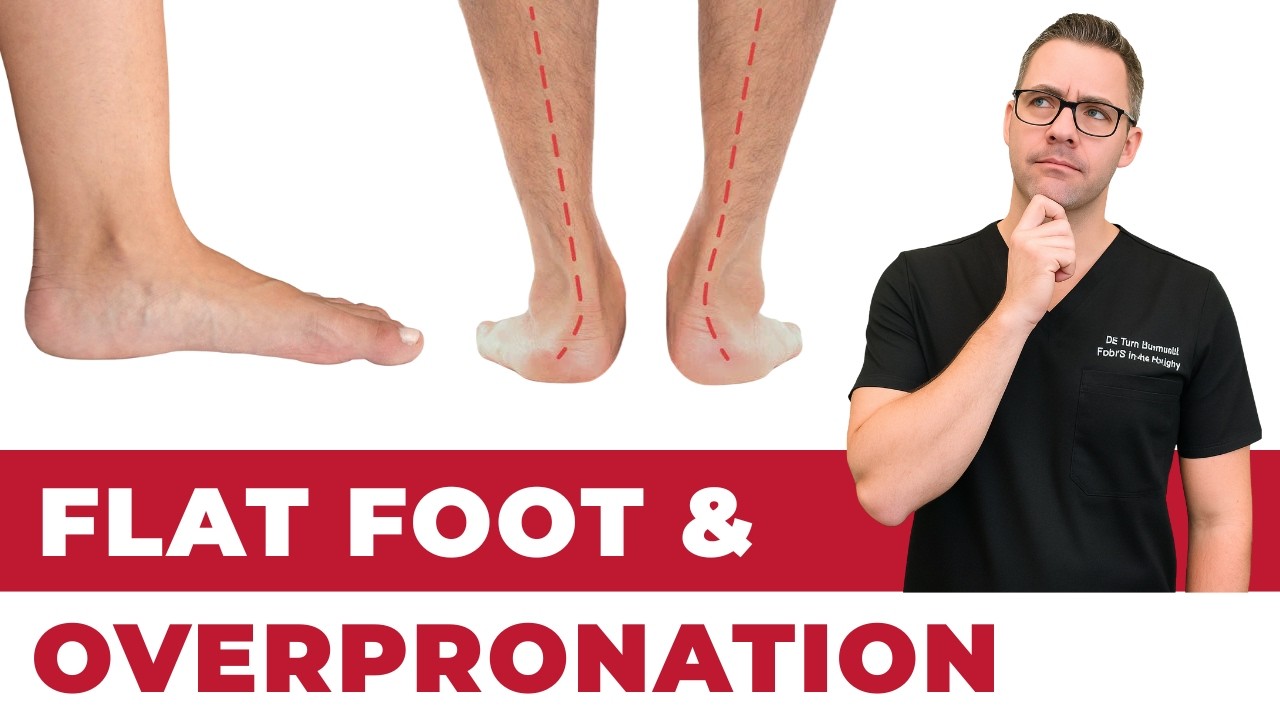
In our clinic, the flat-footed patient who actually needs intervention is the one whose arch is collapsing progressively in adulthood — not the person who was born flat-footed and has been running 5Ks pain-free for 20 years. We evaluate for posterior tibial tendon dysfunction (PTTD) with single-heel-rise testing, check for the “too many toes” sign from behind, and get weight-bearing X-rays. Early PTTD responds well to a custom orthotic with a medial heel skive + short course of boot immobilization. Stage 2+ PTTD is a different conversation — we discuss tendon transfers and calcaneal osteotomy candidates.
More Podiatrist-Recommended Flat Feet Essentials
PowerStep Pinnacle Insole


![How to Fix Flat Feet? [Collapsing Arch Pain & Flat Foot Correction!]](https://www.michiganfootdoctors.com/wp-content/cache/flying-press/7d7817e5895b520e184d5a23725fccc6.jpg)
Watch: How to Fix Flat Feet? [Collapsing Arch Pain & Flat Foot Correction!] — MichiganFootDoctors YouTube
Top orthotic for flat feet — lifts the collapsed arch and controls pronation.
Stability Running Shoe
New Balance Fresh Foam X 860 — designed for overpronators with flat feet.
Supportive Stability Shoe
Brooks Adrenaline GTS 25 — gold-standard stability shoe for flat feet.
As an Amazon Associate, Balance Foot & Ankle earns from qualifying purchases. Product recommendations are based on clinical experience; prices and availability shown above update live from Amazon.
When to See a Podiatrist
Painful flat feet in adults can signal posterior tibial tendon dysfunction — a progressive condition that needs early intervention to avoid surgery. Balance Foot & Ankle evaluates adult flatfoot with weight-bearing imaging and custom orthotic prescriptions. Catching PTTD at stage 1-2 makes the difference between a brace and a reconstruction.
Call Balance Foot & Ankle: (810) 206-1402 · Book online · Offices in Howell & Bloomfield Hills
In-Office Treatment at Balance Foot & Ankle
When conservative care isn’t enough, Dr. Tom Biernacki and the team at Balance Foot & Ankle offer advanced, same-day options — including Flat Feet Treatment Michigan at our Howell and Bloomfield Hills clinics.
Same-day appointments available. Call (810) 206-1402 or book online.
In-Office Treatment at Balance Foot & Ankle
If home treatment isn’t providing relief for your foot and ankle conditions, our podiatry team at Balance Foot & Ankle can help with same-day evaluations and advanced in-office care.
Same-day appointments available. (810) 206-1402
Frequently Asked Questions
When should I see a podiatrist?
If symptoms persist past 2 weeks, affect your normal activity, or are accompanied by red-flag symptoms (warmth, redness, swelling, inability to bear weight).
What does treatment cost?
Most diagnostic visits and conservative treatments are covered by Medicare and major insurers. Out-of-pocket costs vary by your specific plan.
How quickly can I get an appointment?
Most non-urgent cases see us within 5 business days. Urgent cases (sudden pain, possible fracture) typically same or next business day.

Dr. Tom Biernacki, DPM is a double board-certified podiatrist and foot & ankle surgeon at Balance Foot & Ankle Specialists in Southeast Michigan. With over a decade of clinical experience, he specializes in heel pain, bunions, diabetic foot care, sports injuries, and minimally invasive surgery. Dr. Biernacki is a member of the APMA and ACFAS, and his patient education content on MichiganFootDoctors.com and YouTube has reached over one million views.