

Medically reviewed by Dr. Tom Biernacki, DPM
Board-certified podiatric surgeon | Balance Foot & Ankle, Howell & Bloomfield Hills, MI
Last reviewed: May 2026

Quick answer: PRP (platelet-rich plasma) for the Achilles tendon uses a concentrated dose of your own platelets, injected under ultrasound guidance into the degenerated part of the tendon, to stimulate collagen repair where the tendon’s poor blood supply normally stalls healing. It works best for chronic midportion Achilles tendinopathy that has not responded to 3–6 months of eccentric loading. Most patients improve gradually over 8–16 weeks, and the benefit tends to be more durable than a cortisone shot.
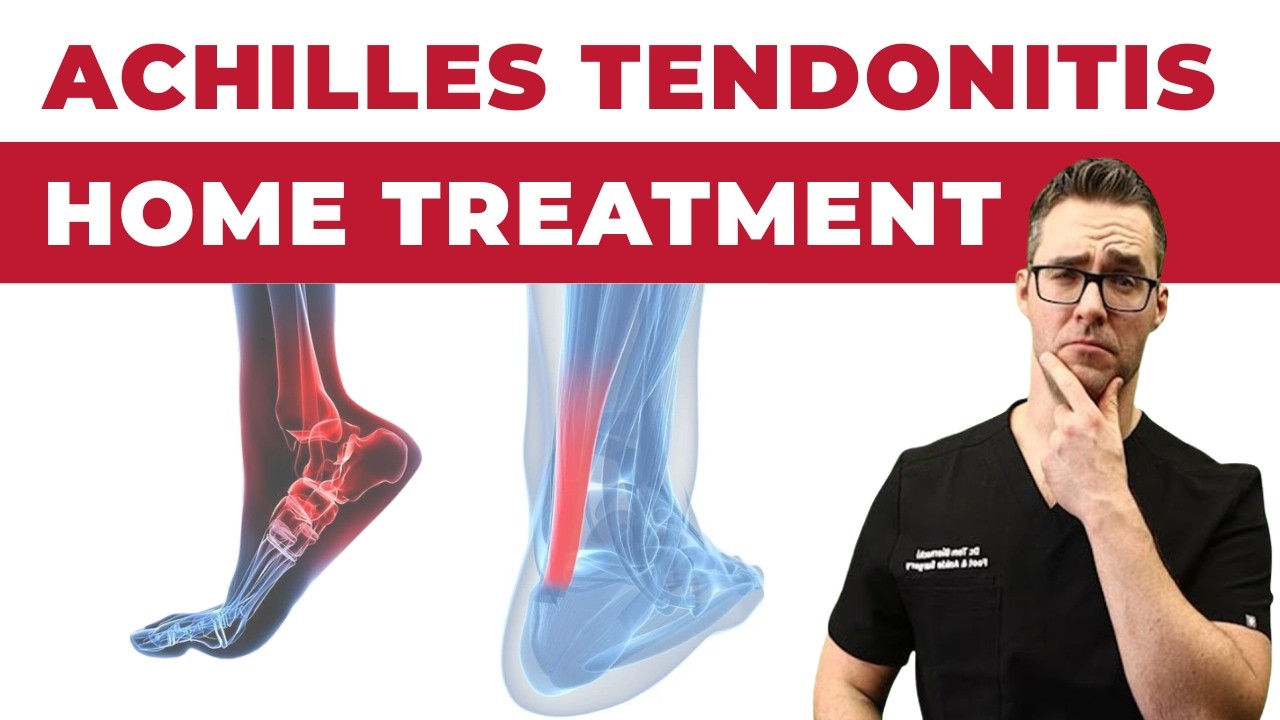
What PRP Does for Achilles Tendinopathy
Achilles tendinopathy—chronic degeneration of the Achilles tendon from repetitive loading exceeding the tendon’s repair capacity—is notoriously difficult to treat. The tendon has poor blood supply, particularly at the midportion (the area 2–6cm above the heel insertion, the most common location of chronic tendinopathy). This relative avascularity means healing factors delivered through the bloodstream arrive slowly and in low concentrations, explaining why Achilles tendinopathy can persist for years without resolving.
Platelet-rich plasma (PRP) concentrates the patient’s own platelets—the cells responsible for clot formation and wound healing—to 5–10x normal blood concentration through centrifugation. Platelets contain hundreds of growth factors including PDGF (platelet-derived growth factor), TGF-β (transforming growth factor), IGF-1 (insulin-like growth factor), and VEGF (vascular endothelial growth factor) that stimulate collagen synthesis, angiogenesis (new blood vessel formation), and fibroblast proliferation. Injecting concentrated growth factors directly into degenerative tendon tissue delivers what the poor blood supply cannot—a high local concentration of regenerative signals.
Ultrasound-guided delivery is essential for Achilles PRP: the injection must be precisely placed within the degenerative tissue, not in the peritendinous space or healthy tendon. Ultrasound identifies the zone of degeneration and guides needle placement to the optimal location.
Evidence and Expected Outcomes
Multiple randomized controlled trials comparing PRP to saline or cortisone injection in Achilles tendinopathy show superior long-term outcomes with PRP: better pain scores, improved ultrasound evidence of tendon healing, and higher rates of return to sport at 12-month follow-up. A systematic review of 12 RCTs (2021) concluded PRP provides clinically significant improvement in chronic Achilles tendinopathy not responding to conservative treatment.
Critically, the advantage of PRP over cortisone is maintained at long-term follow-up. Cortisone provides faster initial relief (weeks) but has higher recurrence rates and the additional risk of tendon weakening with repeated injection. PRP’s improvement develops more slowly (8–16 weeks) but is more durable.
Patient selection is important. PRP works best for: midportion Achilles tendinopathy confirmed by ultrasound, symptoms persisting more than 3–6 months despite eccentric exercise and appropriate management, and patients without prior surgical treatment at the injection site. Insertional Achilles tendinopathy (at the heel bone attachment) responds less predictably to PRP.
Recovery Protocol After Achilles PRP
Post-injection protocol: relative rest from running for 4–6 weeks (walking is permitted), eccentric heel drop program continuation after 2 weeks (eccentric loading is the most evidence-based exercise for Achilles tendinopathy and synergizes with PRP’s regenerative stimulus), and gradual return to sport at 8–12 weeks based on symptom response.
Post-injection soreness for 3–7 days is expected and normal—the injection stimulates an inflammatory response that initiates the healing process. Ice and acetaminophen manage soreness; avoid NSAIDs in the first 2 weeks as they may inhibit the platelet-mediated healing response PRP initiates.
Follow-up ultrasound at 3 months allows direct assessment of tendon healing—reduction in heterogeneous echotexture (the hallmark of tendinopathy) and normalization of tendon thickness indicate successful regeneration.
Is PRP Right for Your Achilles? Candidate Selection
PRP is not a first-line treatment and it is not for every Achilles problem. The patients who benefit most share a clear profile:
- Midportion tendinopathy (2–6 cm above the heel bone) confirmed on ultrasound or MRI — this is where PRP has the strongest evidence.
- Symptoms lasting more than 3–6 months despite a genuine trial of eccentric heel-drop exercises, load management, and footwear changes.
- No prior surgery at the injection site and no active infection.
- Willingness to follow a structured rehab program afterward — PRP creates the biological opportunity to heal, but loading is what remodels the tendon.
Insertional Achilles tendinopathy (pain right at the heel-bone attachment, often with a bone spur or Haglund’s deformity) responds less predictably to PRP than midportion disease, and is usually managed differently. A correct diagnosis of where the tendon is degenerating is the single most important step before considering an injection.
PRP vs Cortisone, Eccentric Exercise, and Surgery
It helps to see where PRP sits among the options for chronic Achilles tendinopathy:
- Eccentric loading (heel drops): still the most evidence-based starting treatment and resolves the majority of cases over 12 weeks. PRP is considered only after this is genuinely tried.
- Cortisone: generally avoided in the Achilles — it can give short-term relief but carries a real risk of tendon weakening and rupture. PRP is favored precisely because it stimulates repair rather than suppressing it.
- PRP: slower to work (8–16 weeks) but more durable, with a strong safety profile because it uses your own blood.
- Surgery (debridement/repair): reserved for tendinopathy that fails all conservative care, including a reasonable trial of PRP.
Cost and Insurance for Achilles PRP
PRP for tendinopathy is generally considered investigational by Medicare and most commercial insurers, so it is usually an out-of-pocket procedure rather than a covered benefit. Pricing varies by region and by how many injections are recommended. Because coverage and cost change and depend on your specific plan, we review the expected cost with you in advance — call (810) 206-1402 and we will give you a clear estimate before scheduling anything.
Frequently Asked Questions
How many PRP injections will I need for my Achilles?
Many patients are treated with a single injection, but some protocols use a short series of 2–3 spaced several weeks apart. The plan depends on the severity of the degeneration on ultrasound and your response to the first injection.
How long until PRP works?
PRP works gradually. Most people notice meaningful improvement between 8 and 16 weeks as the tendon remodels — it is not a quick fix like a numbing or cortisone shot.
Is the injection painful?
The injection itself is done with local anesthetic and ultrasound guidance. It is normal to have 3–7 days of soreness afterward as the healing response begins; ice and acetaminophen help, and NSAIDs are avoided in the first two weeks.
Can I run after a PRP injection?
Not right away. We recommend relative rest from running for 4–6 weeks (walking is fine), continuing eccentric heel drops after about two weeks, and a gradual return to sport at 8–12 weeks based on symptoms.
Does PRP work for a torn Achilles?
PRP is a treatment for tendinopathy (chronic degeneration), not for a complete acute rupture, which is managed with bracing or surgery. If you felt a sudden “pop” and can’t push off, that is a possible rupture and needs urgent evaluation.
In-Office Treatment at Balance Foot & Ankle
If eccentric loading and activity modification have not resolved your Achilles tendinopathy, our podiatry team at Balance Foot & Ankle offers ultrasound-guided PRP and a full range of tendon care, with same-day evaluations available.
OrthoInfo – AAOS: Achilles Tendinitis
Ready to Get Relief?
Same-day appointments available in Howell & Bloomfield Hills, MI
4.9★ | 1,123 Reviews | 3,000+ Surgeries
Or call: (810) 206-1402

Dr. Tom Biernacki, DPM is a board-certified foot & ankle surgeon (ABFAS & ABPM) at Balance Foot & Ankle Specialists in Southeast Michigan. With over a decade of clinical experience, he specializes in heel pain, bunions, diabetic foot care, sports injuries, and minimally invasive surgery. Dr. Biernacki is a member of the APMA and ACFAS, and his patient education content on MichiganFootDoctors.com and YouTube has made him one of the most-followed foot & ankle educators on YouTube.