

You are in the right place. Dr. Tom Biernacki, DPM, FACFAS — board-certified foot & ankle surgeon with 3,000+ surgeries — explains exactly what revision foot surgery failed bunion hammertoe ankle means and what works. Call (810) 206-1402 for same-day appointment at Howell or Bloomfield Township.
Quick answer: Revision Foot Surgery Failed Bunion Hammertoe Ankle is a common foot/ankle topic that affects many patients. The 2026 evidence-based approach combines proper diagnosis, conservative-first treatment, and escalation only when needed. We treat this regularly at our Howell and Bloomfield Township practices. Call (810) 206-1402.
Medically reviewed by Dr. Tom Biernacki, DPM — Board-Certified Podiatric Surgeon — Balance Foot & Ankle, Howell & Bloomfield Township, MI. Last updated April 2026.
▶ Watch
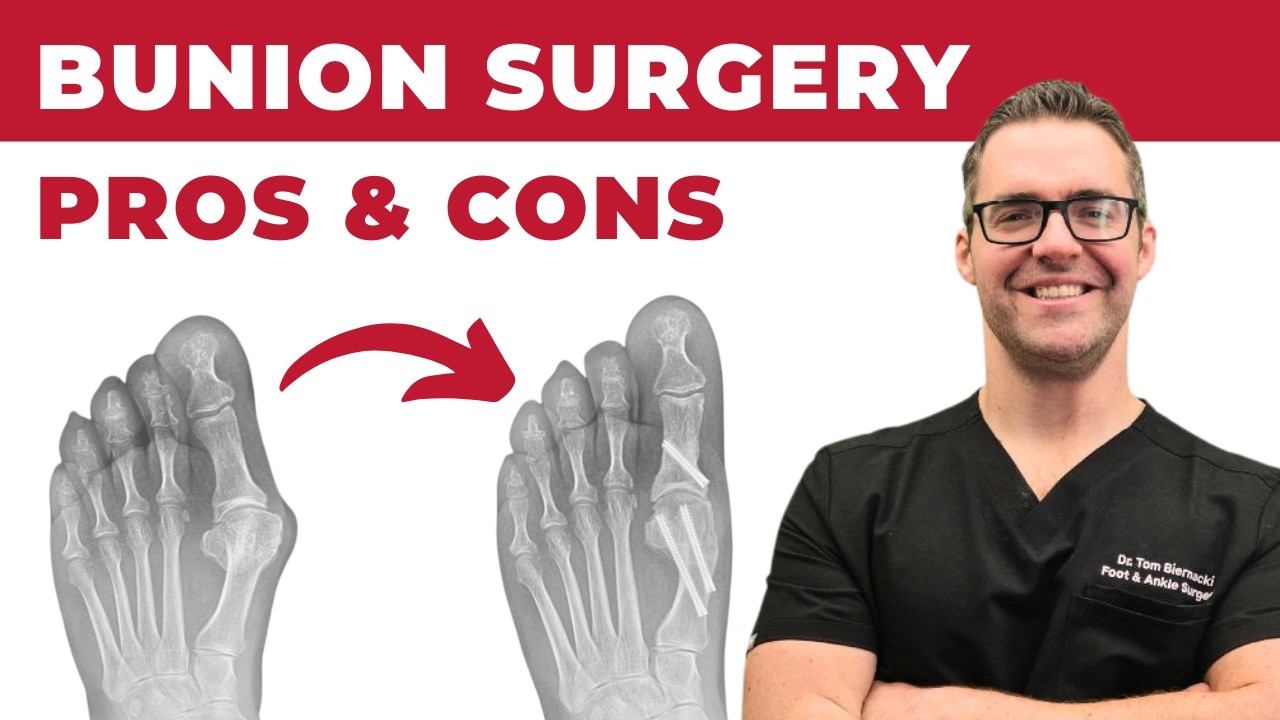
Medically reviewed by Dr. Tom Biernacki, DPM | Board-certified podiatrist | 3,000+ surgeries performed
Last updated: April 2, 2026
The most important clinical decision with Revision Foot Surgery Failed Bunion Hammertoe Ankle isn’t which treatment to start with — it’s identifying the correct subtype. That changes everything. Call (810) 206-1402.
Why Do First Foot Surgeries Sometimes Fail?
First-time foot surgeries fail for multiple reasons, and understanding the cause is critical for planning a successful revision. The most common reason is inadequate correction — a bunion procedure that removes the bump but does not address the underlying metatarsal misalignment, or a hammertoe correction that straightens the toe but leaves it unstable because the causative biomechanical imbalance was not addressed.
Overcorrection creates the opposite problem: a bunion surgery that moves the big toe too far medially (hallux varus), or an Achilles tendon lengthening that weakens push-off strength. Technical errors during the original procedure including improper hardware placement, inadequate fixation, or damage to surrounding structures during dissection also contribute to unsatisfactory outcomes.
Patient factors play a role as well. Noncompliance with post-operative weight-bearing restrictions allows hardware migration and loss of correction. Uncontrolled diabetes impairs healing, smoking reduces blood flow to surgical sites, and failure to address underlying biomechanical contributors — like continued pronation without orthotics after bunion surgery — allows recurrence of the original deformity.
Signs Your Previous Foot Surgery Needs Revision
Pain that persists beyond the expected recovery period is the most common indication that revision may be needed. While post-surgical discomfort typically resolves within 3-6 months, persistent pain at the surgical site, new pain in adjacent areas, or worsening symptoms suggest an inadequate or failed primary procedure.
Visual recurrence of deformity is often the clearest sign. A bunion that gradually returns, a hammertoe that re-curls, or an ankle that becomes unstable again indicates that the original correction was insufficient or that the biomechanical drivers of the deformity were not addressed. Deformity recurrence rates vary by procedure: bunions recur in approximately 15-25 percent of cases depending on the technique used.
Hardware-related symptoms including palpable screws or plates that cause shoe irritation, broken hardware visible on X-ray, or loose implants causing clicking or instability require surgical attention. Some hardware is designed for permanent implantation while other fixation is intended for removal after healing — understanding what was used in your original surgery guides the revision plan.
The Revision Surgery Evaluation Process
Revision foot surgery evaluation begins with obtaining complete records from the original procedure — operative reports, pre-operative imaging, and any intraoperative photographs. Understanding exactly what was done during the first surgery is essential for planning the revision approach and avoiding complications from operating through scarred tissue planes.
Advanced imaging for revision surgery typically exceeds what was needed before the primary procedure. Weight-bearing CT scan provides three-dimensional assessment of bone alignment, hardware position, and joint relationships that standard X-rays cannot fully characterize. MRI evaluates soft tissue integrity including tendons, ligaments, and joint capsules that may have been altered by the original surgery.
Dr. Biernacki’s consultation for revision cases includes honest discussion of realistic expectations. Revision surgery outcomes are generally good but statistically less predictable than primary procedures due to compromised tissue, altered anatomy, and the complexity of correcting a previous intervention. Setting appropriate expectations before proceeding ensures patient satisfaction with achievable results.
Common Revision Procedures and Techniques
Bunion revision (recurrent hallux valgus) often requires a more powerful corrective osteotomy than was used initially. If the first surgery used a distal osteotomy (Austin/chevron), the revision may require a proximal metatarsal osteotomy or a Lapidus fusion that addresses first ray hypermobility at its source. Hardware from the original procedure is removed, scar tissue excised, and the new correction stabilized with updated fixation.
Hammertoe revision addresses recurrence, malalignment, or floating toe deformity from excessive soft tissue release. The revision approach often involves bone shortening to reduce tension, fusion of the proximal interphalangeal joint rather than arthroplasty (which has higher recurrence rates), and rebalancing of the extensor and flexor tendons to prevent recurrence.
Failed ankle surgery revision ranges from hardware removal for symptomatic screws and plates to complete reconstruction of unstable ankle ligament repairs to conversion of a failed ankle replacement to a salvage fusion. These complex procedures require careful planning, advanced fixation techniques, and sometimes staged approaches to manage bone loss and soft tissue compromise.
Recovery Expectations for Revision Surgery
Revision surgery recovery is typically longer and more involved than recovery from the primary procedure. Scarred tissue heals more slowly, bone that has been previously osteotomized requires longer consolidation, and soft tissues that have been previously dissected have reduced blood supply. Patients should expect recovery periods approximately 25-50 percent longer than quoted for first-time procedures.
Physical therapy after revision surgery plays an even more critical role than after primary procedures. Scar tissue mobilization, joint range-of-motion restoration, and progressive strengthening address the additional stiffness and weakness that result from operating through previously scarred tissue planes. Starting therapy early (typically within 2 weeks) prevents adhesion formation.
Biomechanical optimization after revision surgery is non-negotiable. The factors that contributed to the original failure must be addressed — custom orthotics to control pronation, appropriate footwear to accommodate corrected alignment, and ongoing monitoring to detect any early signs of recurrence. This comprehensive post-operative approach distinguishes successful revision from repeated failure.
Getting a Second Opinion Before Revision Surgery
Seeking a second opinion before revision foot surgery is always appropriate and should be encouraged. Revision procedures are technically demanding, and the surgeon’s experience with complex reconstructive cases significantly influences outcomes. A second opinion may confirm the revision plan, suggest alternative approaches, or occasionally identify non-surgical options that were not considered.
When seeking a second opinion, bring all available records including operative reports, imaging studies (not just reports but actual images), and a timeline of symptoms. The consulting surgeon needs complete information to provide meaningful input, and incomplete records may lead to recommendations based on assumptions rather than facts.
At Balance Foot & Ankle, Dr. Biernacki welcomes second opinion consultations for patients whose previous foot or ankle surgeries have not achieved the desired results. An honest assessment of what went wrong, what can be improved, and what realistic expectations should guide the decision provides patients with the information they need to make an informed choice about revision surgery.
The Most Common Mistake We See
The most common mistake is assuming that a failed first surgery means surgery cannot help. In experienced hands, revision procedures achieve good to excellent outcomes in the majority of cases. The key difference is addressing the root cause of the first failure — whether that was insufficient correction, biomechanical factors, or patient-related healing issues — rather than simply repeating the same approach.
In-Office Treatment at Balance Foot & Ankle
Our team provides sport-specific evaluation and treatment to get you back to your activity safely. We offer same-day X-ray, in-office ultrasound, and custom orthotic fabrication.
Same-day appointments available. Call (810) 206-1402 or book online.
More Podiatrist-Recommended Bunion Essentials
Bunion-Friendly Stability Shoe
Brooks Adrenaline GTS 25 — wide toe box reduces bunion pressure.
Wide-Toe-Box Walking Shoe
New Balance 990v6 — roomy forefoot accommodates bunions and reduces rubbing.
Orthotic Insole


![How to Fix Hammer Toes at Home [Overlapping & Crossover Toes]!](https://www.michiganfootdoctors.com/wp-content/cache/flying-press/7ea0260b79509af610220599744e2c56.jpg)
Watch: How to Fix Hammer Toes at Home [Overlapping & Crossover Toes]! — MichiganFootDoctors YouTube
PowerStep arch support — realigns foot mechanics that drive bunion progression.
As an Amazon Associate, Balance Foot & Ankle earns from qualifying purchases. Product recommendations are based on clinical experience; prices and availability shown above update live from Amazon.
When to See a Podiatrist
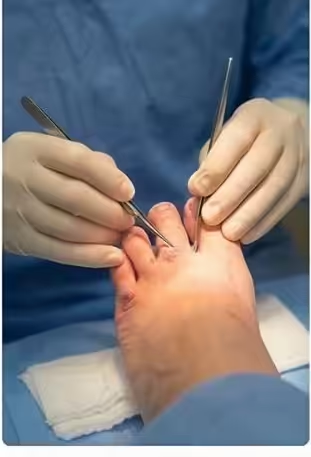
A bunion is a progressive joint deformity — padding and splints reduce pain but don’t reverse the bone shift. If the big toe angle is worsening, shoes no longer fit, or pain is disrupting sleep or activity, schedule a consult at Balance Foot & Ankle. Our surgeons perform minimally-invasive bunion correction with faster recovery than traditional osteotomy. We’ll review X-rays with you and explain exactly what the joint needs.
Call Balance Foot & Ankle: (810) 206-1402 · Book online · Offices in Howell & Bloomfield Township
Frequently Asked Questions
Is revision foot surgery more risky than the first surgery?
Revision surgery carries moderately higher complication rates than primary procedures due to scarred tissue planes, altered blood supply, and bone that has been previously operated on. However, with experienced surgical technique and careful preoperative planning, the risks are manageable and outcomes are generally favorable.
How long should I wait before considering revision surgery?
Allow at least 6-12 months after the original procedure before pursuing revision. Some corrections need this time to fully settle, and some complications resolve with conservative management. However, progressive deformity recurrence, hardware failure, or infection should be addressed sooner.
Should I go back to the same surgeon for revision?
This is a personal decision. Some patients prefer their original surgeon who knows their anatomy, while others prefer a fresh perspective. What matters most is choosing a surgeon with significant revision surgery experience. A second opinion is always appropriate regardless of your decision.
What is the success rate for revision foot surgery?
Success rates vary by procedure type but generally range from 70-85% for achieving good to excellent outcomes. This is somewhat lower than primary surgery success rates, which is why thorough evaluation, proper patient selection, and addressing the cause of the original failure are essential for optimizing results.
The Bottom Line
A failed first surgery does not mean living with pain and dysfunction permanently. Revision foot surgery performed by an experienced surgeon who understands why the original procedure failed and addresses those factors comprehensively achieves meaningful improvement in the majority of cases. If your previous foot surgery has not met your expectations, schedule a consultation to discuss revision options.
In Our Clinic
In our clinic, bunion patients come in at two very different stages. The first group is women in their 30s and 40s noticing a small bump and seeking nonsurgical slowing tactics — wide toe box shoes, bunion splints at night, custom orthotics to redistribute load away from the first MTP. The second group is patients in their 50s+ who can no longer find shoes that fit and are asking, honestly, about surgery. Our standard workup includes weight-bearing X-rays to measure the intermetatarsal angle and the HVA. Patients with an IMA under 13° usually do well conservatively; 13°+ often benefits from a surgical plan.
Sources
- Easley ME, Trnka HJ. Current concepts review: hallux valgus part II — operative treatment. Foot Ankle Int. 2007;28(6):748-758.
- Coughlin MJ. Hallux valgus: causes, evaluation, and treatment. Postgrad Med. 2011;123(4):145-153.
- Haddad SL, et al. Revision surgery of the foot and ankle. J Am Acad Orthop Surg. 2008;16(7):377-386.
- Myerson MS, et al. Revision surgery in the foot and ankle. Foot Ankle Clin. 2019;24(1):1-12.
Expert Revision Surgery When Your First Procedure Fails
Dr. Tom Biernacki has performed over 3,000 foot and ankle surgeries with a 4.9-star rating from 1,123 patient reviews.
Or call (810) 206-1402 for same-day appointments
Revision Foot Surgery in Michigan
When a previous foot surgery hasn’t achieved the desired result, revision surgery can correct the problem. Dr. Tom Biernacki specializes in complex revision procedures at Balance Foot & Ankle.
Learn About Our Surgical Options | Book Your Appointment | Call (810) 206-1402
Clinical References
- Coughlin MJ. “Hallux valgus in men: effect of the distal metatarsal articular angle on hallux valgus correction.” Foot Ankle Int. 2007;28(8):915-922.
- Wukich DK, et al. “Outcomes of revision bunion surgery.” Foot Ankle Int. 2009;30(7):612-618.
- Easley ME, Trnka HJ. “Current concepts review: hallux valgus part II: operative treatment.” Foot Ankle Int. 2007;28(6):748-758.
Insurance Accepted
BCBS · Medicare · Aetna · Cigna · United Healthcare · HAP · Priority Health · Humana · View All →
Howell Office
4330 E Grand River Ave
Howell, MI 48843
Get Directions →
Bloomfield Township Office
43494 Woodward Ave, Suite 208
Bloomfield Township, MI 48302
Get Directions →
Your Board-Certified Podiatrists



Ready to Get Back on Your Feet?
Same-week appointments available at both locations.
Book Your AppointmentWatch: Dr. Tom explains
Podiatrist-recommended products
As an Amazon Associate, Dr. Tom earns from qualifying purchases.
Immobilize during revision planning.
View on Amazon →Manage post-op inflammation.
View on Amazon →Support revision footwear.
View on Amazon →Topical post-op comfort.
View on Amazon →Related resources
Ready to solve this? Book today.
Same-week appointments · Howell & Bloomfield Township · 4.9★ (1,123+ reviews)
☎ (810) 206-1402Book Online →In-Office Treatment at Balance Foot & Ankle
If home treatment isn’t providing relief for your bunions, our podiatry team at Balance Foot & Ankle can help with same-day evaluations and advanced in-office care.
Same-day appointments available. (810) 206-1402
Frequently Asked Questions
When should I see a podiatrist?
If symptoms persist past 2 weeks, affect your normal activity, or are accompanied by red-flag symptoms (warmth, redness, swelling, inability to bear weight).
What does treatment cost?
Most diagnostic visits and conservative treatments are covered by Medicare and major insurers. Out-of-pocket costs vary by your specific plan.
How quickly can I get an appointment?
Most non-urgent cases see us within 5 business days. Urgent cases (sudden pain, possible fracture) typically same or next business day.
What is Bunion?
Bunion is a common foot/ankle condition that affects mobility and quality of life. Understanding the underlying cause is the first step in successful treatment. Our podiatrists at Balance Foot & Ankle perform a hands-on biomechanical exam, review your activity history, and use diagnostic imaging when appropriate to identify the root cause—not just treat the symptom. Many patients have been told to “rest and ice” without a deeper diagnostic workup; our approach is different.
Symptoms and warning signs
Common signs of bunion include pain that worsens with activity, morning stiffness, swelling, tenderness when palpated, and difficulty bearing weight. If you experience sudden severe pain, inability to walk, visible deformity, numbness or color change, contact our office the same day or visit urgent care—these can signal a more serious injury such as a fracture, tendon rupture, or vascular compromise. Diabetics with any foot wound should seek same-day care.
Conservative treatment options
Most cases of bunion respond to non-surgical care: structured rest, supportive footwear changes, custom orthotics, targeted stretching and strengthening protocols, anti-inflammatory medications when medically appropriate, and in-office procedures such as ultrasound-guided injections. We also offer advanced therapies including MLS laser therapy, EPAT/shockwave, regenerative injections, and image-guided procedures. Treatment is sequenced from least invasive to most invasive, and we explain the rationale at every step.
When is surgery considered?
Surgery is reserved for cases that fail 3-6 months of well-structured conservative care, when there is structural pathology (severe deformity, complete tear, advanced arthritis), or when imaging shows damage that will not heal without intervention. Our surgeons have performed 3,000+ foot and ankle procedures and prioritize minimally-invasive techniques whenever appropriate. We discuss recovery timelines, return-to-activity milestones, and realistic outcome expectations before any procedure is scheduled.
Recovery timeline and prevention
Recovery from bunion varies based on severity and chosen treatment path. Conservative cases often improve within 4-8 weeks with consistent adherence to the protocol. Post-procedural recovery may range from a few days (in-office procedures) to several months (reconstructive surgery). Long-term prevention involves footwear assessment, activity modification, structured strengthening, and regular check-ins with your podiatrist if you have a history of recurrence. We provide written home-exercise plans and digital follow-up support.
Ready to feel better?
Same-week appointments available in Howell and Bloomfield Township, Michigan.
Book Your VisitReady to fix this for good?
Reading goes so far. The fastest path is a 30-minute office visit. Same-day Howell or Bloomfield Township. Call (810) 206-1402.
Get Expert Care at Balance Foot & Ankle
Same-week appointments at our Howell and Bloomfield Township offices. Board-certified podiatric surgeons. Most insurance accepted.

Dr. Tom Biernacki, DPM is a board-certified foot & ankle surgeon (ABFAS & ABPM) at Balance Foot & Ankle Specialists in Southeast Michigan. With over a decade of clinical experience, he specializes in heel pain, bunions, diabetic foot care, sports injuries, and minimally invasive surgery. Dr. Biernacki is a member of the APMA and ACFAS, and his patient education content on MichiganFootDoctors.com and YouTube has made him one of the most-followed foot & ankle educators on YouTube.
More questions patients ask
What is a bunion?
A bunion (hallux valgus) is a progressive bony deformity where the big toe joint shifts outward, creating a visible bump. It results from an unstable metatarsal bone, not simply tight shoes. Bunions affect approximately 23% of adults and can cause significant pain, difficulty wearing shoes, and secondary problems like hammertoes. Dr. Biernacki specializes in both conservative management and advanced surgical correction including Lapiplasty 3D bunion correction.
Can bunions be corrected without surgery?
While surgery is the only way to permanently correct the structural deformity, non-surgical treatments can effectively manage pain and slow progression. Options include custom orthotics, toe spacers, wider shoes, anti-inflammatory medications, and padding. Dr. Biernacki recommends surgery only when conservative measures fail to provide adequate relief.
What is Lapiplasty bunion surgery?
Lapiplasty is an advanced 3D bunion correction procedure that addresses the root cause of bunions by correcting the unstable metatarsal bone in all three dimensions. Unlike traditional bunionectomy, Lapiplasty patients can bear weight within days and has a recurrence rate under 3% compared to 12-15% for traditional procedures. Dr. Biernacki is a fellowship-trained Lapiplasty surgeon serving SE Michigan.
Still have a question about coverage or cost? Book online and we will check your benefits before your visit: Book in Howell · Book in Bloomfield Township. Prefer to talk it through first? Call (810) 206-1402.