
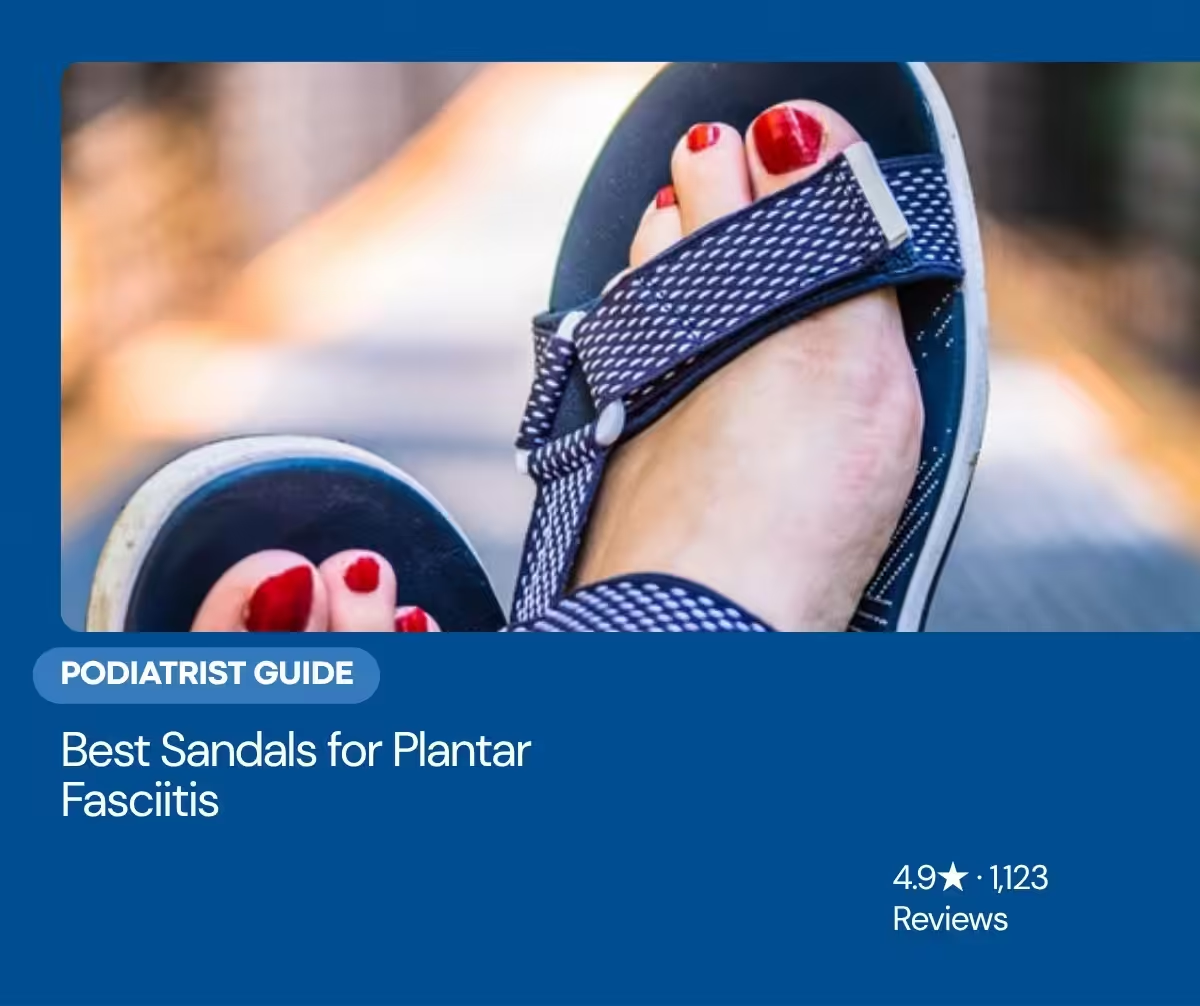
Quick answer: The best sandals for plantar fasciitis have a firm, contoured arch, a deep heel cup, and a rigid midsole that won’t twist — Vionic, Birkenstock, and OOFOS are reliable picks. Avoid flat, flexible sandals; if pain is severe, choose a model that fits a custom orthotic.
Still hurting after switching shoes? Footwear helps, but it can’t fix the underlying problem. See a podiatrist — pick a real appointment time online, 24/7: Howell or Bloomfield Township. Takes about a minute, 24/7.
Medically reviewed by Dr. Tom Biernacki, DPM
Board-certified podiatric surgeon | Balance Foot & Ankle, Howell & Bloomfield Township, MI
Last reviewed: May 2026
Quick answer: The best sandals for plantar fasciitis have a contoured arch, a deep heel cup, and a firm-but-cushioned footbed that supports the plantar fascia instead of letting the arch collapse. Skip flat flip-flops — our top podiatrist-recommended picks are OOFOS, Birkenstock, Vionic, and HOKA recovery slides. We treat this regularly at our Howell and Bloomfield Township practices. Call (810) 206-1402.
If you have plantar fasciitis, you probably already know that one of the worst things you can do is walk barefoot across your kitchen floor — that cold, hard tile in the morning is the enemy. And yet sandal season arrives every year, and the reflex to grab flat flip-flops is powerful. The problem: flat flip-flops and sandals are one of the leading causes of plantar fasciitis flare-ups, and they’re a constant obstacle to recovery.
The good news is that the sandal market has dramatically improved for plantar fasciitis patients. Today’s best therapeutic sandals offer genuine arch support, deep heel cups, and orthotic-grade footbeds — in designs that are actually wearable as everyday footwear. This guide covers exactly what to look for and which sandals I recommend to patients in our clinic.
The sandal version, with the measurements. Footbed contour, heel-cup depth and whether the strap holds without your toes gripping are being measured pair by pair on Dr. Biernacki’s independent review site — read the best sandals for plantar fasciitis guide on Podiatrist Tested.
Why Most Sandals Make Plantar Fasciitis Worse
The plantar fascia is under its greatest mechanical stress when the arch collapses during weight-bearing. A flat sandal provides zero arch support, allowing the arch to drop fully with each step — elongating the fascia and concentrating strain at the calcaneal insertion where plantar fasciitis pain originates.
Flip-flops add an additional problem: the toe-gripping action required to keep a flip-flop on the foot activates the toe flexors and intrinsic muscles in a pattern that increases plantar fascia tension. Patients who spend significant time in flip-flops consistently report plantar fasciitis worsening compared to time in supportive footwear.
Going completely barefoot on hard floors is equally problematic — without any cushioning or arch support, the plantar fascia and heel fat pad absorb the full shock of each step directly. I tell patients: if you wouldn’t run barefoot across concrete, don’t walk barefoot across your tile floor with plantar fasciitis.
Key takeaway: Every step you take barefoot or in flat flip-flops is a step that strains the plantar fascia. For 10,000 daily steps, that adds up to tens of thousands of additional micro-stress events on already-inflamed tissue. Switching to supportive sandals is one of the highest-impact habits for plantar fasciitis recovery.
What to Look for in Plantar Fasciitis Sandals
Deep Heel Cup
The heel cup cradles the calcaneus (heel bone) and centers the fat pad beneath it to maximize its cushioning function. A deep heel cup (18+ mm depth) also stabilizes the rearfoot against excessive pronation. This is the single most important feature in any sandal for plantar fasciitis.
Contoured Arch Support
The footbed must be contoured to fill the arch space and apply upward corrective pressure, not simply a flat foam surface. True arch support is firm enough to resist collapse under body weight. Press your thumb into the arch area: if it collapses, it will collapse under your foot and provide no benefit.
Firm, Non-Compressible Midsole
Ultra-soft foam footbeds feel luxurious but allow the arch to sink, defeating the support function. The ideal midsole has a balance: enough cushion to reduce impact loading on the calcaneal insertion while remaining firm enough to prevent arch collapse.
Adjustable Straps
Adjustable straps allow the sandal to be fitted precisely to the foot without requiring toe-gripping. The wider and more stable the strap system, the less the toes need to work to keep the sandal on — reducing the toe-flexor activation that increases plantar fascia tension.
Top Sandals for Plantar Fasciitis — Podiatrist-Reviewed
I chose these four sandals the same way I evaluate footwear for patients in clinic: each has a genuinely contoured footbed, a deep heel cup, and a firm-but-cushioned midsole that resists arch collapse — the three features that actually reduce plantar fascia strain. Every pick below is one I see patients wear successfully day to day, and each is currently rated 4.4 stars or higher with thousands of verified reviews.
| Sandal | Best For | Standout Feature | Rating | Shop |
|---|---|---|---|---|
| OOFOS OOahh | Recovery & home wear | OOfoam absorbs 37% more impact | 4.4★ 24,000+ | View → |
| Birkenstock Arizona | Everyday wear | Cork footbed molds to your arch | 4.6★ 13,000+ | View → |
| Vionic Tide II | Max arch support | Podiatrist-designed orthotic footbed | 4.6★ 16,000+ | View → |
| HOKA Ora Slide | Active / post-workout | Maximalist dual-density cushioning | 4.4★ 32,000+ | View → |
As an Amazon Associate, Balance Foot & Ankle may earn from qualifying purchases — at no extra cost to you, and it never affects which products we recommend.
Best Recovery Sandals: OOFOS OOahh

The OOFOS OOahh is the sandal I recommend most frequently for post-activity recovery and around-the-house wear. The OOfoam technology absorbs 37% more impact than traditional EVA foam and returns energy with each step. The contoured footbed provides genuine arch support, and the deep heel cup stabilizes the calcaneus. For patients with severe plantar fasciitis who need maximum comfort with minimal loading, OOFOS is the top choice.
Best Everyday Sandal: Birkenstock Arizona

The Birkenstock Arizona has a cork-latex footbed that molds to the individual foot’s contours over several weeks of wear, creating a personalized arch support. The deep heel cup and anatomical toe bar work together to engage the arch’s natural support mechanism. The two-strap adjustable design prevents toe-gripping. Birkenstocks require a 2–3 week break-in period during which some patients experience initial arch fatigue as foot muscles adapt.
Best Arch Support: Vionic with Orthaheel

The Vionic sandal line incorporates built-in orthotic insoles developed in collaboration with podiatrists and biomechanists. The deep heel cup and three-zone comfort design provide the most aggressive arch correction of any OTC sandal. I particularly recommend Vionic for patients who overpronate significantly alongside their plantar fasciitis.
Best for Active Use: HOKA Ora Recovery Slide

The HOKA Ora Recovery Slide brings HOKA’s maximalist cushioning platform to a slide sandal. The thick, dual-density foam provides exceptional heel cushioning alongside genuine arch support. An excellent option for athletes and runners who need maximum post-workout recovery for their plantar fasciitis.
Sandals to Avoid With Plantar Fasciitis
Not all sandals marketed for foot health actually provide it. Avoid:
- Standard flip-flops (Old Navy, Havaianas, most drugstore flip-flops) — flat, no arch support, require toe-gripping
- Minimalist sandals (Chacos standard, most sport sandals with flat footbeds) — the strap system is fine but flat footbeds provide no arch support
- Platform sandals with soft foam — the height doesn’t compensate for lack of arch contour; the foam collapses under load
- Fashion slide sandals without arch contour — most fashion slides are essentially flat platforms
The same four checks work on any sandal, not just these. Footbed contour, heel-cup depth, midsole firmness and strap security are what separate a supportive sandal from a flat one — the full test, and how it applies to shoes and inserts too, is in Heel Guide’s guide to shoes, inserts and kit for heel pain.
Using Sandals as Part of Your Plantar Fasciitis Routine
Here is how I advise plantar fasciitis patients to integrate supportive sandals into their daily routine:
- Keep sandals next to your bed — slip them on before your first step in the morning; never take that first barefoot step across a hard floor
- Around-the-house wear — use OOFOS or Birkenstock whenever you’re moving around at home; this dramatically reduces the cumulative daily fascial strain from barefoot indoor walking
- Post-workout recovery — change into OOFOS or HOKA recovery slides immediately after running, hiking, or any activity
- Poolside and beach — keep a pair of arch-support sandals for pool decks and sandy surfaces; don’t go barefoot in these environments
⚠️ When Sandals Are Not Enough for Plantar Fasciitis
- Morning first-step pain lasting more than 10 minutes despite supportive sandals and stretching
- Heel pain that worsens throughout the day despite full-time supportive footwear use
- Plantar fasciitis symptoms that have not improved after 6–8 weeks of footwear changes
- Bilateral heel pain — both heels involved — which sometimes indicates a systemic cause
- Plantar fasciitis in a diabetic patient — requires professional evaluation regardless of symptom severity
Dr. Tom’s Complete PF Sandal Protocol
- PowerStep Pinnacle — The #1 addition to any PF sandal: upgrading the footbed to PowerStep Pinnacle dramatically improves arch support beyond what any sandal provides stock.
- Doctor Hoy’s Natural Pain Relief Gel — Post-sandal plantar fascia aching: apply arnica gel to the arch and heel immediately after wearing sandals.
- Plantar Fasciitis Compression Socks — Morning first-step pain: graduated compression socks at night maintain arch position through sleep — sandals can’t do this.
Sandals not providing enough PF relief? Read our complete plantar fasciitis guide →
In-Office Treatment at Balance Foot & Ankle
If home treatment isn’t providing relief for your plantar fasciitis, our podiatry team at Balance Foot & Ankle can help with same-day evaluations and advanced in-office care.
Frequently Asked Questions
Can I wear flip-flops with plantar fasciitis?
Standard flat flip-flops are one of the worst choices for plantar fasciitis — they provide no arch support and force your toes to grip to keep them on, both of which increase strain on the plantar fascia. If you want a thong-style sandal, choose one with a contoured orthotic footbed and a deep heel cup, like the Vionic Tide II, rather than a flat drugstore flip-flop.
Are Birkenstocks good for plantar fasciitis?
Yes. The Birkenstock Arizona’s firm cork footbed, deep heel cup, and anatomical toe bar give the arch genuine support, which is why many patients do well in them. Expect a 2–3 week break-in period as your foot adapts, and during an acute, severe flare reach for a cushioned recovery sandal like OOFOS instead.
How long should I wear supportive sandals each day?
Wear them for essentially all of your barefoot time at home — keep a pair by the bed for that first step in the morning and switch into recovery slides right after exercise. The goal is to never load the plantar fascia barefoot on hard floors.
Do supportive sandals replace custom orthotics?
Not always. Quality therapeutic sandals give excellent support for casual and around-the-house wear, but if you overpronate significantly or have stubborn symptoms, a custom orthotic provides more precise correction. Many patients do best using both — orthotics in their main shoes and supportive sandals for everything else. If heel pain hasn’t improved after 6–8 weeks of consistent supportive footwear, see a podiatrist.
Ready to Get Relief?
Same-day appointments available in Howell & Bloomfield Township, MI
4.9★ | 1,123 Reviews | 3,000+ Surgeries
Or call: (810) 206-1402

Dr. Tom Biernacki, DPM is a board-certified foot & ankle surgeon (ABFAS & ABPM) at Balance Foot & Ankle Specialists in Southeast Michigan. With over a decade of clinical experience, he specializes in heel pain, bunions, diabetic foot care, sports injuries, and minimally invasive surgery. Dr. Biernacki is a member of the APMA and ACFAS, and his patient education content on MichiganFootDoctors.com and YouTube has made him one of the most-followed foot & ankle educators on YouTube.