
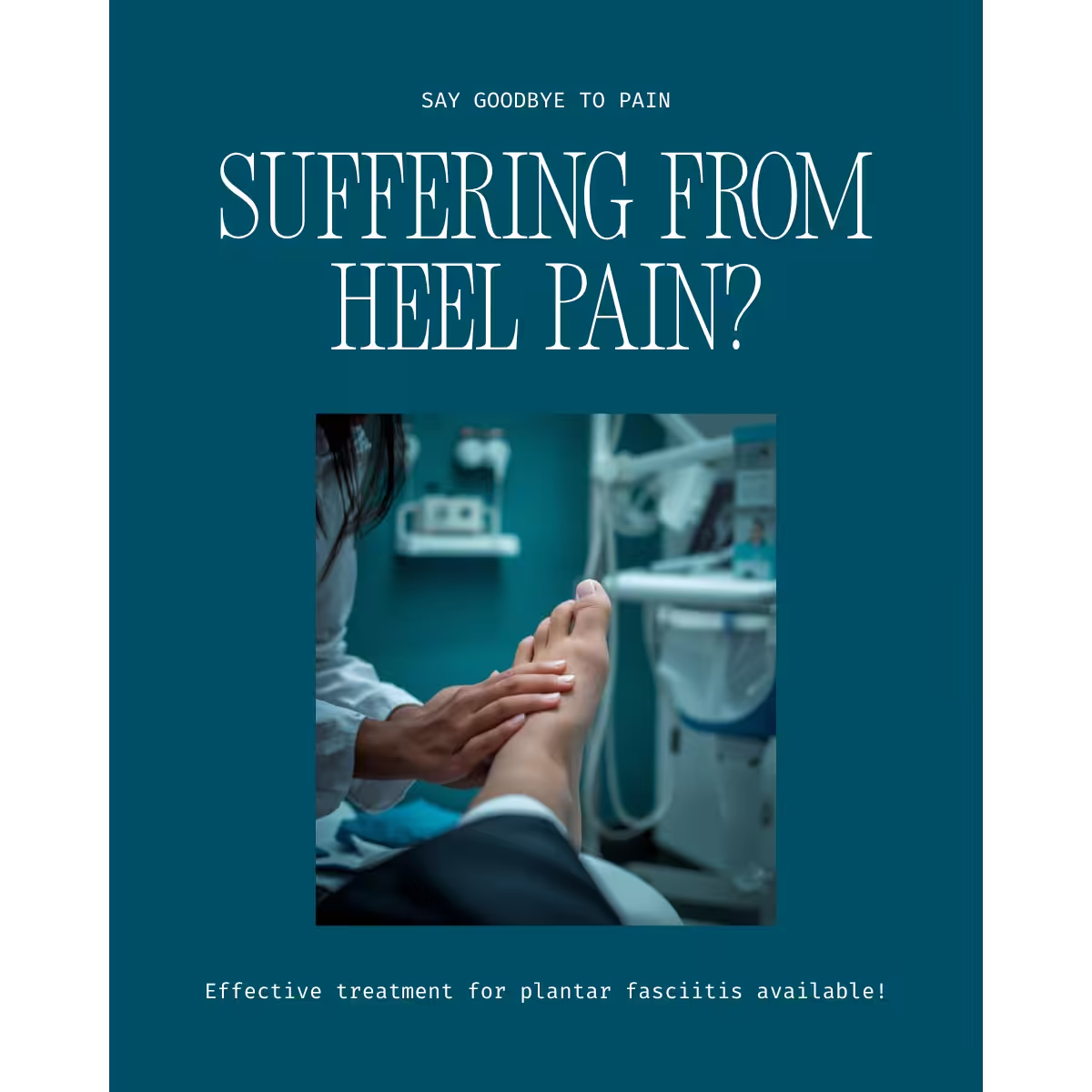
What Is Shockwave Therapy (EPAT)?
Extracorporeal Pulse Activation Technology (EPAT), also called extracorporeal shockwave therapy (ESWT), is a non-invasive treatment that uses acoustic pressure waves to stimulate healing in chronically injured soft tissue. The treatment has become one of the most evidence-supported non-surgical options for chronic plantar fasciitis and Achilles tendinopathy—particularly for patients who have failed conventional conservative treatment. For specialized treatment, see our heel pain treatment at Balance Foot & Ankle.
“Extracorporeal” means the treatment is applied from outside the body. A handheld applicator is placed against the skin over the injured tissue, and pressure waves are delivered through the tissue without breaking the skin. The waves create controlled microtrauma at the cellular level, triggering a biological healing response in tissue that has stopped repairing itself.
How EPAT Works: The Biological Mechanism
Chronic tendinopathy and plantar fasciitis represent failed healing—the tissue has undergone degenerative changes but hasn’t completed the repair cycle. Fibroblasts, the cells responsible for collagen synthesis, become inactive in chronically injured tissue. The tissue enters a state of degenerative tendinosis: disorganized collagen, neovascularization, and absent inflammatory cells.
Treatment at Balance Foot & Ankle: EPAT Shockwave for Heel Pain →
Shockwave therapy interrupts this stalled state through several mechanisms. The acoustic waves stimulate fibroblast proliferation and collagen synthesis, recreating the early inflammatory response necessary to restart the healing cascade. They also disrupt neovascularization (abnormal blood vessel formation associated with chronic tendinopathy) and break down calcific deposits that sometimes form in the fascia and tendons. Additionally, shockwave therapy has analgesic effects through hyperstimulation of nociceptors—a neurological mechanism that reduces pain perception beyond the healing effect itself.
Evidence for EPAT/ESWT in Foot Conditions
Plantar Fasciitis
Plantar fasciitis is the most studied indication for ESWT in the foot and ankle, with the strongest evidence base. Multiple Level I randomized controlled trials and systematic reviews support ESWT for chronic plantar fasciitis (symptoms persisting more than 3–6 months despite conservative treatment). A 2005 meta-analysis in the American Journal of Sports Medicine found ESWT superior to placebo for chronic plantar fasciitis. More recent studies confirm 70–80% success rates in patients who have failed stretching, orthotics, and cortisone injections.
The FDA cleared ESWT specifically for the treatment of chronic proximal plantar fasciitis—one of the few devices to receive FDA clearance for this indication. This regulatory recognition reflects the quality of the evidence base.
Achilles Tendinopathy
Both mid-portion and insertional Achilles tendinopathy respond to ESWT with good evidence. A 2012 Cochrane review found ESWT superior to eccentric exercise alone for insertional Achilles tendinopathy at 12-month follow-up—a particularly meaningful finding for insertional disease, which is notoriously difficult to treat. Combined ESWT plus eccentric exercise outperforms either treatment alone for both mid-portion and insertional disease.
Calcific Tendinitis
When calcium deposits form within the plantar fascia or Achilles tendon, ESWT has the additional mechanism of fragmenting the calcification. The acoustic waves mechanically break down calcium crystals, allowing macrophage resorption. ESWT is highly effective for calcific tendinitis of the Achilles and plantar fascia, with studies showing calcium deposit reduction on ultrasound after treatment.
What to Expect During EPAT Treatment
EPAT treatment at Balance Foot & Ankle consists of 3–5 sessions, each lasting approximately 15–20 minutes. Treatment is performed in the office without anesthesia or sedation. Ultrasound gel is applied to the treatment area, and the handheld applicator is moved over the injured tissue while delivering acoustic pulses.
The sensation ranges from mild tapping to moderate discomfort depending on tissue sensitivity and treatment parameters. Sessions are typically spaced 1 week apart. Most patients notice improvement beginning after the second or third session, with continued improvement for 8–12 weeks after the final session as the healing response completes.
No downtime is required. Most patients return to normal activities immediately. Some post-treatment soreness for 24–48 hours is common and reflects the intentional mild inflammatory response. NSAIDs and ice should be avoided immediately after treatment as they suppress the healing cascade EPAT is designed to trigger.
EPAT vs. Cortisone vs. Surgery
EPAT vs. Cortisone: Cortisone provides faster short-term relief (days to weeks) but carries risks with repeated injections (tendon weakening, fat pad atrophy) and doesn’t stimulate structural repair. EPAT requires 4–8 weeks to show full effect but addresses the underlying degenerative tissue. For chronic cases (3+ months), EPAT produces more durable long-term outcomes in most comparative studies.
EPAT vs. Surgery: Surgical options for plantar fasciitis (plantar fasciotomy—partial release of the fascia) are effective but carry risks including arch collapse, nerve injury, and prolonged recovery. EPAT provides equivalent outcomes in most comparative trials without surgical risks or recovery time. EPAT should be exhausted before considering fasciotomy in the vast majority of patients.
EPAT vs. PRP: Both are biologically active treatments for chronic tendinopathy. EPAT uses acoustic energy to restart healing; PRP uses concentrated growth factors. Both have Level I evidence for plantar fasciitis. Some protocols combine both treatments. PRP requires a blood draw; EPAT does not. Insurance coverage for both is typically limited.
Insurance Coverage
Some insurance plans cover ESWT for chronic plantar fasciitis after documented failure of conservative treatment for a specified duration (typically 6 months). Coverage requirements vary significantly by plan. Medicare does not currently cover ESWT for plantar fasciitis. We verify insurance coverage prior to treatment and provide transparent cash-pay pricing for uninsured patients. A course of EPAT treatment typically costs considerably less than surgical intervention and requires no time off work.
Frequently Asked Questions
How many shockwave therapy sessions do I need for plantar fasciitis?
The standard EPAT protocol for plantar fasciitis is 3–5 sessions, each spaced approximately 1 week apart. Most clinical trials use 3 sessions; some patients with severe or long-standing disease benefit from additional sessions. Sessions take 15–20 minutes each. The full healing response continues for 8–12 weeks after the final session, so final outcomes are assessed at 3 months post-treatment rather than immediately after the last session.
Is shockwave therapy painful?
EPAT involves some discomfort during treatment—most patients describe it as a tapping or pressure sensation, occasionally more intense over particularly tender areas. The discomfort is manageable without anesthesia for the vast majority of patients. Topical anesthetic cream can be applied 30–45 minutes prior to treatment for particularly sensitive patients. Post-treatment soreness for 24–48 hours is common. The treatment is significantly less uncomfortable than a cortisone injection into the heel.
What is the success rate of shockwave therapy for plantar fasciitis?
Published clinical trials for ESWT in chronic plantar fasciitis consistently report 70–80% good-to-excellent outcomes at 12-month follow-up in patients who have failed conservative treatment. Success rates are higher in patients who complete the full treatment protocol and combine EPAT with continued stretching and orthotic use. The 20–30% who don’t achieve satisfactory relief may have additional contributing factors (tarsal tunnel syndrome, nerve entrapment, baxter’s nerve entrapment) that require further evaluation.
Medical References & Sources
- PubMed Research — ESWT Plantar Fasciitis Randomized Trials
- American Orthopaedic Foot & Ankle Society — Shockwave Therapy
- PubMed Research — ESWT Achilles Tendinopathy
Dr. Tom Biernacki, DPM is a board-certified podiatric surgeon at Balance Foot & Ankle in Howell and Bloomfield Hills, Michigan. He provides EPAT shockwave therapy for plantar fasciitis, Achilles tendinopathy, and chronic heel pain at both his Howell and Bloomfield Hills locations.
Dr. Tom’s Recommended Products for Plantar Fasciitis & Heel Pain
📍 Located in Michigan?
Our board-certified podiatrists treat this condition at two convenient locations. Same-day appointments often available.
These are products I personally use and recommend to my patients at Balance Foot & Ankle.
- PowerStep Pinnacle Insoles — Firm arch support with dual-layer cushioning — the #1 podiatrist-recommended OTC insole for plantar fasciitis
- PowerStep Pinnacle Insoles — High-profile biomechanical stabilizer cap controls overpronation and reduces fascia tension at the insertion
- Brooks Adrenaline GTS 24 — GuidRails support system with 12mm heel drop — the most-prescribed running shoe for plantar fasciitis in our practice
📧 Get Dr. Tom’s Free Lab Test Guide
Discover the 5 lab tests every person over 35 should ask their doctor about — explained in plain English by a board-certified physician.
Affiliate disclosure: As an Amazon Associate, Balance Foot & Ankle earns from qualifying purchases. We only recommend products we trust for our own patients.
Join 950,000+ Learning About Foot Health
Dr. Tom shares honest medical advice, supplement reviews, and treatment guides you won’t find anywhere else.
Subscribe on YouTube →Medically Reviewed by: Dr. Jeffery Agnoli, DPM — Board-Certified Podiatrist, Balance Foot & Ankle Specialists

Dr. Tom Biernacki, DPM is a double board-certified podiatrist and foot & ankle surgeon at Balance Foot & Ankle Specialists in Southeast Michigan. With over a decade of clinical experience, he specializes in heel pain, bunions, diabetic foot care, sports injuries, and minimally invasive surgery. Dr. Biernacki is a member of the APMA and ACFAS, and his patient education content on MichiganFootDoctors.com and YouTube has reached over one million views.
Frequently Asked Questions
What is the fastest way to cure plantar fasciitis?
Is plantar fasciitis covered by insurance?
Can plantar fasciitis go away on its own?
Recommended Products from Dr. Tom