
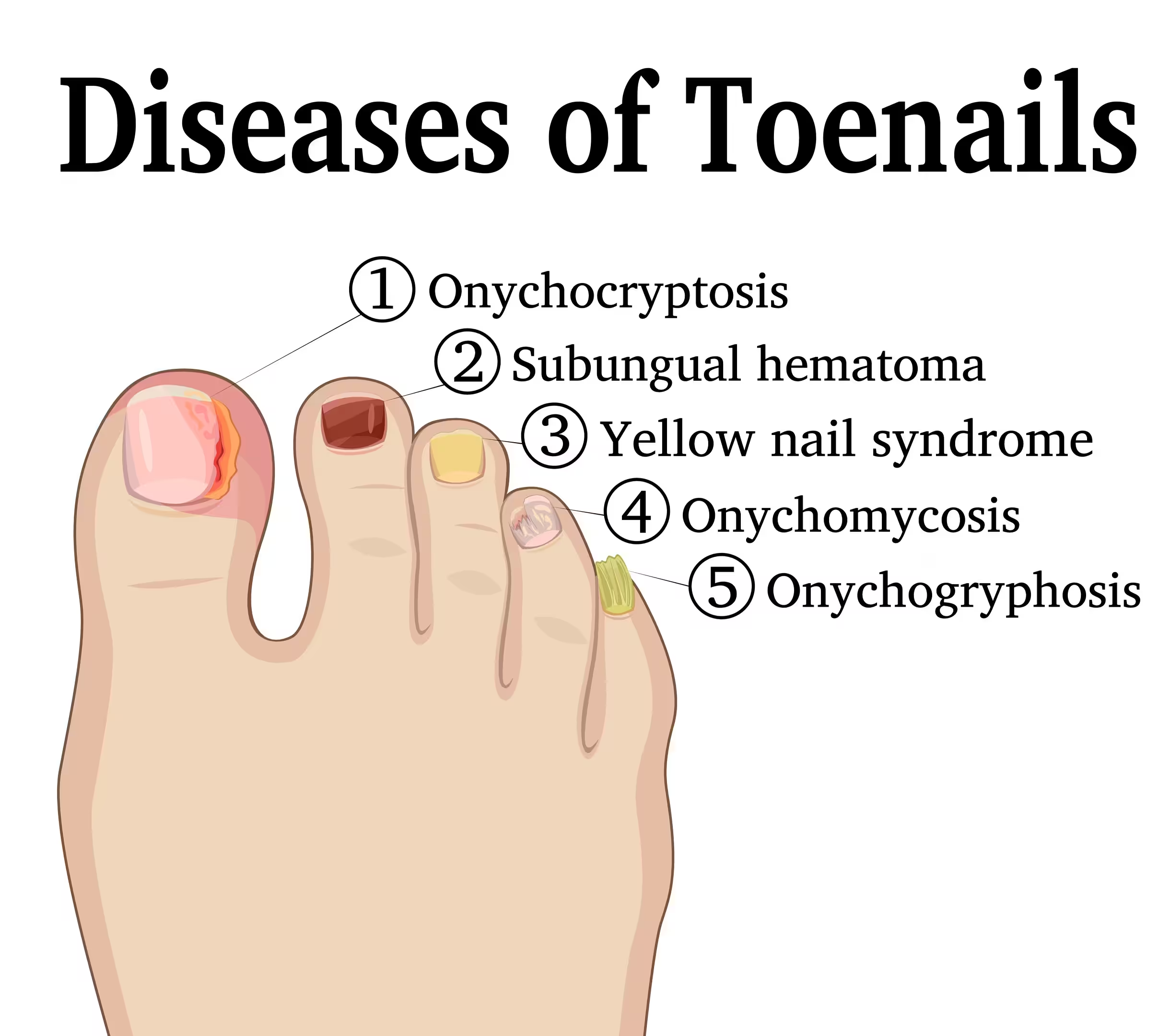

A subungual hematoma (bleeding under the toenail) after running, hiking, or trauma usually heals on its own — but if pressure builds up enough to cause throbbing pain, drainage relieves it dramatically.
You’ve come to the right podiatry team. Dr. Tom Biernacki, DPM, FACFAS — board-certified foot & ankle surgeon with 3,000+ surgeries — explains exactly what subungual hematoma in runners means and what works. Call (810) 206-1402 for same-day appointment at Howell or Bloomfield Township.
Quick answer: Treatment for subungual hematoma black toenail runners treatment follows a stepwise approach: 1) conservative care first (rest, ice, supportive footwear, OTC anti-inflammatories), 2) physical therapy and targeted exercises, 3) in-office treatments (injections, custom orthotics) if conservative fails at 4-6 weeks, 4) surgery for refractory cases. Most patients resolve at step 1 or 2. Call (810) 206-1402.
Medically reviewed by Dr. Tom Biernacki, DPM · Board-Certified Podiatric Surgeon · Last reviewed: April 2026 · Editorial Policy
The most important clinical decision with Subungual Hematoma Black Toenail Runners Treatment isn’t which treatment to start with — it’s identifying the correct subtype. That changes everything. Call (810) 206-1402.
Quick Answer
Subungual Hematoma & Black Toenail in Runners: Causes & relates to toenail conditions — typically caused by fungal infection or trauma. Most patients improve in 6-12 months for nail regrowth with conservative care. Same-week appointments in Howell + Bloomfield Township: (810) 206-1402.
Medically reviewed by Dr. Tom Biernacki, DPM — Board-Certified Podiatric Surgeon — Balance Foot & Ankle, Howell & Bloomfield Township, MI. Last updated April 2026.
▶ Watch
Medically Reviewed by Dr. Tom Biernacki, DPM — Board-Certified Podiatrist, Balance Foot & Ankle Specialists, Michigan. Last updated April 2026.
Black toenail — medically known as subungual hematoma — is one of the most common running injuries, particularly among distance runners and hikers. The classic “runner’s black toe” develops when repetitive microtrauma from the toenail repeatedly striking the shoe box accumulates sufficient force to rupture subungual capillaries, filling the space between the nail plate and nail bed with blood. While usually benign, a subungual hematoma can be extremely painful in its acute phase, and distinguishing it from subungual melanoma — a potentially serious condition — is clinically important.
Why Runners Get Black Toenails
The great toenail or the longest toe (which may be the second toe in Morton’s foot configuration) repeatedly strikes the front of the shoe box thousands of times per run. Even when the shoe appears to fit well statically, dynamic foot swelling during long runs, the downhill forces of trail running, and the way the foot slides forward in the shoe during deceleration all drive the toenail against the shoe repeatedly. Contributing factors include:
- Shoes that are too short — the most common cause; the toe should not contact the front of the shoe box during normal activity
- Downhill running — gravity pulls the foot forward in the shoe with each stride
- Untied or loosely laced shoes — allow excessive forward slide
- Long downhill races and hiking — exposure time makes even minor contact accumulate into hematoma
- Thickened nails — nails with onychomycosis or naturally thick nail plates are more susceptible
Acute vs. Chronic Subungual Hematoma
An acute subungual hematoma — occurring after a single traumatic blow (dropping something on the toe, stubbing the toe, or a direct impact) — produces immediate, intense throbbing pain under the nail as the expanding blood pool increases subungual pressure. This is distinct from the gradual, painless black discoloration of the chronic runner’s hematoma, which accumulates over miles and may only be noticed when the shoe comes off.
When to Drain an Acute Subungual Hematoma
Acute hematomas involving more than 50% of the nail surface and producing severe throbbing pain are candidates for trephination (drainage) to relieve pressure. This office procedure involves creating a small drainage hole through the nail plate — most easily accomplished with a heated electrocautery device that painlessly burns through the nail — allowing the pressurized blood to drain and providing immediate, dramatic pain relief.
For chronic runner’s hematomas (painless or mildly tender), drainage is not necessary and the blood will resorb over weeks to months as the nail grows out. The nail may lift or fall off; this is normal and the new nail will regrow underneath, typically requiring 6–9 months for the great toenail to grow out completely.
Subungual Hematoma vs. Subungual Melanoma: The Critical Distinction
Subungual melanoma — a rare but serious melanoma arising from the nail matrix — can produce dark discoloration under the nail that appears identical to a hematoma. The distinction is critical because melanoma requires urgent evaluation and treatment, while a hematoma resolves spontaneously.
Features that suggest subungual melanoma rather than hematoma:
- No history of trauma or running — a hematoma requires a plausible mechanical cause
- Hutchinson’s sign — dark pigmentation extending from under the nail onto the surrounding skin fold (periungual hyperpigmentation)
- Stable or growing pigmentation — a hematoma moves distally with nail growth; melanoma remains stationary or expands
- Irregular shape and variegated color — uniform dark red-black from blood vs. irregular brown-black of melanoma
- Pigmented band extending from the cuticle — a longitudinal melanonychia that does not move with nail growth
When the history does not fit a traumatic hematoma, or when features of melanoma are present, urgent dermatological or podiatric evaluation with possible nail biopsy is warranted. Dr. Biernacki at Balance Foot & Ankle evaluates all uncertain nail pigmentation with dermoscopy.
Prevention of Runner’s Black Toenail
- Shoe sizing — running shoes should have a full thumb’s width of space beyond the longest toe; buy shoes at the end of the day when feet are largest
- Lacing technique — snug but not tight lacing, particularly around the midfoot, prevents forward slide without causing toe box pressure
- Downhill lacing — for hilly terrain, the “heel lock” or “lace lock” technique prevents the foot from sliding forward on descents
- Moisture-wicking socks — reduces friction between the nail and shoe during long efforts
- Nail length — keep nails trimmed straight across at the free edge, not too short; long nails increase strike contact
Black or Painful Toenail? Get It Evaluated.
Dr. Biernacki at Balance Foot & Ankle evaluates nail pigmentation with dermoscopy to confirm benign hematoma and provides trephination for painful acute cases. Bloomfield Township and Howell offices.
📞 (810) 206-1402 |
📧 Get Dr. Tom’s Free Lab Test Guide
Discover the 5 lab tests every person over 35 should ask their doctor about — explained in plain English by a board-certified physician.
📍 Located in Michigan?
Our board-certified podiatrists treat this condition at two convenient locations. Same-day appointments often available.
Insurance Accepted
BCBS · Medicare · Aetna · Cigna · United Healthcare · HAP · Priority Health · Humana · View All →
Howell Office
4330 E Grand River Ave
Howell, MI 48843
Get Directions →
Bloomfield Township Office
43494 Woodward Ave, #208
Bloomfield Township, MI 48302
Get Directions →
Your Board-Certified Podiatrists



Ready to Get Back on Your Feet?
Same-week appointments available at both locations.
Book Your AppointmentMore Podiatrist-Recommended Foot Health Essentials
Hoka Clifton 10

Watch: Tea Tree Oil Toenail Fungus Home Treatment [Doctor Cure!] — MichiganFootDoctors YouTube
Max-cushion everyday shoe — podiatrist favorite for walking and running.

OOFOS Recovery Slide

Impact-absorbing recovery sandal — wear after long days on your feet.
As an Amazon Associate, Balance Foot & Ankle earns from qualifying purchases. Product recommendations are based on clinical experience; prices and availability shown above update live from Amazon.
When to See a Podiatrist
If foot or ankle pain has been bothering you for more than a few weeks, home care alone may not be enough. Balance Foot & Ankle offers same-week appointments at our Howell and Bloomfield Township clinics — no referral needed in most cases. Bring your current shoes and a short list of symptoms and we’ll build you a treatment plan in one visit.
Call Balance Foot & Ankle: (810) 206-1402 · Book online · Offices in Howell & Bloomfield Township
Pros & Cons of Conservative Care for toenail conditions
Advantages
- ✓ Most cases resolve at home
- ✓ Same-week appointments available
- ✓ Permanent fix exists
Considerations
- ✗ Recurrence common without prevention
- ✗ Diabetics need professional care
Dr. Tom’s Recommended Products for toenail conditions
Affiliate disclosure: As an Amazon Associate, Balance Foot & Ankle earns from qualifying purchases. We only recommend products we use with patients.
Tolcylen Antifungal Solution Dr. Tom’s Pick
Best for: Most effective topical for fungus
Ready to Get Back on Your Feet?
Same-day appointments in Howell + Bloomfield Township. Most insurance accepted. Dr. Tom Biernacki, DPM & team.
Book Today — Same-Day Appointments Available
Call Now: (810) 206-1402
About Your Care Team at Balance Foot & Ankle
Dr. Tom Biernacki, DPM · Board-Certified Foot & Ankle Surgeon. Specializes in conservative-first care, minimally invasive bunion surgery, and complex reconstruction.
Dr. Carl Jay, DPM · Accepting new patients. Specializes in sports medicine, athletic injuries, and routine podiatric care.
Dr. Daria Gutkin, DPM, AACFAS · Accepting new patients. Specializes in surgical reconstruction and pediatric podiatry.
Locations: 4330 E Grand River Ave, Howell, MI 48843 · 43494 Woodward Ave Suite 208, Bloomfield Township, MI 48302
Hours: Mon–Fri 8:00 AM – 5:00 PM · (810) 206-1402
Frequently Asked Questions
How long does treatment take to work?
Most patients see improvement in 4-8 weeks with consistent conservative care. Persistent symptoms after 8 weeks need imaging and escalation.
When is surgery needed?
Surgery is reserved for cases that fail 3-6 months of conservative care, structural deformities, or fractures requiring stabilization.
Is this covered by insurance?
Most diagnostic visits and conservative treatments are covered by Medicare and major insurers. Custom orthotics often require diabetic or post-surgical justification.
In-Office Treatment at Balance Foot & Ankle
If home treatment isn’t providing relief for your foot and ankle conditions, our podiatry team at Balance Foot & Ankle can help with same-day evaluations and advanced in-office care.
Same-day appointments available. (810) 206-1402
Doctor Hoy’s Natural Pain Relief Gel
Natural topical pain relief I use in our clinic. Arnica + camphor formula — apply directly to the area 3–4x daily. ($20–25)
Shop Doctor Hoy’s →Ready for Expert Care?
Same-day appointments in Howell & Bloomfield Township, MI.
4.9★ | 1,123 Reviews | 3,000+ Surgeries
Or call: (810) 206-1402

Dr. Tom Biernacki, DPM is a board-certified foot & ankle surgeon (ABFAS & ABPM) at Balance Foot & Ankle Specialists in Southeast Michigan. With over a decade of clinical experience, he specializes in heel pain, bunions, diabetic foot care, sports injuries, and minimally invasive surgery. Dr. Biernacki is a member of the APMA and ACFAS, and his patient education content on MichiganFootDoctors.com and YouTube has made him one of the most-followed foot & ankle educators on YouTube.