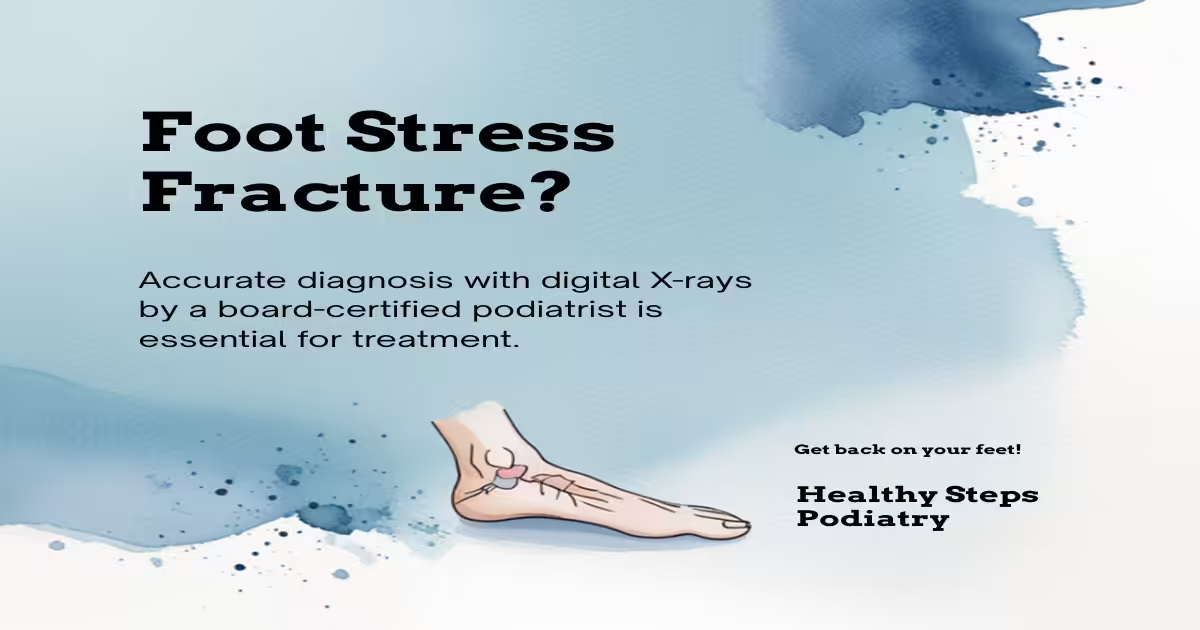
Tibial sesamoid pathology — sesamoiditis, stress fracture, or avascular necrosis — all cause sharp pain under the big toe. Imaging and immobilization plan determine the right approach.
You’re in the right place. Dr. Tom Biernacki, DPM, FACFAS — board-certified foot & ankle surgeon with 3,000+ surgeries — explains exactly what tibial sesamoid pathology means and what works. Call (810) 206-1402 for same-week appointment at Howell or Bloomfield Township.
Tibial Sesamoid Pathology: Sesamoiditis, Stress Fracture, an relates to foot/ankle injury — typically caused by trauma or twist. Most patients improve in 4-8 weeks with conservative care. Same-week appointments in Howell + Bloomfield Township: (810) 206-1402.
Medically reviewed by Dr. Tom Biernacki, DPM — Board-certified foot & ankle surgeon, 3,000+ surgeries performed. Updated April 2026 with current clinical evidence. This article reflects real practice experience from Balance Foot & Ankle Specialists in Howell and Bloomfield Township, Michigan.
Quick Answer
Most foot and ankle problems respond to conservative care — proper footwear, supportive inserts, activity modification, and targeted stretching — within 4-8 weeks. Persistent pain beyond that window, or any symptom that prevents walking, warrants a podiatric evaluation to rule out fracture, tendon tear, or systemic cause.
Watch: Dr. Tom Biernacki, DPM
Medically reviewed by Dr. Tom Biernacki, DPM — Board-Certified Podiatric Surgeon — Balance Foot & Ankle, Howell & Bloomfield Township, MI. Last updated April 2026.
▶ Watch
Medically Reviewed by Dr. Tom Biernacki, DPM — Board-Certified Podiatrist, Balance Foot & Ankle Specialists, Michigan. Last updated April 2026.
The tibial (medial) sesamoid — the larger of the two hallux sesamoids embedded within the flexor hallucis brevis tendon beneath the first metatarsophalangeal (MTP) joint — bears approximately one-third of body weight during normal walking and up to three times body weight during running and jumping. This extraordinary load-bearing role makes the tibial sesamoid vulnerable to a spectrum of pathology ranging from sesamoiditis (inflammatory overload) through stress fracture to avascular necrosis — conditions that share a similar clinical presentation but differ importantly in their prognosis and management approach.
Differential Diagnosis and Imaging
Sesamoiditis (tibial sesamoid stress syndrome): the most common diagnosis — repetitive overloading without structural fracture; plantar first MTP joint pain with direct palpation, worsened by weight-bearing and push-off activities; X-ray normal; MRI shows bone marrow edema without fracture line. Tibial sesamoid stress fracture: transverse fracture through the sesamoid from cumulative fatigue loading — runners, dancers, and gymnasts are at highest risk; X-ray may show fracture line (compare to bipartite sesamoid — a developmental variant present in 10–30% of patients; bipartite sesamoids have smooth, sclerotic, rounded edges vs. the jagged edges of an acute fracture); MRI differentiates sesamoiditis from stress fracture definitively. Avascular necrosis (osteonecrosis): collapse of sesamoid bone vascularity producing fragmentation and flattening — idiopathic or following corticosteroid injection, stress fracture non-union, or traumatic injury; X-ray shows fragmentation and sclerosis; MRI shows hypointense T1/T2 signal indicating dead bone. Bipartite sesamoid: a normal variant — important to recognize on X-ray to avoid misdiagnosis as fracture; bilateral in 25% (confirm by bilateral comparison X-ray).
Treatment by Diagnosis
Sesamoiditis: offloading — sesamoid dancer’s pad (J-pad) to relieve direct pressure; activity modification; NSAID therapy; custom orthotics with first ray cutout; corticosteroid injection (limit to 1–2 lifetime injections given AVN risk). Tibial sesamoid stress fracture: non-weight-bearing in a boot for 6–8 weeks; transition to sesamoid offloading orthotic; bone stimulator for delayed unions; surgical excision reserved for symptomatic non-unions after 4–6 months of conservative care — partial sesamoidectomy preserves the flexor hallucis brevis attachment. Avascular necrosis: conservative care identical to sesamoiditis for mild cases; surgical excision (partial or total sesamoidectomy) for refractory pain — total tibial sesamoidectomy risks hallux valgus deformity from loss of medial sesamoid weight-bearing, so partial sesamoidectomy with preservation of the plantar cortical shell is preferred when possible. Dr. Biernacki at Balance Foot & Ankle evaluates sesamoid pathology with weight-bearing X-rays and MRI and provides individualized treatment. Call (810) 206-1402 at our Bloomfield Township or Howell office.
📍 Located in Michigan?
Our board-certified podiatrists treat this condition at two convenient locations. Most new patients are seen the same week.
class=”mfd-patient-scenario” id=”in-our-clinic”>In Our Clinic: What We See
Clinical perspective from Dr. Tom Biernacki, DPM — Balance Foot & Ankle, Howell & Bloomfield Township, MI:
In our Balance Foot & Ankle clinic, sesamoiditis patients are usually dancers, runners, or women who have spent significant time in heels. They describe pain directly UNDER the big toe joint — not at the joint (that’s hallux rigidus) — which worsens with push-off. On exam we palpate each sesamoid separately (tibial and fibular) and assess for sensitivity. We always get X-rays to look for sesamoid fracture or bipartite sesamoid (a normal variant). Treatment uses a dancer’s pad to offload the sesamoid, stiff-soled footwear to reduce push-off stress, and activity modification.
class=”mfd-differential” id=”differential-diagnosis”>Differential Diagnosis: What Else Could It Be?
Not every case of sesamoiditis is straightforward. In our clinic we routinely rule out three look-alike conditions before confirming the diagnosis. If your symptoms don’t match the classic presentation, one of these may explain the pain — which is why physical exam matters more than self-diagnosis.
Condition
How It Differs
Sesamoid stress fracture
Acute or gradually worsening sharp pain, tender directly over one sesamoid, positive findings on MRI.
Hallux rigidus
Stiff, painful big toe joint with limited dorsiflexion — pain is AT the joint, not UNDER the ball.
Turf toe (plantar plate injury)
Acute hyperextension mechanism, diffuse swelling of the 1st MTP, positive 1st MTP drawer test.
Red Flags — When to See a Podiatrist Now
Seek same-day evaluation at Balance Foot & Ankle if you notice any of the following:
Sudden sharp onset (possible fracture)
Bruising or swelling under the big toe
Pain at rest or at night
Inability to push off during gait
Call (810) 206-1402 or request an appointment. Our Howell and Bloomfield Township offices reserve same-day slots for urgent foot and ankle issues.
class=”wp-block-heading mfd-treatment-bridge” id=”in-office-treatment”>In-Office Treatment at Balance Foot & Ankle
If home care isn’t resolving your stress fracture, a visit with a board-certified podiatrist is the fastest path to accurate diagnosis and a personalized plan. At Balance Foot & Ankle Specialists, Dr. Tom Biernacki, Dr. Carl Jay, and Dr. Daria Gutkin offer same-week appointments at both our Howell and Bloomfield Township offices. We perform on-site diagnostic ultrasound, digital X-ray, conservative care, advanced regenerative treatments, and minimally invasive surgery when indicated.
PowerStep Pinnacle — distributes impact evenly across the foot.
As an Amazon Associate, Balance Foot & Ankle earns from qualifying purchases. Product recommendations are based on clinical experience; prices and availability shown above update live from Amazon.
When to See a Podiatrist
Most foot stress fractures heal in 6-8 weeks of protected weight-bearing — but rushing back to activity can turn a hairline fracture into a full break. Balance Foot & Ankle confirms stress fractures on X-ray or MRI and guides your return-to-running protocol. Don’t guess — we’ll tell you the exact week you can start jogging again.
How long does a foot stress fracture take to heal?
Most foot stress fractures heal within 6–8 weeks with proper offloading. High-risk fractures (Jones fracture, navicular stress fracture) can take 3–6 months and sometimes require surgery. Premature return to activity is the most common cause of delayed healing.
How do I know if I have a stress fracture?
Stress fractures cause localized pain that worsens with activity and improves with rest, often with point tenderness over a specific bone. X-rays may be negative for 2–3 weeks after onset — MRI provides definitive diagnosis earlier.
Can you walk on a stress fracture?
This depends on the fracture location and severity. Many foot stress fractures allow limited walking in a protective boot. High-risk fractures (Jones, navicular) typically require non-weight-bearing. Walking on an unprotected stress fracture risks complete fracture.
Need Treatment at Balance Foot & Ankle?
Dr. Tom Biernacki, Dr. Carl Jay, and Dr. Daria Gutkin see patients at our Howell and Bloomfield Township offices.
The most common mistake we see is: Waiting too long before seeking care. Fix: any foot pain lasting more than 4 weeks, or any sudden severe symptom, deserves a professional evaluation rather than more rest.
Warning Signs That Need Same-Day Care
Seek immediate evaluation at Balance Foot & Ankle if you experience any of the following:
Dr. Tom Biernacki, DPM · Board-Certified Foot & Ankle Surgeon. Specializes in conservative-first care, minimally invasive bunion surgery, and complex reconstruction.
Dr. Carl Jay, DPM · Accepting new patients. Specializes in sports medicine, athletic injuries, and routine podiatric care.
Dr. Daria Gutkin, DPM, AACFAS · Accepting new patients. Specializes in surgical reconstruction and pediatric podiatry.
Locations: 4330 E Grand River Ave, Howell, MI 48843 · 43494 Woodward Ave Suite 208, Bloomfield Township, MI 48302
Stress fracture is a common foot/ankle condition that affects mobility and quality of life. Understanding the underlying cause is the first step in successful treatment. Our podiatrists at Balance Foot & Ankle perform a hands-on biomechanical exam, review your activity history, and use diagnostic imaging when appropriate to identify the root cause—not just treat the symptom. Many patients have been told to “rest and ice” without a deeper diagnostic workup; our approach is different.
Symptoms and warning signs
Common signs of stress fracture include pain that worsens with activity, morning stiffness, swelling, tenderness when palpated, and difficulty bearing weight. If you experience sudden severe pain, inability to walk, visible deformity, numbness or color change, contact our office the same day or visit urgent care—these can signal a more serious injury such as a fracture, tendon rupture, or vascular compromise. Diabetics with any foot wound should seek same-day care.
Conservative treatment options
Most cases of stress fracture respond to non-surgical care: structured rest, supportive footwear changes, custom orthotics, targeted stretching and strengthening protocols, anti-inflammatory medications when medically appropriate, and in-office procedures such as ultrasound-guided injections. We also offer advanced therapies including laser therapy, EPAT/shockwave, regenerative injections, and image-guided procedures. Treatment is sequenced from least invasive to most invasive, and we explain the rationale at every step.
When is surgery considered?
Surgery is reserved for cases that fail 3-6 months of well-structured conservative care, when there is structural pathology (severe deformity, complete tear, advanced arthritis), or when imaging shows damage that will not heal without intervention. Our surgeons have performed 3,000+ foot and ankle procedures and prioritize minimally-invasive techniques whenever appropriate. We discuss recovery timelines, return-to-activity milestones, and realistic outcome expectations before any procedure is scheduled.
Recovery timeline and prevention
Recovery from stress fracture varies based on severity and chosen treatment path. Conservative cases often improve within 4-8 weeks with consistent adherence to the protocol. Post-procedural recovery may range from a few days (in-office procedures) to several months (reconstructive surgery). Long-term prevention involves footwear assessment, activity modification, structured strengthening, and regular check-ins with your podiatrist if you have a history of recurrence. We provide written home-exercise plans and digital follow-up support.
Reviewed by Dr. Tom Biernacki, DPM — Board-certified podiatrist, Balance Foot & Ankle, Howell & Bloomfield Township, MI. 4.9-star rating across 1,123+ patient reviews. Schedule an evaluation | (810) 206-1402
Ready to feel better?
Same-week appointments available in Howell and Bloomfield Township, Michigan.
Dr. Tom Biernacki, DPM is a board-certified foot & ankle surgeon (ABFAS & ABPM) at Balance Foot & Ankle Specialists in Southeast Michigan. With over a decade of clinical experience, he specializes in heel pain, bunions, diabetic foot care, sports injuries, and minimally invasive surgery. Dr. Biernacki is a member of the APMA and ACFAS, and his patient education content on MichiganFootDoctors.com and YouTube has made him one of the most-followed foot & ankle educators on YouTube.
Balance Foot & Ankle surgeons are affiliated with Trinity Health Michigan, Corewell Health, and Henry Ford Health — three of Michigan’s largest health systems.