
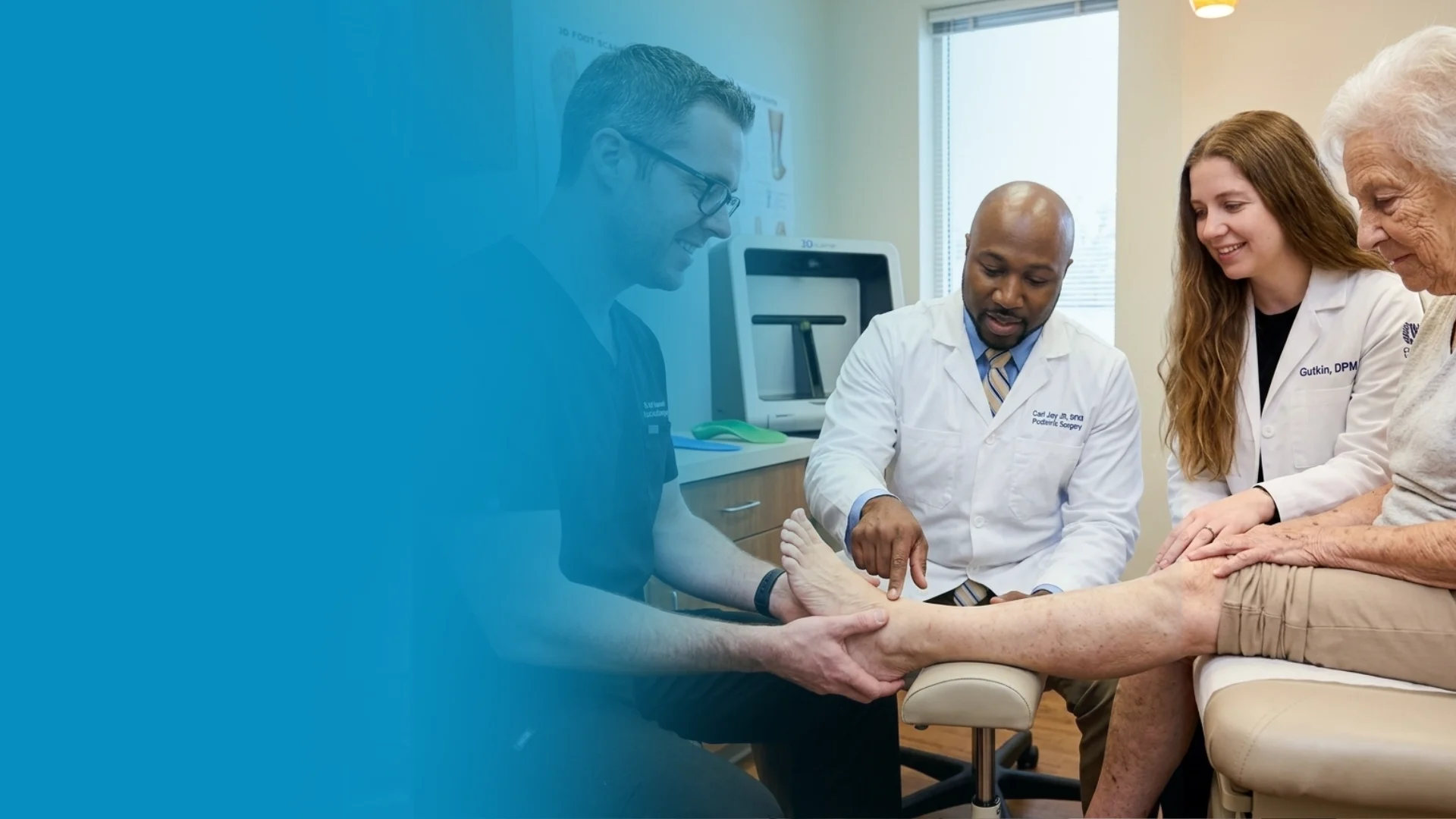
Medically reviewed by Dr. Tom Biernacki, DPM · Board-Certified Podiatric Surgeon · Last reviewed: April 2026 · Editorial Policy
Not sure which one you have? A podiatrist can tell in one visit — book a real appointment time online, 24/7: Howell or Bloomfield Township. Takes about a minute, 24/7.
In This Article
- Quick Answer
- Side-by-Side Comparison
- Turmeric/Curcumin — Full Review
- Ibuprofen — Full Review
- Our Podiatrists’ Recommendation
- Need Expert Guidance?
- Podiatrist-Recommended Foot Products and Clinical Foot Care in Michigan
- Your Board-Certified Podiatrists
- Pros & Cons of Conservative Care for foot care
- Dr. Tom’s Recommended Products for foot care
Related Conditions
Medically reviewed by Dr. Tom Biernacki, DPM
Board-certified podiatric surgeon | Balance Foot & Ankle
Last reviewed: May 2026

✅ Medically reviewed by Dr. Tom Biernacki, DPM — Board-Certified Podiatrist · Last updated April 6, 2026
Turmeric/Curcumin vs Ibuprofen: Natural vs Traditional Anti-Inflammatory for Foot Pain

Quick Answer
Use ibuprofen for acute, significant pain that needs fast relief — it’s more potent and acts within 30-60 minutes. Use turmeric/curcumin for long-term daily anti-inflammatory support — it’s gentler on the stomach, safer for long-term use, and has meaningful evidence for chronic inflammation management. Many patients with plantar fasciitis or arthritis use both: ibuprofen for flare-ups and turmeric for daily maintenance. Note: This is educational information — consult your doctor before changing your medication regimen.
Side-by-Side Comparison
Feature | Turmeric/Curcumin | Ibuprofen
Onset | Days-weeks | 30-60 minutes
Effect | Moderate anti-inflammatory | Strong anti-inflammatory
GI Safety | Generally gentle | Can cause GI irritation
Long-Term Use | Yes (generally safe) | Caution (GI, kidney, cardiovascular)
Drug Interactions | Minimal | Multiple
Best For | Chronic inflammation | Acute pain flares
Turmeric/Curcumin — Full Review
Curcumin — the active compound in turmeric — inhibits NF-κB, a key inflammatory signaling molecule, and modulates prostaglandin pathways similar to NSAIDs, but with a significantly better safety profile for long-term use. Clinical trials in osteoarthritis patients have shown curcumin supplementation (500-1000mg daily) reduces pain and inflammation comparably to ibuprofen in some studies, with far fewer gastrointestinal side effects.
For patients with chronic plantar fasciitis, Achilles tendinitis, or foot and ankle arthritis who need ongoing anti-inflammatory support but cannot tolerate daily NSAIDs, high-bioavailability curcumin (with piperine or in liposomal form) is an excellent option. Results build over 4-8 weeks of consistent use. See our supplement guide and browse our full product catalog.
Pros: Safe long-term, minimal drug interactions, anti-inflammatory + antioxidant, gentle on stomach.
Cons: Slow onset, variable bioavailability (choose enhanced formulas), less potent for acute pain.
[AFFILIATE LINK — Turmeric/Curcumin]
Ibuprofen — Full Review
Ibuprofen (Advil, Motrin) is a proven NSAID that inhibits COX-1 and COX-2 enzymes, rapidly reducing prostaglandin production and delivering meaningful pain relief within an hour. It remains the most appropriate choice for: acute injury pain, severe inflammatory flare-ups, and situations where rapid pain control is needed.
The concerns with ibuprofen are primarily with long-term daily use: gastrointestinal irritation (including ulcers), increased cardiovascular risk, and potential kidney stress. Short-term use at recommended doses is safe for most healthy adults. Take with food, avoid if you have kidney disease or cardiovascular risk factors, and don’t exceed 10-14 days of regular use without medical supervision. See our plantar fasciitis guide for comprehensive treatment approaches.
Pros: Fast-acting, potent, well-understood, affordable, widely available.
Cons: GI irritation, cardiovascular risk with long-term use, not safe for certain patients, masks pain without healing.
[Ibuprofen is an OTC medication available at all pharmacies]
Our Podiatrists’ Recommendation
For acute foot pain flare-ups: ibuprofen at the recommended dose for 3-5 days, taken with food. For chronic inflammation management: daily high-bioavailability curcumin (500-1000mg with piperine) as a safer long-term strategy. Topical Voltaren (diclofenac gel) is an excellent middle ground — NSAID anti-inflammatory effect delivered locally with minimal systemic risk. The best anti-inflammatory strategy addresses the root cause of inflammation through footwear, orthotics, and biomechanical correction — not just medication.
Frequently Asked Questions
Q: Can I take turmeric and ibuprofen together?
Generally yes, but curcumin has mild blood-thinning properties — consult your doctor if you take blood thinners or are pre-surgical.
Q: What dose of turmeric is effective?
500-1000mg of standardized curcumin extract daily (not the same as cooking turmeric, which has much lower curcumin content). Look for formulas with piperine (black pepper extract) for enhanced absorption.
Q: Is long-term ibuprofen use dangerous?
Regular daily use beyond 2 weeks increases GI, cardiovascular, and kidney risk. Occasional use for flare-ups is generally safe for healthy adults. Always follow package directions.
Need Expert Guidance?
Our podiatrists help you choose the right products. Call: (810) 206-1402 | Schedule Online
Browse all podiatrist-recommended products.
Podiatrist-Recommended Foot Products and Clinical Foot Care in Michigan
Michigan podiatrists at Balance Foot & Ankle recommend the products that have the strongest clinical evidence for the conditions they treat — and are honest when a product category provides limited benefit for a specific patient’s situation. The most effective foot care products (insoles, creams, braces, stretching devices, compression garments) work best when selected on the basis of an accurate diagnosis and matched to the individual patient’s needs. Products chosen without a clear diagnosis may provide generalized relief without addressing the underlying condition, leading to ongoing symptoms despite product expense.
At Balance Foot & Ankle, product recommendations are always in the context of a treatment plan — not a standalone recommendation divorced from clinical assessment. When a patient’s condition requires more than products can provide, we offer the clinical interventions that products cannot replicate: custom orthotics fabricated to the patient’s foot from a clinical cast or scan; MLS laser therapy for chronic inflammation and nerve pain; EPAT shockwave therapy for tendinopathy; targeted injection therapy; and surgical correction when structural problems require definitive treatment. Michigan patients who want professional guidance on both product selection and clinical treatment options can call Balance Foot & Ankle at (810) 206-1402 to schedule a hands-on exam plus imaging when needed at our Howell or Bloomfield Township office.
Related Treatment Guides
- Plantar Fasciitis & Heel Pain Treatment
- Foot & Ankle Arthritis Treatment
- Custom 3D Orthotics
- Sports Foot & Ankle Injury Treatment
Michigan patients experiencing foot or ankle problems can schedule an appointment at Balance Foot & Ankle — with locations in Howell (4330 E Grand River) and Bloomfield Township (43494 Woodward Ave #208). Call (810) 206-1402 for same-week availability.
Insurance Accepted
BCBS · Medicare · Aetna · Cigna · United Healthcare · HAP · Priority Health · Humana · View All →
Howell Office
4330 E Grand River Ave
Howell, MI 48843
Get Directions →
Bloomfield Township Office
43494 Woodward Ave, #208
Bloomfield Township, MI 48302
Get Directions →
Your Board-Certified Podiatrists



Pros & Cons of Conservative Care for foot care
Advantages
- ✓ Conservative care first
- ✓ Appointments
- ✓ Multiple insurance accepted
Considerations
- ✗ Self-treatment can mask issues
- ✗ See a podiatrist if pain >2 weeks
Dr. Tom’s Recommended Products for foot care
Affiliate disclosure: As an Amazon Associate, Balance Foot & Ankle earns from qualifying purchases. We only recommend products we use with patients.
Footnanny Heel Cream Dr. Tom’s Pick
Best for: Daily moisturizer for cracked heels
Ready to Get Back on Your Feet?
Appointments in Howell + Bloomfield Township. Most insurance accepted. Dr. Tom Biernacki, DPM & team.
Book Today — Online Booking 24/7 Available
Call Now: (810) 206-1402
About Your Care Team at Balance Foot & Ankle
Dr. Tom Biernacki, DPM · Board-Certified Foot & Ankle Surgeon. Specializes in conservative-first care, minimally invasive bunion surgery, and complex reconstruction.
Dr. Carl Jay, DPM · Accepting new patients. Specializes in sports medicine, athletic injuries, and routine podiatric care.
Dr. Daria Gutkin, DPM, AACFAS · Accepting new patients. Specializes in surgical reconstruction and pediatric podiatry.
Locations: 4330 E Grand River Ave, Howell, MI 48843 · 43494 Woodward Ave Suite 208, Bloomfield Township, MI 48302
Hours: Mon–Thu 9:00 AM – 4:30 PM, Fri 9:00 AM – 2:30 PM · (810) 206-1402
In-Office Treatment at Balance Foot & Ankle
If home treatment isn’t providing relief for your foot and ankle conditions, our podiatry team at Balance Foot & Ankle can help with expert evaluations and advanced in-office care.
Appointments available. (810) 206-1402
VitaMedica Arnica Gel
Arnica gel plus 15 plant compounds for sore feet, plantar fasciitis flares and post-activity soreness. Apply a thin layer to the sore area.
Shop VitaMedica Arnica Gel →Ready for Expert Care?
Appointments in Howell & Bloomfield Township, MI.
4.9★ | 1,123 Reviews | 3,000+ Surgeries
Or call: (810) 206-1402
