
★ 4.9 Stars · 1,123+ Reviews · Balance Foot & Ankle Michigan
Achilles Tendonitis Rupture Care
Board-certified podiatrists in Howell & Bloomfield Township, MI. 4.9★ rated · Same-week appointments · Most insurance accepted · (810) 206-1402.
Achilles Tendonitis & Rupture Care in Howell & Bloomfield Township, Michigan
Short intro explaining how Achilles pain or rupture affects walking, standing, sports, and daily activities, emphasizing early diagnosis and expert care.
Types of Achilles Tendon Conditions We Treat
The Achilles tendon can be injured in several distinct ways, each requiring a targeted treatment approach:
Achilles Tendinopathy (Insertional vs. Non-Insertional)
Non-insertional Achilles tendinopathy affects the middle portion of the tendon — typically in active adults and runners. Insertional tendinopathy occurs at the point where the tendon attaches to the heel bone, often accompanied by a heel spur (Haglund’s deformity). Both types cause pain, stiffness, and swelling, but require different treatment strategies.
Achilles Tendon Rupture
A complete rupture is a serious injury most common in middle-aged recreational athletes (“weekend warriors”). It typically feels like a sudden snap or pop at the back of the leg. Treatment options include surgical repair and non-surgical casting/bracing, depending on patient activity level, age, and rupture characteristics. Our doctors will walk you through all options and their recovery timelines.
Recovery Timeline: What to Expect
| Condition | Conservative Care | Surgical Recovery |
|---|---|---|
| Mild tendinopathy | 4–8 weeks | N/A |
| Moderate tendinopathy | 8–16 weeks | N/A |
| Partial rupture | 6–12 weeks in boot | 3–4 months |
| Complete rupture | 4–6 months in cast/boot | 4–6 months |
Recovery times vary based on individual factors including age, activity level, and compliance with rehabilitation. We monitor your progress closely and adjust treatment as needed.
Advanced Achilles Treatment Options
Beyond standard physical therapy and orthotics, Balance Foot & Ankle offers advanced regenerative and energy-based therapies to accelerate Achilles healing:
- PRP (Platelet-Rich Plasma) Injections — stimulate tendon repair using your body’s own growth factors
- Shockwave Therapy — high-energy acoustic waves break down scar tissue and promote healing
- EMTT (Magnetotransduction Therapy) — deep tissue magnetic field therapy for chronic tendon pain
- Custom Orthotics — reduce strain on the Achilles by correcting heel elevation and gait mechanics
Preventing Achilles Tendon Injuries
Many Achilles injuries are preventable with the right approach to activity and footwear:
- Warm up gradually before exercise — never sprint from a cold start
- Stretch the calf muscles and Achilles daily, especially before and after running
- Increase training intensity and mileage gradually (no more than 10% per week)
- Wear supportive footwear with adequate heel cushioning
- Replace running shoes every 300–500 miles
- Avoid running on hard surfaces exclusively — vary terrain
- Strengthen calf and ankle muscles with eccentric heel-drop exercises
If you notice Achilles stiffness or pain first thing in the morning, don’t ignore it — early treatment prevents small problems from becoming major injuries. Call us at (810) 206-1402.
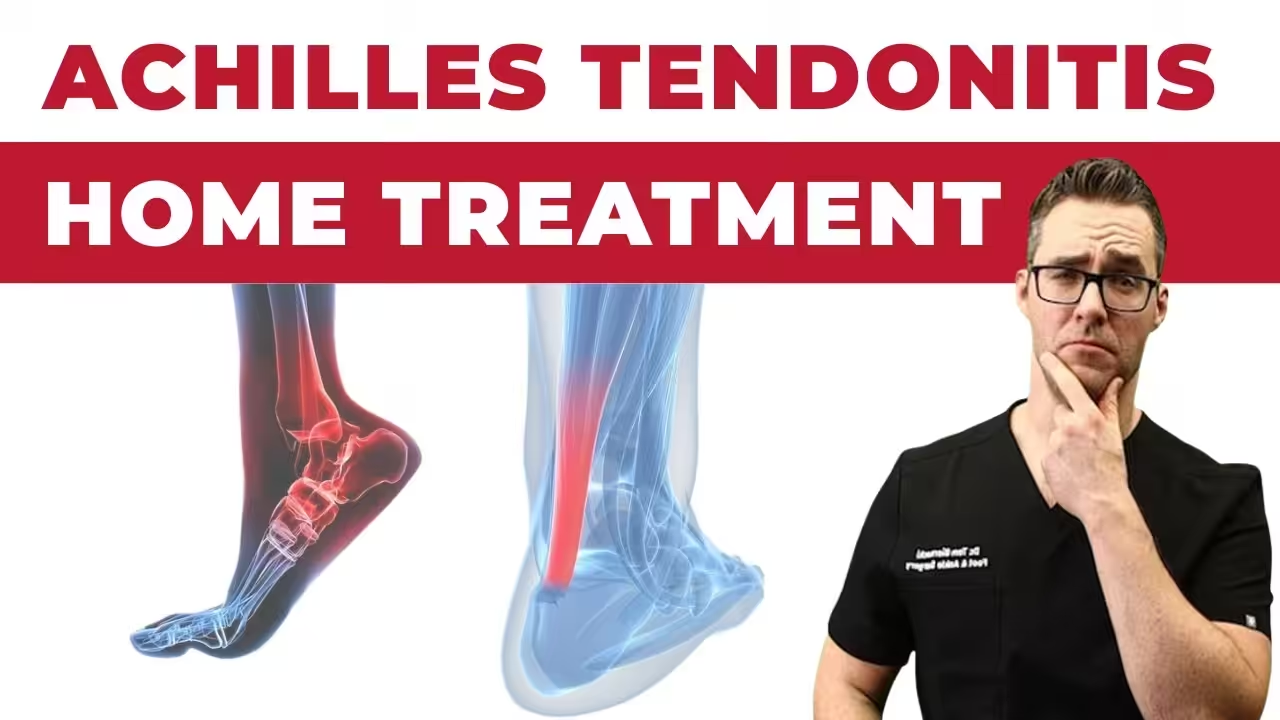
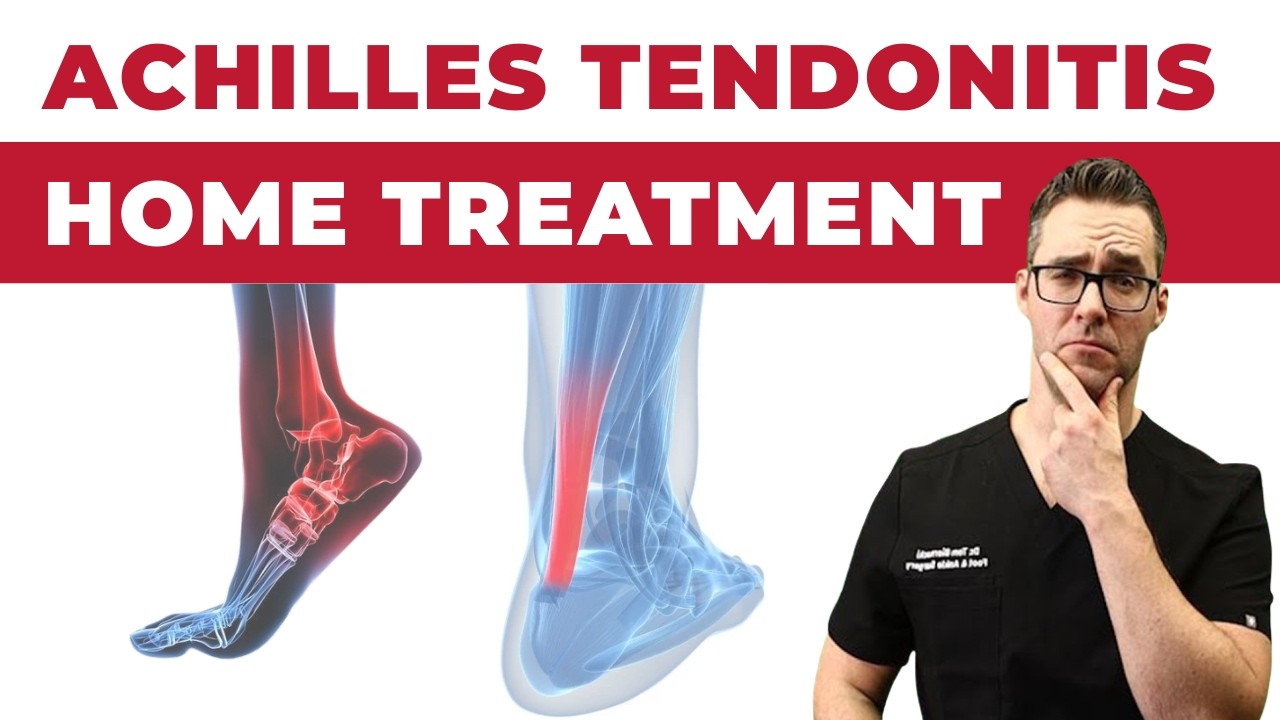
Watch: Insertional Achilles Tendonitis HOME Treatment [Stretches & Exercises]
Schedule Your Achilles Evaluation
When Is Achilles Tendon Treatment Needed?
Outline common signs and symptoms:
- Pain or stiffness along the Achilles tendon
- Swelling or thickening near the heel
- Pain that worsens with activity or in the morning
- Sudden sharp pain or “pop” (possible rupture)
- Difficulty pushing off while walking or running
Emphasize risks of delayed treatment, including tendon weakening and rupture.
Our Treatment Approach
Non-Surgical Achilles Care
- Activity modification and rest
- Stretching and strengthening programs
- Custom orthotics and heel lifts
- Supportive footwear and bracing
- Anti-inflammatory care
Achilles Rupture & Surgical Care
- Prompt evaluation for suspected rupture
- Minimally invasive surgical repair when necessary
- Post-surgical rehabilitation planning
Note conservative-first philosophy with surgery reserved for severe cases.
Benefits of Professional Achilles Care
Reduces pain and inflammation
Restores tendon strength
and flexibility
Prevents progression
to rupture
Improves walking and
athletic performance
Lowers risk of long-term complications
What to Expect – Before, During
& After Treatment
BEFORE
DURING
AFTER
Why Choose Balance Foot & Ankle Specialist?
- Board-certified podiatrists
- Experience treating athletes, workers, and seniors
- Conservative-first, evidence-based care
- Advanced diagnostics and treatment options
- Convenient Howell & Bloomfield Township locations
Insurance & Medicare Friendly
Achilles Tendonitis & Rupture FAQ
What is the difference between Achilles tendonitis and rupture?
Tendonitis is inflammation or degeneration from overuse. A rupture is a complete or partial, sudden tear of the tendon that severely limits movement.
How long does Achilles tendonitis take to heal?
Mild cases take 6 to 12 weeks. Chronic cases may require 3 to 6 months of dedicated non-surgical treatment.
Can Achilles tendonitis heal without surgery?
Yes, almost always. Surgery is rarely needed and is only considered if severe pain lasts longer than six months despite conservative treatment.
What are signs of an Achilles rupture?
A sudden, sharp “pop” or “snap” in the heel, followed by immediate inability to stand on the toes, and a gap felt in the back of the ankle.
Do custom orthotics help Achilles pain?
Yes. Custom orthotics correct foot mechanics (like overpronation) to reduce abnormal strain and pulling forces on the Achilles tendon.
When is surgery required for Achilles injuries?
Surgery is typically required for a complete Achilles rupture. For tendonitis, surgery is only a last resort if chronic pain persists after six months of proper non-surgical care.
Protect Your Achilles. Restore Your Strength.
Expert care for Achilles tendon pain and injuries to help you move confidently again.
Schedule Your Achilles Evaluation
Frequently Asked Questions
What is the difference between insertional and non-insertional Achilles tendonitis?
Insertional Achilles tendonitis affects the attachment point of the tendon at the back of the heel bone. Non-insertional affects the middle portion of the tendon, typically 2-6 cm above the heel. Insertional cases often have a Haglund’s deformity (heel bone spur) and respond well to heel lift orthotics and specific stretching. Non-insertional cases benefit more from eccentric strengthening exercises. Treatment differs significantly depending on which type you have.
Can Achilles tendonitis heal on its own?
Mild Achilles tendonitis may improve with relative rest, proper footwear, and stretching over 6-12 weeks. However, the Achilles tendon has poor blood supply which means it heals slowly and incompletely without targeted treatment. Untreated or undertreated Achilles tendonitis frequently progresses to tendinosis (degenerative change) and dramatically increases rupture risk. Early intervention with eccentric exercises, orthotics, and when needed, shockwave or PRP therapy leads to the best outcomes.
What exercises help Achilles tendonitis recover?
Eccentric calf strengthening is the most evidence-backed exercise for Achilles tendonitis — performed by slowly lowering the heel off a step. For insertional Achilles tendonitis, exercises are modified to avoid extreme dorsiflexion. Calf stretching, ankle mobility work, and gradual return to activity are also important. Our podiatrists provide a specific, phased home exercise program tailored to whether you have insertional or non-insertional tendonitis.
How long does Achilles tendonitis take to heal?
Mild cases with prompt treatment may resolve in 6-12 weeks. Moderate cases typically require 3-6 months of consistent treatment. Chronic or severe tendinosis (degenerative change) may take 6-12 months or longer, and may require advanced treatments like PRP injection or shockwave therapy. The most common reason for slow recovery is returning to full activity too quickly. Our team creates return-to-activity plans that protect the tendon while maintaining fitness.
Does insurance cover Achilles tendonitis treatment in Michigan?
Yes — evaluation, imaging, orthotics (when medically necessary), and conservative treatments for Achilles tendonitis are covered by most insurance plans and Medicare. Advanced treatments like PRP injection and shockwave therapy may have variable coverage depending on your specific plan. Our team verifies your benefits before recommending any treatment and provides transparent cost information for any uncovered options.
Ready to Get Back on Your Feet?
Same-week appointments available at both locations.
Insurance Accepted
BCBS · Medicare · Aetna · Cigna · United Healthcare · HAP · Priority Health · Humana · View All →
Howell Office
4330 E Grand River Ave
Howell, MI 48843
Get Directions →
Bloomfield Township Office
43494 Woodward Ave #208
Bloomfield Township, MI 48302
Get Directions →
Your Board-Certified Podiatrists



Board-certified care at both Michigan locations
Book your visit today
Most insurance accepted · On-site X-ray · Board-certified podiatrists
Achilles Tendinitis & Rupture Care Michigan
Dr. Biernacki explains the spectrum of Achilles tendon injuries — from insertional tendinitis to complete rupture — and when each requires conservative care vs. surgical repair.
Frequently Asked Questions
How do I know if my Achilles pain is tendinitis or a rupture?
Tendinitis: gradual onset, stiffness in the morning, pain that warms up with activity. Rupture: sudden pop, immediate inability to rise on tiptoe, a gap palpable in the tendon. The Thompson test (squeezing the calf — no foot movement = positive = rupture) is the key clinical test. Ultrasound or MRI confirms the diagnosis.
What is the fastest recovery from Achilles tendinitis?
Fastest protocol: EPAT shockwave therapy (3–5 sessions, often resolves 6-month chronic cases in weeks), eccentric calf strengthening (Alfredson protocol — 3×15 reps twice daily), custom orthotics with heel lift, and activity modification. Cortisone injections are avoided near the Achilles due to tendon rupture risk.
Watch: Achilles Tendonitis & Rupture Care
Dr. Tom on Achilles care — tendinitis vs tendinosis, Thompson test for rupture, eccentric heel drops, PRP, surgical repair decision-making.
Frequently Asked Questions
When should I see a podiatrist?
If symptoms persist past 2 weeks, affect your normal activity, or are accompanied by red-flag symptoms (warmth, redness, swelling, inability to bear weight).
What does treatment cost?
Most diagnostic visits and conservative treatments are covered by Medicare and major insurers. Out-of-pocket costs vary by your specific plan.
How quickly can I get an appointment?
Most non-urgent cases see us within 5 business days. Urgent cases (sudden pain, possible fracture) typically same or next business day.
What is Achilles tendon?
Achilles tendon is a common foot/ankle condition that affects mobility and quality of life. Understanding the underlying cause is the first step in successful treatment. Our podiatrists at Balance Foot & Ankle perform a hands-on biomechanical exam, review your activity history, and use diagnostic imaging when appropriate to identify the root cause—not just treat the symptom. Many patients have been told to “rest and ice” without a deeper diagnostic workup; our approach is different.
Symptoms and warning signs
Common signs of Achilles tendon include pain that worsens with activity, morning stiffness, swelling, tenderness when palpated, and difficulty bearing weight. If you experience sudden severe pain, inability to walk, visible deformity, numbness or color change, contact our office the same day or visit urgent care—these can signal a more serious injury such as a fracture, tendon rupture, or vascular compromise. Diabetics with any foot wound should seek same-day care.
Conservative treatment options
Most cases of Achilles tendon respond to non-surgical care: structured rest, supportive footwear changes, custom orthotics, targeted stretching and strengthening protocols, anti-inflammatory medications when medically appropriate, and in-office procedures such as ultrasound-guided injections. We also offer advanced therapies including MLS laser therapy, EPAT/shockwave, regenerative injections, and image-guided procedures. Treatment is sequenced from least invasive to most invasive, and we explain the rationale at every step.
When is surgery considered?
Surgery is reserved for cases that fail 3-6 months of well-structured conservative care, when there is structural pathology (severe deformity, complete tear, advanced arthritis), or when imaging shows damage that will not heal without intervention. Our surgeons have performed 3,000+ foot and ankle procedures and prioritize minimally-invasive techniques whenever appropriate. We discuss recovery timelines, return-to-activity milestones, and realistic outcome expectations before any procedure is scheduled.
Recovery timeline and prevention
Recovery from Achilles tendon varies based on severity and chosen treatment path. Conservative cases often improve within 4-8 weeks with consistent adherence to the protocol. Post-procedural recovery may range from a few days (in-office procedures) to several months (reconstructive surgery). Long-term prevention involves footwear assessment, activity modification, structured strengthening, and regular check-ins with your podiatrist if you have a history of recurrence. We provide written home-exercise plans and digital follow-up support.
Ready to feel better?
Same-week appointments available in Howell and Bloomfield Township, Michigan.