

The most important clinical decision with Ankle Sprain Vs Fracture Michigan isn’t which treatment to start with — it’s identifying the correct subtype. That changes everything. Call (810) 206-1402.
Dr. Tom’s Wound Care Kit
Dr. Tom’s Top Pain Relief Picks — Dr. Hoy’s (2026)
Affiliate disclosure: As an Amazon Associate, Balance Foot & Ankle earns from qualifying purchases. I personally use Dr. Hoy’s in my practice for patients who need topical relief.
| Product | Best For | Dr. Tom’s Take | Get It |
|---|---|---|---|
| Dr. Hoy’s Natural Pain Relief Gel 3.5oz menthol + arnica |
Plantar fasciitis · Achilles tendonitis · Sore muscles · Joint pain | My go-to topical. Cooling-then-warming sensation. No greasy residue. Non-NSAID alternative. | Buy Now |
| Dr. Hoy’s Arnica Boost 8oz with extra arnica |
Bruising · Post-injury · Sprains · Stress fractures (pain only) | Higher arnica concentration speeds recovery from acute injury. Use 4x daily for first 7 days. | Buy Now |
| Dr. Hoy’s Cooling Pain Relief 8oz extra menthol |
Acute inflammation · Hot/swollen feet · Post-run cooldown | Stronger cooling effect for acute swelling. Pair with ice for first 48 hours after injury. | Buy Now |
| Dr. Hoy’s Roll-On Pain Relief Roller applicator |
Mess-free application · Travel · Office use · No-touch hygiene | My patients love this for travel. Glides on without hand contact — cleanest application available. | Buy Now |
| Dr. Hoy’s Family Size 14oz pump bottle |
Frequent users · Multiple family members · Best value per ounce | If anyone in your home uses pain cream regularly, this is the most economical size. Same formula. | Buy Now |
Why I recommend Dr. Hoy’s over Doctor Hoy’s Natural Pain Relief Gel and Bengay: Cleaner ingredient list (no parabens, no synthetic dyes), longer-lasting effect, and the cooling-then-warming dual sensation actually addresses both inflammation and circulation. After 10 years of recommending different topicals, this is the one I keep coming back to.
Quick Compare: Dr. Tom’s Top Running Shoes
| Shoe | Best For | Watch Out For | Buy | ||||||||||||||||||||||||
|---|---|---|---|---|---|---|---|---|---|---|---|---|---|---|---|---|---|---|---|---|---|---|---|---|---|---|---|
| Hoka Bondi 9 | Plantar fasciitis, max cushion | Heavy, tall stack | Buy | ||||||||||||||||||||||||
| Brooks Ghost 17 | Neutral runners, first running shoe | Not for 200+lb runners | Buy | ||||||||||||||||||||||||
| Brooks Adrenaline GTS 23 | Flat feet, overpronation | Snug toe box | Buy | ||||||||||||||||||||||||
| Altra Torin 8 | Wide feet, bunions, Morton’s toe | Zero-drop transition | Buy | ||||||||||||||||||||||||
| Hoka Clifton 10 | Daily training, lighter Hoka | Less cushion than Bondi | Buy | ||||||||||||||||||||||||
| NB 990v6 | Senior fall prevention, 6E width |
Dr. Tom’s Top Pain Relief Picks — Dr. Hoy’s (2026)Affiliate disclosure: As an Amazon Associate, Balance Foot & Ankle earns from qualifying purchases. I personally use Dr. Hoy’s in my practice for patients who need topical relief.
Why I recommend Dr. Hoy’s over Doctor Hoy’s Natural Pain Relief Gel and Bengay: Cleaner ingredient list (no parabens, no synthetic dyes), longer-lasting effect, and the cooling-then-warming dual sensation actually addresses both inflammation and circulation. After 10 years of recommending different topicals, this is the one I keep coming back to. | Buy |
For full detailed reviews with pros/cons/Dr. Tom’s tips, see our complete shoe guide.
Medically reviewed by Dr. Tom Biernacki, DPM · Board-Certified Podiatric Surgeon · Last reviewed: April 2026 · Editorial Policy
Related Conditions
Quick Answer
Ankle Sprain vs Fracture 2026: How to Tell Podiatrist relates to foot/ankle injury — typically caused by trauma or twist. Most patients improve in 4-8 weeks with conservative care. Same-week appointments in Howell + Bloomfield Hills: (810) 206-1402.

Medically reviewed by Dr. Tom Biernacki, DPM — Board-certified foot & ankle surgeon, 3,000+ surgeries performed. Updated April 2026 with current clinical evidence. This article reflects real practice experience from Balance Foot & Ankle Specialists in Howell and Bloomfield Hills, Michigan.
Quick Answer
An ankle sprain is a stretch or tear of the lateral ligaments caused by an inward roll of the foot. Grades 1-2 respond to RICE, bracing, and progressive loading within 2-4 weeks. See a podiatrist same-day if you cannot bear weight, have bone tenderness, or severe swelling within 1 hour (Ottawa Rules).
Watch: Dr. Tom Biernacki, DPM

Medically reviewed by Dr. Tom Biernacki, DPM — Board-Certified Podiatric Surgeon — Balance Foot & Ankle, Howell & Bloomfield Hills, MI. Last updated April 2026.
▶ Watch

👟 Dr. Tom Also Recommends
Podiatrist Recommended Shoes 2026: Dr. Tom’s Top Picks for Every Condition
The right footwear can make or break your recovery. Dr. Tom’s complete guide to the best shoes for plantar fasciitis, flat feet, neuropathy, bunions & more — with clinical picks for every foot type.
See Dr. Tom’s Top Shoe Picks →Ankle Sprain vs. Fracture: Key Differences
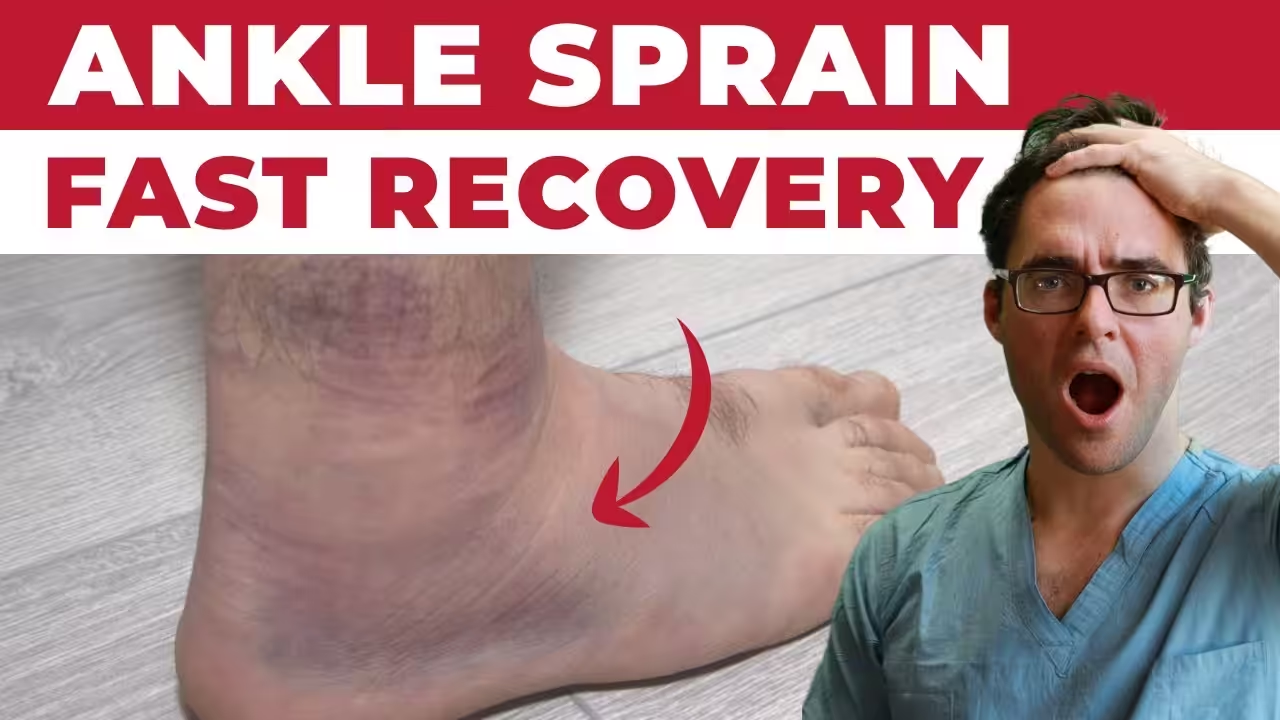
After an ankle injury, one of the most common questions is: is this a sprain or a fracture? The distinction matters enormously because treatment differs significantly — a sprain may heal with rest and rehabilitation in a few weeks, while a fracture may require immobilization, non-weight-bearing, or surgery. While only an X-ray can definitively rule out a fracture, clinical guidelines (the Ottawa Ankle Rules) help identify which patients actually need imaging — and can reassure many that X-rays are not necessary.
The Ottawa Ankle Rules: Does Your Ankle Need an X-Ray?
The Ottawa Ankle Rules are validated clinical decision rules used by emergency physicians, podiatrists, and urgent care providers to determine whether an ankle X-ray is necessary after injury. An ankle X-ray IS needed if there is pain near the ankle malleolus (the bony prominences) AND at least one of: inability to bear weight (take 4 steps) immediately after the injury AND in the exam room; or bone tenderness at the posterior edge or tip of either malleolus (the bottom 6 cm of the fibula or tibia). Additionally, a foot X-ray is needed if there is pain in the midfoot zone AND bone tenderness at the base of the 5th metatarsal or over the navicular bone. If these criteria are absent, an ankle fracture is unlikely and X-rays may not be needed in a low-risk patient.
Signs That Suggest a Fracture Rather Than a Sprain
Signs that increase concern for fracture: immediate inability to bear weight after the injury; significant bony tenderness directly over the malleolus, fibula shaft, or 5th metatarsal base; audible “pop” or crack at the time of injury (a pop can also occur with a ligament tear, but a crack more often suggests bone); severe swelling and bruising developing within 1–2 hours; deformity (the ankle looks visibly displaced or crooked). Signs that suggest a sprain without fracture: ability to bear weight immediately after injury; tenderness localized to the ligaments (anterior to the lateral malleolus for ATFL sprain, posterior for PTFL); gradual swelling over 12–24 hours rather than immediate severe swelling; no direct bony tenderness by Ottawa criteria.
Common Ankle Fracture Types
Lateral malleolus fracture (Weber A, B, or C): The most common ankle fracture — involves the fibula at or above the joint line. Weber A fractures are below the joint and often treated non-operatively. Weber B and C fractures involve the ankle mortise and may require surgical fixation if unstable. Bimalleolar fracture: Both the fibula and tibia are fractured — almost always requires surgical fixation. Trimalleolar fracture: Fibula, medial tibia, and posterior tibia — requires surgery. 5th metatarsal base fracture (avulsion): Very commonly confused with ankle sprain — the peroneus brevis tendon pulls off a chip of bone at the base of the 5th metatarsal. Often treated with a boot; occasionally requires surgery if displaced. Talar fractures: Less common but serious — the talus has limited blood supply and is prone to avascular necrosis (bone death) if the fracture compromises its vascularity.
Treatment Differences: Sprain vs. Fracture
Grade I–II ankle sprain: RICE (rest, ice, compression, elevation), protected weight-bearing with an ankle brace, peroneal strengthening rehabilitation, return to activity in 1–4 weeks. Grade III ankle sprain: Functional rehabilitation in a boot or high-top brace, 6–12 weeks of rehabilitation before full sport return, possible evaluation for concurrent injuries (osteochondral lesion, peroneal tear). Stable ankle fracture (e.g., isolated distal fibula): Immobilization in a boot, protected weight-bearing, 6–8 weeks healing, then rehabilitation. Unstable or displaced fracture: Surgical fixation (open reduction internal fixation, ORIF) with plates and screws, 10–12 weeks non-weight-bearing, prolonged recovery.
When to See a Podiatrist After an Ankle Injury
See a podiatrist immediately (same day or next day) if: you cannot bear weight on the ankle; there is obvious deformity; there is severe swelling within 1–2 hours of injury; you have bony tenderness by Ottawa criteria; or you have a history of prior fractures. See a podiatrist within a few days if: you have a moderate sprain that is improving but not resolving, or pain persists beyond 1 week. Any ankle injury that doesn’t substantially improve within 4–6 weeks deserves evaluation for a missed fracture, osteochondral defect, or tendon injury. Call (810) 206-1402 — Dr. Tom Biernacki at Balance Foot & Ankle in Howell and Bloomfield Hills offers same-day and next-day ankle injury evaluations.
More Podiatrist-Recommended Ankle Sprain Essentials
Stability Walking/Running Shoe
Brooks Adrenaline GTS 25 — lateral support during recovery walking.
KT Tape for Ankle Support
KT Tape — proprioceptive support for athletic return-to-play.
Supportive Insole


PowerStep Pinnacle — arch support reduces re-injury risk during recovery.
As an Amazon Associate, Balance Foot & Ankle earns from qualifying purchases. Product recommendations are based on clinical experience; prices and availability shown above update live from Amazon.
When to See a Podiatrist
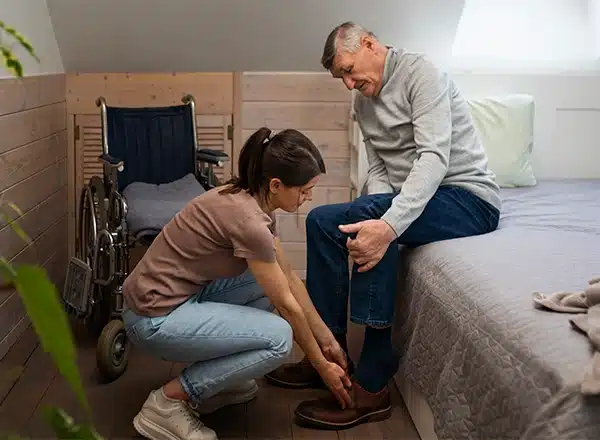
A sprain that hasn’t fully recovered after 6 weeks often has residual ligament laxity or occult fracture that keeps the ankle unstable. Balance Foot & Ankle X-rays and stress-tests every lingering sprain — if the ligament is torn, we offer bracing, PRP, and (for chronic instability) minimally-invasive repair. Don’t keep re-rolling the same ankle; let us stabilize it properly.
Call Balance Foot & Ankle: (810) 206-1402 · Book online · Offices in Howell & Bloomfield Hills
Frequently Asked Questions
Can you walk on a fractured ankle?
Yes — some ankle fractures allow limited weight-bearing, which is why “I can walk on it, so it must not be broken” is a dangerous assumption. Stable, minimally displaced lateral malleolus fractures (Weber A, some Weber B), 5th metatarsal avulsion fractures, and some fibula stress fractures allow painful weight-bearing. The ability to take a few steps does not rule out a fracture. If you have significant ankle pain after an injury — even if you can limp on it — and meet any of the Ottawa Ankle Rules criteria, X-ray evaluation is appropriate. Delaying fracture treatment because of the ability to bear weight can result in malunion (fracture healing in wrong position) and prolonged disability.
Does a sprained ankle hurt more than a fracture?
Pain level is an unreliable indicator of whether an injury is a sprain or fracture. Severe Grade III ankle sprains (complete ligament rupture) are often extremely painful and swollen — sometimes more so than a stable distal fibula fracture. Pain severity depends on the individual’s pain tolerance, neuropathic factors, and injury mechanism. Location of tenderness (ligament vs. bone) is more informative than pain intensity. The clinical pearl: tenderness directly over the bone edge (especially at the malleolus tips) suggests fracture; tenderness in the soft tissue anterior or posterior to the malleolus suggests ligament sprain. Both can be present simultaneously if both structures were injured.
Dr. Tom Biernacki, DPM is a board-certified podiatric surgeon at Balance Foot & Ankle in Howell and Bloomfield Hills, Michigan. He evaluates acute ankle injuries with on-site digital X-ray and provides same-day or next-day appointments for ankle fractures and sprains.
Dr. Tom’s Recommended Products for Ankle Pain & Injuries
📍 Located in Michigan?
Our board-certified podiatrists treat this condition at two convenient locations. Same-day appointments often available.
These are products I personally use and recommend to my patients at Balance Foot & Ankle.
- ASO Ankle Stabilizing Orthosis — Figure-8 straps with bilateral stability columns — the gold standard lace-up ankle brace for return to sport
- McDavid 195 Ankle Brace — Hinged design allows dorsiflexion/plantarflexion while blocking inversion — best for chronic lateral instability
- Doctor Hoy’s Natural Pain Relief Gel 3oz — Menthol-based cryotherapy — penetrates soft tissue to reduce ankle sprain inflammation and acute pain
Affiliate disclosure: As an Amazon Associate, Balance Foot & Ankle earns from qualifying purchases. We only recommend products we trust for our own patients.
Dr. Tom’s Recommended: Natural Topical Pain Relief
This is what I actually use in our clinic at Balance Foot & Ankle.
- Doctor Hoy’s Natural Pain Relief Gel — Natural topical pain relief I use in our clinic. Arnica + camphor formula. Apply directly to the painful area 3-4x daily for fast-acting relief without NSAIDs.
📧 Get Dr. Tom’s Free Lab Test Guide
Discover the 5 lab tests every person over 35 should ask their doctor about — explained in plain English by a board-certified physician.
Affiliate disclosure: As an Amazon Associate, Balance Foot & Ankle earns from qualifying purchases. We only recommend products we trust for our own patients.
Join 950,000+ Learning About Foot Health
Dr. Tom shares honest medical advice, supplement reviews, and treatment guides you won’t find anywhere else.
Subscribe on YouTube →Top-Rated Ankle Braces
- Aircast Air-Stirrup — Gold Standard Ankle Brace
- Zamst A2-DX — Maximum Support for Athletes
- McDavid Lace-Up Ankle Brace — Everyday Stability
Amazon affiliate links — we may earn a small commission at no extra cost to you.
Medically Reviewed by: Dr. Tom Biernacki, DPM — Board-Certified Podiatrist, Balance Foot & Ankle Specialists
Not Sure if It’s a Sprain or Fracture?
Ankle sprains and fractures can present with similar symptoms. Proper imaging and expert evaluation are essential for the right treatment. Our podiatrists offer same-week appointments with in-office X-ray.
Clinical References
- Stiell IG et al. “Implementation of the Ottawa ankle rules.” JAMA, 271(11):827-832, 1994.
- Bachmann LM et al. “Accuracy of Ottawa ankle rules to exclude fractures of the ankle and mid-foot: systematic review.” BMJ, 326(7386):417, 2003.
- van den Bekerom MP et al. “What is the evidence for rest, ice, compression, and elevation therapy in the treatment of ankle sprains in adults?” Journal of Athletic Training, 47(4):435-443, 2012.
Insurance Accepted
BCBS · Medicare · Aetna · Cigna · United Healthcare · HAP · Priority Health · Humana · View All →
Howell Office
4330 E Grand River Ave
Howell, MI 48843
Get Directions →
Bloomfield Hills Office
43494 Woodward Ave, #208
Bloomfield Hills, MI 48302
Get Directions →
Your Board-Certified Podiatrists



Ready to Get Back on Your Feet?
Same-week appointments available at both locations.
Book Your AppointmentIn-Office Treatment at Balance Foot & Ankle
If home care isn’t resolving your ankle pain, a visit with a board-certified podiatrist is the fastest path to accurate diagnosis and a personalized plan. At Balance Foot & Ankle Specialists, Dr. Tom Biernacki, Dr. Carl Jay, and Dr. Daria Gutkin offer same-day and next-day appointments at both our Howell and Bloomfield Hills offices. We perform on-site diagnostic ultrasound, digital X-ray, conservative care, advanced regenerative treatments, and minimally invasive surgery when indicated.
Call (810) 206-1402 or request an appointment online. Most insurance plans accepted, including Medicare, Blue Cross Blue Shield, Aetna, Cigna, and United Healthcare.
Differential Diagnosis: What Else Could It Be?
Several conditions share symptoms with Ankle Sprain and are commonly misdiagnosed in the first office visit. Considering these alternatives is part of every Balance Foot & Ankle exam:
- Peroneal tendon tear. Snapping behind the lateral malleolus or weakness everting the foot.
- High-ankle (syndesmosis) sprain. Pain over the syndesmosis with squeeze + external rotation — needs longer recovery.
- Lateral malleolus fracture. Bone-point tenderness positive on Ottawa rules — get an X-ray.
If your symptoms don’t fit the textbook pattern, ask your podiatrist which differentials they ruled out — that conversation often shortcuts months of trial-and-error treatment.
In Our Clinic
Most of our ankle sprains are acute — a patient comes in the same day or within 48 hours after rolling the ankle. We apply the Ottawa Ankle Rules first: bone tenderness at the posterior malleolus, navicular, or base of the 5th metatarsal, or inability to bear weight for 4 steps, means we image immediately to rule out fracture. For a clean grade 1–2 lateral ligament sprain, we use a short period of boot immobilization if needed, then transition into an ankle brace + proprioception training. The mistake we often see: patients skip the rehab phase and re-sprain within a year.
Most Common Mistake We See
The most common mistake we see is: Returning to sport as soon as the pain resolves. Fix: first pass a 30-second single-leg balance test with eyes closed and complete a graded return-to-sport progression.
Warning Signs That Need Same-Day Care
Seek immediate evaluation at Balance Foot & Ankle if you experience any of the following:
- Unable to bear weight for four steps
- Bone tenderness at the ankle bones (Ottawa)
- Severe swelling within one hour of injury
- Numbness or tingling in the foot
Call (810) 206-1402 — same-day and next-day appointments at our Howell and Bloomfield Hills offices.
Pros & Cons of Conservative Care for foot care
Advantages
- ✓ Conservative care first
- ✓ Same-week appointments
- ✓ Multiple insurance accepted
Considerations
- ✗ Self-treatment can mask issues
- ✗ See a podiatrist if pain >2 weeks
In This Article
- Quick Answer
- In-Office Treatment at Balance Foot & Ankle
- Differential Diagnosis: What Else Could It Be? Several conditions share symptoms with Ankle Sprain and are commonly misdiagnosed in the first office visit. Considering these alternatives is part of every Balance Foot & Ankle exam: Peroneal tendon tear. Snapping behind the lateral malleolus or weakness everting the foot. High-ankle (syndesmosis) sprain. Pain over the syndesmosis with squeeze + external rotation — needs longer recovery. Lateral malleolus fracture. Bone-point tenderness positive on Ottawa rules — get an X-ray. If your symptoms don’t fit the textbook pattern, ask your podiatrist which differentials they ruled out — that conversation often shortcuts months of trial-and-error treatment. In Our Clinic Most of our ankle sprains are acute — a patient comes in the same day or within 48 hours after rolling the ankle. We apply the Ottawa Ankle Rules first: bone tenderness at the posterior malleolus, navicular, or base of the 5th metatarsal, or inability to bear weight for 4 steps, means we image immediately to rule out fracture. For a clean grade 1–2 lateral ligament sprain, we use a short period of boot immobilization if needed, then transition into an ankle brace + proprioception training. The mistake we often see: patients skip the rehab phase and re-sprain within a year. Most Common Mistake We See
- Warning Signs That Need Same-Day Care
Dr. Tom’s Recommended Products for foot care
Affiliate disclosure: As an Amazon Associate, Balance Foot & Ankle earns from qualifying purchases. We only recommend products we use with patients.
Footnanny Heel Cream Dr. Tom’s Pick
Best for: Daily moisturizer for cracked heels
Ready to Get Back on Your Feet?
Same-day appointments in Howell + Bloomfield Hills. Most insurance accepted. Dr. Tom Biernacki, DPM & team.
Book Today — Same-Day Appointments Available
Call Now: (810) 206-1402
About Your Care Team at Balance Foot & Ankle
Dr. Tom Biernacki, DPM · Board-Certified Foot & Ankle Surgeon. Specializes in conservative-first care, minimally invasive bunion surgery, and complex reconstruction.
Dr. Carl Jay, DPM · Accepting new patients. Specializes in sports medicine, athletic injuries, and routine podiatric care.
Dr. Daria Gutkin, DPM, AACFAS · Accepting new patients. Specializes in surgical reconstruction and pediatric podiatry.
Locations: 4330 E Grand River Ave, Howell, MI 48843 · 43494 Woodward Ave Suite 208, Bloomfield Hills, MI 48302
Hours: Mon–Fri 8:00 AM – 5:00 PM · (810) 206-1402
What is Ankle sprain?
Ankle sprain is a common foot/ankle condition that affects mobility and quality of life. Understanding the underlying cause is the first step in successful treatment. Our podiatrists at Balance Foot & Ankle perform a hands-on biomechanical exam, review your activity history, and use diagnostic imaging when appropriate to identify the root cause—not just treat the symptom. Many patients have been told to “rest and ice” without a deeper diagnostic workup; our approach is different.
Symptoms and warning signs
Common signs of ankle sprain include pain that worsens with activity, morning stiffness, swelling, tenderness when palpated, and difficulty bearing weight. If you experience sudden severe pain, inability to walk, visible deformity, numbness or color change, contact our office the same day or visit urgent care—these can signal a more serious injury such as a fracture, tendon rupture, or vascular compromise. Diabetics with any foot wound should seek same-day care.
Conservative treatment options
Most cases of ankle sprain respond to non-surgical care: structured rest, supportive footwear changes, custom orthotics, targeted stretching and strengthening protocols, anti-inflammatory medications when medically appropriate, and in-office procedures such as ultrasound-guided injections. We also offer advanced therapies including MLS laser therapy, EPAT/shockwave, regenerative injections, and image-guided procedures. Treatment is sequenced from least invasive to most invasive, and we explain the rationale at every step.
When is surgery considered?
Surgery is reserved for cases that fail 3-6 months of well-structured conservative care, when there is structural pathology (severe deformity, complete tear, advanced arthritis), or when imaging shows damage that will not heal without intervention. Our surgeons have performed 3,000+ foot and ankle procedures and prioritize minimally-invasive techniques whenever appropriate. We discuss recovery timelines, return-to-activity milestones, and realistic outcome expectations before any procedure is scheduled.
Recovery timeline and prevention
Recovery from ankle sprain varies based on severity and chosen treatment path. Conservative cases often improve within 4-8 weeks with consistent adherence to the protocol. Post-procedural recovery may range from a few days (in-office procedures) to several months (reconstructive surgery). Long-term prevention involves footwear assessment, activity modification, structured strengthening, and regular check-ins with your podiatrist if you have a history of recurrence. We provide written home-exercise plans and digital follow-up support.
Ready to feel better?
Same-week appointments available in Howell and Bloomfield Hills, Michigan.
Book Your Visit🏥 Dr. Biernacki’s Recommended Products (Save 30% – Foundation Wellness)
👉 PowerStep Pinnacle Insoles — Supportive insoles for recovery.
👉 DASS Compression Socks — Compression for swelling & recovery.
Our podiatrists treat the underlying cause, not just the symptom. Same-week appointments at our Howell and Bloomfield Hills, Michigan offices.
Frequently Asked Questions
What injuries require a walking boot?
Walking boots are used for: stress fractures of the metatarsals or calcaneus, acute ankle sprains (grade 2–3), Jones fractures, Lisfranc sprains, posterior tibial tendon insufficiency, plantar fasciitis refractory to other treatments, Achilles tendinopathy, post-surgical protection, and Charcot foot. The common thread is controlled immobilization that allows walking while protecting healing tissue. Each condition has a different expected duration in the boot and different weight-bearing instructions.
How long do I have to wear a walking boot?
Duration varies by diagnosis: metatarsal stress fracture 4–6 weeks, Jones fracture 6–8 weeks, severe ankle sprain 3–6 weeks, Achilles tendinopathy exacerbation 2–4 weeks. The boot duration is a starting point — we reassess at each visit and extend or progress based on clinical and imaging findings. Coming out of the boot too early is the single most common cause of re-injury. We establish clear criteria (pain level, imaging, strength testing) for when boot progression is appropriate.
Should I wear the walking boot all day, including when sleeping?
For most fractures: yes, including sleeping, for the first 2–4 weeks. The rationale — nighttime movement without the boot can undo the day’s protected healing. Some patients sleep more comfortably without it after the initial acute phase, which is fine for stable stress fractures but not for unstable fractures or acute injuries. We’ll give you specific sleeping instructions based on your injury. If not told otherwise, wearing it to bed is always the safer default.
Can I drive with a walking boot on my right foot?
We advise against it — and many insurance companies consider it comparable to impaired driving. A boot on the right foot significantly slows braking reaction time. If your boot is on the right foot, arrange alternative transportation for the boot period. Left-foot boots don’t affect driving mechanics in most vehicles. Automatic transmission cars with a left-foot boot are generally manageable; standard transmission is more complex. When in doubt, don’t drive — your safety and legal liability are at stake.
What is an Aircast boot vs. a standard walking boot?
Aircast and similar air-bladder boots (CAM walkers) allow inflation around the ankle for customizable compression and stability — particularly useful for ankle sprains and soft tissue injuries where swelling fluctuates. Standard rigid boots offer fixed immobilization more appropriate for fractures requiring strict positional control. We select the boot type based on injury mechanism and healing requirements. For most fractures, a rigid CAM boot is standard; for ankle ligament injuries, an air stirrup design is often preferred.
Will I lose muscle while wearing a walking boot?
Yes — disuse atrophy begins within 48–72 hours of immobilization. Calf muscle volume can decrease 3–5% per week in a boot. This is normal and expected. Upper-body workouts, swimming, and seated exercises maintain cardiovascular fitness during boot wear. After boot removal, a structured rehabilitation protocol (typically 4–8 weeks of progressive calf loading and balance training) rebuilds strength. Patients who do formal physical therapy post-boot return to full function 4–6 weeks faster than those who just stop wearing the boot.
How do I keep my other leg and back from hurting while in a boot?
The boot’s heel height (typically 3–4cm) creates a limb length discrepancy that stresses the opposite knee, hip, and lower back. Two solutions: (1) Use a boot with a rocker bottom sole to reduce gait compensation; (2) Add a heel lift to the opposite shoe to equalize leg lengths. Most patients who develop contralateral knee or back pain during boot wear benefit immediately from a 1–2cm heel lift in the non-booted shoe. We provide these at your boot fitting appointment.
What is a stress fracture and why does it need a boot?
A stress fracture is a micro-crack in bone caused by repetitive loading rather than acute trauma — common in the 2nd and 3rd metatarsals, calcaneus, and navicular in runners and active individuals. Unlike a full fracture, stress fractures don’t always show on X-ray initially; MRI is the gold standard diagnosis. The boot protects the healing fracture from the repetitive stress that caused it, allowing the micro-crack to fill in. Continuing to load an unprotected stress fracture risks complete fracture, which may require surgery.
Can I shower with a walking boot?
Most walking boots are not waterproof — the foam lining holds moisture, which softens skin and creates maceration risk. Remove the boot for showering, using a shower chair or crutches for balance if non-weight-bearing. Wrap the leg in a plastic bag secured above the knee for protection if needed. Completely dry the foot and liner before replacing. Some patients use a waterproof boot cover (DryPro) to shower with the boot on — acceptable for stable injuries but not for acute fractures where positioning matters.
When can I return to sports after using a walking boot?
Return-to-sport timing depends entirely on the diagnosis. For stress fractures: typically 4–8 weeks after X-ray or MRI confirms healing, then a graduated 4–6 week return-to-run program. For ankle sprains: functional testing (single-leg hop, agility) guides return rather than time alone. We use a structured protocol: walking → jogging → running → sports-specific drills → full return. There’s no universal timeline — we establish return criteria at your initial visit so you have a roadmap.
Ready for Expert Care?
Same-day appointments in Howell & Bloomfield Hills, MI.
4.9★ | 1,123 Reviews | 3,000+ Surgeries
Or call: (810) 206-1402

Dr. Tom Biernacki, DPM is a board-certified foot & ankle surgeon (ABFAS & ABPM) at Balance Foot & Ankle Specialists in Southeast Michigan. With over a decade of clinical experience, he specializes in heel pain, bunions, diabetic foot care, sports injuries, and minimally invasive surgery. Dr. Biernacki is a member of the APMA and ACFAS, and his patient education content on MichiganFootDoctors.com and YouTube has made him one of the most-followed foot & ankle educators on YouTube.