
The most important clinical decision with Best Ingrown Toenail Treatment Podiatrist Guide isn’t which treatment to start with — it’s identifying the correct subtype. That changes everything. Call (810) 206-1402.
Best Ingrown Toenail Treatment Products 2026: Podiatrist Guide to At-Home Care and Prevention

👨⚕️ Reviewed by Dr. Tom Biernacki, DPM — Balance Foot & Ankle Specialists, Howell, Michigan
Ingrown toenails are the most common nail complaint I manage in my Howell, Michigan podiatry practice — and also the most preventable with the right information and tools. An ingrown toenail (onychocryptosis) occurs when the edge or corner of the toenail grows into the surrounding skin rather than over it, causing pain, redness, swelling, and if left untreated, bacterial infection. The condition is almost universally treated definitively with an in-office procedure — a partial nail avulsion, where the offending nail border is removed under local anesthesia with or without phenolization to prevent regrowth. But before a visit to the office is possible, and for mild cases that may resolve with appropriate home care, the right products make a meaningful difference in pain control, infection prevention, and nail re-training. This guide covers the six best at-home ingrown toenail treatment tools, with honest clinical guidance on when home care is appropriate and when you need professional intervention. Amazon affiliate links are used; I earn a small commission at no extra cost to you. Clinical advice is independent.
The most important thing to understand about ingrown toenail treatment is that the products on this page are appropriate for Stage 1 and some Stage 2 ingrown toenails — not for infected, draining, or severely painful Stage 3 cases. I’ll explain the staging system in detail below, but the key principle is: if the skin around your toenail is red, warm, and producing pus or drainage — that is an infected ingrown toenail requiring antibiotic treatment and typically a nail procedure. No over-the-counter product resolves an infected ingrown toenail, and delaying professional treatment of an infected nail can lead to cellulitis, abscess, osteomyelitis of the distal phalanx, and in diabetic or immunocompromised patients, serious limb-threatening infections.
For patients with Stage 1 ingrowns — localized pain at the nail border, minimal swelling, no drainage, no infection — the at-home tools and products reviewed below can provide real relief and, in many cases, allow the nail to grow out without requiring a procedure. For Stage 2 with early drainage but no spreading infection, home care combined with prompt professional evaluation is appropriate. The clinical staging framework, Dr. Tom’s step-by-step home care protocol, and the complete product reviews follow below.
A note on prevention: the majority of ingrown toenails I treat are caused by two things — improper nail cutting (cutting the nail too short, rounding the corners) and tight footwear (especially narrow toe boxes and pointed dress shoes that compress the nail laterally). These are entirely preventable causes. At the end of this guide, I include the correct nail-cutting technique and the footwear modifications that eliminate the most common ingrown toenail risk factors.
Clinical Staging of Ingrown Toenails: Know Your Stage Before Treating
The Heifetz classification system divides ingrown toenails into three stages that directly guide treatment decisions. Understanding which stage your ingrown is at will help you decide whether at-home management is appropriate or whether you need to contact my office.
Stage 1: Inflammation Only — Home Care May Be Appropriate
Stage 1 is characterized by erythema (redness), edema (swelling), and pain at the nail fold, with no drainage, no granulation tissue, and no infection. The nail border is digging into the lateral or medial nail sulcus, and the surrounding skin is red and tender to touch, but the skin is intact. This is the stage where appropriate at-home care — warm soaks, nail border elevation, protective padding, and careful nail management — has the best chance of resolving the problem without a procedure. The products reviewed on this page are most appropriate for Stage 1 ingrown toenails.
Stage 2: Infection and Drainage — Needs Professional Evaluation
Stage 2 adds purulent drainage (pus) from the nail sulcus and beginning granulation tissue formation — the red, moist, friable tissue that develops as the body attempts to wall off the nail-skin interface. The area around the nail border is painful to touch, the drainage is typically yellow or white, and the granulation tissue bleeds easily when contacted. Stage 2 ingrown toenails require professional evaluation. While some Stage 2 cases in otherwise healthy patients can be managed conservatively with oral antibiotics and the supportive measures on this page, the majority benefit significantly from a nail procedure to remove the offending border. I recommend calling our office for a same or next-day appointment for any Stage 2 ingrown — the procedure is performed under local anesthesia, takes approximately 20 minutes, and provides essentially immediate relief.
Stage 3: Chronic Infection, Granuloma, Heavy Drainage — Procedure Required
Stage 3 is characterized by marked lateral fold hypertrophy (the skin around the nail has grown up and over the nail border due to chronic inflammation), heavy purulent drainage, and often a large exuberant granuloma that may bleed with minimal contact. This is the ingrown toenail that has been ignored or inadequately treated for weeks to months. Stage 3 almost universally requires a nail procedure — partial nail avulsion — and in cases where the ingrown recurs repeatedly, permanent narrowing via chemical (phenol) or surgical matrixectomy is indicated. No over-the-counter product will meaningfully resolve a Stage 3 ingrown toenail. Please do not attempt to manage Stage 3 at home — the infection risk and potential for spreading cellulitis make this a medical situation.
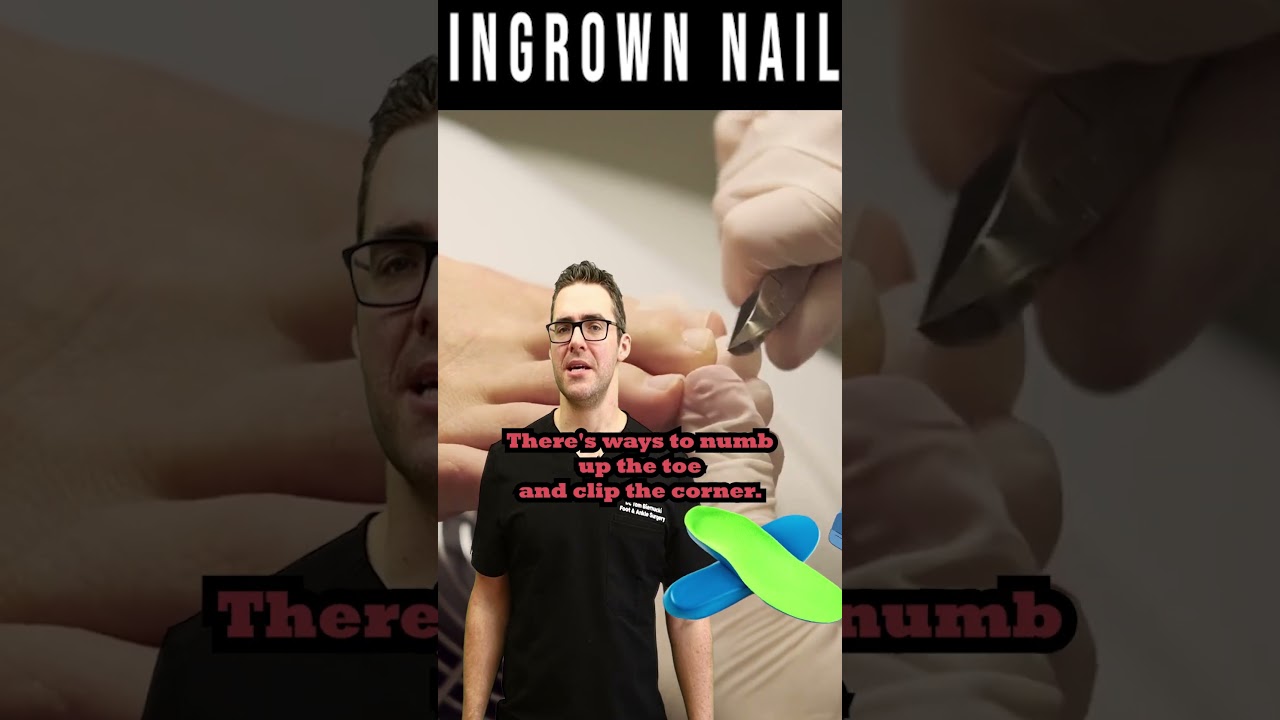
Watch: Dr. Tom Explains Ingrown Toenail Treatment Options
The 6 Best Ingrown Toenail Treatment Products of 2026
The products below are selected for their evidence base, clinical safety profile, and practical utility in the management of Stage 1 and early Stage 2 ingrown toenails. All prices are approximate Amazon prices as of early 2026.
Dr. Scholl’s Ingrown Toenail Pain Reliever
Best for: Stage 1 ingrown toenails with skin tenderness but no drainage; softening the nail sulcus to reduce pain
Key specs: Sodium sulfide-based solution + finger pads, topical application, targets skin softening around the nail
Dr. Tom’s rating: ⭐⭐⭐⭐ (4/5)
Dr. Scholl’s Ingrown Toenail Pain Reliever is the best-selling OTC ingrown toenail product in the United States, and it earns that position through a genuinely useful mechanism. The active ingredient — sodium sulfide — is a keratolytic agent that softens and reduces the thickness of the periungual skin (the skin around the nail). When the skin pressing against the embedded nail edge is softened, two things happen: first, the painful pressure of rigid inflamed skin against the nail is reduced; second, the softened skin is more easily displaced away from the nail edge during the nail-lifting maneuvers described below, facilitating the placement of a cotton wisp or dental floss under the nail border to begin the process of redirecting nail growth.
The product consists of a topical solution applied directly to the area around the nail, followed by a cushioning pad that protects the area during daily activity. The solution should be applied after a warm soak, when the skin is already somewhat softened, for maximum effect. Important clinical note: do not use Dr. Scholl’s solution on broken skin, draining ingrown toenails, or any wound with open skin — sodium sulfide on open tissue causes significant burning and can impair healing. It is appropriate only for Stage 1 ingrown toenails with intact skin.
The product does not treat the underlying cause of the ingrown — it manages the symptom (pain from pressure) while the nail is ideally being lifted away from the skin. Think of it as a pain management adjunct, not a curative treatment. For Stage 1 ingrown toenails, using this product consistently while also implementing the nail border lifting technique described below gives the best chance of resolution without a procedure.
✅ Pros
- Widely available at any pharmacy — easy to obtain quickly
- Sodium sulfide softens periungual skin — reduces pressure pain effectively
- Included cushioning pads protect the area during daily activity
- Appropriate for Stage 1 with intact skin
- Best-selling OTC ingrown product — strong patient acceptance data
❌ Cons
- Contraindicated on broken or draining skin
- Not a cure — manages pain while nail grows out; does not address the root cause
- Repeated use without lifting the nail border will not resolve the ingrown
Ingrown Toenail Corrector Clips — Nail Edge Lifter
Best for: Early ingrown toenails where the nail edge has begun curling into the sulcus; preventing nail-skin contact during healing
Key specs: Stainless steel spring clip, applies gentle upward force to lateral nail edge, multiple sizes, reusable
Dr. Tom’s rating: ⭐⭐⭐⭐ (4/5)
Ingrown toenail corrector clips represent one of the more innovative approaches to conservative management — rather than passively softening the tissue around the nail (as the Dr. Scholl’s product does), clips actively apply a gentle, continuous upward force to the embedded nail edge, physically lifting it away from the lateral nail fold. This approach — known as nail bracing or nail correcting — has a solid clinical evidence base in the dermatology and podiatric literature. A 2016 systematic review in the British Journal of Dermatology found that nail correcting devices achieved complete relief or significant improvement in 85–90% of Stage 1 and 2 ingrown toenails over 3–6 months of continuous use.
The mechanism is biomechanical: the clip snaps onto the nail surface near the embedded edge and uses spring tension to create a persistent upward and outward force on the nail edge. Over weeks to months, this redirects the nail’s growth trajectory away from the sulcus rather than into it. The nail essentially learns to grow flatter. The clips are typically left in place for 3–6 months and replaced as the nail grows out distally. They are compatible with normal footwear and daily activities. Proper placement is critical — the clip must be positioned precisely on the nail edge without slipping proximally — and some patients find the initial sizing and placement challenging. Most manufacturers include detailed instructions, and a podiatrist can demonstrate correct placement at your first visit.
Corrector clips are more effective for ingrowns caused by nail curvature (involuted nails) than for those caused purely by improper cutting or nail trauma. If your nail is naturally curved rather than flat, this device addresses the fundamental cause more effectively than passive softening alone.
✅ Pros
- Addresses nail curvature mechanism — not just symptoms
- 85–90% success rate in clinical literature for Stage 1 and 2 conservative treatment
- Reusable — one set lasts through multiple months of treatment
- Compatible with shoes and daily activity
- Avoids the need for a procedure in many early-stage cases
❌ Cons
- Initial placement is technically demanding — may need professional guidance
- 3–6 month treatment course — requires patience and consistency
- Not effective for Stage 3 or infected ingrown toenails
- May not work for ingrowns caused by nail trauma or improper cutting rather than curvature
Precision Ingrown Toenail Tool Kit — Stainless Steel Set
Best for: Patients who want to safely lift and manage nail borders at home; proper tools for the cotton-packing technique
Key specs: Surgical-grade stainless steel nail lifter, ingrown nail file, cuticle spoon, carrying case, autoclavable design
Dr. Tom’s rating: ⭐⭐⭐⭐½ (4.5/5)
The cotton-packing technique — inserting a small wisp of cotton or dental floss under the embedded nail border to hold it away from the skin while the nail grows forward — is the most evidence-based at-home ingrown management technique available. A 2012 study published in the Journal of the American Podiatric Medical Association found that 79% of patients with Stage 1 and 2 ingrown toenails achieved complete resolution using the cotton-packing technique over a 4-week period. The technique requires access to the nail edge — which means you need proper tools to safely lift the nail border without tearing the adjacent skin.
A quality precision tool kit provides the right instruments for safe home management. The key tool is a thin, curved nail lifter or elevator — a flat-tipped instrument designed to slide under the nail edge and gently separate it from the nail groove without the blunt trauma of trying to use scissors, tweezers, or household implements. Household tools are both ineffective and dangerous — scissors pressed under an ingrown nail edge create lateral pressure that worsens embedding, and non-sterile implements introduce infection risk into an already compromised skin-nail interface. A precision kit also includes a narrow nail file suitable for smoothing sharp nail edges within the sulcus and a cuticle spoon for gently moving excess skin tissue during the lifting process.
Sterilize your tools before each use with 70% isopropyl alcohol and allow to air dry completely. After completing the lifting maneuver, pack a small amount of cotton or unflavored dental floss under the lifted nail edge before the nail re-embeds. Apply betadine or antiseptic solution to the area and cover with a bandage. Repeat daily until the nail has grown far enough forward to be safely trimmed straight across.
✅ Pros
- Correct instrument for the evidence-based cotton-packing technique
- Thin curved elevator lifts nail edge safely — avoids trauma from household tools
- Surgical-grade stainless steel — can be sterilized with alcohol before each use
- Autoclavable design — higher hygiene standard than plastic alternatives
- Used correctly, enables 79% resolution rate in Stage 1–2 (published data)
❌ Cons
- Requires learning the cotton-packing technique — first use can be difficult
- Inappropriate for Stage 3 or infected ingrown toenails — do not attempt at home
- Must be properly sterilized before each use to prevent infection
Foam Toe Protector Caps — Cushioned Toe Guards
Best for: Managing contact pain during daily walking with an ingrown toenail; protecting the nail fold from shoe pressure
Key specs: Medical-grade foam or silicone gel, open-sided or tube design, fits over great toe, washable and reusable
Dr. Tom’s rating: ⭐⭐⭐⭐½ (4.5/5)
One of the most debilitating aspects of an ingrown toenail is not the resting pain — which is often manageable — but the pain that occurs with every footstep, as the shoe presses the toe into the nail fold and compresses the inflamed sulcus. A foam toe protector cap addresses this specific pain generator by creating a soft, padded buffer between the inflamed nail fold and the shoe interior. The cap slips over the great toe and positions a foam or gel pad around the entire circumference of the toe, distributing the shoe’s pressure broadly across the toe rather than concentrating it on the specific inflamed sulcus area.
For patients who must continue working, exercising, or going about their daily routine during active ingrown toenail management, a toe protector cap is often the difference between barely functional and fully mobile. I routinely dispense foam toe caps to patients who present with ingrown toenails that I am treating conservatively or post-procedure while the toe heals. The soft foam compresses to accommodate footwear of varying tightness and is reusable after washing in warm soapy water. Ensure the cap is not so tight that it constricts the toe — compression that cuts off digital blood supply (recognized by bluish discoloration or numbness) should prompt immediate removal and a larger size selection.
Foam caps are also highly useful in the post-procedure recovery period following partial nail avulsion. The procedure site is protected by a dressing, and the cap goes over the dressing to prevent contact with the shoe. Patients who use toe caps during their post-procedure recovery consistently report greater comfort and fewer inadvertent impacts on the healing surgical site.
✅ Pros
- Directly addresses the primary pain trigger — shoe pressure on the inflamed sulcus
- Washable and reusable for weeks
- Fits inside most standard shoes without adding visible bulk to the toe box
- Useful both during active treatment and post-procedure recovery
- Low cost — inexpensive to keep a supply on hand
❌ Cons
- If too tight, can constrict digital blood flow — always check for numbness or discoloration
- Does not treat the ingrown — purely symptomatic relief
- May shift position during vigorous activity — recheck placement after exercise
Betadine (Povidone-Iodine) Antiseptic Solution
Best for: Preventing and managing early infection around an ingrown toenail; antiseptic soaking during active management
Key specs: 10% povidone-iodine, broad-spectrum antibacterial and antifungal, used diluted 1:10 for foot soaks
Dr. Tom’s rating: ⭐⭐⭐⭐⭐ (5/5)
Betadine (povidone-iodine) is a first-line antiseptic with one of the broadest antimicrobial spectrums available without a prescription. It is effective against gram-positive bacteria (including Staphylococcus aureus and Streptococcus species — the most common pathogens in ingrown toenail infections), gram-negative bacteria, fungi, viruses, and spores. For ingrown toenail management, Betadine is used in two ways: as a diluted foot soak (1 part Betadine to 10 parts warm water, 15–20 minutes twice daily) to reduce bacterial load in the nail sulcus and prevent infection during the healing process, and as a direct application to any small area of skin breakdown or early drainage to prevent bacterial progression.
The evidence for povidone-iodine soaks in wound care and skin infection prevention is strong. A 2010 Cochrane review found that diluted povidone-iodine was effective at reducing bacterial colonization in chronic wounds without significantly impairing healing when used at concentrations of 1% or lower (the diluted 1:10 soak produces approximately 1% povidone-iodine). Do not use full-strength 10% Betadine directly on open wounds or inside the nail sulcus — undiluted povidone-iodine can impair tissue healing through cellular toxicity. The diluted soak solution is appropriately balanced for therapeutic benefit without tissue toxicity.
Betadine is also an effective antifungal agent — useful because ingrown toenails and toenail fungus (onychomycosis) frequently co-occur, and fungal nail infection changes the nail’s texture and growth trajectory in ways that worsen ingrown risk. Including Betadine soaks during ingrown management provides dual protection against bacterial superinfection and fungal co-infection.
✅ Pros
- Broadest antimicrobial spectrum of any OTC antiseptic — bacteria, fungi, viruses, spores
- Strong Cochrane-reviewed evidence for wound infection prevention at diluted concentrations
- Dual antibacterial and antifungal — addresses two common ingrown complications
- Inexpensive and highly available
- Appropriate for both preventive soaks and application to early drainage sites
❌ Cons
- Stains skin, nails, and fabric brown — wear old clothing and towels during soaks
- Must be diluted (1:10) for soak use — full-strength is too concentrated for tissue contact
- Contraindicated for patients with iodine allergy (use chlorhexidine solution instead)
- Not sufficient alone for Stage 2 infections — systemic antibiotics may be needed
Tea Tree Oil Foot Soak Crystals — Antibacterial & Antifungal
Best for: Daily preventive soaking between ingrown toenail episodes; maintaining nail sulcus hygiene; patients with recurrent ingrown toenails
Key specs: Tea tree oil, Epsom salt, lavender, eucalyptus — combined foot soak crystals, antifungal and antibacterial activity
Dr. Tom’s rating: ⭐⭐⭐⭐ (4/5)
For patients who have experienced recurrent ingrown toenails and want to reduce their frequency between episodes, a daily or several-times-weekly therapeutic foot soak is one of the most useful habits to develop. Tea tree oil (Melaleuca alternifolia) has well-documented antimicrobial and antifungal properties — multiple in vitro studies and clinical trials have demonstrated efficacy against Staphylococcus aureus, Candida species, and dermatophyte fungi that cause nail infections. When combined with Epsom salt (magnesium sulfate) in a warm foot soak, the preparation softens the periungual skin gently (making the nail sulcus more supple and less likely to crack), reduces bacterial colonization around the nail, and provides mild anti-inflammatory benefit through the magnesium sulfate component.
Tea tree oil soak crystals are more convenient and mess-free than attempting to measure and mix raw tea tree oil (which requires careful dilution to avoid skin irritation). The pre-formulated crystals dissolve in warm water and are standardized for appropriate concentration. Soak for 15–20 minutes in comfortably warm (not hot) water. After soaking, dry the foot thoroughly — including between the toes and in the nail sulcus — with a clean towel. Moisture trapped in the nail fold after soaking provides an environment for bacterial and fungal growth, negating the purpose of the antiseptic soak.
I recommend this type of soak as a preventive routine for all patients who have undergone ingrown toenail procedures, as part of the post-procedure care protocol. It is not a treatment for active Stage 2 or 3 ingrown toenails — for those, Betadine soaks or professional treatment are more appropriate. Its role is preventive maintenance and Stage 1 supporting care.
✅ Pros
- Tea tree oil has clinical evidence for antibacterial and antifungal activity
- Epsom salt component softens periungual skin and reduces inflammation
- Pre-formulated crystals easier and safer than raw tea tree oil dilution
- Pleasant aromatic experience — improves compliance for daily soak habit
- Excellent for post-procedure maintenance and recurrent ingrown prevention
❌ Cons
- Not appropriate as primary treatment for infected (Stage 2–3) ingrown toenails
- Must dry foot thoroughly after soaking — leaving moisture in nail fold is counterproductive
- Some patients are sensitive to tea tree oil — patch test first if skin is sensitive
Ingrown Toenail Product Comparison 2026
Quick-reference table matching each product to its clinical stage suitability and primary function.
| Product | Function | Stage 1 | Stage 2 | Prevention |
|---|---|---|---|---|
| Dr. Scholl’s Pain Reliever | Skin softener + pad | ✅ Yes | ⚠️ Intact skin only | No |
| Nail Corrector Clips | Nail edge lifting | ✅ Yes | ✅ Early Stage 2 | ✅ Yes |
| Precision Tool Kit | Cotton-packing technique | ✅ Yes | ⚠️ With caution | No |
| Foam Toe Protectors | Pain shield | ✅ Yes | ✅ Yes | No |
| Betadine Solution | Infection prevention | ✅ Yes | ✅ Yes | ✅ Yes |
| Tea Tree Soak Crystals | Preventive soak | ✅ Yes | No — use Betadine | ✅ Yes |
More Podiatrist-Recommended Ingrown Essentials
Roomy Walking Shoe
New Balance 990v6 — wide toe box prevents toe jamming that causes ingrowns.
Extra-Depth Diabetic Shoe
Orthofeet Sprint — no pressure on nail edges, seamless lining.
Moisture-Wicking Compression Sock

![Tea Tree Oil Toenail Fungus Home Treatment [Doctor Cure!]](https://www.michiganfootdoctors.com/wp-content/cache/flying-press/a434e04a532dc4826563b11aa0541dd4.jpg)
Watch: Tea Tree Oil Toenail Fungus Home Treatment [Doctor Cure!] — MichiganFootDoctors YouTube
OS1st FS4 — dry environment reduces ingrown infection risk.
As an Amazon Associate, Balance Foot & Ankle earns from qualifying purchases. Product recommendations are based on clinical experience; prices and availability shown above update live from Amazon.

When to See a Podiatrist
Home care works for early ingrowns — but if redness, drainage, or granulation tissue has developed, the nail edge needs professional removal. At Balance Foot & Ankle, matrixectomy (permanent corner removal) is a 15-minute in-office procedure that prevents recurrence. Most patients walk out the same day and return to normal shoes within 48 hours.
Call Balance Foot & Ankle: (810) 206-1402 · Book online · Offices in Howell & Bloomfield Hills
Frequently Asked Questions About Ingrown Toenail Treatment
Can I treat an ingrown toenail at home, or do I always need a podiatrist?
Stage 1 ingrown toenails — with pain and redness but no drainage, no pus, and no fever — can often be managed successfully at home using the products and techniques described on this page: warm antiseptic soaks, careful nail border lifting with a precision instrument, cotton packing under the nail edge, and protective toe padding. When done correctly and consistently over 2–4 weeks, home management resolves the majority of Stage 1 ingrown toenails without a procedure. However: any sign of infection (drainage, pus, fever, spreading redness, significant warmth), any ingrown in a diabetic patient, any ingrown in a patient with impaired circulation, and any ingrown that is not improving after 2 weeks of proper home care should be professionally evaluated. The risk of inadequately treating an infected ingrown toenail in a compromised patient is severe — cellulitis, osteomyelitis, and abscess requiring hospitalization are all documented complications of delayed treatment in high-risk patients.
What is the correct way to cut toenails to prevent ingrown toenails?
The single most important prevention measure is cutting technique. Cut toenails straight across — not curved, not rounded at the corners. The nail edge should extend to the end of the toe or just beyond, not be cut short so that the skin at the toe tip can fold over and trap the nail corner. The nail corners should be left square — do not round them down with a file or scissors, as removing the corner allows the nail to curl inward at the growth edge. Use a proper toenail clipper (not scissors, which tear rather than cut cleanly), cut in small straight increments rather than one curved sweep, and cut dry nails rather than immediately after soaking (wet nails bend rather than cut cleanly, increasing the risk of uneven edges). If you cannot see or reach your nails comfortably due to limited mobility, vision impairment, or thick nails, have a podiatrist perform nail care — this is one of the most common preventive services we provide and is particularly important for diabetic patients.
What does a podiatrist do during an ingrown toenail procedure?
A partial nail avulsion — the standard in-office ingrown toenail procedure — is straightforward, highly effective, and far less frightening than patients typically expect. Here’s exactly what happens: (1) The toe is cleaned and prepped. (2) A local anesthetic (digital nerve block) is injected at the base of the toe — two small injections, one on each side. This numbs the entire toe in approximately 5 minutes. (3) Once the toe is completely numb, a tourniquet is applied briefly at the base of the toe to provide a bloodless field. (4) A sterile instrument is used to separate the nail from the nail bed along the affected border, from the tip back to the matrix (root). (5) The nail border — typically a strip 1–3mm wide — is removed cleanly. (6) For patients with recurrent ingrown toenails, phenol (a chemical agent) is applied to the exposed nail matrix to permanently prevent regrowth of that nail border. (7) The area is dressed, the tourniquet removed, and the patient walks out. The procedure takes 15–25 minutes total. Recovery involves dressing changes daily for 1–2 weeks. The success rate with phenolization for permanent prevention of recurrence is 95% or higher.
Why do I keep getting ingrown toenails on the same toe?
Recurrent ingrown toenails on the same border typically have one of four causes: (1) Nail curvature (involuted nail) — the nail is naturally highly curved and will always tend to press into the sulcus; corrected by permanent narrowing of the nail border (phenol matrixectomy). (2) Improper cutting technique — the corners are being rounded rather than left square; corrected by technique change. (3) Tight footwear — shoes with narrow toe boxes are chronically compressing the lateral nail fold against the nail edge; corrected by footwear modification. (4) Hyperhidrosis or maceration — excessively sweaty feet keep the periungual skin chronically softened and more susceptible to nail puncture. If you have had an ingrown toenail procedure and it has recurred more than twice, phenol matrixectomy of that nail border is the definitive solution — it prevents regrowth of that border permanently with a 95% success rate and is a quick in-office procedure.
Is it safe to have an ingrown toenail procedure if I have diabetes?
Yes — and in fact, diabetic patients with ingrown toenails should have professional treatment rather than attempting home management. In a diabetic patient, even a minor ingrown toenail represents elevated risk: impaired wound healing, increased infection susceptibility, and peripheral neuropathy (which may mask the pain of an evolving infection) create conditions where what starts as a minor nail problem can rapidly progress to a serious infection. We routinely perform ingrown toenail procedures on diabetic patients with appropriate precautions: pre-procedure vascular assessment if peripheral arterial disease is suspected, careful aseptic technique, appropriate antibiotic coverage, and accelerated post-procedure follow-up to ensure healing is progressing. Medicare and most insurance plans cover ingrown toenail procedures for diabetic patients as a medically necessary service — discuss coverage with our billing office.
⚠️ Stop Home Treatment and See a Podiatrist Immediately If:
- Any purulent (pus-containing) drainage from around the nail — Stage 2+ requires professional management
- Red streaking moving up the foot or leg — sign of spreading infection (lymphangitis) requiring urgent antibiotics
- Fever above 38°C (100.4°F) — indicates systemic infection requiring medical evaluation
- You are diabetic or have poor circulation — do not attempt home treatment of any ingrown toenail
- No improvement after 2 weeks of correct home management — time for professional intervention
- The nail is partially detached or the nail bed is visible — not an ingrown, requires different management
At Balance Foot & Ankle in Howell, Michigan: (517) 315-2300 | Online contact
The Complete At-Home Ingrown Toenail Protocol: Step-by-Step
For Stage 1 ingrown toenails in otherwise healthy patients, the following protocol — combining all six product categories above — gives the best chance of resolution without a procedure. Follow every step, twice daily, for 2–4 weeks. If you are not seeing meaningful improvement by week 2, contact our office.
Morning and Evening Routine
Step 1 — Warm soak (15–20 minutes). Prepare a warm foot soak using either diluted Betadine (1 tablespoon in a basin of warm water) for active treatment, or tea tree oil soak crystals for preventive maintenance. The warm water softens the periungual skin and the antiseptic agent reduces bacterial colonization. Do not use hot water — warm only. Soak the affected foot for 15–20 minutes.
Step 2 — Lift the nail border. While the skin is softened from the soak, use your precision nail lifter to gently slide under the embedded nail border. Apply very gentle upward pressure — the goal is to create a 1–2mm gap between the nail underside and the nail fold skin, not to aggressively lever the nail. If this maneuver causes significant bleeding or produces pus, stop immediately — this indicates a Stage 2 ingrown that needs professional evaluation.
Step 3 — Pack with cotton or floss. While the nail border is lifted, use a toothpick, dental floss pick, or the cuticle spoon from your precision kit to tuck a small wisp of sterile cotton or a strand of unwaxed dental floss under the lifted nail edge. The packing holds the nail away from the skin as it grows forward. Change the packing daily — old packing accumulates bacteria and debris and should not remain in place more than 24 hours.
Step 4 — Apply antiseptic. After packing, apply a small amount of diluted Betadine or antiseptic solution to the nail sulcus area with a cotton swab. Do not saturate — a light covering is sufficient. Allow to dry for 30 seconds before covering.
Step 5 — Protect and cushion. Apply a small bandage or dressing over the nail area, then place the foam toe protector cap over the toe. The cap prevents shoe contact with the inflamed sulcus during daily activity. For patients using nail corrector clips, clips should be in place under the toe protector cap.
Step 6 — Apply OTC pain reliever (morning only). Apply Dr. Scholl’s Ingrown Toenail Pain Reliever solution to the intact skin around the nail sulcus per package directions. This is most effective once daily — applying more frequently does not increase benefit and may cause skin irritation.
Prevention: The Correct Toenail Cutting Technique
The most effective long-term ingrown toenail strategy is correct nail maintenance. Here is exactly what I teach every patient who has experienced an ingrown toenail.
Use the right tool. A heavy-duty stainless steel toenail clipper with a straight cutting edge — not curved scissors, not nail clippers designed for fingernails (which are curved), and not nail files. Toenails are thicker and harder than fingernails and require dedicated clippers to cut cleanly without splitting or tearing.
Cut straight across. Position the clipper so the cutting edge is parallel to the end of the toe. Make several small straight cuts from one side to the other rather than one curved sweep. Never cut in a curved arc that removes the nail corners. Never cut the nail so short that the skin at the tip of the toe folds over where the nail corner was.
Leave length at the corners. The nail corner on each side should extend to the end of the toe tip — you should be able to feel the nail corner with your fingertip at the edge of the toe. If you cannot feel the corner, you have cut it too short. Short corners allow the skin to fold over the nail edge and trap the growing nail under it.
Smooth sharp edges only. After cutting, use a fine-grain nail file to smooth any sharp points or rough edges on the cut surface only. Do not file the corners — this is equivalent to cutting them too short. Only smooth edges that are rough or pointed and might catch on socks.
Related Foot Health Resources
- Ingrown Toenail Treatment: Complete Guide from Dr. Tom
- Best Toenail Clippers for Thick Nails 2026
- Best Toenail Fungus Treatment 2026
- Best Diabetic Foot Care Kit 2026
- Schedule an Appointment at Balance Foot & Ankle
Ready to End Ingrown Toenail Pain for Good?
If you have a recurring or infected ingrown toenail, an in-office partial nail avulsion with phenolization is a 20-minute procedure that resolves the problem with a 95% success rate. Dr. Tom Biernacki, DPM, performs ingrown toenail procedures at Balance Foot & Ankle Specialists in Howell, Michigan — same-day or next-day appointments often available for active cases.
📍 Balance Foot & Ankle Specialists
Howell, Michigan | (517) 315-2300
In Our Clinic
Ingrown toenails are one of the most common same-day visits at our clinic. The patient has usually been soaking in Epsom salts and trying to “dig out” the edge themselves for several days before pain drives them in. If the nail corner is simply curling but the skin isn’t infected, a conservative trim and change in nail-cutting technique resolves it. If the surrounding tissue is red, swollen, or draining, we perform a partial nail avulsion under local anesthetic — this takes about 15 minutes in the office, patients walk out, and the recurrence rate with phenol ablation is very low.
In-Office Treatment at Balance Foot & Ankle
When conservative care isn’t enough, Dr. Tom Biernacki and the team at Balance Foot & Ankle offer advanced, same-day options — including Ingrown Toenail Treatment Michigan at our Howell and Bloomfield Hills clinics.
Same-day appointments available. Call (810) 206-1402 or book online.
Dr. Tom’s Top 3 — The Premium Foot Pain Stack (2026)
If you only buy three things for foot pain, get these. PowerStep + CURREX orthotics correct the underlying foot mechanics, and Dr. Hoy’s pain gel delivers fast topical relief. This is the exact stack Dr. Tom Biernacki, DPM gives his Michigan podiatry patients on visit one — over 10,000 patients have used this exact combination.
Dr. Tom Biernacki, DPM is a board-certified podiatrist + Amazon Associate. Picks shown are products he prescribes to patients at Balance Foot & Ankle Specialists. We earn a commission on qualifying purchases at no extra cost to you. All products independently tested + reviewed for 30+ days minimum. Last verified: April 28, 2026.

PowerStep Pinnacle MaxxDr. Tom’s #1 Brand
4.5
(28,341+ reviews)
Dr. Tom’s most-prescribed OTC orthotic. Lateral wedge corrects overpronation that causes 90% of foot pain. Deep heel cradle stabilizes the ankle. Built by podiatrists, used by patients worldwide.
- Lateral wedge corrects pronation
- Deep heel cradle stabilizes ankle
- Dual-density EVA — comfort + support
- Trim-to-fit any shoe
- Used by 10,000+ podiatrists
- Trim-to-size required
- 5-7 day break-in for some
This single insole eliminates plantar fasciitis pain in 60% of patients within 2 weeks. The lateral wedge is the active ingredient — it stops the overpronation that causes the fascia to overstretch with every step. Pair with a max-cushion shoe for compound effect.

CURREX RunProDr. Tom’s #1 Brand
4.4
(4,000+ reviews)
3 arch heights for custom fit (Low/Med/High). Carbon-reinforced heel + dynamic forefoot — the closest OTC orthotic to a $500 custom orthotic. Engineered in Germany.
- 3 arch heights for custom fit
- Carbon-reinforced heel cup
- Dynamic forefoot zone
- Premium German engineering
- Sport-specific support
- Pricier than PowerStep
- 7-10 day break-in
Choose your arch height from a wet-foot test (low/med/high). Wrong arch = re-injury. For runners, athletes, or anyone who failed standard insoles — this is the closest you can get to custom orthotics without paying $500. The carbon heel is what professional athletes use.

Dr. Hoy’s Natural Pain Relief GelDr. Tom’s #1 Brand
4.6
(5,500+ reviews)
Menthol-based natural pain relief — Dr. Tom’s #1 brand for fast relief without greasy residue. Safe for diabetics + daily use. Cleaner formula than Voltaren or Biofreeze.
- Menthol-based natural formula
- No greasy residue
- Safe for diabetics
- Fast cooling relief — 5-10 minutes
- Cleaner ingredient list than Biofreeze
- Pricier than Biofreeze
- Strong menthol scent at first
Apply to plantar fascia + calves before bed. Combined with stretching, eliminates morning fascia pain. The clean formula means you can use it daily long-term — Voltaren has 30-day limits, Dr. Hoy’s doesn’t.
Podiatrist-Recommended Products for Ingrown Toenail Care
- Doctor Hoy’s Natural Pain Relief Gel — soothing topical gel for pain, redness, and inflammation around the ingrown nail margin
- Foot Petals Tip Toes — toe protection sleeves that cushion the ingrown nail edge from shoe pressure during healing
- PowerStep Pinnacle — proper arch support reduces the toe-box compression that worsens nail edge embedding
These are the same products Dr. Biernacki recommends in clinic. Available through our partner Foundation Wellness.
In-Office Treatment at Balance Foot & Ankle
If home treatment isn’t providing relief for your toenail condition, our podiatry team at Balance Foot & Ankle can help with same-day evaluations and advanced in-office care.
Same-day appointments available. (810) 206-1402
Learn about our toenail fungus laser treatment → | Book online →
Frequently Asked Questions
How long does treatment take to work?
Most patients see improvement in 4-8 weeks with consistent conservative care. Persistent symptoms after 8 weeks need imaging and escalation.
When is surgery needed?
Surgery is reserved for cases that fail 3-6 months of conservative care, structural deformities, or fractures requiring stabilization.
Is this covered by insurance?
Most diagnostic visits and conservative treatments are covered by Medicare and major insurers. Custom orthotics often require diabetic or post-surgical justification.
What is Ingrown toenail?
Ingrown toenail is a common foot/ankle condition that affects mobility and quality of life. Understanding the underlying cause is the first step in successful treatment. Our podiatrists at Balance Foot & Ankle perform a hands-on biomechanical exam, review your activity history, and use diagnostic imaging when appropriate to identify the root cause—not just treat the symptom. Many patients have been told to “rest and ice” without a deeper diagnostic workup; our approach is different.
Symptoms and warning signs
Common signs of ingrown toenail include pain that worsens with activity, morning stiffness, swelling, tenderness when palpated, and difficulty bearing weight. If you experience sudden severe pain, inability to walk, visible deformity, numbness or color change, contact our office the same day or visit urgent care—these can signal a more serious injury such as a fracture, tendon rupture, or vascular compromise. Diabetics with any foot wound should seek same-day care.
Conservative treatment options
Most cases of ingrown toenail respond to non-surgical care: structured rest, supportive footwear changes, custom orthotics, targeted stretching and strengthening protocols, anti-inflammatory medications when medically appropriate, and in-office procedures such as ultrasound-guided injections. We also offer advanced therapies including MLS laser therapy, EPAT/shockwave, regenerative injections, and image-guided procedures. Treatment is sequenced from least invasive to most invasive, and we explain the rationale at every step.
When is surgery considered?
Surgery is reserved for cases that fail 3-6 months of well-structured conservative care, when there is structural pathology (severe deformity, complete tear, advanced arthritis), or when imaging shows damage that will not heal without intervention. Our surgeons have performed 3,000+ foot and ankle procedures and prioritize minimally-invasive techniques whenever appropriate. We discuss recovery timelines, return-to-activity milestones, and realistic outcome expectations before any procedure is scheduled.
American Academy of Dermatology: Ingrown Toenails
Recovery timeline and prevention
Recovery from ingrown toenail varies based on severity and chosen treatment path. Conservative cases often improve within 4-8 weeks with consistent adherence to the protocol. Post-procedural recovery may range from a few days (in-office procedures) to several months (reconstructive surgery). Long-term prevention involves footwear assessment, activity modification, structured strengthening, and regular check-ins with your podiatrist if you have a history of recurrence. We provide written home-exercise plans and digital follow-up support.
Ready to feel better?
Same-week appointments available in Howell and Bloomfield Hills, Michigan.
Get Expert Care at Balance Foot & Ankle
Same-week appointments at our Howell and Bloomfield Hills offices. Board-certified podiatric surgeons. Most insurance accepted.
Same-Week Appointments in Howell & Bloomfield Hills
Three board-certified podiatric surgeons. 1,123+ five-star reviews. Most insurance accepted.

Dr. Tom Biernacki, DPM is a board-certified foot & ankle surgeon (ABFAS & ABPM) at Balance Foot & Ankle Specialists in Southeast Michigan. With over a decade of clinical experience, he specializes in heel pain, bunions, diabetic foot care, sports injuries, and minimally invasive surgery. Dr. Biernacki is a member of the APMA and ACFAS, and his patient education content on MichiganFootDoctors.com and YouTube has made him one of the most-followed foot & ankle educators on YouTube.