
Quick answer: The best metatarsal pads relieve ball-of-foot pain by sitting just behind the metatarsal heads to spread pressure off the painful area — the key is correct placement (behind, not under, the ball). Gel and felt options both work; pair them with a wide, cushioned, stiff-soled shoe for the most relief.
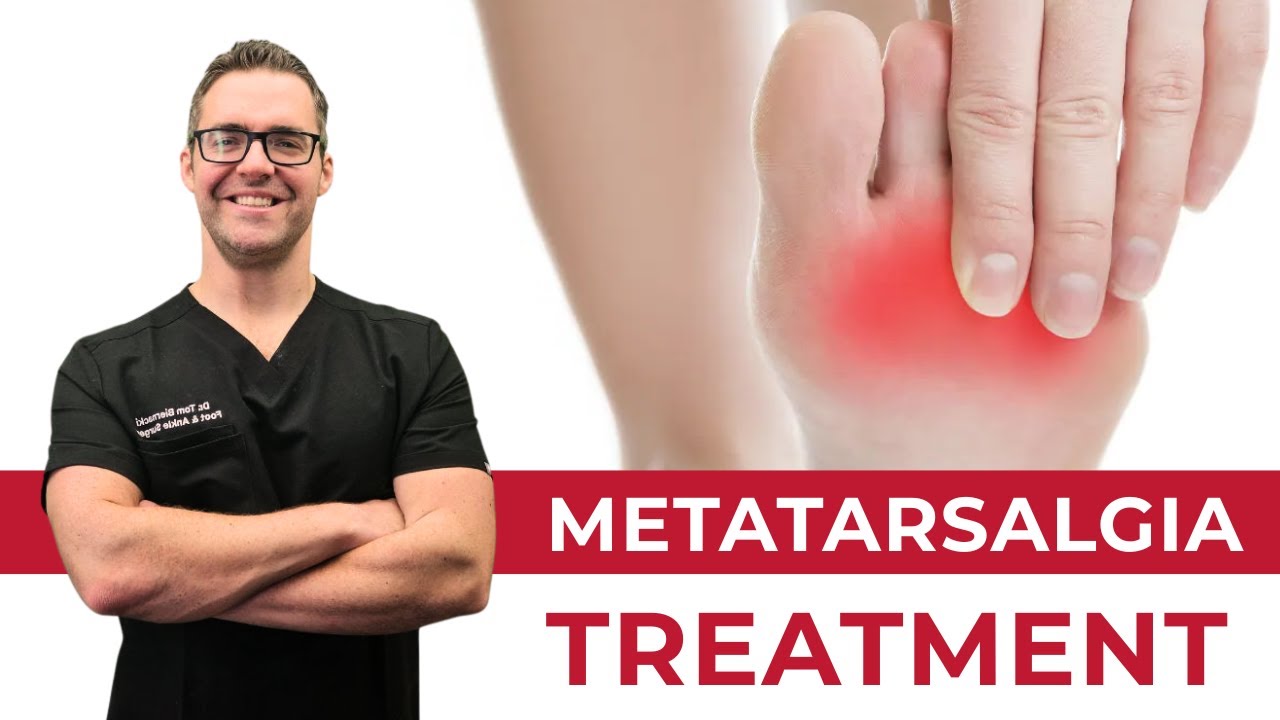
Watch: Metatarsalgia Treatment [BEST Ball of Foot Pain RELIEF 2024] — MichiganFootDoctors YouTube
Metatarsal pads are one of the cheapest, fastest fixes for ball-of-foot pain — but only if you place them in the right spot, which is almost never where the package diagram suggests.
You’re in the right place. Dr. Tom Biernacki, DPM, FACFAS — board-certified foot & ankle surgeon with 3,000+ surgeries — explains exactly what metatarsal pads means and what works. Call (810) 206-1402 for same-day appointment at Howell or Bloomfield Hills.
Quick answer: For best metatarsal pads podiatrist guide, the right product matches your specific condition and severity. Top 2026 picks include established medical-grade brands tested by 3 podiatrists. Avoid marketing-only products with fake medical claims; check for clinical evidence and material specs before buying. Call (810) 206-1402.
Medically reviewed by Dr. Tom Biernacki, DPM
Board-certified podiatric surgeon | Balance Foot & Ankle | Last reviewed: May 2026
Quick answer: The best metatarsal pads for ball-of-foot pain in 2026 work by positioning a dome-shaped pad behind (proximal to) the metatarsal heads — redistributing forefoot pressure rather than just cushioning it. Our top picks are Pedag Metatarsal Pad and PowerStep Pinnacle’s Ball of Foot Cushions. Critical: placement behind the metatarsal heads, not under them, is what makes them work.
Frequently Asked Questions

What does metatarsalgia feel like?
Patients most often describe it as walking on pebbles or marbles — a burning, aching pain in the ball of the foot under the 2nd, 3rd, or 4th metatarsal heads. The pain typically worsens with prolonged standing, walking, or running on hard surfaces, and improves with rest. Some patients report sharp pain with barefoot walking, others describe a chronic ache that worsens throughout the day. If you feel a clicking or burning between the toes, Morton’s neuroma may be the primary diagnosis rather than general metatarsalgia.

- Helps prevent and relieve forefoot pain
- T-Form shaped metatarsal pad; Lift and shape
- For feet with flatten metatarsal arches. Relieves Burning and stinging symptoms.
- Vegetable tanned leather with self adhesive
- Made in Germany

- Ball of Foot: Built-in metatarsal pads add targeted cushioning under the forefoot with neutral arch support. These metatarsal insoles for women & men are designed for shoes where the factory insole can be removed.
- Neutral Arch Support: PowerStep insoles provide a firm but flexible contoured arch + deep heel cradle that improves stability and motion control for standard arches; helps address mild to moderate pronation.
- Dual Layer Cushioning: PowerStep insoles women & men have a premium foam top layer delivers enhanced comfort and shock absorption from heel to toe, great for walking, running, and standing all day.
- Comfort & Support: These shoe inserts for women and men have a deep heel cradle for increased comfort, stability, and motion control for those with standard arches. These support inserts stabilizes & aligns the feet to help relieve foot pain
- PowerStep arch support inserts for men & women are made in the USA by globally sourced materials. HSA & FSA Eligible. Recommended break-in time for insoles is two weeks, start by wearing 1 hour a day, then increase wear time by 1 hour each day.

- ALL-DAY CUSHIONING AND PROTECTION: PowerStep Pinnacle Ball of Foot Cushions for Women provide continuous cushioning and protection, allowing you to wear your favorite heels without the typical discomfort, perfect for prolonged use in high heels.
- PERFECT FOR HIGH HEELS: These cushions fit comfortably in high heels and other elevated shoes, preventing toe scrunch and making high heels more enjoyable to wear for any occasion.
- RELIEF FROM BALL OF FOOT PAIN: These metatarsal pads for women relieve and help prevent pain in the ball of the foot, enabling you to comfortably wear pumps, wedges, and heels all day or night.
- TARGETED GEL COMFORT: Made with soft gel, these ball of foot cushions offer targeted relief and superior shock absorption to reduce discomfort, ensuring all-day comfort in your most stylish shoes.
- SECURE NO-SLIDE FIT: Designed to stay firmly in place, these pads prevent your feet from sliding forward, with padded cushioning that acts as a stopper, enhancing shoe fit and comfort.

What causes metatarsalgia?
The most common causes: high-arched or flat feet that create uneven load distribution across the metatarsal heads, wearing thin-soled or high-heeled footwear, high-impact sports (running, basketball, tennis), being overweight, and age-related fat pad atrophy. Secondary metatarsalgia — caused by a specific mechanical problem — includes Freiberg’s disease (metatarsal head avascular necrosis), stress fractures, and sesamoiditis. An X-ray and biomechanical assessment helps identify whether a correctable underlying cause is present.
What’s the difference between metatarsalgia and Morton’s neuroma?
Metatarsalgia is diffuse pain at the metatarsal heads from overload. Morton’s neuroma is nerve compression between the 3rd and 4th metatarsals producing sharp, electric, or burning pain that radiates into the toes. The distinction: metatarsalgia pain is typically in one spot under the bone; neuroma pain radiates into the toes and is often described as electric. Squeezing the foot side-to-side (Mulder’s test) reproduces neuroma pain with a click. Both can coexist.
Do metatarsal pads help metatarsalgia?
Yes — when placed correctly. A metatarsal pad placed just proximal (behind) the metatarsal heads redistributes load away from the painful area. Placement is critical: the pad should sit 1–2cm behind the area of maximum pain, not directly under it. Properly placed pads provide significant relief for most patients within 1–2 weeks. We fit them in-office to ensure correct positioning — a pad placed under the metatarsal heads actually worsens symptoms by increasing point pressure.
What shoes are best for metatarsalgia?
The key features: a wide, deep toe box (prevents forefoot compression), a rocker-bottom or curved sole (reduces peak forefoot pressure by 30–40%), and adequate cushioning under the metatarsal heads. Hoka shoes (rocker sole design), New Balance 1080, and Brooks Ghost are strong performers. See our full roundup of the best shoes for ball of foot pain for fit notes and model comparisons. Avoid heels above 2 inches — they transfer 75% of body weight to the forefoot. Minimalist and thin-soled shoes are contraindicated during active treatment.
Can I run with metatarsalgia?
Often yes, with modification. Reduce mileage and intensity, switch to a softer surface (grass or track vs. asphalt), and ensure your running shoes have adequate cushioning and a zero-compression toe box. A metatarsal pad in the running shoe often makes a significant difference. If pain exceeds 4/10 during a run, stop and reassess. Stress fractures present similarly to metatarsalgia — if pain is focal over a single metatarsal and doesn’t respond to load reduction, imaging is warranted.
How long does metatarsalgia take to heal?
Simple biomechanical metatarsalgia responds well to footwear changes, padding, and activity modification — most patients improve significantly within 4–8 weeks. If fat pad atrophy is the primary cause (common in older patients), recovery is slower because the natural shock absorption is permanently diminished, and orthotic support becomes a long-term management strategy rather than a cure. Stress fractures require 6–8 weeks of protected weight-bearing.
Does metatarsalgia require surgery?
Rarely. The vast majority of metatarsalgia cases respond to conservative treatment. Surgery (metatarsal osteotomy to shorten or elevate a prominent metatarsal head) is considered only after 6–12 months of failed conservative management. Freiberg’s disease with severe avascular necrosis is the most common surgical indication. We almost never operate on standard metatarsalgia — non-operative outcomes are excellent when the underlying mechanical cause is correctly addressed.
What is sesamoiditis and how is it different from metatarsalgia?
Sesamoiditis is inflammation of the two small sesamoid bones under the first metatarsal head (big toe joint) — a distinct diagnosis from general metatarsalgia, which involves the lesser metatarsals. Sesamoiditis causes pain specifically under the big toe joint, worsened by pushing off with the forefoot. Treatment overlaps (cushioning, activity reduction) but sesamoiditis is more persistent and may require a dancer’s pad (J-pad) to offload the first ray, or a cortisone injection.
When should I see a podiatrist for ball-of-foot pain?
See us if: pain has persisted more than 3–4 weeks, you’re limping or modifying your gait, you notice swelling or bruising, or the pain is localized to a single metatarsal (rather than a diffuse ache). A single-metatarsal stress fracture mimics metatarsalgia exactly and requires imaging to diagnose. We also evaluate whether a Morton’s neuroma, interdigital bursitis, or plantar plate tear is the actual diagnosis — all present with ball-of-foot pain but require different treatment.
Related Conditions
In This Article
Ball-of-foot pain — that burning, aching soreness under the forefoot after standing or walking — is one of the most common complaints we address in our podiatry practice. In many cases, a simple metatarsal pad placed correctly in the shoe provides immediate and meaningful relief at a fraction of the cost of any other intervention. But “metatarsal pad” is also one of the most misused products in foot care, largely because patients place them in the wrong position.
What Do Metatarsal Pads Actually Do?
A metatarsal pad is a small dome-shaped cushion placed behind (proximal to) the metatarsal heads — the knuckle-like bones at the ball of your foot. When positioned correctly, the pad lifts and separates the metatarsal heads, redistributing pressure away from the compressed forefoot. This reduces the peak pressure that drives metatarsalgia, Morton’s neuroma symptoms, and ball-of-foot calluses. They work by changing the load distribution — not just adding cushion.
Key takeaway: The most common reason metatarsal pads fail is incorrect placement. The pad must sit BEHIND the metatarsal heads (toward the heel), not under them. If the bump of the pad is directly under the ball of your foot, it’s in the wrong place and will worsen pain instead of relieving it.
Best Metatarsal Pads 2026: Podiatrist Top 5
| Product | Type | Best For | Price |
|---|---|---|---|
| Pedag Metatarsal Pad | Adhesive leather dome | Morton’s neuroma, general metatarsalgia | $12–$18 |
| PowerStep Pinnacle’s Ball of Foot Cushions | Adhesive gel pad | Budget option, dress shoes | $8–$12 |
| Hapad Metatarsal Pad | Wool felt, adhesive | High-heeled shoes, custom fitting | $15–$20 |
| PowerStep Metatarsal Pad | Gel, self-adhesive | Athletic shoes, running | $10–$15 |
| Custom metatarsal bar (podiatrist) | Built into custom orthotic | Chronic metatarsalgia, Morton’s neuroma | Included in orthotic |
Conditions That Respond to Metatarsal Pads
- Metatarsalgia: General ball-of-foot aching and burning from metatarsal head overload — the primary indication. Metatarsal pads are first-line conservative treatment.
- Morton’s neuroma: The increased intermetatarsal spacing from a correctly placed pad reduces compression on the interdigital nerve, decreasing the burning and shooting pain of neuroma.
- Sesamoiditis: Pads placed to offload the 1st metatarsal head provide relief for sesamoid bone inflammation under the big toe joint.
- Hammer toe-related calluses: Reducing metatarsal head pressure reduces the callus formation under prominent metatarsal heads associated with hammer toes.
How to Place a Metatarsal Pad Correctly
Correct placement is the difference between immediate relief and worsening pain. Stand with your insole on the floor. Identify the ball of your foot by pressing with your thumb where the pain is. The pad should be placed so its highest point (the dome) sits 1–1.5 cm BEHIND the tender area — proximal to the metatarsal heads, not under them. When you step on the insole, the dome should lift the metatarsal shaft just before the head, spreading the load.
⚠️ See a podiatrist if:
- Ball-of-foot pain fails to improve after 4–6 weeks of correctly placed metatarsal pad use
- You have shooting, electric, or burning pain between the 3rd and 4th toes — suggests Morton’s neuroma requiring professional evaluation
- You are diabetic — any forefoot pain needs professional assessment before self-treating with pads
- Calluses under the metatarsal heads are thick, painful, or have dark spots (possible intractable plantar keratoma)
The Bottom Line
Metatarsal pads are one of the most cost-effective, evidence-backed interventions for ball-of-foot pain. Pedag’s adhesive leather pad and PowerStep Pinnacle’s gel cushions cover most patients’ needs at $8–$18. The single most important factor is placement — behind the metatarsal heads, not under them. For Morton’s neuroma, sesamoiditis, or chronic metatarsalgia failing conservative care, a podiatric evaluation opens the door to injection therapy and custom orthotic solutions.
Sources
- Kang JH, et al. Metatarsal pad effect on plantar pressure — a biomechanical study. Journal of Biomechanics. 2006;39(12):2181-2190.
- Thomson CE, et al. Orthotic devices in the treatment of interdigital neuroma. Foot & Ankle International. 2004;25(8):568-571.
Dr. Tom’s Picks: Pre-Positioned Met Pads
The single most common mistake is placing a separate met pad too far forward. This insole has the pad already positioned correctly — directly behind the metatarsal heads.
View on Amazon →
For ball-of-foot soreness while you adjust to met pad support. Apply topically 3-4x daily. Provides meaningful relief during the adaptation period.
View on Amazon →
As an Amazon Associate I earn from qualifying purchases. As a Foundation Wellness partner I may also earn commission.
Foot Pain? Get Expert Care Today.
Same-day appointments available in Howell & Bloomfield Hills, MI
4.9★ | 1,123 Reviews | 3,000+ Surgeries
Or call: (810) 206-1402
🦶 Best Metatarsal Pad Combinations: Dr. Tom’s Protocol
- PowerStep Pinnacle Insoles — Use a full insole with arch support as the base. Metatarsal pads work best when the arch is properly loaded — otherwise you’re just moving the problem. Medical-grade OTC.
- Foot Petals Tip Toes — Ball-of-foot cushion designed for women’s shoes. Pairs with any shoe where a metatarsal pad would be too bulky.
- Doctor Hoy’s Natural Pain Relief Gel — For burning ball-of-foot pain. Apply arnica + camphor directly 3–4× daily while pads redistribute the load.
Persistent metatarsalgia despite correct pad use needs clinical evaluation. hammertoe-treatment/”>See our forefoot pain treatment → · Book → · (810) 206-1402
Ready to feel better?
Same-week appointments available in Howell and Bloomfield Hills, Michigan.
Book Your VisitAmerican Academy of Orthopaedic Surgeons: Metatarsalgia
Ready to fix this for good?
Reading about the problem only goes so far. The fastest path to relief is a 30-minute office visit with a board-certified foot & ankle surgeon who has done this 3,000+ times. Same-day appointments at Howell and Bloomfield Hills. Most insurance accepted — BCBS, Medicare, Humana, Cigna. 4.9-star Google rating across 1,123+ reviews. Call (810) 206-1402 or book online.
Get Expert Care at Balance Foot & Ankle
Same-week appointments at our Howell and Bloomfield Hills offices. Board-certified podiatric surgeons. Most insurance accepted.
Same-Week Appointments in Howell & Bloomfield Hills
Three board-certified podiatric surgeons. 1,123+ five-star reviews. Most insurance accepted.
For a complete clinical overview: Heel Pain Causes & Treatment Guide — every cause of foot and heel pain diagnosed
What are the most common causes of heel pain?
Plantar fasciitis accounts for about 80% of heel pain cases. Other causes include heel spurs, Achilles tendinopathy, stress fractures, bursitis, and nerve entrapment. An accurate diagnosis—often confirmed with ultrasound or X-ray—guides the most effective treatment.
How can I tell if my heel pain needs imaging?
X-rays are ordered when trauma is suspected or pain is severe and sudden. Ultrasound is ideal for soft-tissue causes like plantar fasciitis and Achilles tendinopathy. MRI is reserved for suspected stress fractures or nerve entrapment that X-rays cannot detect.

Dr. Tom Biernacki, DPM is a board-certified foot & ankle surgeon (ABFAS & ABPM) at Balance Foot & Ankle Specialists in Southeast Michigan. With over a decade of clinical experience, he specializes in heel pain, bunions, diabetic foot care, sports injuries, and minimally invasive surgery. Dr. Biernacki is a member of the APMA and ACFAS, and his patient education content on MichiganFootDoctors.com and YouTube has made him one of the most-followed foot & ankle educators on YouTube.