For all-day arch support the Birkenstock Arizona (or closed-toe Boston) is the best classic pick — a firm cork footbed with a deep heel cup and real arch contour. If you have plantar fasciitis, choose the Vionic Tide/Walker for its built-in orthotic footbed; for post-run or post-shift recovery, the HOKA Ora Recovery Slide is the most cushioned. Skip flat, flexible flip-flops — they’re the most common cause of summer arch and heel pain. Questions about your feet? Call (810) 206-1402 or book online.
Still hurting after switching shoes? Footwear helps, but it can’t fix the underlying problem. See a podiatrist — pick a real appointment time online, 24/7: Howell or Bloomfield Township. Takes about a minute, 24/7.
Best Sandals for Arch Support: What to Look For by Foot Type
Most sandals fail for foot health not because of the brand but because they lack the structural elements that make foot support possible. A sandal with adequate arch support must have three things: a contoured footbed that contacts the medial arch (not flat), a deep heel cup (minimum 8mm) that centralizes the calcaneus and controls rearfoot mechanics, and sufficient midsole rigidity to prevent collapse under body weight. Most fashion sandals and flip-flops fail on all three. Here is how to match sandal features to your specific foot type, followed by the brands that actually deliver clinical-grade support.
Without footwear support, the arch collapses with each step, placing excess strain on the plantar fascia, posterior tibial tendon, and medial ankle; flat sandal footbeds accelerate this collapse
Medial arch contour (must be raised, not flat); deep heel cup (10mm+); semi-rigid or rigid arch support — soft foam alone collapses under flat-foot load; anti-pronation posting preferred; closed or strapped heel counter to control rearfoot
Orthopedic sandals with orthotic-grade footbeds (Vionic, Birkenstock with cork footbed, Hoka Ora Recovery); avoid: thin-soled sandals, flat flip-flops, fashion wedges
Standard flat flip-flops (zero arch support, no heel cup); platform sandals with soft foam only; high-heeled sandals (transfers load forward, worsens midfoot collapse); slides with no strap securing the heel
High-arched foot lacks natural shock absorption; supination concentrates ground reaction force on lateral foot edge; heel and forefoot take excessive impact; inadequate cushion in sandals causes lateral heel/foot pain
CUSHIONING over structure (opposite of flat foot needs); soft to medium arch contour (high-arched foot does not tolerate aggressive arch support); neutral or slight lateral posting; thick, compliant midsole; deep heel cup still important for calcaneal centering
Cushioned sandals with neutral footbed (Hoka recovery sandals; Oofos OOahh; soft Birkenstock); moderate arch height — not orthopedic-grade rigid arch
Rigid orthotics or highly structured footbeds (forces an already rigid foot into further supination); flat hard sandals (no cushion for impact-sensitive supinated feet)
Plantar fasciitis
Flat sandals allow plantar fascia to overstretch with each barefoot-like step; going barefoot or wearing flat flip-flops is one of the most common PF aggravation patterns
Arch support that reduces plantar fascia tensile load (medial arch contact required); heel cup for calcaneal support; low heel-to-toe drop (2-10mm) — slight heel lift reduces fascial tension; moderate rigidity; NO flat flip-flops or barefoot-style sandals
Vionic sandals (APMA-accepted); Birkenstock (contoured cork footbed); Hoka Ora Recovery (rocker geometry); Olukai with arch contour; replace flip-flops with any of these at home
Flat flip-flops (the single most common footwear mistake in PF patients — many wear flip-flops at home while doing their stretching routine, completely negating the treatment); completely flat sandals; minimalist sandals; Chacos without orthotics (adequate heel cup but flat arch)
Bunions
Standard sandal straps cross directly over the medial eminence (bunion prominence) causing friction, pressure, and pain; toe box width must accommodate hallux valgus deformity
Wide toe box (enough lateral space for hallux in valgus position); straps that do NOT cross over the medial eminence (or adjustable straps that can be positioned away from the bunion); soft upper material where it contacts the bunion; open-toe design preferred
Adjustable-strap sandals (reposition straps away from bunion); Birkenstock open-toe (wide toe box, straps don’t cross medial eminence on most styles); custom-made orthotics inside sandal to reduce hallux valgus load; avoid styles with single thong strap between toes (toe post between hallux and 2nd toe forces bunion laterally)
Narrow-strap sandals crossing the medial eminence; thong/toe-post styles (force hallux into valgus); tight-toe-box closed-toe sandals; flip-flops with narrow toe post that presses between hallux and 2nd digit
Diabetic feet
Reduced sensation means pressure injuries from straps, seams, or inadequate cushioning may go undetected; peripheral neuropathy patients cannot feel developing hot spots or blisters
Seamless or very soft interior; adjustable straps (accommodate daily volume variation from neuropathy-associated swelling); deep toe box; protective sole (minimum 10mm); inspect feet after each wearing; custom diabetic sandals available with prescription; NO open-toed sandals if neuropathy is significant (protection required)
Orthofeet diabetic sandals (specifically designed for neuropathy and sensitive feet); Drew Cascade (adjustable depth); Aetrex diabetic sandals; any APMA-sealed diabetic footwear line
Thin-soled fashion sandals; sandals with rigid straps that can’t accommodate swelling; thong flip-flops (thong rubs between neuropathic toes creating undetected pressure sore); high-heeled sandals (dangerous with neuropathy due to balance impairment)
Best Arch Support Sandals: Podiatrist’s Ranked Guide
Built-in orthotics with deep heel cup, arch contour, and forefoot padding; APMA Seal of Acceptance; the most clinically validated OTC sandal on the market; flip-flop format acceptable because orthotic compensates for thong-style
⭐⭐⭐⭐⭐ — Best overall; APMA-accepted; closest to custom orthotic in sandal form; most podiatrists’ first recommendation when patients ask about sandals for PF or flat feet
Birkenstock Arizona (original)
High — cork/latex footbed; contoured medial arch; deep heel cup
Deep (8-10mm)
Flat feet; arch fatigue; general foot health; patients who want durable long-term sandal
Cork footbed molds to individual foot shape over time; contoured arch support; forefoot rocker; natural materials; 30+ year evidence base; wide and regular width options; replace cork footbed every 1-2 years
⭐⭐⭐⭐⭐ — Best for arch contouring that customizes to foot; cork footbed becomes semi-custom with use; excellent for flat feet; less suitable for high arches (too aggressive arch height)
Hoka Ora Recovery Slide
Moderate — rocker geometry provides offloading rather than classic arch contour
Moderate (6-7mm)
Post-run recovery; heel pain; athletes; patients needing cushion over structure
Meta-Rocker geometry reduces MTP joint and ankle load; 30mm midsole stack; excellent for recovery use; reduces cumulative foot loading during rest periods; not orthopedic in traditional sense but highly effective at offloading
⭐⭐⭐⭐⭐ — Best recovery sandal; excellent for plantar fasciitis recovery; the rocker geometry reduces joint loading during casual wear; recommended for runners doing active recovery
Recovery; post-surgical; fatigue-related foot pain; patients on feet all day
OOfoam absorbs 37% more impact than EVA; arch-contoured footbed; reduces stress on feet during casual wear; significantly better than standard foam slides; recommended for post-Achilles, post-PF recovery
⭐⭐⭐⭐ — Best soft recovery option; OOfoam impact absorption clearly superior to standard foam; wide toe box; available in narrow/regular/wide; slight downgrade from Vionic for structural support but excellent for cushioning-priority patients
Chaco Z/Cloud
Moderate — polyurethane footbed; good lateral arch support; heel cup present
Adjustable LUVSEAT polyurethane footbed; durable lugged outsole for variable terrain; straps fully adjustable — can avoid bunion prominence; good durability (5+ year lifespan); resolable; excellent for active outdoor use
⭐⭐⭐⭐ — Best for outdoor/hiking sandal use; adjustable straps accommodate foot deformity; durable for trail wear; add custom orthotic on top of footbed for patients with significant flat foot or PF
For arch support in sandals, the right pick has a contoured footbed, deep heel cup, and rocker sole — OOFOS, Vionic, and Birkenstock with proper arch support each hit the mark.
You’re in the right place. Dr. Tom Biernacki, DPM, FACFAS — board-certified foot & ankle surgeon with 3,000+ surgeries — explains exactly what the best sandals for arch support means and what works. Call (810) 206-1402 for same-day appointment at Howell or Bloomfield Township.
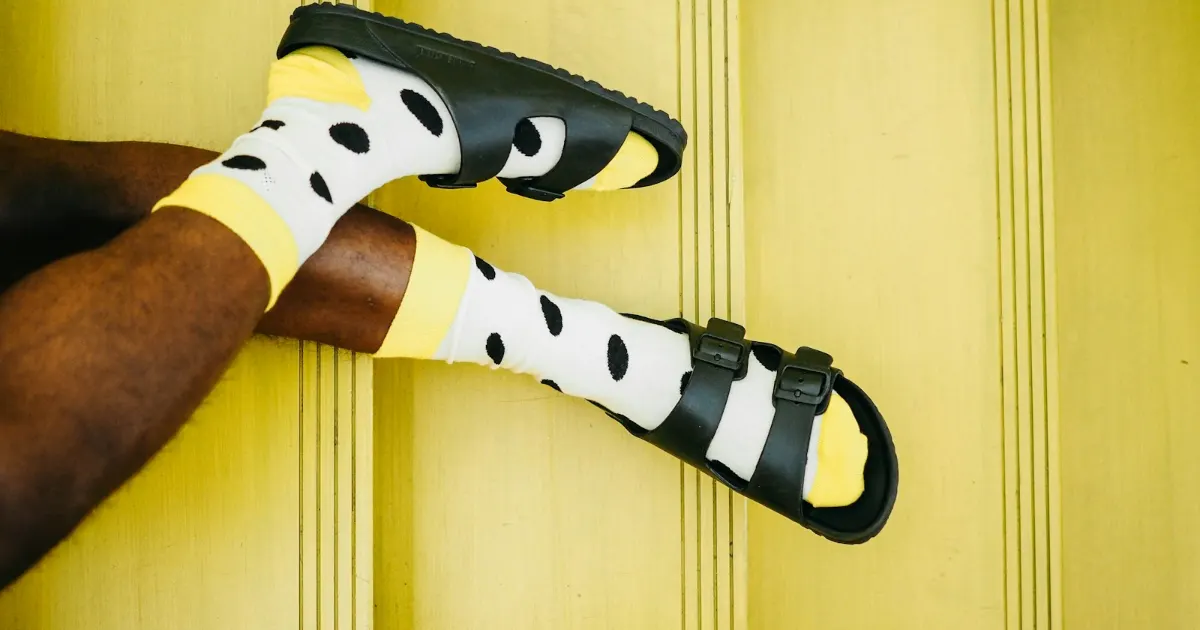
A contoured cork footbed with a deep heel cup is what separates a supportive sandal from a flat one. | Photo: No Revisions/Unsplash
Every year in our podiatrist in Howell and podiatrist in Bloomfield Township clinics, we see a predictable surge in new plantar fasciitis cases starting in May and June — right when Michigan residents switch from supportive winter shoes to flat summer sandals. The pattern is so reliable we’ve started calling it “sandal season.” For people who have been wearing supportive shoes all winter, the sudden transition to zero-arch-support flip-flops or flats creates an abrupt change in plantar fascia loading that triggers inflammation within days to weeks.
The good news is that supportive sandals have improved dramatically over the past decade. Several brands now offer genuinely orthotic-grade arch support in open-toed designs — enough to maintain the same biomechanical loading pattern as a supportive shoe, preventing the annual plantar fasciitis flare that flat sandal wearers dread.
Shoe specifics: our testing site Podiatrist Tested breaks these down model by model in its arch support sandal guide.
Why Most Sandals Cause Foot Pain
Standard flat sandals — flip-flops, slides, and most fashion sandals — provide zero arch support, zero heel cup, and zero shock absorption. The plantar fascia, which needs to maintain arch tension throughout the stance phase of every step, is forced to sustain the full tensile load without any mechanical assistance from the footwear. For people with plantar fasciitis, flat feet, or high arches, this creates rapid symptom onset. For people with normal feet who haven’t had problems before, prolonged wear of flat sandals can initiate plantar fasciitis de novo.
The flip-flop exacerbates the problem further: to prevent the sandal from flying off the foot, the toes must grip and curl with each step — recruiting the flexor digitorum longus and intrinsic flexors in a non-physiological pattern that strains the toe tendons and increases forefoot pressure at the metatarsal heads. Prolonged flip-flop use contributes to hammertoe progression, metatarsalgia, and interdigital neuritis beyond the plantar fascia problems of simply being flat.
What Makes a Sandal Truly Supportive
Feature
What It Does
Minimum Standard
Contoured Arch Footbed
Fills the medial arch space; reduces plantar fascia elongation with each step
Arch elevation ≥8mm at peak medial point
Deep Heel Cup
Centralizes calcaneal fat pad; stabilizes rearfoot in neutral
Cup depth ≥8mm (less than closed shoes, but must be present)
Firm Midsole
Prevents arch from collapsing through the footbed under full body weight
EVA ≥15mm or cork composite; not foam-only
Toe Straps That Don’t Require Gripping
Adjustable straps over instep prevent flip-flop toe-gripping gait
Adjustable buckle, Velcro, or wide-band over midfoot
Wide Toe Box
Prevents lateral toe compression; essential for bunion and neuroma patients
Natural toe splay; no medial compression at 1st MTP
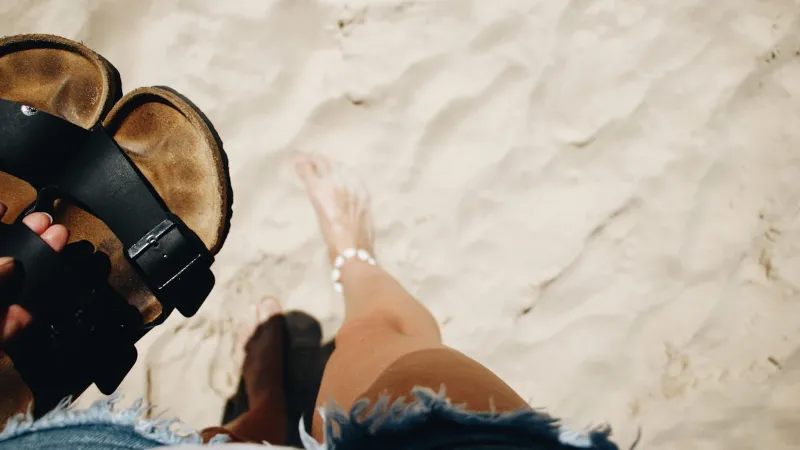
Adjustable instep straps stop the toe-gripping gait that flat flip-flops force with every step. | Photo: Ellena McGuinness/Unsplash
Top Sandals for Arch Support: Podiatrist Picks
Disclosure: As an Amazon Associate, Balance Foot & Ankle earns from qualifying purchases made through links on this page. Recommendations are based on clinical experience, not commissions.
1. Birkenstock Arizona / Boston — Best Classic Arch Support Sandal
Birkenstock’s cork-latex footbed is genuinely orthotic-grade and has been validated in multiple clinical studies for plantar pressure reduction. The footbed features four distinct zones: a deep heel cup, arch support post, metatarsal pad, and toe bar — the same components a custom orthotic fitting in Michigan provides, built into the sandal. The footbed molding property — it gradually conforms to the foot’s exact contour after 2–3 weeks of break-in — means the support becomes progressively more precise over time. The Arizona (two-strap) and Boston (clog) are both appropriate; the Arizona is better for heat management, the Boston provides more midfoot stability.
Birkenstock Clinical Notes: Requires 2-week break-in period — cork footbed is firm initially. Size down a half-size if between sizes. Available in narrow and regular widths. Not ideal for very high-arched rigid cavus feet — the fixed arch height may not match a very elevated arch. Narrow model exists for narrower heel/midfoot proportions.
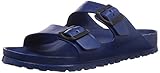
The BIRKENSTOCK Arizona is a true classic. Modeled on the cork sandal, it is made from ultra light and highly flexible EVA. The high-quality, odor-neutral EVA has been tested for harmful substances and combines numerous positive attributes. It’s waterproof, ultra lightweight, washable and therefore extremely easy to care for. Regular Fit.
Heel Height (cm):Flat
Platform Height (cm):Flatcm
Main Materials:Manmade
Main Materials:Buckle
As an Amazon Associate, Balance Foot and Ankle earns from qualifying purchases. Product links are affiliate links and we may earn a commission at no extra cost to you. This does not influence our clinical recommendations. Last update on 2026-09-23 / Images from Amazon Product Advertising API
2. Vionic Tide / Walker Sandals — Best for Plantar Fasciitis Patients
Vionic sandals use the Orthaheel orthotic technology — a medial arch post and deep heel cup design. The evidence for foot orthoses in plantar heel pain is mixed, and worth knowing before you buy: a systematic review and meta-analysis of 20 randomized trials (Rasenberg et al., British Journal of Sports Medicine, 2018) found foot orthoses were not superior to sham orthoses for pain or function. Treat built-in arch support as a comfort measure that many patients prefer to a flat sandal, rather than a proven treatment. Vionic offers a many styles (flip-flop format, walking sandal, dress sandal) all using the same arch support platform — making it the most versatile brand for plantar fasciitis patients who need variety in their warm-weather footwear.
Designed with exclusive alignment technology to balance the whole you.
Full underfoot contact reduces pressure.
Optimizes degree of forefoot motion.
As an Amazon Associate, Balance Foot and Ankle earns from qualifying purchases. Product links are affiliate links and we may earn a commission at no extra cost to you. This does not influence our clinical recommendations. Last update on 2026-09-23 / Images from Amazon Product Advertising API
3. HOKA Ora Recovery Slide — Best Post-Activity Recovery Sandal
For athletes, nurses, and anyone using sandals primarily as post-activity recovery footwear, HOKA’s thick EVA Ora Recovery Slide provides exceptional cushioning and a contoured arch profile that’s more cushion-forward than structured. These are not ideal for all-day walking or hiking, but for transitioning from shoes at the end of a long shift or post-run recovery, the Ora provides dramatically better foot recovery than a flat flip-flop or lodge slipper.
As an Amazon Associate, Balance Foot and Ankle earns from qualifying purchases. Product links are affiliate links and we may earn a commission at no extra cost to you. This does not influence our clinical recommendations. Last update on 2026-09-23 / Images from Amazon Product Advertising API
Dr. Tom’s Arch Support Sandal + Upgrade Stack
PowerStep Pinnacle — Best arch support sandals still benefit from insole upgrade: PowerStep Pinnacle inside any sandal with a removable footbed delivers clinical-grade medial arch support beyond what even the best-rated arch support sandal provides.
Foot Petals Tip Toes — Sandals too shallow for a full insole: Foot Petals Tip Toes provides metatarsal cushioning and forefoot support in flat sandal and fashion sandal styles that cannot accommodate a full-length insert.
Doctor Hoy’s Natural Pain Relief Gel — End-of-day arch and heel soreness despite arch support sandals: arnica + camphor gel applied after removing sandals each evening reduces the fascial inflammation that daily loading accumulates — even in properly supported feet.
Arch support sandals not controlling plantar fasciitis or foot pain? Custom orthotics provide the correction level no sandal can achieve. Custom orthotics →(810) 206-1402
Best Sandal by Foot Condition
Condition
Primary Need
Best Sandal Choice
What to Avoid
Plantar Fasciitis
Arch support + heel cup
Vionic Tide or Birkenstock Arizona
All flat flip-flops; zero-drop slides
Flat Feet
Medial arch post
Birkenstock or Vionic
Flat soles with no arch; fashion sandals
Bunions
Wide toe box; no medial strap pressure
Birkenstock (wide model) or Vionic Tide II
Thong straps between 1st/2nd toe; narrow sandals
Morton’s Neuroma
Wide forefoot; met pad elevation
Birkenstock (metatarsal pad built-in)
Any sandal that compresses the forefoot laterally
High Arches
Lateral column cushioning; not excessive arch post
HOKA Ora or Birkenstock (narrow, lower arch profile)
The transition from supportive winter footwear to flat sandals causes plantar fasciitis onset or flare in our clinic every May-June with striking predictability. The plantar fascia adapts over winter to a supported loading pattern — and the sudden removal of that support when sandal season begins creates an abrupt increase in tensile load at the calcaneal insertion. The result is the classic presentation: heel pain beginning 2–3 weeks after the first sustained warm-weather sandal use, severe with first steps in the morning, improving after 10 minutes of walking then worsening through the day. First intervention: replace the flat sandal with a Birkenstock or Vionic. Most mild-to-moderate plantar fasciitis cases triggered by sandal transition resolve within 4–6 weeks of supportive sandal use.
Posterior Tibial Tendinitis
The posterior tibial tendon is the primary dynamic arch stabilizer. Flat sandals without medial arch support load this tendon continuously during the stance phase of walking. In patients with pre-existing mild PTTD or flexible flat feet, summer sandal season can trigger progression from asymptomatic to symptomatic tendinopathy within weeks. Medial ankle aching that appears in summer and resolves in fall with return to supportive shoes is a diagnostic pattern we see regularly — and a clear signal to permanently add arch-supportive sandals to the summer wardrobe.
Differential Diagnosis: Foot Pain That Sandals Don’t Fix
Condition
Location
Distinguishing Feature
Next Step
Tarsal Coalition
Medial midfoot / subtalar
Rigid flat foot in adolescent; no normal arch on tip-toe
CT scan; possible surgical resection
PTTD Stage II-IV
Medial ankle + collapsed arch
Progressive deformity; single heel rise impossible
Imaging; KAFO or surgical reconstruction
Sesamoiditis
Plantar 1st MTP
Point tender under 1st metatarsal head
Sesamoid X-ray; offloading pad; injection if needed
Baxter’s Nerve Entrapment
Plantar heel (inferior)
Heel pain without morning pattern; persists through day
Ultrasound-guided injection; surgical decompression if needed
Warning Signs You Need More Than a Sandal
⚠ See a Podiatrist — Sandal Change Isn’t Enough
Heel pain that doesn’t improve within 4 weeks of switching to supportive sandals — clinical plantar fasciitis requiring treatment
Medial ankle swelling regardless of sandal type — PTTD requiring imaging
Pain in any sandal, including supportive styles — the problem is beyond footwear correction
Numbness or tingling in the heel or forefoot — nerve entrapment or vascular condition
Open wounds, ulcers, or skin breakdown — especially critical in diabetic patients wearing open-toed footwear
Most Common Sandal Mistake
The most common mistake we see is patients with plantar fasciitis switching from flat flip-flops to a “supportive” sandal and expecting immediate relief, then concluding the sandal didn’t work because pain persists for the first week. The plantar fascia is inflamed tissue — changing its mechanical loading environment improves the loading condition, but the inflammation doesn’t resolve in days. Supportive sandals need 3–4 weeks of consistent wear to demonstrate their full benefit, during which time the inflammatory cascade that has been perpetuated by flat footwear gradually resolves. If you’ve been in flat sandals for 3 months of summer and then switch to a supportive sandal, give it 4 weeks before evaluating whether it’s helping. Most patients see significant improvement within 3–4 weeks of consistent supportive sandal use, combined with plantar fascia stretching protocol.
In-Office Treatment at Balance Foot & Ankle
When sandal season plantar fasciitis or posterior tibial tendinitis has progressed beyond what footwear changes can address, our Howell and Bloomfield Township teams offer same-day diagnostic evaluation, shockwave therapy for chronic plantar fasciitis, custom prescription orthotics that can be transferred to sandals with removable footbeds, and steroid injection for acute heel pain that requires faster resolution.
Can I put my own orthotics in Birkenstock sandals?
Birkenstock sandals are not designed for orthotic insertion — the cork footbed is contoured and glued in place. However, the Birkenstock footbed itself is of sufficient orthotic quality that additional insoles are rarely necessary for patients with mild-moderate plantar fasciitis or flat feet. For patients requiring custom orthotics, sandals with flat, removable footbeds (some Vionic models, many athletic sandals) accommodate custom insole insertion better than contoured cork beds.
How long do supportive sandal footbeds last?
Birkenstock cork footbeds last 2–3 years of regular summer use with proper care (avoid prolonged water submersion). Vionic EVA footbeds typically last 1–2 seasons before the cushioning component compresses. Signs of footbed failure: the heel cup becomes flush with the surrounding surface, the arch support feels flat, or foot pain returns after a season of being resolved. Birkenstock offers cork footbed replacement service for worn-out pairs.
Are flip-flops ever appropriate for people with foot problems?
Standard flat flip-flops are not recommended for people with plantar fasciitis, flat feet, or any active foot condition. They are acceptable for very short-duration use — pool decks, locker rooms, brief beach walks — by people without active foot conditions. Even Vionic and Birkenstock make thong-style flip-flops with built-in arch support (Vionic Tide II, Birkenstock Gizeh) that provide the convenience of a flip-flop format with orthotic-quality support. For patients with active foot conditions, these arch-support thongs are the only acceptable flip-flop-style option.
Is there a sandal that works with custom orthotics?
Yes — sandals with flat, removable, full-length insoles allow custom orthotic insertion. Naot and Alegria both offer sandal models with deep footbeds designed for orthotic accommodation. Ecco’s sandal line includes models with removable insoles wide enough for most custom orthotic profiles. When selecting a sandal for custom orthotic use, remove the factory footbed and ensure the custom orthotic sits flat without lifting the heel excessively — the sandal strap adjustment should then be tightened accordingly.
When should I see a podiatrist about sandal-related foot pain?
See a podiatrist if foot pain develops within the first 2 weeks of sandal season (acute plantar fasciitis onset), if supportive sandal use for 4 weeks doesn’t provide meaningful improvement, if you have medial ankle swelling, visible arch changes, numbness or tingling, or any skin issue involving open-toed footwear (especially in diabetics). Same-day appointments at Balance Foot & Ankle: (810) 206-1402.
The Bottom Line
The best sandals for arch support provide contoured arch footbeds, deep heel cups, and firm midsoles — features found in Birkenstock (cork-latex footbed), Vionic (Orthaheel orthotic platform), and HOKA Ora Recovery (thick EVA cushion). For plantar fasciitis patients, Vionic’s built-in arch support and deep heel cup make it the usual starting point, chosen for comfort rather than because a trial has shown it cures heel pain. For all-around support with longevity, Birkenstock’s molding cork footbed is the gold standard. For post-activity recovery, HOKA Ora provides maximum cushioning without structured support. Transition gradually from flat sandals to supportive models — allow 3–4 weeks for inflammation to resolve before evaluating efficacy. When sandal changes alone don’t resolve foot pain, same-day care at Balance Foot & Ankle addresses the clinical condition driving the symptoms.
Sandal Season Foot Pain?
Same-day appointments — Dr. Tom Biernacki DPM, Howell & Bloomfield Township, MI.
Menz HB, et al. “Biomechanical effects of wearing sandals with contoured footbeds in people with plantar heel pain.” Journal of Foot and Ankle Research. 2014;7(1):A109.
Landorf KB, et al. “Effectiveness of different types of foot orthoses for the treatment of plantar fasciitis.” Journal of the American Podiatric Medical Association. 2006;96(2):109–118.
Rasenberg N, et al. “Insoles for plantar heel pain: a systematic review and individual patient data meta-analysis.” British Journal of General Practice. 2018;68(672):e220–e228.
Mündermann A, et al. “Foot orthosis effect on plantar fascia stress is minimal during walking despite load reduction across the arch.” Journal of Biomechanics. 2002;35(1):55–64.
Wearing SC, et al. “The pathomechanics of plantar fasciitis.” Sports Medicine. 2006;36(7):585–611.
Dr. Tom Biernacki, DPM is a board-certified foot & ankle surgeon (ABFAS & ABPM) at Balance Foot & Ankle Specialists in Southeast Michigan. With over a decade of clinical experience, he specializes in heel pain, bunions, diabetic foot care, sports injuries, and minimally invasive surgery. Dr. Biernacki is a member of the APMA and ACFAS, and his patient education content on MichiganFootDoctors.com and YouTube has made him one of the most-followed foot & ankle educators on YouTube.
Balance Foot & Ankle surgeons are affiliated with Trinity Health Michigan, Corewell Health, and Henry Ford Health — three of Michigan’s largest health systems.