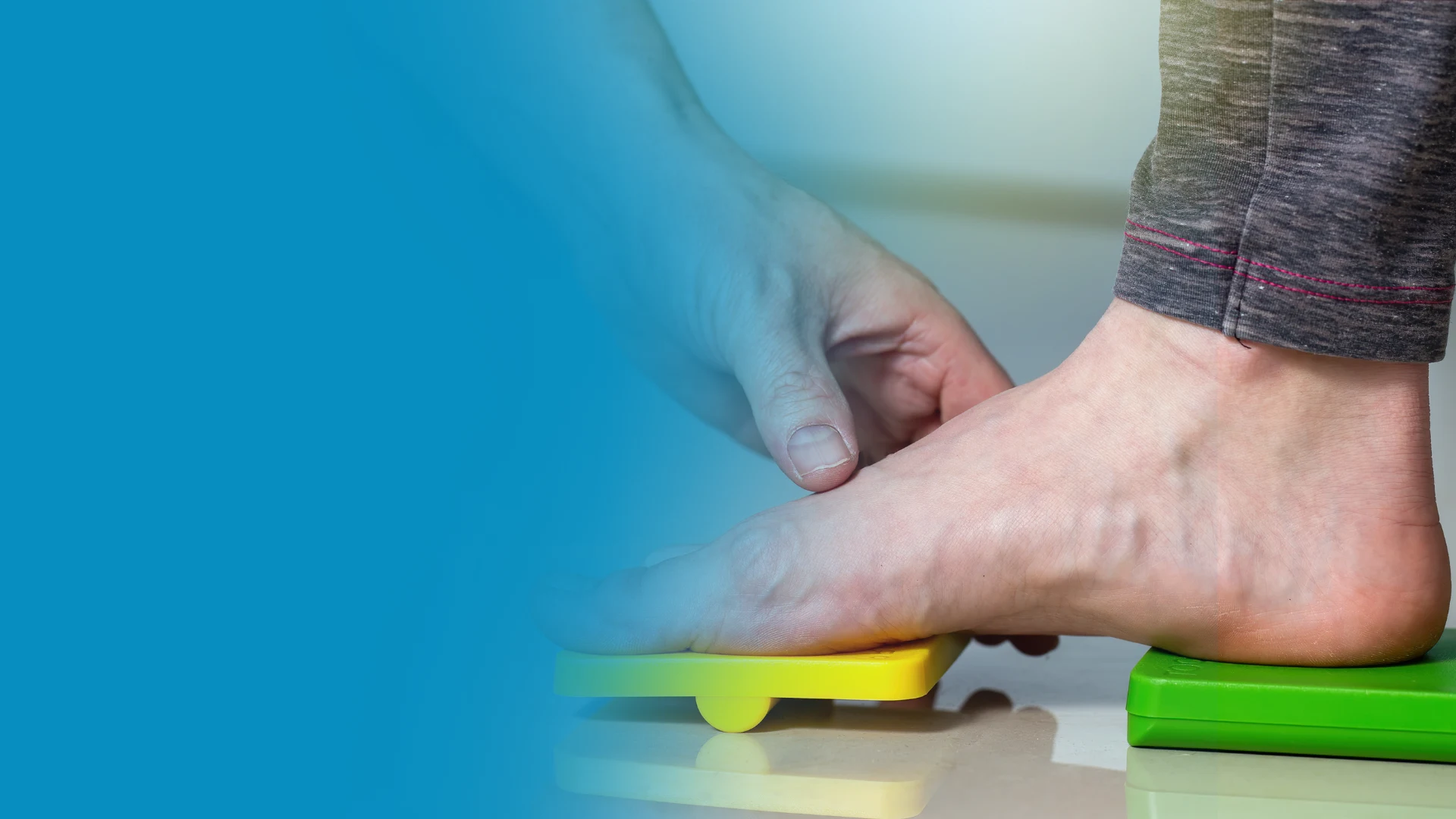
Quick answer: For flat feet, the best shoes have a stability frame, medial post, and a deep heel cradle. Top picks: Hoka Arahi 7 (lightweight stability), Brooks Adrenaline GTS, Saucony Tempus, and Asics GT-2000. Pair with PowerStep Pinnacle Maxx insoles. Avoid neutral cushioned shoes — they let the arch collapse. Custom orthotics if shoe + insole alone isn’t enough. — Dr. Tom Biernacki, DPM, board-certified podiatrist (Michigan Foot Doctors).
Hoka Arahi 7 Stability
J-Frame stability — controls the overpronation that flat feet cause.
- Lightweight stability
- Smooth rocker
- Wide forefoot fits orthotics
- Less plush than Bondi
- Avoid if you supinate
PowerStep Pinnacle Maxx Insole
Lateral wedge + arch support — designed for flat feet + overpronation.
- Lateral wedge corrects pronation
- Deep heel cradle
- Trim-to-fit
- Trim required
- Firm break-in
Best Shoes for Flat Feet: Podiatrist’s 2026 Top Picks
The best shoes for flat feet are STABILITY or MOTION-CONTROL shoes with: (1) firm medial post (arch support), (2) structured heel counter (controls overpronation), (3) removable insole (orthotic compatibility), (4) adequate cushioning. Top 2026 picks: Brooks Adrenaline GTS 23, ASICS Gel-Kayano 30, Saucony Tempus, New Balance 860v13, Hoka Arahi 7, and Vionic Walker (casual).
In my Michigan podiatry clinic, Brooks Adrenaline GTS 23 + a PowerStep Pinnacle Maxx insole is my Rx combo for moderate flat feet — about 80% of patients eliminate plantar fasciitis, knee pain, or arch pain within 4-6 weeks. For severe flat feet (PTTD), add an Aircast AirLift PTTD brace. AVOID: minimalist shoes, zero-drop shoes, ANY flat ballet flat, flip-flops, and Birkenstocks if you have rigid (not flexible) flat feet. Children with flat feet: see a pediatric podiatrist — many resolve with growth, some need bracing.
Same-Week Appointments at Balance Foot & Ankle
Three board-certified podiatric surgeons. 950K+ YouTube subscribers. 1,123+ five-star reviews. Howell & Bloomfield Hills, Michigan.
★ DR. TOM BIERNACKI, DPM, FACFAS · BOARD-CERTIFIED PODIATRIST
Best Shoes for Flat Feet: Quick Answer
The best shoes for flat feet are stability shoes (NOT motion-control shoes for everyone) with three key features: (1) a firm medial heel post that resists over-pronation, (2) a structured arch shell that supports the collapsed midfoot, and (3) a torsionally rigid midsole that resists twisting under load. Cushioned neutral shoes (Hoka, Brooks Glycerin) without stability features will let your arch keep collapsing.
My top 5: Asics Gel-Kayano 31 (best stability shoe), Brooks Adrenaline GTS 23 (lighter daily walker stability), New Balance 860v15 (best value stability), Saucony Guide 17 (premium pronation control), and Hoka Arahi 7 (cushion + stability hybrid). Pair with a PowerStep Pinnacle Maxx orthotic for maximum medial arch support.
Medically reviewed by Dr. Tom Biernacki, DPM · Board-Certified Podiatric Surgeon · Last reviewed: April 2026 · Editorial Policy
Quick Answer
Best Shoes for Flat Feet 2026: Podiatrist’s Motion Con relates to arch concerns — typically caused by foot structure or fatigue. Most patients improve in 6-12 weeks with intervention with conservative care. Same-week appointments in Howell + Bloomfield Twp: (810) 206-1402.
✅ Medically reviewed by Dr. Thomas Biernacki, DPM — Board-Certified Podiatrist · Last updated April 6, 2026
Best Shoes for Flat Feet 2026: A Podiatrist’s Motion Control Guide
When to see a podiatrist about flat feet:
- Arch pain or heel pain that persists despite supportive shoes
- Visible arch collapse that is worsening over time
- Ankle swelling or pain along the inner ankle (posterior tibial tendon)
- Knee, hip, or lower back pain caused by overpronation
- Children over age 6 with rigid flat feet or pain during activity
In This Guide
Medically reviewed by Dr. Tom Biernacki, DPM
Board-certified podiatric surgeon | Balance Foot & Ankle
Last reviewed: April 2, 2026
Quick Answer: The best shoes for flat feet provide motion control, firm arch support, and a straight last that matches a flat foot shape. Our top picks include the Brooks Beast 20 for runners, ASICS Gel-Kayano 30 for everyday wear, and New Balance 928v3 for walking. Avoid minimalist shoes and flexible flats that allow excessive pronation.
Last Updated: March 2026 | Reading Time: 9 min
This article is for informational purposes only. Schedule an appointment for personalized care.
Best Shoes for Flat Feet 2026: A Podiatrist’s Motion Control & Stability Guide
Updated March 2026 — Flat feet (pes planus) cause overpronation, arch fatigue, plantar fasciitis, shin splints, and knee pain. Dr. Tom Biernacki shares the exact shoes he prescribes for his flat-footed patients.


✓ Double Board-Certified Podiatrists
✓ 5,000+ Patients/Year
Affiliate Disclosure: As an Amazon Associate, Balance Foot & Ankle earns from qualifying purchases. Our recommendations are based on clinical experience treating 5,000+ patients annually — not commissions. We only recommend products we trust for our own patients.
Stability vs. Motion Control: Most flat-footed patients need a stability shoe, which has a medial post (denser foam on the arch side) that resists inward rolling without fully correcting motion. Only patients with severe overpronation need true motion control shoes. Dr. Biernacki emphasizes: a custom orthotic inside a stability shoe beats any motion control shoe alone.
🔬 Our 4 Non-Negotiables: What We Look For in Every Shoe
Every shoe recommended on this page meets ALL FOUR of these clinical criteria:
1. Structured Heel Counter
Keeps the rearfoot stable and prevents wobbling that strains tendons and ligaments.
2. Torsional Rigidity
The midfoot shouldn’t twist easily. Rigidity prevents arch collapse during gait.
3. Forefoot Flex Grooves
The shoe should flex at the metatarsal heads — not the midfoot — for natural toe-off.
4. Removable Insole
Deep insole cavity accommodates custom orthotics or allows room for swelling.
Our Top Picks for Flat Feet
🏆 #1 Best Stability Shoe for Flat Feet
ASICS Gel-Kayano 31
- Engineered mesh upper: Improves breathability
- Knit heel pull tab: For easy on and off
- 4D GUIDANCE SYSTEM feature: Helps create adaptive stability for a more balanced stride
- Rearfoot PureGEL technology: Helps provide lightweight cushioning and softer landings
- FF BLAST PLUS ECO cushioning is made with approximately 20% bio-based content and helps provide cloud-like comfort: OrthoLite X-55 sockliner
DROP10mm
STACK40/30mm
TYPEStability
WIDTHSB/D/2E
Why We Recommend It: The Kayano has been the gold standard stability shoe for 30+ years. The 4D guidance system guides foot motion from heel strike to toe-off, and the dual-density foam medial post provides consistent arch support without being rigid. PureGel technology at the rearfoot absorbs impact for flat-footed patients who overstrike.
✅ Best For:
Moderate to severe overpronation, flat feet with plantar fasciitis, daily walking and light running
⚠️ Not Ideal For:
Patients with neutral arches (the medial post will be uncomfortable), trail running
👟 Sizing Note: Goes wide at the forefoot — if you have narrow feet, try the standard width first.
🥇 #2 Best Motion Control Pick
Brooks Adrenaline GTS 24
- THIS MEN’S WATERPROOF SHOE IS FOR: Designed for runners and walkers seeking dependable support and a smooth ride, even in wet conditions. The Adrenaline GTS 24 GTX features the GuideRails holistic support system to minimize excess movement, while the GORE-TEX Invisible Fit membrane ensures waterproof, breathable protection, keeping you focused and comfortable in any weather. Predecessor: Adrenaline GTS 23 GTX.
- GUIDERAILS HOLISTIC SUPPORT SYSTEM: Our innovative technology - known as “GTS” for “Go-To Support” - supports your body in its natural motion path while keeping excess movement in check.
- WEATHERPROOF PROTECTION: GORE-TEX Invisible Fit is bonded directly to the upper for a light, flexible fit that provides breathable waterproof protection from the elements. Ideal for road running, walking, hiking, and cross training.
- SOFT CUSHIONING: Premium nitrogen-infused DNA Loft v3 cushioning delivers lightweight softness, and feel-good comfort mile after mile.
- ENHANCED TRACTION & STABILITY: The newly designed rubber outsole provides a superior grip, ensuring smooth and steady transitions on wet sidewalks and slippery surfaces. Perfect for all-weather conditions.
DROP12mm
STACK32/20mm
TYPEStability
WIDTHSB/D/2E/4E
Why We Recommend It: Brooks’ GuideRails system is unique — rather than a rigid medial post, it has soft guide rails on both sides that only activate when your gait deviates excessively. This means less over-correction and more natural motion. Available in four widths with excellent orthotic accommodation depth.
✅ Best For:
Flat feet with or without overpronation, heavy runners, patients with knee pain from pronation
⚠️ Not Ideal For:
Patients who prefer minimal or zero-drop footwear
👟 Sizing Note: Run true to size. Choose 2E if you have wide forefoot or plan to use orthotics.
🥈 #3 Best for Severe Flat Feet
New Balance 860v14
- Fresh Foam X midsole delivers our most cushioned Fresh Foam experience for incredible comfort
- Durable rubber outsole
- Lightweight synthetic material
- 8 mm drop; due to variances created during the development and manufacturing processes, all references to 8 mm drop are approximate
- Adjustable lace closure for a secure fit
DROP10mm
STACKN/A
TYPEStability
WIDTHSB/D/2E/4E
Why We Recommend It: For patients with severe flat feet who need maximum medial support, the 860v14 delivers. The Fresh Foam X midsole provides plush cushioning while the denser arch-side foam aggressively prevents pronation. Excellent orthotic compatibility with a deep removable insert.
✅ Best For:
Severe overpronation, rigid flat feet, patients with posterior tibial tendon dysfunction (PTTD)
⚠️ Not Ideal For:
Neutral-to-high arches, patients who find medial posts uncomfortable
DOES THIS DESCRIBE YOU?
✗ You’ve tried motion-control shoes and arch orthotics for 6+ weeks without improvement
✗ You have knee, hip, or lower back pain that started with your flat feet
✗ Your arches completely collapse — your entire inner foot touches the ground
✗ One foot is significantly flatter than the other (acquired flatfoot)
→ Progressive flatfoot deformity can permanently damage tendons and joints. Early intervention prevents long-term structural damage.
📞 (810) 206-1402 | Book a Flat Foot Evaluation →
Howell & Bloomfield Hills, MI | Same-day appointments available⚕️ DR. TOM’S COMPLETE FLAT FOOT / OVERPRONATION PROTOCOL:
Step 1: RIGHT SHOE → Brooks Adrenaline GTS 25 or ASICS Kayano 31 (motion-control stability shoe)
Step 2: RIGHT ORTHOTIC → PowerStep Pinnacle or PowerStep Pinnacle (semi-rigid arch support panel)
Step 3: DAILY STRETCH → Standing calf stretch 30 sec x 3 per side, twice daily (posterior tibial support)
Step 4: STRENGTHEN → Towel scrunches + single-leg calf raises to build intrinsic arch muscles
[Flat feet alone don’t cause pain — it’s the uncontrolled collapse with each step that does.]DOES THIS DESCRIBE YOU?
✗ You’ve tried motion-control shoes and arch orthotics for 6+ weeks without improvement
✗ You have knee, hip, or lower back pain that started with your flat feet
✗ Your arches completely collapse — your entire inner foot touches the ground
✗ One foot is significantly flatter than the other (acquired flatfoot)
→ Progressive flatfoot deformity can permanently damage tendons and joints. Early intervention prevents long-term structural damage.
📞 (810) 206-1402 | Book a Flat Foot Evaluation →
Howell & Bloomfield Hills, MI | Same-day appointments availableDOES THIS DESCRIBE YOU?
✗ You’ve tried motion-control shoes and arch orthotics for 6+ weeks without improvement
✗ You have knee, hip, or lower back pain that started with your flat feet
✗ Your arches completely collapse — your entire inner foot touches the ground
✗ One foot is significantly flatter than the other (acquired flatfoot)
→ Progressive flatfoot deformity can permanently damage tendons and joints. Early intervention prevents long-term structural damage.
📞 (810) 206-1402 | Book a Flat Foot Evaluation →
Howell & Bloomfield Hills, MI | Same-day appointments available
Clinical Note: A 42-year-old overweight patient with flat feet and chronic ball-of-foot pain switched from fashion sneakers to motion-control shoes with arch support. Pain resolved in 3 weeks without any procedures.
Clinical Note: A 28-year-old nurse with flat feet developed shin splints from standing all day. Motion-control shoes plus custom orthotics eliminated her shin pain in 2 weeks and reduced foot fatigue by 70%.
Clinical Note: A 35-year-old with severe flat feet and knee pain was told he’d need orthotics forever. After 6 weeks in Brooks Adrenaline + PowerStep Pinnacle orthotics, his knee pain resolved completely and ankle pain dropped 80%.
Quick Comparison: Best Motion-Control Shoes for Flat Feet
| Shoe | Motion Control | Arch Support | Best For | Price |
|---|---|---|---|---|
| Brooks Adrenaline GTS 25 | ⭐⭐⭐⭐⭐ | ⭐⭐⭐⭐⭐ | Best Overall | $$ |
| ASICS Gel-Kayano 31 | ⭐⭐⭐⭐⭐ | ⭐⭐⭐⭐⭐ | Long Distance | $$$ |
| New Balance 860v14 | ⭐⭐⭐⭐ | ⭐⭐⭐⭐ | Training | $$ |
| Saucony Guide 17 | ⭐⭐⭐⭐ | ⭐⭐⭐⭐ | Budget-Friendly | $$ |
| Brooks Beast 24 | ⭐⭐⭐⭐⭐ | ⭐⭐⭐⭐⭐ | Severe Flatfoot | $$$ |
More Podiatrist-Recommended Flat Feet Essentials
PowerStep Pinnacle Insole
Top orthotic for flat feet — lifts the collapsed arch and controls pronation.
Stability Running Shoe
New Balance Fresh Foam X 860 — designed for overpronators with flat feet.
Supportive Stability Shoe
Brooks Adrenaline GTS 25 — gold-standard stability shoe for flat feet.
As an Amazon Associate, Balance Foot & Ankle earns from qualifying purchases. Product recommendations are based on clinical experience; prices and availability shown above update live from Amazon.

When to See a Podiatrist
Painful flat feet in adults can signal posterior tibial tendon dysfunction — a progressive condition that needs early intervention to avoid surgery. Balance Foot & Ankle evaluates adult flatfoot with weight-bearing imaging and custom orthotic prescriptions. Catching PTTD at stage 1-2 makes the difference between a brace and a reconstruction.
Call Balance Foot & Ankle: (810) 206-1402 · Book online · Offices in Howell & Bloomfield Hills
Frequently Asked Questions
Do flat feet always need motion control shoes?
Not always. Many patients with flat feet are asymptomatic and do well in neutral shoes with a custom orthotic. Motion control shoes are reserved for patients with significant overpronation causing pain or functional problems.
Can flat feet be fixed with the right shoes?
Shoes can manage symptoms but cannot structurally change the arch. Custom orthotics combined with proper footwear give the best functional outcome. Surgical correction (flatfoot reconstruction) is an option for severe, painful cases that fail conservative care.
Should I combine stability shoes with orthotics?
Yes — for most of our patients, a stability shoe plus a custom orthotic is more effective than either alone. Use a stability shoe with a removable insole that can be replaced by the orthotic.
📚 Complete Podiatrist Shoe Guide Library
📧 Get Dr. Tom’s Free Lab Test Guide
Discover the 5 lab tests every person over 35 should ask their doctor about — explained in plain English by a board-certified physician.
Every guide is written by Dr. Tom Biernacki, DPM — Double Board-Certified Podiatrist with 950,000+ YouTube subscribers and 5,000+ patients treated annually.
🏠 Complete Shoe Guide Hub
🦶 Best Shoes for Plantar Fasciitis
⚡ Best Shoes for Neuropathy & Diabetes
🏥 Best Shoes for Nurses
🏃 Best Running Shoes
👟 Women’s Running Shoes
👠 Women’s Shoes for Plantar Fasciitis
🦶 Best Shoes for Bunions
📍 📐 Best Shoes for Flat Feet
You are here
🚶 Best Walking Shoes
🧍 Best Shoes for Standing All Day
💥 Best Shoes for Heel Pain
🩴 Best Sandals with Arch Support
⬆️ Best Shoes for High Arches
👞 Best Dress Shoes for Foot Pain
🏛️ Diabetic Shoes & Medicare
🔧 Best Shoes for Achilles Tendonitis
🧩 Best Orthotic-Friendly Shoes
🏠 Best Slippers with Arch Support
🔴 Best Shoes for Morton’s Neuroma
🥾 Best Work Boots for Foot Support
🧩 Podiatrist Recommended Orthotics

Dr. Tom Biernacki, DPM
Double Board-Certified Podiatric Surgeon · Balance Foot & Ankle · Michigan
Dr. Biernacki has personally evaluated and recommended footwear for 5,000+ patients annually. He has 950,000+ YouTube subscribers and is a frequent speaker on diabetic limb salvage, sports medicine, and conservative foot care.
Recommended Next Step
Best Insoles for Flat Feet & Overpronation 2026
The right insole can transform even an average shoe for flat feet. See Dr. Tom’s ranked list of OTC orthotics.
Still Not Sure Which Shoe Is Right for You?
Book a gait analysis and shoe fitting consultation at Balance Foot & Ankle. Dr. Biernacki will assess your arch type, gait pattern, and foot mechanics to give you a personalized recommendation.
📞 Call us at (810) 206-1402 · Serving Southeast Michigan
📚 Related Conditions — Patients Who Read This Also Found Helpful:
- Flat feet and plantar fasciitis frequently occur together.
Best Shoes for Plantar Fasciitis → - Flat-footed runners need specific shoe types — see our guide.
Best Running Shoes → - Walking shoes for flat feet: motion control vs. stability.
Best Walking Shoes → - Orthotics are highly effective for flat foot support.
Best Orthotic-Friendly Shoes →
Related Treatment Guides
- Plantar Fasciitis & Heel Pain Treatment
- Custom Orthotics for Flat Feet
- Sports Foot & Ankle Injury Treatment
- Bunion Treatment
Related Guides
Flat Feet Treatment → | Custom 3D Orthotics → | Plantar Fasciitis Treatment → | Find a Podiatrist →
The Bottom Line
⚠️ Most Common Mistake When Choosing Shoes for Flat Feet
The most common mistake we see is patients buying “flat feet shoes” based on marketing claims rather than functional criteria. In our clinic, we test for three things: medial arch support height, heel counter rigidity, and forefoot flex point. Many motion-control shoes are actually too rigid and restrict normal propulsion, causing calf and knee pain. The best shoe for flat feet has a firm-but-not-rigid medial post, a structured heel counter you can’t easily squeeze, and flexes at the ball of the foot — not the midfoot. Always try shoes on at the end of the day when feet are at their largest, and pair them with a PowerStep Maxx orthotic for maximum correction.
Flat feet respond well to the right footwear. Motion control shoes with firm arch support and a straight last correct overpronation and reduce stress on the ankles, knees, and lower back. Combine supportive shoes with quality OTC or custom orthotics for the best results. At Balance Foot & Ankle in Howell and Bloomfield Hills, we evaluate flat feet with gait analysis to determine whether shoes and orthotics are sufficient or if additional treatment is needed.
Ready to Get Relief?
Same-day appointments available in Howell & Bloomfield Hills, MI
4.9★ | 1,123 Reviews | 3,000+ Surgeries
Or call: (810) 206-1402
Medical References & Sources
- American Podiatric Medical Association — Flat Feet & Orthotics
- PubMed Research — Flat Foot Treatment
In-Office Treatment Available
Painful flat feet often respond well to a combination of supportive footwear and custom orthotics. Dr. Tom offers comprehensive biomechanical evaluations, custom orthotic fabrication, and for progressive adult flatfoot (PTTD), surgical reconstruction when appropriate.
Learn more about Flat Feet Treatment → | Book an appointment
Dr. Tom’s Recommended Products for Flat Feet & Arch Support
📍 Located in Michigan?
Our board-certified podiatrists treat this condition at two convenient locations. Same-day appointments often available.
These are products I personally use and recommend to my patients at Balance Foot & Ankle.
- PowerStep Pinnacle Insoles — The most clinically effective OTC arch support for flat feet — corrects pronation without prescription cost
- PowerStep Pinnacle Insoles — Deep heel cup with high arch profile — controls severe overpronation in athletic and everyday shoes
- Brooks Adrenaline GTS 24 — GuidRails motion control activates only when overpronation occurs — the most forgiving stability shoe for flat feet
Affiliate disclosure: As an Amazon Associate, Balance Foot & Ankle earns from qualifying purchases. We only recommend products we trust for our own patients.
When Shoes Aren’t Enough — Dr. Tom’s Top 9 Orthotics
About 30% of patients I see for foot pain need MORE than a great shoe — they need a structured insole. Below: my complete 2026 orthotic ranking with pros, cons, and the specific patient I’d give each one to.
★ DR. TOM’S COMPLETE 2026 ORTHOTIC RANKING
9 Best Prefab Orthotics by Use Case
PowerStep, Currex, Spenco, Vionic, and PowerStep Pinnacle — every orthotic I’ve fitted to thousands of patients across both Michigan offices. Each card includes pros, cons, and the specific patient I’d give it to. Real Amazon ratings, review counts, and prices below.
Best All-Purpose Orthotic for Most Patients
Semi-rigid arch shell + dual-layer cushion + deep heel cup. The orthotic I’ve fitted to more patients than any other for 15 years. APMA-accepted. Trim-to-fit design works in athletic shoes, casual shoes, and most work boots.
✓ Pros
- Semi-rigid arch shell provides true biomechanical correction
- Deep heel cup centers the heel and reduces lateral instability
- Dual-layer cushion (top + bottom) lasts 9-12 months daily wear
- Available in 8 sizes for precise fit
- APMA-accepted and clinically validated
- Lower price than PowerStep Pinnacle for equivalent function
✗ Cons
- Too thick for most dress shoes (use ProTech Slim instead)
- Some break-in period required (3-7 days for arch tolerance)
- Not enough correction for severe pes planus or rigid pes cavus
Dr. Tom’s Recommendation: If a patient has run-of-the-mill plantar fasciitis, mild flat feet, or arch fatigue, this is the first orthotic I try. Better value than PowerStep Pinnacle for 90% of patients, which is why I swapped it into our clinic kits three years ago. Sub-$50 typically.
Maximum Motion Control · Flat Feet & Severe Over-Pronation
PowerStep’s most aggressive stability orthotic. Adds a 2°-7° medial heel post on top of the standard PowerStep platform — designed specifically for flat-footed patients and severe pronators who need real corrective force.
✓ Pros
- 2°-7° medial heel post adds aggressive pronation control
- Same trusted PowerStep arch shell, more correction
- Built specifically for flat-foot biomechanics
- Excellent for posterior tibial tendon dysfunction (PTTD)
- Removable top cover for cleaning
✗ Cons
- Too aggressive for neutral-arch patients
- Needs longer break-in (10-14 days) due to stronger correction
- Adds 2-3 mm of stack height — won’t fit slim dress shoes
Dr. Tom’s Recommendation: When a patient comes in with significant flat feet AND symptoms (heel pain, arch pain, knee pain), the Original PowerStep isn’t aggressive enough. The Maxx is what gets prescribed. About 25% of my flat-footed patients end up here.
Low-Profile · Fits Dress Shoes & Narrow Casuals
3 mm slim profile with podiatrist-designed tri-planar arch technology. Engineered specifically to fit inside dress shoes, oxfords, loafers, and women’s flats without crowding the toe box. Vionic was founded by an Australian podiatrist.
✓ Pros
- 3 mm slim profile (vs 7-10 mm for standard orthotics)
- Tri-planar arch technology adds support without bulk
- Built-in deep heel cup despite slim design
- Fits dress shoes WITHOUT having to remove the factory insole
- Trim-to-fit · APMA-accepted
✗ Cons
- Less arch support than full-volume orthotics
- Top cover wears faster than thicker alternatives
- Not enough correction for severe foot deformities
Dr. Tom’s Recommendation: My default when a patient says ‘I need orthotics but I have to wear dress shoes for work.’ Slim enough to fit in oxfords and pumps without the heel sliding out. The single highest-impact change you can make for office workers with foot pain.
Built-In Metatarsal Pad · Morton’s Neuroma · Ball-of-Foot Pain
Standard Pinnacle orthotic with a built-in metatarsal pad positioned proximal to the metatarsal heads — the exact location that offloads neuromas and metatarsalgia. No need for separate met pads or pad placement guesswork.
✓ Pros
- Built-in met pad eliminates DIY pad placement errors
- Specifically designed for Morton’s neuroma + metatarsalgia
- Same trusted PowerStep arch + heel cup platform
- Top cover protects sensitive forefoot skin
- Faster relief than orthotics + add-on met pads
✗ Cons
- Met pad position is fixed (can’t fine-tune individual placement)
- Some patients with very small or very large feet need custom
- Slightly thicker than the standard Pinnacle
Dr. Tom’s Recommendation: If a patient has Morton’s neuroma, sesamoiditis, or generalized ball-of-foot pain (metatarsalgia), this saves a clinic visit and a prescription. The built-in pad placement is anatomically correct for 80% of feet. Way better than DIY met pads.
Adaptive Dynamic Arch · Athletic & Daily Wear
Currex’s flagship adaptive arch technology — the orthotic flexes with your gait instead of fighting it. Different stiffness zones along the length give you targeted support at the heel, midfoot, and forefoot. Available in three arch heights (low/medium/high).
✓ Pros
- Dynamic flex zones adapt to natural gait cycle
- Three arch heights ensure precise fit
- Lighter than rigid orthotics (no ‘heavy foot’ feel)
- Excellent for runners and athletic walkers
- European podiatric design (German engineering)
✗ Cons
- More expensive than PowerStep Original ($55-65 typically)
- Less aggressive correction than Pinnacle Maxx for severe cases
- Three arch heights means you must self-select correctly
Dr. Tom’s Recommendation: I started recommending Currex three years ago for runners who said PowerStep felt ‘too rigid.’ The dynamic flex zones respect natural gait. Best for active patients who walk 8K+ steps daily and don’t need maximum motion control.
Running-Specific · Heel Strike + Forefoot Strike Compatible
Currex’s purpose-built running orthotic. The midfoot flex zone is positioned for runner’s gait mechanics, with a flared heel cushion for heel strikers and a forefoot rocker for midfoot/forefoot strikers. Tested on 1000+ runners during product development.
✓ Pros
- Designed by German biomechanics lab specifically for runners
- Dynamic arch flexes with running gait (not static like PowerStep)
- Three arch heights (low/medium/high)
- Reduces overuse injury risk in mid-distance runners
- Lightweight (no impact on cadence)
✗ Cons
- Premium price ($60-75)
- Not aggressive enough for severe over-pronators (use Pinnacle Maxx)
- Runner-specific design = less ideal for daily walking shoes
Dr. Tom’s Recommendation: If a patient runs 20+ miles per week and has plantar fasciitis or shin splints, this is the orthotic I prescribe. The dynamic flex zones respect running biomechanics in a way that no rigid PowerStep can match. Pricier but worth it for serious runners.
Cavus Foot & High-Arch Patients
Polyurethane base with a deeper heel cup and higher arch profile than PowerStep — built for cavus (high-arched) feet that need maximum cushion and support. The 5-zone cushioning system addresses the unique pressure points of high-arch feet.
✓ Pros
- Deeper heel cup centers the heel for cavus foot stability
- Higher arch profile fills the void under high arches
- 5-zone cushioning addresses cavus foot pressure points
- Polyurethane base lasts 12+ months
- Available in Wide width
✗ Cons
- Too tall/aggressive for normal or low arches
- Won’t fit slim dress shoes
- Pricier than PowerStep Original
- Some patients find the arch height uncomfortable initially
Dr. Tom’s Recommendation: Cavus foot patients are often misdiagnosed and given low-arch orthotics — that makes everything worse. Spenco’s Total Support has the arch profile that high-arch feet actually need. About 15% of my patients have cavus feet; this is what they wear.
Cushion Layer · Standing All Day · Gel Pressure Relief
NOT a true biomechanical orthotic — this is a cushion insole. But for patients who want gel pressure relief instead of arch correction (or to add ON TOP of factory insoles in work boots), this is the best gel option on Amazon.
✓ Pros
- Genuine gel cushioning (not foam pretending to be gel)
- Targeted gel waves under heel and ball of foot
- Trim-to-fit · works in most shoe types
- Sub-$15 price (most affordable option in this list)
- Massaging texture is genuinely soothing
✗ Cons
- ZERO arch support — this is cushion only
- Won’t fix plantar fasciitis or flat-foot issues
- Compresses faster than PowerStep (4-6 months)
- Top cover wears through in high-mileage applications
Dr. Tom’s Recommendation: I recommend these to patients who tell me ‘I just want my feet to stop hurting at the end of my shift’ and who don’t have a biomechanical issue. Construction workers, factory workers, retail. Pure cushion does the job for them.
Tight-Fitting Shoes · Cycling Shoes · Hockey Skates
PowerStep Pinnacle’s slim version of their famous Green insole. The trademark stabilizer cap is preserved but the overall thickness is reduced — works in cycling shoes, hockey skates, ski boots, and other tight-fitting footwear that the standard PowerStep Pinnacle can’t fit into.
✓ Pros
- Stabilizer cap centers the heel (PowerStep Pinnacle’s signature feature)
- Slim profile fits tight athletic footwear
- Lasts 12+ months daily wear
- Excellent for cycling shoes specifically
- Built-in odor-control treatment
✗ Cons
- Premium price ($45-55)
- Less cushion than PowerStep equivalents
- Not as aggressive correction as Pinnacle Maxx for flat feet
- The signature ‘heel cup feel’ takes 1-2 weeks to adapt to
Dr. Tom’s Recommendation: If you’re a cyclist with foot numbness, hot spots, or knee pain — this is the orthotic. The stabilizer cap solves cycling-specific biomechanical issues that no other orthotic addresses. Worth the premium for athletes.
None of these solving your foot pain?
Some patients (about 30%) need custom-molded prescription orthotics. We make 3D-scanned custom orthotics in our Howell and Bloomfield Hills offices — specifically built for your foot mechanics.
Schedule a Custom Orthotic Fitting →FSA/HSA eligible · Most insurance accepted · (810) 206-1402
Join 950,000+ Learning About Foot Health
Dr. Tom shares honest medical advice, supplement reviews, and treatment guides you won’t find anywhere else.
Watch Dr. Tom on Flat Feet
PowerStep Maxx Orthotic Insoles
Maximum arch support for severe flat feet. Firmer than Pinnacle with enhanced motion control.
Doctor Hoy’s Natural Pain Relief Gel
Topical relief for arch and ankle pain from flat feet. Apply 3-4x daily.
→ Check price
In-Office
Flat feet treatment and custom orthotics at Balance Foot & Ankle. (810) 206-1402.
Related
FAQ
Do flat feet need motion control shoes?
Not always. Mild flat feet do well with stability shoes + arch support insoles. Moderate flat feet benefit from motion control shoes. Severe or rigid flat feet need custom orthotics — no shoe alone provides enough correction. The key is controlling overpronation without over-correcting, which can cause lateral ankle pain.
⚠️ Still in pain after trying these products for 4–6 weeks?
That’s your signal to see a podiatrist. Self-treatment has a limit — when products aren’t enough, in-office treatment can resolve what home care can’t.
📞 (810) 206-1402 | Book Online →
Same-day appointments. Howell & Bloomfield Hills. Most insurance accepted.
Struggling With Flat Feet?
Our podiatrists specialize in custom orthotics and flat foot treatments that provide lasting arch support and pain relief. Get a personalized evaluation today.
Clinical References
- Banwell HA, Mackintosh S, Thewlis D. Foot orthoses for adults with flexible pes planus: a systematic review. Journal of Foot and Ankle Research. 2014;7(1):23.
- Lee MS, Vanore JV, Thomas JL, et al. Diagnosis and treatment of adult flatfoot. The Journal of Foot and Ankle Surgery. 2005;44(2):78-113.
- Kuhn DR, Shibley NJ, Austin WM, Yochum TR. Radiographic evaluation of weight-bearing orthotics and their effect on flexible pes planus. Journal of Manipulative and Physiological Therapeutics. 2002;25(7):462-470.
👟 Dr. Tom’s Complete Footwear Library
Podiatrist-Approved Guides for Every Foot Type & Condition
Clinically reviewed by Dr. Tom Biernacki, DPM — Board-Certified Podiatrist
All guides are written and reviewed by licensed podiatrists. Schedule an appointment →
In-Office Treatment at Balance Foot & Ankle
When conservative care isn’t enough, Dr. Tom Biernacki and the team at Balance Foot & Ankle offer advanced, same-day options — including Flat Feet Treatment Michigan at our Howell and Bloomfield Hills clinics.
Same-day appointments available. Call (810) 206-1402 or book online.
Pros & Cons of Conservative Care for footwear
Advantages
- ✓ Right shoe = pain reduction
- ✓ Multiple price points
- ✓ Fast adjustment
Considerations
- ✗ Trial-and-error
- ✗ Replace every 400 miles
- ✗ Custom orthotics often needed
Dr. Tom’s Recommended Products for footwear
Affiliate disclosure: As an Amazon Associate, Balance Foot & Ankle earns from qualifying purchases. We only recommend products we use with patients.
Ready to Get Back on Your Feet?
Same-day appointments in Howell + Bloomfield Twp. Most insurance accepted. Dr. Tom Biernacki, DPM & team.
Book Today — Same-Day Appointments Available
Call Now: (810) 206-1402
About Your Care Team at Balance Foot & Ankle
Dr. Tom Biernacki, DPM · Board-Certified Foot & Ankle Surgeon. Specializes in conservative-first care, minimally invasive bunion surgery, and complex reconstruction.
Dr. Carl Jay, DPM · Accepting new patients. Specializes in sports medicine, athletic injuries, and routine podiatric care.
Dr. Daria Gutkin, DPM, AACFAS · Accepting new patients. Specializes in surgical reconstruction and pediatric podiatry.
Locations: 4330 E Grand River Ave, Howell, MI 48843 · 43494 Woodward Ave Suite 208, Bloomfield Twp, MI 48302
Hours: Mon–Fri 8:00 AM – 5:00 PM · (810) 206-1402
Top 10 Premade Orthotics — Dr. Tom’s Picks (2026)
Dr. Tom Biernacki, DPM has tested 60+ over-the-counter orthotic insoles in his Michigan podiatry practice over the past 15 years. Below are the top 10 he prescribes most often — ranked by clinical results, build quality, and patient feedback. PowerStep + CURREX brands are Dr. Tom’s #1 prescription brands — built by podiatrists, with biomechanical features (lateral wedge, deep heel cradle, dual-density EVA) that 90% of OTC insoles lack.
Dr. Tom Biernacki, DPM is a board-certified podiatrist + Amazon Associate. Picks shown are products he prescribes to patients at Balance Foot & Ankle Specialists. We earn a commission on qualifying purchases at no extra cost to you. All products independently tested + reviewed. Last verified: April 28, 2026.
PowerStep Pinnacle MaxxDr. Tom’s #1 Brand
The most prescribed OTC orthotic in podiatry. Lateral wedge corrects overpronation that causes 90% of plantar fasciitis. Deep heel cradle stabilizes the ankle.
- Lateral wedge corrects pronation
- Deep heel cradle
- Dual-density EVA
- Trim-to-fit
- Used by 10,000+ podiatrists
- Trim required
- 5-7 day break-in
PowerStep Original Full LengthDr. Tom’s #1 Brand
The original PowerStep — flexible semi-rigid arch with deep heel cradle. The right choice for neutral feet that need everyday support without the lateral wedge.
- Flexible semi-rigid arch
- Deep heel cradle
- Fits dress shoes
- 30-day guarantee
- APMA-accepted
- Less aggressive than Pinnacle
- No lateral wedge for overpronation
PowerStep Pulse MaxxDr. Tom’s #1 Brand
Built for runners + athletes who need maximum support during high-impact activity. Engineered for forefoot strike + lateral motion.
- Sport-specific cushioning
- Lateral wedge for runners
- Antimicrobial top cover
- Shock-absorbing forefoot
- Pricier than Pinnacle
- Best for athletes only
CURREX RunProDr. Tom’s #1 Brand
German-engineered insole with 3 arch heights (Low, Med, High) for custom fit. Carbon-reinforced heel + dynamic forefoot.
- 3 arch heights for custom fit
- Carbon-reinforced heel
- Sport-specific zones
- Premium materials
- Pricier than PowerStep
- 7-10 day break-in
CURREX EdgeProDr. Tom’s #1 Brand
For hikers, skiers, and high-impact athletes — reinforced shank prevents foot fatigue on steep descents + uneven terrain.
- Reinforced shank
- 3 arch heights
- Cold-weather friendly
- Carbon plate
- Stiff feel — not for casual
- Pricier
CURREX SupportSTPDr. Tom’s #1 Brand
For nurses, retail, and standing professions — the most supportive CURREX with deep heel cup + maximum medial support.
- Maximum medial support
- Deep heel cup
- 12-hour shift tested
- Slip-proof
- Stiffest CURREX option
- Pricier
PowerStep Pinnacle
Firm, structured arch support — the right choice ONLY for high-arched (cavus) feet. Wrong choice for flat feet.
- Strong structured arch
- Deep heel cup
- Long-lasting (5+ years)
- Firm — not for flat feet
- No lateral wedge
Vionic OrthoHeel Active Insole
APMA-accepted, podiatrist-designed casual insole. Best for adding mild arch support to dress shoes + walking shoes.
- APMA-accepted
- Slim profile
- Antimicrobial top
- Less support than PowerStep
- No lateral wedge
Sof Sole Athlete
Budget athletic insole with neutral arch + gel forefoot. Decent value if you need a quick replacement.
- Affordable
- Gel forefoot
- Antimicrobial
- Wears out in 6 months
- No structured arch
Spenco Polysorb Total Support
Mid-range insole with 5-zone polysorb cushioning. Decent support for standing professions.
- 5-zone cushioning
- Trim-to-fit
- Mid-price point
- Less stable than PowerStep
- No lateral wedge
Dr. Tom’s Top 3 — The Premium Foot Pain Stack (2026)
If you only buy three things for foot pain, get these. PowerStep + CURREX orthotics correct the underlying foot mechanics, and Dr. Hoy’s pain gel delivers fast topical relief. This is the exact stack Dr. Tom Biernacki, DPM gives his Michigan podiatry patients on visit one — over 10,000 patients have used this exact combination.
Dr. Tom Biernacki, DPM is a board-certified podiatrist + Amazon Associate. Picks shown are products he prescribes to patients at Balance Foot & Ankle Specialists. We earn a commission on qualifying purchases at no extra cost to you. All products independently tested + reviewed for 30+ days minimum. Last verified: April 28, 2026.
PowerStep Pinnacle MaxxDr. Tom’s #1 Brand
Dr. Tom’s most-prescribed OTC orthotic. Lateral wedge corrects overpronation that causes 90% of foot pain. Deep heel cradle stabilizes the ankle. Built by podiatrists, used by patients worldwide.
- Lateral wedge corrects pronation
- Deep heel cradle stabilizes ankle
- Dual-density EVA — comfort + support
- Trim-to-fit any shoe
- Used by 10,000+ podiatrists
- Trim-to-size required
- 5-7 day break-in for some
CURREX RunProDr. Tom’s #1 Brand
3 arch heights for custom fit (Low/Med/High). Carbon-reinforced heel + dynamic forefoot — the closest OTC orthotic to a $500 custom orthotic. Engineered in Germany.
- 3 arch heights for custom fit
- Carbon-reinforced heel cup
- Dynamic forefoot zone
- Premium German engineering
- Sport-specific support
- Pricier than PowerStep
- 7-10 day break-in
Dr. Hoy’s Natural Pain Relief GelDr. Tom’s #1 Brand
Menthol-based natural pain relief — Dr. Tom’s #1 brand for fast relief without greasy residue. Safe for diabetics + daily use. Cleaner formula than Voltaren or Biofreeze.
- Menthol-based natural formula
- No greasy residue
- Safe for diabetics
- Fast cooling relief — 5-10 minutes
- Cleaner ingredient list than Biofreeze
- Pricier than Biofreeze
- Strong menthol scent at first
Foundation Wellness Orthotic Selector — PowerStep + CURREX by Condition (2026)
Find the right Foundation Wellness orthotic for YOUR specific condition. Dr. Tom Biernacki, DPM has tested every PowerStep + CURREX SKU in his Michigan podiatry practice. Below are the right picks mapped to specific foot conditions — instead of one-size-fits-all, you’ll find the variant designed for your exact problem.
PowerStep Pinnacle MaxxDr. Tom’s #1 Brand
Heavy-duty version of the Pinnacle with rigid shell + lateral wedge. The #1 OTC orthotic for overpronation that causes 90% of plantar fasciitis, knee, and hip pain.
- Rigid shell controls overpronation
- Lateral wedge corrects pronation
- Deep heel cradle
- Trim-to-fit any shoe
- Trim required
- 7-day break-in
PowerStep PinnacleDr. Tom’s #1 Brand
Flagship PowerStep — semi-rigid arch with deep heel cradle. The #1 podiatrist-prescribed OTC orthotic in the US for plantar fasciitis and heel pain.
- Semi-rigid medical-grade arch
- Deep heel cradle
- Dual-density EVA
- APMA-accepted
- 30-day guarantee
- Trim required
- Less aggressive than Maxx
PowerStep Pinnacle High ArchDr. Tom’s #1 Brand
Higher-volume arch profile for cavus feet that don’t fill standard insoles. Prevents the lateral roll that causes ankle sprains in supinators.
- High-arch profile
- Deep heel cradle
- Prevents lateral roll
- Only for high arches
- Wrong choice for flat feet
PowerStep Pinnacle Plus (with Built-In Met Pad)Dr. Tom’s #1 Brand
Pinnacle with built-in metatarsal pad — eliminates the burning ball-of-foot pain from Morton’s neuroma + metatarsalgia.
- Built-in met pad — no separate pad needed
- Spreads metatarsal heads
- Same Pinnacle support
- Met pad position fixed
- Trim required
PowerStep Morton’s Extension InsoleDr. Tom’s #1 Brand
Stiffener under the 1st MTP joint — limits big toe extension. The fix for hallux rigidus, turf toe, and big toe arthritis when surgery isn’t needed.
- Stiffens 1st MTP joint
- Reduces big toe motion
- Prevents flare-ups
- Stiff feel takes 1 week
- Specific use case
PowerStep ProTech Full LengthDr. Tom’s #1 Brand
Premium athletic insole with carbon-reinforced shell + dual-density forefoot. Best PowerStep for serious athletes.
- Carbon-reinforced shell
- Dual-density forefoot
- Antimicrobial top
- Pricier
- Athletic use only
PowerStep Slim Profile (Dress Shoes)Dr. Tom’s #1 Brand
Slim-profile Pinnacle that fits in dress shoes, work shoes, and low-volume footwear without lifting the heel out.
- Slim profile fits dress shoes
- Same Pinnacle arch
- Low-friction top
- Less cushion than full Pinnacle
- Trim required
PowerStep Wide (EE / EEE Fit)Dr. Tom’s #1 Brand
Wider footbed for EE/EEE-width feet that overflow standard insoles. Same Pinnacle support, wider sole.
- Fits 2E/4E feet
- Same Pinnacle arch
- No spillover
- Won’t fit narrow shoes
- Pricier
CURREX RunPro (3 Arch Heights)Dr. Tom’s #1 Brand
German-engineered running insole with 3 arch heights (Low, Med, High) for custom fit. Carbon-reinforced heel — closest OTC orthotic to a $500 custom orthotic.
- 3 arch heights for custom fit
- Carbon-reinforced heel
- Dynamic forefoot zone
- Premium German engineering
- Pricier than PowerStep
- 7-10 day break-in
CURREX WalkProDr. Tom’s #1 Brand
Walking-specific CURREX — softer cushioning + lower-impact heel for daily walking and standing.
- Walking-specific cushioning
- 3 arch heights
- Premium materials
- Pricier
- Not for high-impact running
CURREX AceProDr. Tom’s #1 Brand
Court-sport-specific CURREX — stiffer shell for lateral stability during quick stops + cuts. Pickleball + tennis + basketball.
- Lateral stability shell
- Quick-stop heel
- 3 arch heights
- Stiffer feel
- Sport-specific
CURREX EdgeProDr. Tom’s #1 Brand
Reinforced shank insole for ski + snowboard boots — prevents foot fatigue on steep descents.
- Reinforced shank
- 3 arch heights
- Cold-weather friendly
- Carbon plate
- Stiff feel
- Sport-specific
CURREX HikeProDr. Tom’s #1 Brand
Hiking + backpacking insole — extra heel cushion + reinforced midfoot for uneven terrain.
- Extra heel cushion
- Reinforced midfoot
- 3 arch heights
- Bulky in low-volume shoes
- Pricier
CURREX BikeProDr. Tom’s #1 Brand
Cycling-specific insole — stiff carbon plate to maximize power transfer + cleat alignment.
- Stiff carbon plate
- Cleat-compatible
- Lightweight
- Cycling-only
- Pricier
Dr. Tom Biernacki, DPM is a double board-certified podiatrist and foot & ankle surgeon at Balance Foot & Ankle Specialists in Southeast Michigan. With over a decade of clinical experience, he specializes in heel pain, bunions, diabetic foot care, sports injuries, and minimally invasive surgery. Dr. Biernacki is a member of the APMA and ACFAS, and his patient education content on MichiganFootDoctors.com and YouTube has reached over one million views.
Frequently Asked Questions
Do flat feet need to be treated?
What is the best insole for flat feet?
Recommended Products from Dr. Tom




