
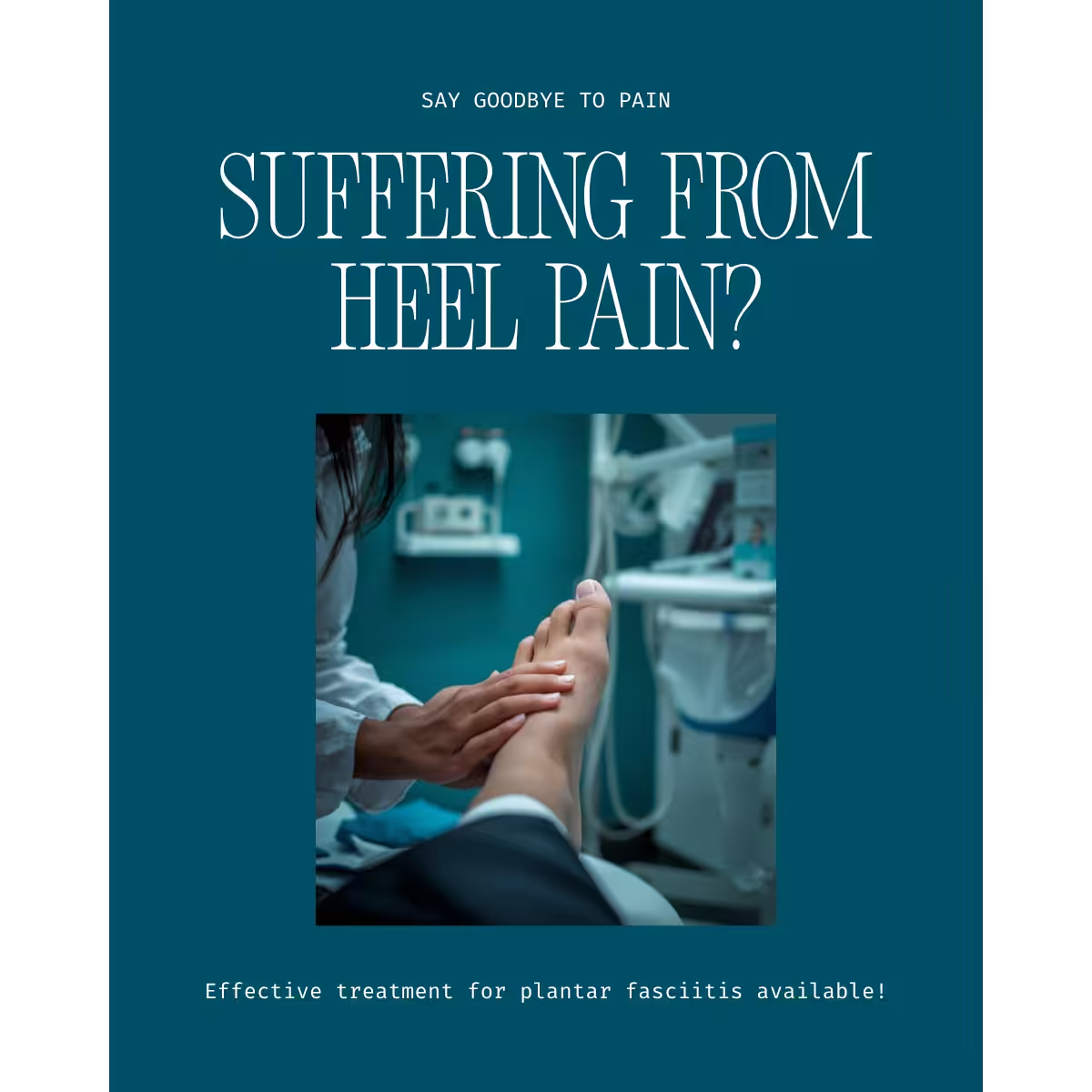
Plantar fasciitis is the most common cause of heel pain in adults — and the single most common question I receive from patients in our Howell and Bloomfield Hills offices is: “What walking shoes should I be wearing?” The right shoe will not cure plantar fasciitis on its own, but the wrong shoe can prevent healing regardless of every other treatment we apply. This guide covers the specific biomechanical features that matter for plantar fasciitis footwear and my top walking shoe recommendations for 2026 based on what I actually recommend to patients in our Michigan practice.
What Your Walking Shoe Needs to Do for Plantar Fasciitis
The plantar fascia is a band of tissue that runs from the heel bone to the base of the toes. It is under maximal stress when the ankle dorsiflexes (foot bends upward) and the toes extend simultaneously — the exact moment of push-off during walking. A walking shoe that reduces this stress has three key structural features: a mild heel raise (8–10mm drop, which keeps the Achilles and plantar fascia in a slightly shortened position), a firm but cushioned midsole (not so soft that the foot sinks and the fascia stretches excessively), and adequate torsional rigidity (the shoe should not twist easily along its length — a twisting sole allows the midfoot to collapse and loads the fascia).
What plantar fasciitis shoes should not have: zero-drop or completely flat soles (increases fascia tension), completely flexible soles that fold in half (allows the midfoot to collapse), and minimal cushioning in the heel (allows impact forces to transfer directly to the inflamed insertion).
Best Walking Shoes for Plantar Fasciitis — 2026 Recommendations
📍 Located in Michigan?
Our board-certified podiatrists treat this condition at two convenient locations. Same-day appointments often available.
Best Overall: Brooks Addiction Walker 2
The Brooks Addiction Walker 2 is my top recommendation for plantar fasciitis walking shoes. It has a 10mm heel-to-toe drop, firm BioMoGo DNA midsole, excellent torsional rigidity, and the MoGo midsole material that provides cushioning without excessive softness. The extended progressive diagonal rollbar provides medial support for overpronators — the most common foot type in plantar fasciitis patients. It has lasted reliably for 400–500 miles of walking before midsole compression. Available in wide widths. Leather and mesh uppers available.
Best for High-Arch / Neutral Foot: New Balance 928
The New Balance 928 is the best walking shoe for patients with neutral to high-arch foot types with plantar fasciitis. ROLLBAR technology provides stability without medial posting, the ABZORB heel cushioning absorbs heel strike impact, and the wide toe box accommodates bunions and hammertoes that frequently coexist with plantar fasciitis. Available in 2E and 4E wide widths. Particularly suitable for patients who need a walking shoe wide enough to accommodate a custom orthotic.
Best for All-Day Wear / Workplace: HOKA Bondi 8
The HOKA Bondi 8 is the highest-cushion walking shoe I recommend for patients with severe plantar fasciitis who need maximum heel impact reduction — particularly for those who work all day on hard floors. The maximum-cushion EVA midsole, early-stage Meta-Rocker geometry (reduces ankle dorsiflexion moment), and 4mm heel-toe drop make it effective for acute plantar fasciitis flares. Important note: the extremely soft midsole means this shoe does not provide meaningful arch support — pair it with a custom orthotic or a quality OTC arch support (PowerStep Pinnacle or PowerStep Pinnacle) for best results.
Best Budget Option: Saucony Cohesion 15
The Saucony Cohesion 15 provides the essential plantar fasciitis-friendly features — 8mm drop, adequate heel cushioning, reasonable torsional rigidity — at a price point accessible to patients on a budget. It will not last as long as the Brooks or New Balance and lacks the medial support features, but for patients who need an immediate improvement in footwear without significant financial outlay, it is a solid entry point.
What About Shoe Inserts?
Even the best walking shoe for plantar fasciitis works better with the right insert. Over-the-counter arch supports — PowerStep Pinnacle or PowerStep Pinnacle — provide the arch contact and torsional control that even good walking shoes cannot fully replicate. Patients who have had plantar fasciitis for more than 4 weeks without improvement on OTC insoles should be evaluated for custom orthotics. We fabricate custom orthotics with pressure plate analysis at both our Howell and Bloomfield Hills offices — Medicare and most PPO plans cover them when medically indicated.
The Most Common Walking Shoe Mistake with Plantar Fasciitis
The most common mistake: buying the most cushioned shoe available without checking torsional rigidity. Ultra-soft shoes (think: maximum cushion “cloud” shoes) allow the midfoot to collapse under body weight, which stretches the plantar fascia despite the cushioning feel. A shoe that twists easily when you grab the toe and heel and rotate them in opposite directions is providing inadequate fascia protection regardless of how much cushioning it has. Test every shoe before buying: if it twists, the fascia will be stressed.
When Shoes Are Not Enough — Book an Evaluation
📧 Get Dr. Tom’s Free Lab Test Guide
Discover the 5 lab tests every person over 35 should ask their doctor about — explained in plain English by a board-certified physician.
If you have changed your footwear appropriately and your plantar fasciitis has not improved in 4–6 weeks, the structural cause likely requires clinical evaluation. Custom orthotics, MLS laser therapy, cortisone injection, and extracorporeal shockwave therapy have strong evidence for plantar fasciitis that has failed footwear changes alone. Same-day appointments available. Call (810) 206-1402 or book online.
Related: Best Running Shoes for Foot Problems · Best Insoles for Plantar Fasciitis · Custom Orthotics Michigan
Disclosure: This page contains affiliate links. As an Amazon Associate, Balance Foot & Ankle earns from qualifying purchases. All product recommendations reflect clinical practice and are not influenced by affiliate relationships.
Join 950,000+ Learning About Foot Health
Dr. Tom shares honest medical advice, supplement reviews, and treatment guides you won’t find anywhere else.
Subscribe on YouTube →
Dr. Tom Biernacki, DPM is a double board-certified podiatrist and foot & ankle surgeon at Balance Foot & Ankle Specialists in Southeast Michigan. With over a decade of clinical experience, he specializes in heel pain, bunions, diabetic foot care, sports injuries, and minimally invasive surgery. Dr. Biernacki is a member of the APMA and ACFAS, and his patient education content on MichiganFootDoctors.com and YouTube has reached over one million views.