

You are in the right place. Dr. Tom Biernacki, DPM, FACFAS — board-certified foot & ankle surgeon with 3,000+ surgeries — explains exactly what best wide-width shoes for swollen feet means and what actually works. Call (810) 206-1402 for a same-day appointment at our Howell or Bloomfield Township office.
Medically reviewed by Dr. Tom Biernacki, DPM · Board-Certified Podiatric Surgeon · Last reviewed: April 2026 · Editorial Policy
The most important clinical decision with Best Wide Width Shoes Swollen Feet Edema 2026 isn't which treatment to start with — it's which subtype or underlying cause you actually have. Our podiatrists regularly see patients who've been treated for months for the wrong diagnosis. The correct identification changes the entire treatment path. Call (810) 206-1402 — Dr. Tom evaluates this condition at both Howell and Bloomfield Township locations.
Medically reviewed by Dr. Tom Biernacki, DPM — Board-certified foot & ankle surgeon, 3,000+ surgeries performed. Updated April 2026 with current clinical evidence. This article reflects real practice experience from Balance Foot & Ankle Specialists in Howell and Bloomfield Township, Michigan.
The most important clinical decision with Best Wide Width Shoes Swollen Feet Edema 2026 isn’t which treatment to start with — it’s identifying the correct subtype. That changes everything. Call (810) 206-1402.
Quick Answer
Most foot and ankle problems respond to conservative care — proper footwear, supportive inserts, activity modification, and targeted stretching — within 4-8 weeks. Persistent pain beyond that window, or any symptom that prevents walking, warrants a podiatric evaluation to rule out fracture, tendon tear, or systemic cause.
Watch: Dr. Tom Biernacki, DPM
Medically reviewed by Dr. Tom Biernacki, DPM — Board-Certified Podiatric Surgeon — Balance Foot & Ankle, Howell & Bloomfield Township, MI. Last updated April 2026.
▶ Watch
📋 Dr. Tom Also Recommends
Podiatrist Recommended Orthotics 2026: Dr. Tom’s Top 10 Insoles & Arch Supports
A podiatrist’s complete clinical guide to the best insoles — custom orthotics, OTC picks, and what actually works for plantar fasciitis, flat feet, neuropathy & more.
Read the Full Guide →Medically Reviewed by Dr. Tom Biernacki, DPM — Board-Certified Podiatrist, Balance Foot & Ankle Specialists, Michigan. Last updated April 2026.
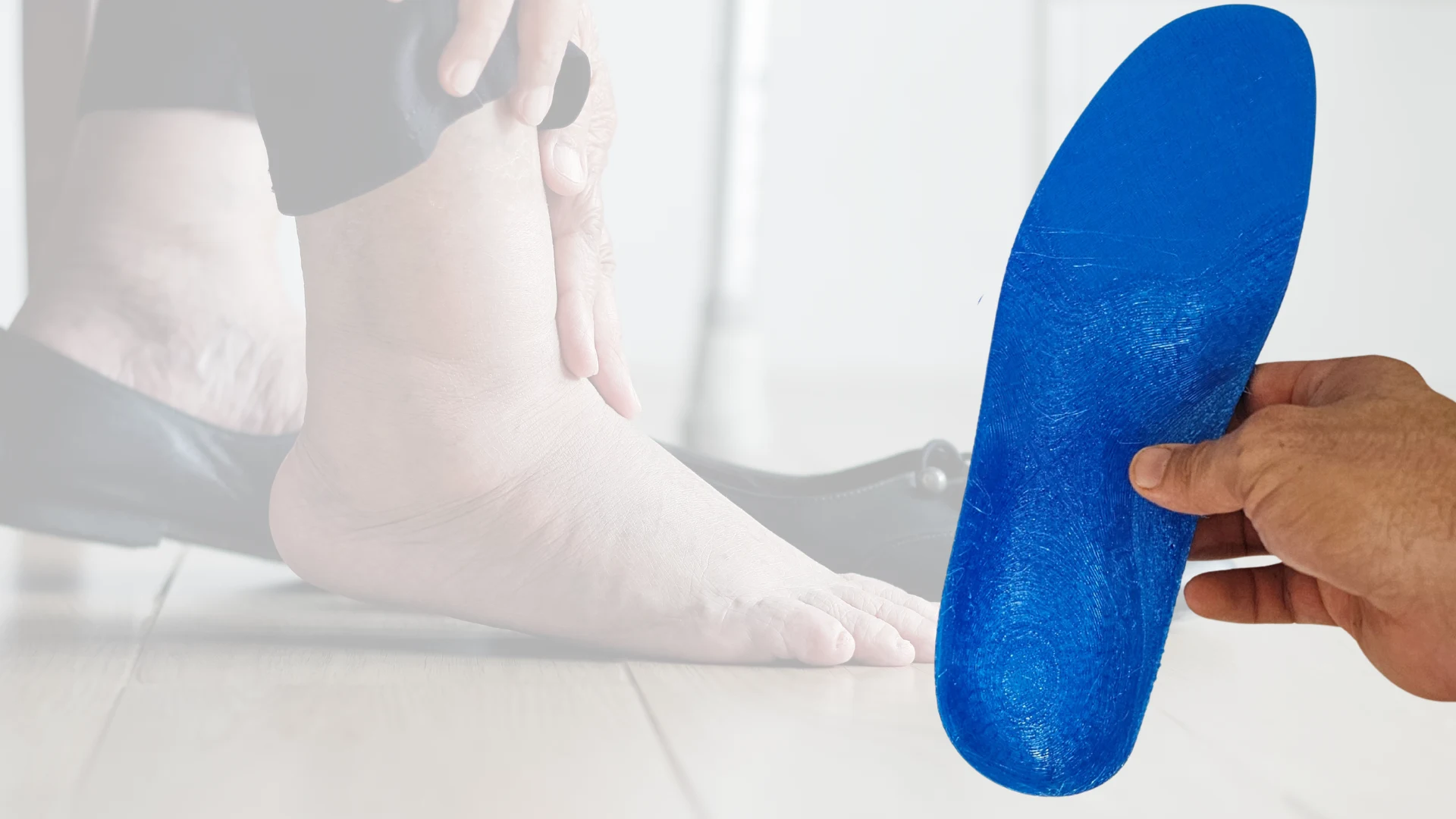
Finding shoes that fit swollen, edematous feet is one of the most practical daily challenges for patients with venous insufficiency, lymphedema, congestive heart failure, post-surgical swelling, and diabetic foot edema. The wrong shoe creates pressure points that cause blisters, ulcers, and skin breakdown in exactly the population that can least afford these complications. Dr. Tom Biernacki, DPM at Balance Foot & Ankle (Howell & Bloomfield Township, MI) reviews the best wide-width shoes of 2026 for patients with swelling-related footwear challenges.
Why Wide-Width Shoes Fail Most Patients with Edema
Standard “wide” (2E/EE) sizing addresses the foot width at the ball, but edematous feet often have increased volume throughout — at the instep, the ankle, and the heel as well as the forefoot. A 2E shoe still has a fixed instep height and a rigid heel counter that cannot accommodate volume fluctuation throughout the day. The most effective designs for edematous feet use adjustable Velcro closures, stretchable uppers, or extra-depth construction with volume-accommodating design that allows donning in the morning and adjustment as swelling progresses.
Best Overall: New Balance 928v3 in Wide Widths
📍 Located in Michigan?
Our board-certified podiatrists treat this condition at two convenient locations. Same-day appointments often available.
The New Balance 928v3 in 4E–6E width offers the combination of extra depth construction, roll bar stability, and wide-width availability (up to 6E for men, 4E for women) that makes it the most versatile choice for edematous feet. The removable insole creates additional interior volume when removed for patients whose edema requires it. Medicare A5500-coded in diabetic version. Best for: moderate edema; diabetic patients with peripheral neuropathy; patients who need rocker-sole pressure redistribution with wide-width accommodation.
Best Adjustable: Orthofeet Stretch Knit Sneakers
The Orthofeet Stretch Knit Athletic Shoe uses a stretch-fabric upper with adjustable Velcro closure — effectively accommodating any foot volume within a wide range. There is no heel counter rigidity to create pressure at the posterior ankle when edema extends into that region. The anatomical arch support and ergonomic midsole provide biomechanical support despite the accommodating construction. Best for: significant edema that fluctuates throughout the day; patients who struggle to lace/tie shoes; severe venous insufficiency.
Best Dress Shoe Option: Propet Stability Strider
The Propet Stability Strider in widths up to 9E (men’s) and 6E (women’s) is the widest-width dress-style shoe on the market. The Velcro closure allows one-handed donning — critical for patients with upper extremity involvement. The extra-depth construction (5/8 inch deeper than standard) accommodates custom diabetic orthotics alongside edematous feet. Best for: patients who need to wear professional-appearing footwear despite significant bilateral edema.
Best After Surgery: OrthoWedge / Post-Op Shoe
In the immediate post-operative period when the foot is at maximum swelling, a DJO ProCare Post-Operative Shoe accommodates any level of post-surgical edema. The open design with Velcro closures fits over dressings and bandaging; the rigid sole protects the surgical site; the one-size-adjustable design eliminates the need for multiple shoe sizes during recovery. Not a long-term solution, but essential for the first 2–6 weeks of recovery.
Podiatrist Tips for Fitting Shoes With Swollen Feet
- Shop in the afternoon or evening: Foot edema is typically maximal by late afternoon; buying shoes that fit at this time prevents the too-tight problem that occurs when shoes purchased in the morning are too small by evening
- Fit to the larger foot: Edema is often asymmetric; always fit the more swollen foot
- Use a shoe horn for every donning: A long-handled shoe horn prevents heel counter damage and reduces the effort of putting on shoes when the foot is at its largest
- Combine with compression hosiery: 15–20 mmHg compression socks worn during the day reduce peak edema volume, improving the shoe fit situation throughout the day
- Diabetic patients: Any red mark visible after 30 minutes of shoe wear is a sign of excessive pressure — the shoe is too tight for that edema level; size up or switch to stretchable design
- Lymphedema patients: Custom-measured shoes may be medically necessary when standard widths cannot accommodate; discuss with your podiatrist and lymphedema therapist
When Footwear Isn’t the Full Solution
Persistent bilateral foot and ankle swelling should be evaluated by a physician to rule out cardiac, renal, or hepatic causes. Unilateral swelling with calf pain requires same-day evaluation to rule out deep vein thrombosis. Dr. Biernacki evaluates swollen feet for podiatric causes including venous insufficiency complications, chronic ankle instability, and lymphatic conditions that contribute to lower extremity edema. Schedule a same-day evaluation or call (810) 206-1402.
Affiliate disclosure: As an Amazon Associate, Balance Foot & Ankle earns from qualifying purchases. All recommendations are based on clinical utility.
Dr. Tom’s Recommended Insoles
PowerStep is the brand I prescribe most — medical-grade OTC support without the custom orthotic price tag.
- PowerStep Pinnacle Insoles — The OTC orthotic I recommend most — medical-grade arch support at a fraction of custom orthotic cost. Works in most shoes.
- PowerStep Maxx Insoles — For severe arch pain or flat feet — maximum correction and support when Pinnacle isn’t enough.
Affiliate disclosure: As an Amazon Associate, Balance Foot & Ankle earns from qualifying purchases. We only recommend products we trust for our own patients.
🧦 Dr. Tom’s Pick: DASS Medical Compression Socks
Medical-grade 15-20 mmHg graduated compression. DASS socks are the brand I recommend most to patients with swollen feet, poor circulation, and post-surgery recovery. Graduated compression means tightest at the ankle, gradually releasing up the leg — promoting upward venous blood flow.
View DASS Compression Socks on Amazon →📧 Get Dr. Tom’s Free Lab Test Guide
Discover the 5 lab tests every person over 35 should ask their doctor about — explained in plain English by a board-certified physician.
Affiliate disclosure: As an Amazon Associate, Balance Foot & Ankle earns from qualifying purchases.
Join 950,000+ Learning About Foot Health
Dr. Tom shares honest medical advice, supplement reviews, and treatment guides you won’t find anywhere else.
Subscribe on YouTube →🔗 Related Care & Resources
Treated by Dr. Tom Biernacki DPM — Board-certified podiatric surgeon at Balance Foot & Ankle in Howell & Bloomfield Township, MI.
Schedule an Appointment → or call (810) 206-1402Insurance Accepted
BCBS · Medicare · Aetna · Cigna · United Healthcare · HAP · Priority Health · Humana · View All →
Howell Office
4330 E Grand River Ave
Howell, MI 48843
Get Directions →
Bloomfield Township Office
43494 Woodward Ave, #208
Bloomfield Township, MI 48302
Get Directions →
Your Board-Certified Podiatrists



Ready to Get Back on Your Feet?
Same-week appointments available at both locations.
Book Your Appointment👟 Dr. Tom’s Complete Footwear Library
Podiatrist-Approved Guides for Every Foot Type & Condition
Clinically reviewed by Dr. Tom Biernacki, DPM — Board-Certified Podiatrist
All guides are written and reviewed by licensed podiatrists. Schedule an appointment →
More Podiatrist-Recommended Shoes Essentials
Hoka Clifton 10


Max-cushion neutral runner — podiatrist favorite for all-day comfort.
Brooks Adrenaline GTS 25
Stability runner for overpronators — great for flat feet and bunions.
New Balance 990v6
Premium walking shoe with wide toe box — bunion and flat-foot friendly.
As an Amazon Associate, Balance Foot & Ankle earns from qualifying purchases. Product recommendations are based on clinical experience; prices and availability shown above update live from Amazon.
When to See a Podiatrist
The right shoe shape, last, and stability category is more important than brand. Balance Foot & Ankle evaluates your foot type (neutral, pronator, supinator, high-arched) and recommends specific shoe models that match. Bringing in your current pair lets us spot wear patterns that reveal gait issues — a free 5-minute assessment that can prevent years of foot pain.
Call Balance Foot & Ankle: (810) 206-1402 · Book online · Offices in Howell & Bloomfield Township
In-Office Treatment at Balance Foot & Ankle
If home care isn’t resolving your your foot or ankle concern, a visit with a board-certified podiatrist is the fastest path to accurate diagnosis and a personalized plan. At Balance Foot & Ankle Specialists, Dr. Tom Biernacki, Dr. Carl Jay, and Dr. Daria Gutkin offer same-day and next-day appointments at both our Howell and Bloomfield Township offices. We perform on-site diagnostic ultrasound, digital X-ray, conservative care, advanced regenerative treatments, and minimally invasive surgery when indicated.
Call (810) 206-1402 or request an appointment online. Most insurance plans accepted, including Medicare, Blue Cross Blue Shield, Aetna, Cigna, and United Healthcare.
Most Common Mistake We See
The most common mistake we see is: Waiting too long before seeking care. Fix: any foot pain lasting more than 4 weeks, or any sudden severe symptom, deserves a professional evaluation rather than more rest.
Warning Signs That Need Same-Day Care
Seek immediate evaluation at Balance Foot & Ankle if you experience any of the following:
- Unable to bear weight
- Severe swelling with skin colour change
- Fever with foot pain (possible infection)
- Diabetes plus any new foot symptom
Call (810) 206-1402 — same-day and next-day appointments at our Howell and Bloomfield Township offices.
Watch: Dr. Tom explains
Podiatrist-recommended products
As an Amazon Associate, Dr. Tom earns from qualifying purchases.
Fits wide shoes with removable insole.
View on Amazon →Offload forefoot in edematous feet.
View on Amazon →Topical menthol for swollen foot discomfort.
View on Amazon →Ice + elevation to reduce foot swelling.
View on Amazon →Related resources
Ready to solve this? Book today.
Same-week appointments · Howell & Bloomfield Township · 4.9★ (1,123+ reviews)
☎ (810) 206-1402Book Online →Pros & Cons of Conservative Care for footwear
Advantages
- ✓ Right shoe = pain reduction
- ✓ Multiple price points
- ✓ Fast adjustment
Considerations
- ✗ Trial-and-error
- ✗ Replace every 400 miles
- ✗ Custom orthotics often needed
Dr. Tom’s Recommended Products for footwear
Affiliate disclosure: As an Amazon Associate, Balance Foot & Ankle earns from qualifying purchases. We only recommend products we use with patients.
Brooks Ghost 17 Dr. Tom’s Pick
Best for: Neutral runner
Check Price on Amazon
Brooks Adrenaline GTS 23 Dr. Tom’s Pick
Best for: Stability for flat feet
Check Price on Amazon
Altra Torin 8 Dr. Tom’s Pick
Best for: Zero-drop wide toe box
Check Price on Amazon
Ready to Get Back on Your Feet?
Same-day appointments in Howell + Bloomfield Township. Most insurance accepted. Dr. Tom Biernacki, DPM & team.
Book Today — Same-Day Appointments Available
Call Now: (810) 206-1402
About Your Care Team at Balance Foot & Ankle
Dr. Tom Biernacki, DPM · Board-Certified Foot & Ankle Surgeon. Specializes in conservative-first care, minimally invasive bunion surgery, and complex reconstruction.
Dr. Carl Jay, DPM · Accepting new patients. Specializes in sports medicine, athletic injuries, and routine podiatric care.
Dr. Daria Gutkin, DPM, AACFAS · Accepting new patients. Specializes in surgical reconstruction and pediatric podiatry.
Locations: 4330 E Grand River Ave, Howell, MI 48843 · 43494 Woodward Ave Suite 208, Bloomfield Township, MI 48302
Hours: Mon–Fri 8:00 AM – 5:00 PM · (810) 206-1402
⚕ Doctor Recommended
DASS Compression SocksGraduated compression for circulation & comfort
View Product →
Dr. Tom Biernacki, DPM is a board-certified foot & ankle surgeon (ABFAS & ABPM) at Balance Foot & Ankle Specialists in Southeast Michigan. With over a decade of clinical experience, he specializes in heel pain, bunions, diabetic foot care, sports injuries, and minimally invasive surgery. Dr. Biernacki is a member of the APMA and ACFAS, and his patient education content on MichiganFootDoctors.com and YouTube has made him one of the most-followed foot & ankle educators on YouTube.