
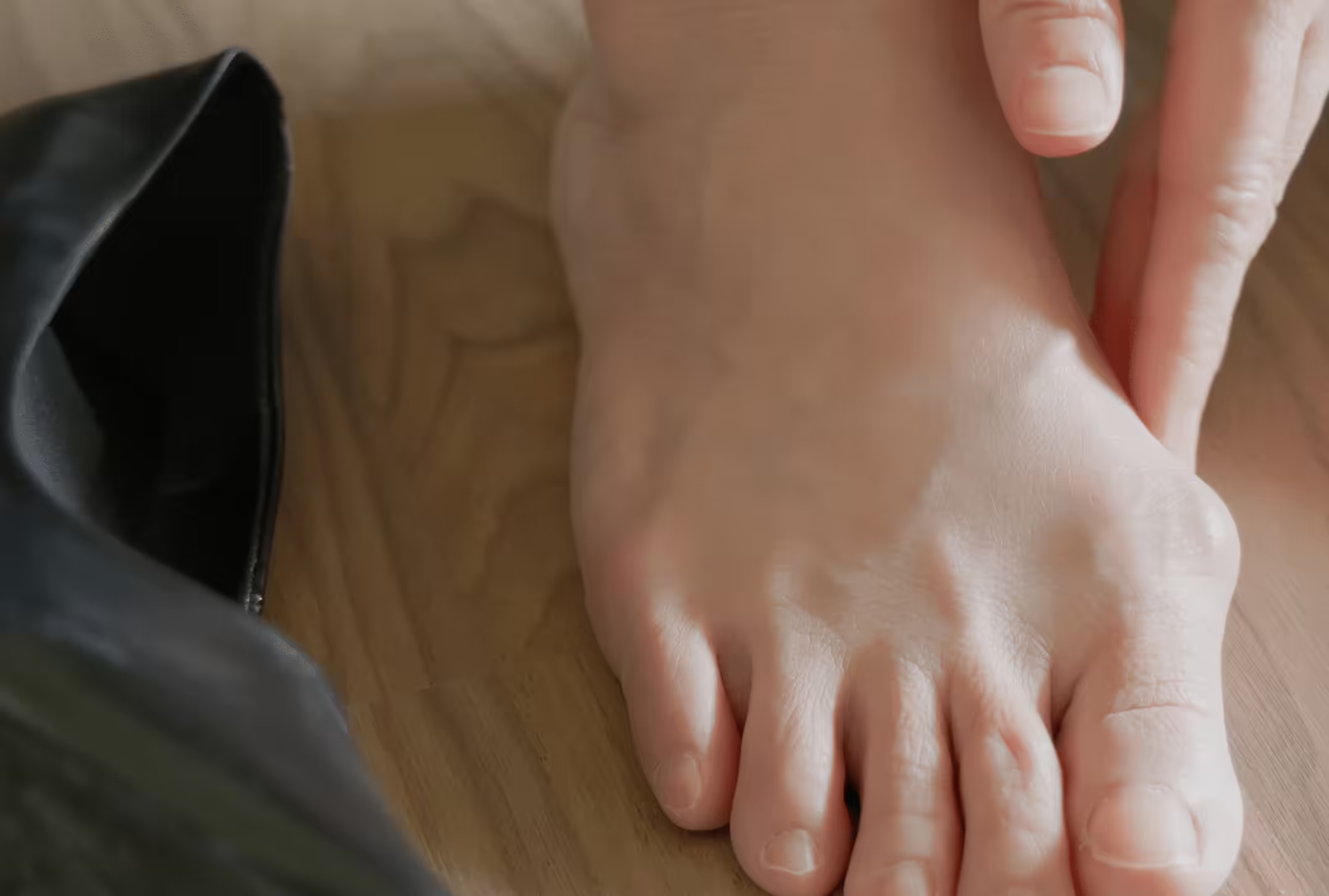
Quick answer: Bunion correctors — splints, toe spacers, sleeves and night braces — are pain-management tools that may slow progression in an early, flexible bunion. They do not realign bone. Surgery is the only intervention that corrects the deformity itself. Which one is right depends on how rigid the bunion is and how much it limits you, not on price. Book online, or call (810) 206-1402.
Bunion Surgery vs. Correctors: Which Fixes It, Which Just Helps?
$20 splints can’t realign bone. Surgery can. Here’s when each one is the right answer — from a Michigan podiatrist who performs bunion correction every week.
Call (810) 206-1402 Book Bunion EvaluationQuick Answer
Bunion correctors — splints, toe spacers, sleeves, and night braces — are pain-management tools that may slow progression in early, flexible bunions. They do not realign bone. Bunion surgery (most commonly a Lapidus arthrodesis or modified Austin osteotomy for moderate deformities) is the only intervention that corrects the underlying first-metatarsal deviation. In our clinic, I recommend correctors for patients under 40 with flexible mild deformity and tolerable pain, and surgery for patients with progressive deformity, daily pain that limits activity, shoe-fit difficulty, or a rigid bunion. Modern Lapidus technique has under 5% recurrence and allows weight-bearing in a boot at 2 weeks. The wrong move: spending years on $200+ of correctors while the bunion angle worsens. See a podiatrist early to know which category you’re in.
In-Person Bunion Evaluation
The honest truth: neither correctors nor surgery is the right answer until someone measures your hallux valgus angle (HVA) and intermetatarsal angle (IMA). A 30-minute weight-bearing X-ray visit tells you whether you’re a corrector candidate (early, flexible, low angles) or a surgical candidate (established bone deviation). This single step saves most patients $200–$400 they’d otherwise waste on the wrong intervention.
Call (810) 206-1402 Book Evaluation (Howell or Bloomfield Township)What Bunion Correctors Actually Do (And What They Can’t)
Bunion correctors include hinged day splints, gel toe spacers, silicone sleeves, rigid night braces, and “bunion socks.” Every one of these is a passive, external device. They can reduce pressure on the bursa over the bump, hold the great toe in a slightly less deviated position while worn, and distribute pressure more evenly across the forefoot. Patients frequently feel better within a week.
What they cannot do — and this is what a decade of clinic visits has taught me — is change the bone position of the first metatarsal. The bunion deformity originates at the first tarsometatarsal joint, not at the great toe. When you take the splint off at 7 a.m., the joint returns to the same position it was in at bedtime. Peer-reviewed studies (JFAS 2023, FAI 2022) have shown no measurable reduction in hallux valgus angle from corrector use beyond 12 weeks. The mistake I see every month: a patient who wore a splint religiously for 18 months, convinced it was working, whose follow-up X-ray shows the HVA has actually increased by 4–6 degrees. Correctors manage symptoms. They don’t reverse the anatomy.
That said, they earn their place. For a flexible bunion with an HVA under 20° in someone with minimal pain, a well-fitted toe spacer plus a wider toe-box shoe can genuinely slow progression and keep surgery off the table for years. The problem is not that correctors are useless — it’s that patients use them as a substitute for the anatomical answer instead of a bridge.
When Surgery Is the Right Answer
Modern bunion surgery bears almost no resemblance to the procedure your aunt had in 1998. The two techniques I perform most often are the Lapidus arthrodesis (for moderate-to-severe bunions, especially with first-ray hypermobility) and the modified Austin/Chevron osteotomy (for mild-to-moderate deformity with stable anatomy). Both are outpatient, both allow protected weight-bearing in a surgical boot within 7–14 days, and both have literature-supported recurrence rates under 5% at 5 years when the correct procedure is chosen for the correct anatomy.
The criteria I use to recommend surgery: HVA above 20° with progression documented over 2+ years, daily pain that limits your activities or shoe choices, a rigid (non-flexible) bunion on physical exam, second-toe deviation or crowding from the great toe pushing against it, or a bunion that is cosmetically unacceptable to the patient AFTER we’ve discussed what conservative care can and can’t do. I do not recommend surgery for a cosmetic concern with zero pain and a stable angle. I also do not recommend it for patients with uncontrolled diabetes, active smoking, peripheral neuropathy, or poor circulation until those are addressed — the healing risk outweighs the benefit.
Cost & Downtime — Real Numbers
Bunion Surgery (Lapidus or Austin Osteotomy)
✓ What It Delivers
- Actual correction of the bunion angle (HVA + IMA)
- Under 5% recurrence at 5 years with Lapidus for moderate-severe cases
- Weight-bearing in boot at 7–14 days (modern fixation)
- Most insurance plans cover when medically indicated
- Pain relief that lasts decades, not days
- Eliminates the $30–$100/month corrector cycle
- Can include second-toe correction in same surgery
- Restores shoe-fit options patients thought were gone forever
✗ Real Trade-Offs
- Requires 3–4 months to full recovery
- Some out-of-pocket cost even with insurance
- Surgical risk (infection, nonunion, nerve irritation) — rare but real
- Not appropriate for uncontrolled diabetes or active smokers
- Requires an experienced surgeon — procedure selection matters
Bunion Correctors (Splints, Spacers, Sleeves)
✓ Legitimate Uses
- Reduce pressure and bursal pain over the bump in tight shoes
- Toe spacers can slow progression in flexible bunions under HVA 20°
- Night splints can improve morning stiffness temporarily
- Inexpensive, no recovery time
- Appropriate for surgical candidates who can’t have surgery yet (pregnancy, athletic season, financial)
✗ What They Cannot Do
- Realign bone — the deformity originates at the TMT joint, not the toe
- Reverse an HVA that’s already established
- Replace orthotics for biomechanical control of the first ray
- Fix a rigid bunion (zero benefit in rigid deformity)
- Prevent surgery in progressive bunions — delay ≠ avoidance
13-Point Head-to-Head Comparison
| Dimension | Surgery (Lapidus/Austin) | Correctors (splints/spacers) |
|---|---|---|
| Realigns bone | Yes — the defining feature | No — cannot move a TMT joint |
| Typical out-of-pocket cost | $0–$2,500 (insurance usually covers) | $20–$300 per year, indefinitely |
| Time to full recovery | 3–4 months | Zero downtime |
| Recurrence rate | Under 5% at 5 years (modern Lapidus) | N/A — no correction occurs |
| Works for rigid bunion | Yes | No |
| Works for HVA > 25° | Yes | No meaningful benefit |
| Reversible | No | Yes — you stop wearing it |
| Insurance coverage | Yes when medically indicated | No (OTC / HSA-eligible in some cases) |
| FDA evidence base | Strong — peer-reviewed outcomes data | Weak — no HVA-reduction data past 12 weeks |
| Best for | Progressive, painful, moderate-to-severe bunions | Early, flexible, mildly painful bunions under 20° HVA |
| Worst for | Uncontrolled diabetes, active smokers | Any established, progressing, or rigid bunion |
| Lifespan of benefit | Decades | Hours (while worn) |
| Who decides you’re a candidate | A weight-bearing X-ray and a surgeon | Often an Amazon product listing |
Decision Tree: Which Path Is Yours?
- Does your bunion move when you gently push the great toe back toward midline? If it’s flexible — correctors may buy time. If it’s rigid — correctors will not help; evaluation for surgery is appropriate.
- Is your HVA above or below 20° on a weight-bearing X-ray? Below 20° with tolerable pain → reasonable to trial correctors 3–6 months. Above 20° → surgery discussion is appropriate. (If you don’t know your HVA, you haven’t had the right workup yet.)
- Has the bunion visibly progressed in the last 2 years? Yes → surgery discussion, because “slowing progression” has failed. No, stable → correctors and yearly monitoring are reasonable.
- Is the pain limiting activities, shoe choices, or quality of life on a daily basis? Yes → surgery — this is the threshold I use in clinic. No → reasonable to manage conservatively.
How I Evaluate a Bunion in Clinic (Howell + Bloomfield Township)
- History: How long, how fast progressing, what activities trigger pain, family history, footwear, prior treatments.
- Physical exam: Flexibility test (push the great toe back — does it reduce?), pain localization (bursa vs joint vs sesamoid), first-ray motion, second-toe alignment, skin integrity.
- Weight-bearing X-rays (3 views): Measure HVA, IMA, DMAA, first-ray stability. These numbers, not my subjective impression, drive the recommendation.
- Rule out mimics: Hallux limitus/rigidus, tailor’s bunion (5th MTP), ganglion cyst, gout, sesamoiditis. About 1 in 15 “bunions” I see is actually something else.
- Shared decision conversation: I show you the X-ray measurements, explain what conservative care can and can’t do at your angle, and discuss surgical options if indicated. You are not rushed toward surgery.
- Conservative trial (if appropriate): Shoe gear guidance, toe spacer recommendation, orthotic considerations for first-ray control, 3-month follow-up.
- Surgical planning (if indicated): Procedure selection matched to your anatomy, pre-op medical optimization, realistic recovery timeline, postoperative protocol. I do my own follow-up — you see me, not a tech.
🚨 When Bunion Issues Become Urgent
Call the office or a podiatrist within 24–48 hours if you have any of these:
- An open wound, ulceration, or skin breakdown over the bunion (especially in diabetes)
- Sudden severe pain, redness, warmth, or swelling suggesting infection or gout flare
- A bunion that is displacing the second toe to the point the second toe is underriding or overriding — joint cartilage loss accelerates quickly here
- Numbness or tingling in the great toe that’s progressively worsening
- Inability to bear weight on the forefoot
- Discoloration (dark, dusky, purple) around the toe — possible vascular issue
- Drainage, pus, or foul odor from the bump
- A bunion that has changed shape or gotten visibly worse in a matter of weeks (not years)
Before You Order Another Corrector or Schedule Surgery Elsewhere
A 30-minute weight-bearing X-ray evaluation tells you which path actually fits your anatomy — and saves you months of the wrong treatment. We see bunion patients at both Howell and Bloomfield Township.
Call (810) 206-1402 Book OnlineFrequently Asked Questions
Can a bunion go back to normal without surgery?
No. Once the first metatarsal has deviated and the hallux valgus angle is established, no conservative measure — corrector, spacer, exercise, or orthotic — reverses the bone position. Conservative care manages pain and can slow progression in early flexible cases. The “non-surgical bunion correction” marketing is not supported by radiographic evidence beyond 12 weeks.
How painful is modern bunion surgery recovery?
Most patients report their post-op pain was significantly less than they feared. With modern multimodal pain control (long-acting nerve block, NSAIDs, short-course opioids as needed), the first 72 hours are manageable. By week 2, most patients are off opioids entirely. The biggest complaint is boredom during the protected weight-bearing period, not pain.
Will my insurance cover bunion surgery?
Most commercial insurance plans, Medicare, and Medicaid cover bunion surgery when medically indicated (documented pain, functional limitation, failed conservative care, appropriate HVA/IMA measurements). Cosmetic-only corrections are not covered. Our billing team verifies your specific coverage before surgery — no surprises.
What’s the difference between Lapidus and Austin osteotomy?
Austin (or Chevron) is a distal osteotomy — we cut and shift the head of the first metatarsal. It’s excellent for mild-to-moderate bunions with stable first-ray anatomy. Lapidus is a fusion at the first tarsometatarsal joint — we eliminate motion at the unstable joint driving the deformity. Lapidus handles larger deformities and hypermobile first rays. The right procedure depends on your X-ray, not surgeon preference.
Can I wait on surgery if my bunion isn’t severe?
Yes, if it’s stable. The concerning pattern is a bunion that has progressed more than 5° in the last 2 years, or that’s causing second-toe deviation — these tend not to stabilize on their own, and delaying risks joint cartilage damage that limits surgical options later. Stable, mildly painful bunions can often be watched for years.
Do toe spacers actually work?
For reducing forefoot crowding and offloading pressure over the bunion bump while worn, yes — many patients feel noticeable relief. For permanently reducing the bunion angle, no. Silicone spacers like those from Foot Petals or simple silicone gel spacers are reasonable trials. Do not expect radiographic change.
What about bunion taping or yoga exercises?
Taping (buddy-tape the great toe toward midline) can provide temporary positional support and reduce some pain. Yoga/toe exercises can improve intrinsic foot strength and are harmless to try. Neither reverses established bunion deformity. They can be part of a conservative plan for a flexible mild bunion; they are not a substitute for evaluation.
Is Lapidus always the better surgery?
No — Lapidus is the right choice for moderate-to-severe deformities with first-ray hypermobility or when the IMA is elevated. For mild bunions with a stable first ray, a distal osteotomy (Austin/Chevron) is often less invasive with equally good outcomes. Beware a surgeon who does only one procedure — bunion surgery is not one-size-fits-all.
Can bunions come back after surgery?
Recurrence is possible but uncommon with modern technique. Lapidus at 5 years has under 5% recurrence in the published literature. Recurrence risk rises with: wrong procedure for the anatomy, noncompliance with post-op protocol, inadequate correction at the time of surgery, or uncorrected underlying biomechanics (severe flat foot, generalized ligamentous laxity). Choosing an experienced surgeon matters.
How do I know if I have a flexible or rigid bunion?
In clinic I push the great toe gently back toward midline. If it reduces easily and the bump flattens, it’s flexible. If the joint resists motion and the bump stays prominent, it’s rigid. Rigid bunions do not respond to correctors at all — don’t buy any splint, spacer, or sleeve for a rigid bunion.
Related Reading & Treatment Pages
- Best Bunion Correctors 2026: Dr. Tom’s Top 12 (if you’re an early candidate)
- Bunion Pain Relief Without Surgery: 12 Products + Protocol
- Best Shoes After Bunion Surgery
- Bunion Prevention: Stop Bunions Before They Start
- Bunion Surgery in Howell, MI
- Bunion Treatment in Bloomfield Township, MI
- How to Stop a Bunion from Getting Worse
- Meet Dr. Tom Biernacki, DPM, FACFAS
👟 Dr. Tom Also Recommends
Podiatrist Recommended Shoes 2026: Dr. Tom’s Top Picks for Every Condition
The right footwear can make or break your recovery. Dr. Tom’s complete guide to the best shoes for plantar fasciitis, flat feet, neuropathy, bunions & more — with clinical picks for every foot type.
See Dr. Tom’s Top Shoe Picks →Bunion Correctors & Supportive Shoes — Dr. Biernacki’s Picks
Whether you choose surgery or conservative management, the right products can significantly reduce daily bunion pain and slow deformity progression. Dr. Biernacki’s top picks for bunion management products are below — organized by the clinical purpose each serves.
Amazon Affiliate Disclosure: As an Amazon Associate, Balance Foot & Ankle earns from qualifying purchases at no additional cost to you.
No products found.
No products found.
Full bunion product guides: Best Bunion Correctors 2026 | Best Bunion Pads & Cushions 2026 | Best Shoes for Bunions 2026 | Bunion Treatment Guide
Bunion Consultation — Know Your Options Before Deciding
Call: (810) 206-1402 | Howell & Bloomfield Township
Frequently Asked Questions
What is Bunion?
Bunion is a common foot/ankle condition that affects mobility and quality of life. Understanding the underlying cause is the first step in successful treatment. Our podiatrists at Balance Foot & Ankle perform a hands-on biomechanical exam, review your activity history, and use diagnostic imaging when appropriate to identify the root cause—not just treat the symptom. Many patients have been told to “rest and ice” without a deeper diagnostic workup; our approach is different.
Symptoms and warning signs
Common signs of bunion include pain that worsens with activity, morning stiffness, swelling, tenderness when palpated, and difficulty bearing weight. If you experience sudden severe pain, inability to walk, visible deformity, numbness or color change, contact our office the same day or visit urgent care—these can signal a more serious injury such as a fracture, tendon rupture, or vascular compromise. Diabetics with any foot wound should seek same-day care.
Conservative treatment options
Most cases of bunion respond to non-surgical care: structured rest, supportive footwear changes, custom orthotics, targeted stretching and strengthening protocols, anti-inflammatory medications when medically appropriate, and in-office procedures such as ultrasound-guided injections. We also offer advanced therapies including MLS laser therapy, EPAT/shockwave, regenerative injections, and image-guided procedures. Treatment is sequenced from least invasive to most invasive, and we explain the rationale at every step.
When is surgery considered?
Surgery is reserved for cases that fail 3-6 months of well-structured conservative care, when there is structural pathology (severe deformity, complete tear, advanced arthritis), or when imaging shows damage that will not heal without intervention. Our surgeons have performed 3,000+ foot and ankle procedures and prioritize minimally-invasive techniques whenever appropriate. We discuss recovery timelines, return-to-activity milestones, and realistic outcome expectations before any procedure is scheduled.
Recovery timeline and prevention
Recovery from bunion varies based on severity and chosen treatment path. Conservative cases often improve within 4-8 weeks with consistent adherence to the protocol. Post-procedural recovery may range from a few days (in-office procedures) to several months (reconstructive surgery). Long-term prevention involves footwear assessment, activity modification, structured strengthening, and regular check-ins with your podiatrist if you have a history of recurrence. We provide written home-exercise plans and digital follow-up support.
Ready to feel better?
Same-week appointments available in Howell and Bloomfield Township, Michigan.
Book Your Visit