


Watch: Top 5 Barefoot Shoes LIES! [Plantar Fasciitis, Bunions & Flat Feet] — MichiganFootDoctors YouTube
Foot pain isn't resolving?
Same-week appointments at podiatrist in Howell & podiatrist in Bloomfield Hills
Board-Certified Podiatric Foot & Ankle Surgeon · Last reviewed: May 4, 2026
⚡ Quick Answer: How can bunions be treated without surgery?
Non-surgical bunion treatment includes wider footwear, bunion splints, custom orthotics, and anti-inflammatory therapy. These measures reduce pain and slow progression but do not straighten the joint.
Bunion treatment without surgery focuses on reducing pain and slowing progression — it cannot reverse the structural deformity. Effective non-surgical options include wide toe box footwear, toe spacers, functional orthotics, bunion splints, and topical anti-inflammatories. In our clinic, the majority of patients with mild-to-moderate bunions achieve excellent long-term pain control without ever needing surgery. Surgery is reserved for patients with severe deformity or intractable pain that fails comprehensive conservative management.
One of the most common questions we hear at Balance Foot & Ankle is: “Do I really need surgery for my bunion?” The honest answer — one that Healthline and WebMD often bury — is that most patients with bunions never need surgery if they manage the condition correctly from the beginning. Bunion surgery, while highly effective when indicated, carries real recovery costs: 6–10 weeks of limited weight-bearing, swelling for months, and a meaningful failure rate when performed for the wrong indications. Understanding what conservative treatment can and cannot do is the starting point for every bunion management decision we make.
What Is a Bunion
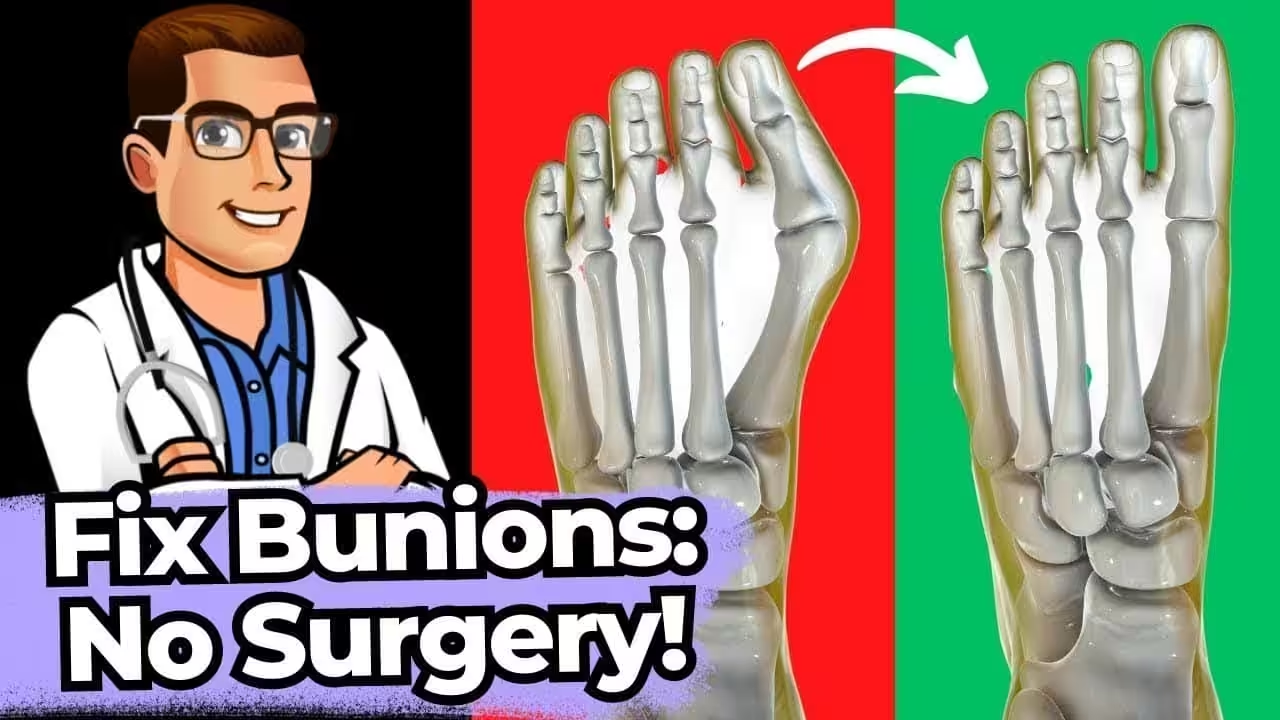
A bunion (hallux valgus) is a progressive structural deformity of the first metatarsophalangeal (MTP) joint in which the first metatarsal drifts medially (inward) while the big toe drifts laterally (toward the second toe). The medial prominence of the first metatarsal head — commonly called the “bump” — is not a new growth of bone but the metatarsal head becoming more prominent as the first ray rotates out of alignment. On a weight-bearing X-ray, the severity is graded by two angles: the hallux abductus angle (HAV, normal <15°) and the intermetatarsal angle (IMA, normal <9°). Mild bunion: HAV 15–25°, IMA 9–11°. Moderate: HAV 25–35°, IMA 11–16°. Severe: HAV >35°, IMA >16°.
A bunion is a tri-planar deformity — the metatarsal rotates in all three planes simultaneously, not just the transverse plane visible on X-ray. This three-dimensional nature is why some bunions recur after surgery if the rotational component is not corrected, and why passive toe spacers that only push the toe medially cannot address the underlying structural driver.
Can a Bunion Be Treated Without Surgery
Yes — with important caveats. Conservative treatment can eliminate or dramatically reduce bunion pain, prevent or slow structural progression, and help the majority of patients avoid surgery indefinitely. What conservative treatment cannot do is reverse an established bony deformity or improve the X-ray angles. Once the intermetatarsal angle has widened and the joint has rotated, only surgery restores normal alignment. The goal of non-surgical management is therefore pain control and deformity stabilization — not correction.
In our clinic, we find that approximately 70–80% of patients with mild-to-moderate bunions (HAV under 30°) who commit to the full conservative protocol — proper footwear, functional orthotics, toe spacers, and activity modification — achieve pain levels they consider acceptable without surgery. The 20–30% who ultimately require surgery typically either have severe structural deformity at presentation, have developed secondary complications (second toe capsulitis, metatarsalgia, nerve entrapment), or cannot tolerate the required footwear modifications due to occupational demands.
Footwear Modification — The Foundation of Non-Surgical Treatment
Footwear modification is the single highest-impact non-surgical intervention for bunions. The wrong shoe causes nearly all bunion pain and accelerates deformity progression; the right shoe eliminates most symptoms and halts progression. This is not a minor lifestyle suggestion — it is the foundational treatment that everything else builds on.
The ideal bunion shoe has a wide, deep toe box that allows the first toe to lie in its natural position without lateral compression. The toe box should be shaped to the foot — square or round at the front, not pointed. The heel should be flat or low (under 1.5 inches) to avoid forefoot pressure transfer. The upper material should be soft leather, mesh, or stretch fabric — nothing rigid that presses against the medial prominence. Several athletic brands (New Balance, HOKA, Brooks, ASICS wide widths) offer forefoot widths that accommodate mild-to-moderate bunions comfortably without custom shoes.
High heels are the single most destructive footwear choice for bunion patients. A two-inch heel transfers 57% of body weight to the forefoot; a three-inch heel transfers 75–80%. This dramatically increases MTP joint stress, accelerates hallux valgus progression, and triggers bursitis flares. Complete elimination of heels above 1.5 inches is often the single change that turns a painful bunion into a manageable one.
Toe Spacers and Night Splints
Toe spacers — silicone or gel devices placed between the first and second toe — reduce the lateral deviation of the big toe during activity. They do not remodel bone or permanently change the intermetatarsal angle, but they do reduce the shear forces at the MTP joint, decrease interdigital corn formation, and for many patients provide significant walking comfort. We recommend spacers for patients with mild-to-moderate bunions as a daily symptom management tool.
Bunion splints are rigid or semi-rigid devices worn at night that hold the big toe in a more neutral position while sleeping. Studies show that night splints do not permanently correct bunion deformity in adults — the bone cannot be remodeled by passive stretching in skeletally mature patients. However, they do maintain soft tissue flexibility, reduce morning stiffness, and may slow progression in younger patients whose growth plates are still open. For adult patients, the primary benefit is symptomatic: many report less morning pain after consistent night splint use.
Orthotics for Bunion Pain
Functional foot orthotics are one of the most evidence-supported non-surgical interventions for bunion management. Bunions are closely associated with excessive pronation — the inward rolling of the foot that increases the load on the medial forefoot and accelerates hallux valgus progression. A semi-rigid functional orthotic with medial arch support reduces pronation, offloads the first MTP joint, and — in patients with flexible hallux valgus — can slow the progression of the intermetatarsal angle widening measurably over time.
A 2021 systematic review in the Journal of Foot and Ankle Research found that orthotic intervention reduced pain scores by 22–38% in bunion patients compared to footwear modification alone, with the most pronounced benefit in patients with concomitant pronation deformity. Orthotics with first-ray cutouts reduce direct pressure on the medial prominence; those with a Morton’s extension (a stiff extension under the first metatarsal and toe) help stabilize the first ray during push-off and reduce the hallux valgus deforming force during walking.
Pain Relief Methods for Bunion Flares
Bunion pain typically has two components: the mechanical pain from joint stress with walking, and the bursitis/inflammatory pain from the medial prominence rubbing against footwear. Both require different approaches. Mechanical pain responds to orthotics and footwear modification. Inflammatory bursitis pain responds to ice, topical anti-inflammatories, and — when severe — periarticular cortisone injection.
Ice therapy: Applying ice for 15–20 minutes after prolonged walking or standing reduces acute joint inflammation and bursitis swelling. Never apply ice directly to skin — use a thin cloth barrier. This is most effective in the first 48–72 hours of an acute flare.
Topical anti-inflammatories: Topical NSAID gels (diclofenac) and natural alternatives applied directly over the bunion deliver anti-inflammatory action locally without systemic side effects. We recommend Doctor Hoy’s Natural Pain Relief Gel (arnica + camphor) for patients who prefer a natural option or who cannot tolerate oral NSAIDs due to GI sensitivity. Applied 2–3 times daily over the bunion area, it reduces surface inflammation and soft tissue pain effectively for most patients.
Cortisone injection: A single periarticular cortisone injection into the medial bursa and MTP joint can provide weeks to months of dramatic pain relief during severe flares. We use it selectively — repeated cortisone weakens the periarticular soft tissues over time and can accelerate articular cartilage degeneration in the MTP joint. One to two injections per year is the maximum we recommend; more than that suggests conservative management is insufficient and surgery should be reconsidered.
Recommended Products for Non-Surgical Bunion Management
PowerStep Pinnacle — Best Orthotic for Bunion Pronation Control
PowerStep Pinnacle’s semi-rigid arch support reduces the excessive pronation that drives hallux valgus progression. The firm shell controls first-ray instability during push-off, reducing the deforming lateral force on the big toe. The dual-density EVA top cover cushions the forefoot. Fits in most athletic, casual, and work footwear. Not ideal for: extremely narrow dress shoes or patients who need a first-ray cutout (custom orthotics required for that).
Shop PowerStep Pinnacle →CURREX RunPro — Best for Runners with Bunions
Runners with hallux valgus need dynamic forefoot control through the propulsive phase of gait, where bunion deforming forces are greatest. CURREX RunPro’s dynamic arch concept adapts to individual arch height and controls pronation during the push-off phase — the exact moment the hallux valgus deforming force peaks. Available in LOW/MED/HIGH profiles; most bunion patients benefit from LOW or MED arch. Not ideal for: daily walking shoes or dress footwear.
Shop CURREX RunPro →Doctor Hoy’s Natural Pain Relief Gel — Bunion Bursitis Relief
Doctor Hoy’s combines arnica montana and camphor to reduce medial bunion bursitis inflammation topically. It’s particularly effective for the surface burning pain caused by shoe pressure on the prominence. Apply 2–3 times daily directly over the bunion area. Absorbs quickly, no residue. Not ideal for: open skin or pre-surgical cases where skin integrity must be maintained. A natural alternative to topical diclofenac for patients avoiding NSAIDs.
Shop Doctor Hoy’s Gel →Exercises for Bunion Pain Relief and Strength
Strengthening the intrinsic foot muscles and maintaining first MTP joint flexibility are two of the most effective and underutilized non-surgical strategies for bunion management. These exercises do not reverse structural deformity, but they reduce pain, improve gait mechanics, and can slow hallux valgus progression by strengthening the muscular stabilizers of the first ray.
Big toe abductor strengthening: Place a thick rubber band around both big toes and try to spread them apart, holding for 5 seconds. Three sets of 10 daily. This targets the abductor hallucis muscle — the muscle whose weakness allows the hallux to drift laterally. Most bunion patients have profoundly weak abductor hallucis on the affected side.
Short foot exercise: While sitting or standing, try to shorten your foot by drawing the ball of the foot toward the heel without curling the toes. Hold 5 seconds, 10 repetitions, 3 times daily. This activates the plantar intrinsic muscles that support the medial longitudinal arch and reduce first-ray instability.
Passive MTP joint stretching: Gently pull the big toe into a corrected position (medially, toward the midline) and hold for 30 seconds. Three sets per day. Maintains joint capsule flexibility and reduces morning stiffness. Not effective at permanently changing alignment but dramatically reduces pain in the early morning when the joint is most stiff.
Calf stretching: Tight gastrocnemius and soleus muscles increase forefoot loading during walking, worsening bunion progression. Two 30-second gastrocnemius stretches (knee straight) and two Achilles stretches (knee bent) per lower extremity, twice daily, should be permanent features of any bunion management program.
When Bunion Surgery Becomes Necessary
Surgery is the right choice when: pain is severe and functionally limiting despite 3–6 months of comprehensive conservative management; the deformity has progressed to severe (HAV >35°, IMA >16°); secondary complications have developed (crossover second toe, capsulitis, neuritic pain from digital nerve compression); or joint destruction is visible on X-ray (first MTP arthritis). Surgery is not indicated solely to improve the cosmetic appearance of the foot. Cosmetic bunion correction in the absence of pain or functional limitation has a higher complication rate and lower patient satisfaction score than medically indicated correction.
Red Flags — When to See a Podiatrist Promptly
- The second toe is beginning to cross over or under the first toe — second MTP capsulitis developing; conservative window closing
- Sudden severe pain in the bunion area, especially at night or at rest — may indicate gout flare or septic arthritis requiring urgent evaluation
- Warmth, redness, and swelling that spread beyond the bunion bump — infected bursa or cellulitis requires same-day evaluation
- Deformity worsening rapidly over weeks rather than years — inflammatory arthritis (RA, psoriatic) should be ruled out
- Pain that is preventing normal walking or disturbing sleep — severe enough to warrant surgical evaluation
- Any bunion with diabetes or poor circulation — even mild bunions carry ulceration risk in this population and need regular professional monitoring
The Most Common Mistake in Non-Surgical Bunion Management
The most common mistake we see is patients buying toe spacers and night splints while continuing to wear narrow, pointed-toe shoes and high heels. The spacers cushion the pain enough to tolerate the same footwear that caused the problem — allowing the deformity to progress silently for years. The fix: footwear modification is non-negotiable and must come first. Toe spacers and splints are adjuncts to correct footwear, not substitutes for it. No conservative device can overcome the force of a tight-toed shoe pressing against the first MTP joint for 8–10 hours per day.
Conditions That Mimic Bunion Pain
| Condition | How It Mimics Bunion Pain | How to Distinguish |
|---|---|---|
| Gout | Severe first MTP joint pain, warmth, and swelling — often nocturnal onset | Elevated serum uric acid; responds dramatically to colchicine; no structural deformity on X-ray; acute not chronic onset |
| First MTP Arthritis (Hallux Rigidus) | First MTP joint stiffness and pain, worse with push-off | Dorsal osteophyte on X-ray; limited dorsiflexion (not lateral deviation); deformity at top of joint, not medial side |
| Sesamoiditis | Pain under the first metatarsal head near the big toe | Plantar tenderness, not medial prominence pain; pain with passive extension of hallux; sesamoid bone tenderness |
| First MTP Bursitis | Medial soft tissue swelling and pain without structural bony deformity | No widened intermetatarsal angle on X-ray; fluctuant swelling; normal hallux abductus angle; responds to ice and footwear change alone |
| Rheumatoid Arthritis | Symmetric forefoot deformities resembling bilateral bunions + metatarsalgia | Positive RF/anti-CCP; bilateral symmetric involvement; erosions on X-ray; systemic symptoms (fatigue, morning stiffness >1 hour) |
In-Office Treatment at Balance Foot & Ankle
At Balance Foot & Ankle in Howell and Bloomfield Hills, MI, Dr. Tom Biernacki evaluates every bunion patient with weight-bearing X-rays, a comprehensive biomechanical exam, and an honest conversation about what conservative treatment can and cannot achieve for their specific deformity grade. We offer professional custom and semi-custom orthotics fabricated in-office, cortisone injections when indicated, digital gait analysis, and — when surgery is the right choice — comprehensive surgical planning with full recovery support. Our goal is to keep you out of the operating room if at all possible, and in it only when the evidence clearly shows it’s your best option. Call (810) 206-1402 or book online.
Bunion Pain? Get a Real Assessment.
Most bunions don’t need surgery. Dr. Tom Biernacki will tell you honestly which category yours falls into — same-day appointments available.
Book Appointment (810) 206-1402Howell: 4330 E Grand River Ave · Bloomfield Hills: 43494 Woodward Ave #208
Frequently Asked Questions
Can bunions go away without surgery?
The structural bony deformity of a bunion — the widened intermetatarsal angle and lateral big toe deviation — cannot reverse without surgery in a skeletally mature adult. However, pain can be eliminated or reduced to acceptable levels without surgery in the majority of patients with mild-to-moderate deformity through footwear modification, orthotics, and toe spacers. “Treating a bunion” without surgery means managing pain and preventing progression, not reversing the deformity.
Do bunion splints work?
Bunion splints and night splints do not permanently correct bunion deformity in adults. Studies consistently show no significant change in hallux abductus angle or intermetatarsal angle with splint use alone in skeletally mature patients. Their value is in reducing morning stiffness, maintaining soft tissue flexibility, and providing symptomatic relief — not structural correction. They are a useful adjunct, not a cure.
What is the fastest way to get rid of bunion pain?
For rapid pain relief: switch immediately to wide toe box footwear with a low heel, apply ice 15–20 minutes after activity, use a silicone toe spacer between the first and second toe, and apply Doctor Hoy’s gel directly over the painful prominence 2–3 times daily. A cortisone injection provides the fastest relief for severe acute bursitis flares — most patients report 50–80% pain reduction within 48 hours of injection.
Do orthotics help bunions?
Yes. Functional foot orthotics reduce the pronation that accelerates hallux valgus progression and offload the first MTP joint during walking. A 2021 systematic review found orthotics reduced bunion pain scores by 22–38% compared to footwear modification alone. They are most effective in patients with flexible flat feet or excessive pronation — patients with rigid feet or structural deformity beyond moderate grade benefit less.
When should I consider bunion surgery?
Consider surgery when: pain significantly limits daily activities despite 3–6 months of comprehensive conservative management; the deformity is severe (hallux abductus angle >35°); secondary complications have developed (crossover toe, nerve pain, arthritic joint destruction); or conservative management is not feasible due to occupational demands. Surgery should not be chosen for cosmetic improvement alone.
Sources
1. Fraissler L, Konrads C, Hoberg M, Rudert M, Walcher M. “Treatment of hallux valgus deformity.” EFORT Open Rev. 2016;1(8):295–302.
2. Menz HB, Roddy E, Thomas E, Croft PR. “Impact of hallux valgus severity on general and foot-specific health-related quality of life.” Arthritis Care Res. 2011;63(3):396–404.
3. Torkki M, Malmivaara A, Seitsalo S, et al. “Surgery vs orthosis vs watchful waiting for hallux valgus: a randomized controlled trial.” JAMA. 2001;285(19):2474–80.
4. Schuh R, Hofstaetter SG, Adams SB Jr, Pichler F, Kristen KH, Trnka HJ. “Rehabilitation after hallux valgus surgery: importance of physical therapy to restore weight bearing of the first ray during the stance phase.” Phys Ther. 2009;89(9):934–45.
5. Wülker N, Mittag F. “The treatment of hallux valgus.” Dtsch Arztebl Int. 2012;109(49):857–67.

Related Conditions & Resources
For more on related conditions and treatments:
- What causes bunions
- Best shoes for bunions (podiatrist picks)
- Tailor’s bunion (bunionette) guide
- Bunionette treatment options
- Hammer toe causes: why toes curl
- Howell podiatrist office
- Bloomfield Hills podiatrist office
Need to see a podiatrist? Call (810) 206-1402 or book online. Same-week availability.
Frequently Asked Questions
How do I treat a bunion without surgery?
Best non-surgical approaches: wide-toe-box shoes (Altra, Topo, HOKA), bunion pads or splints (limited effectiveness, mainly for pain relief), custom orthotics, ice for inflammation, NSAIDs, and toe stretching exercises. None of these REVERSE a bunion, but they can manage pain and slow progression. Surgery is the only way to actually correct the deformity.
Do bunion correctors actually work?
Bunion correctors and splints provide TEMPORARY pain relief by realigning the big toe but DO NOT permanently correct the bunion. The deformity is in the bone, not soft tissue, so external bracing has limited effect. They’re useful for short-term symptom relief but won’t ‘fix’ a bunion. Surgery is the only permanent correction.
How do I know if I need bunion surgery?
Surgery is considered when: bunion pain persists despite shoe changes + orthotics, deformity is progressing, you can’t fit normal shoes, daily activities are limited, or there’s secondary problems (hammertoes, transfer pain). Mild bunions without pain don’t need surgery. A bunion specialist can recommend timing based on X-ray + exam.
What are the best shoes for bunions?
Top picks: Altra Torin (zero-drop wide toe box), Topo Athletic Phantom (wide forefoot), HOKA Bondi 8 (cushion + wide forefoot), New Balance 990v6 (wide widths available), Vionic Walker (orthotic-friendly), and Birkenstock Arizona Soft Footbed for casual. Look for: wide/extra-wide toe box, soft uppers, removable insoles. AVOID: pointed-toe heels, narrow racing shoes, narrow dress shoes.
Can bunions be prevented?
Genetics are the primary driver — if your parents have bunions, you’re 70% likely to develop them. Wearing appropriate shoes (wide toe box, low heel) slows progression but doesn’t prevent inherited bunions. Custom orthotics help correct underlying biomechanics that contribute to bunion progression. Early intervention preserves toe alignment longer.
Frequently Asked Questions
How long does treatment take to work?
Most patients see improvement in 4-8 weeks with consistent conservative care. Persistent symptoms after 8 weeks need imaging and escalation.
When is surgery needed?
Surgery is reserved for cases that fail 3-6 months of conservative care, structural deformities, or fractures requiring stabilization.
Is this covered by insurance?
Most diagnostic visits and conservative treatments are covered by Medicare and major insurers. Custom orthotics often require diabetic or post-surgical justification.
What is Bunion?
Bunion is a common foot/ankle condition that affects mobility and quality of life. Understanding the underlying cause is the first step in successful treatment. Our podiatrists at Balance Foot & Ankle perform a hands-on biomechanical exam, review your activity history, and use diagnostic imaging when appropriate to identify the root cause—not just treat the symptom. Many patients have been told to “rest and ice” without a deeper diagnostic workup; our approach is different.
Symptoms and warning signs
Common signs of bunion include pain that worsens with activity, morning stiffness, swelling, tenderness when palpated, and difficulty bearing weight. If you experience sudden severe pain, inability to walk, visible deformity, numbness or color change, contact our office the same day or visit urgent care—these can signal a more serious injury such as a fracture, tendon rupture, or vascular compromise. Diabetics with any foot wound should seek same-day care.
Conservative treatment options
Most cases of bunion respond to non-surgical care: structured rest, supportive footwear changes, custom orthotics, targeted stretching and strengthening protocols, anti-inflammatory medications when medically appropriate, and in-office procedures such as ultrasound-guided injections. We also offer advanced therapies including MLS laser therapy, EPAT/shockwave, regenerative injections, and image-guided procedures. Treatment is sequenced from least invasive to most invasive, and we explain the rationale at every step.
When is surgery considered?
Surgery is reserved for cases that fail 3-6 months of well-structured conservative care, when there is structural pathology (severe deformity, complete tear, advanced arthritis), or when imaging shows damage that will not heal without intervention. Our surgeons have performed 3,000+ foot and ankle procedures and prioritize minimally-invasive techniques whenever appropriate. We discuss recovery timelines, return-to-activity milestones, and realistic outcome expectations before any procedure is scheduled.
Recovery timeline and prevention
Recovery from bunion varies based on severity and chosen treatment path. Conservative cases often improve within 4-8 weeks with consistent adherence to the protocol. Post-procedural recovery may range from a few days (in-office procedures) to several months (reconstructive surgery). Long-term prevention involves footwear assessment, activity modification, structured strengthening, and regular check-ins with your podiatrist if you have a history of recurrence. We provide written home-exercise plans and digital follow-up support.
Ready to feel better?
Same-week appointments available in Howell and Bloomfield Hills, Michigan.
Book Your Visit
Dr. Tom Biernacki, DPM is a double board-certified podiatrist and foot & ankle surgeon at Balance Foot & Ankle Specialists in Southeast Michigan. With over a decade of clinical experience, he specializes in heel pain, bunions, diabetic foot care, sports injuries, and minimally invasive surgery. Dr. Biernacki is a member of the APMA and ACFAS, and his patient education content on MichiganFootDoctors.com and YouTube has reached over one million views.
- Plantar Fasciitis: Diagnosis and Conservative Management (PubMed)
- Plantar Fasciitis (APMA)
- Diagnosis and Treatment of Plantar Fasciitis (PubMed / AAFP)
- Heel Pain (APMA)
Related Treatments at Balance Foot & Ankle
Our board-certified podiatrists offer advanced treatments at our Bloomfield Hills and Howell locations.
Recommended Products from Dr. Tom