
Medically reviewed by Dr. Tom Biernacki, DPM · Board-Certified Podiatric Surgeon · Last reviewed: April 2026 · Editorial Policy
Quick Answer
Caregiver’s Guide to Foot Care — Warning Signs t relates to foot pain — typically caused by overuse, footwear, or biomechanics. Most patients improve in 6-12 weeks with conservative care. Same-week appointments in Howell + Bloomfield Twp: (810) 206-1402.

✅ Medically reviewed by Dr. Thomas Biernacki, DPM — Board-Certified Podiatrist · Last updated April 6, 2026
▶ Watch: Mobile Podiatry Home Visits Michigan

Dr. Tom Biernacki explains how our mobile podiatry home visits work across Michigan — who qualifies, what we bring, and how insurance covers it.
Caregiver’s Guide to Foot Care — Warning Signs to Watch for in Your Loved One’s Feet
As a caregiver, you’re responsible for so many aspects of your loved one’s health. Their feet are easy to overlook — but foot problems can quietly escalate into infections, falls, or even life-threatening complications in people with diabetes or vascular disease. This guide helps you know what to watch for and when to call a podiatrist.
Why Foot Care Matters for Your Loved One
For older adults and people with chronic conditions, feet are a window into overall health. Poor circulation, neuropathy, and immune challenges mean that small foot problems — a blister, a wound, an ingrown nail — can become serious much faster than they would in younger, healthier individuals.
Regular foot monitoring and professional podiatric care can prevent hospitalizations, amputations, and falls — three of the most costly and devastating events in elderly care.
Warning Signs That Require a Podiatrist
Skin Changes:
- Redness, warmth, or swelling that doesn’t resolve in 24-48 hours
- Any open wound, blister, or break in the skin — especially if your loved one has diabetes
- Blackened or darkening tissue (can indicate tissue death — call immediately)
- Persistent dry, cracked skin that bleeds
- Unusual skin color: pale, blue-tinged, or mottled feet can indicate circulation problems
Nail Problems:
- Nails that are extremely thick, curved, or digging into surrounding skin
- Yellow, white, or crumbly nails (fungal infection)
- Red, swollen skin at the nail borders — likely ingrown toenail
- Nails that haven’t been trimmed in more than 8 weeks
Pain and Behavioral Changes:
- Reluctance to walk or bear weight on one foot
- Grimacing or pulling away when feet are touched
- Behavioral changes in dementia patients (agitation, resistance to walking) that could signal hidden foot pain
- Complaints of burning, tingling, or numbness
Structural Concerns:
- New foot deformities: toes crossing over, toes becoming rigid, arch changes
- Foot swelling that is new or getting worse
- Difficulty fitting into regular footwear
Monthly Foot Check Routine for Caregivers
Once a month, in good light:
- Remove shoes and socks. Examine the top, bottom, sides, and between toes of each foot.
- Check skin color — look for pallor, redness, or discoloration
- Run your hand over the foot — feel for unusual warmth or coolness
- Look for any skin breakdown, cuts, or wounds
- Assess nail length and condition
- Note any swelling or deformity compared to last month
How to Arrange a Home Podiatry Visit
If your loved one has difficulty traveling to a podiatry clinic, or if you’ve noticed any of the warning signs above, a home podiatry visit may be the ideal solution. Balance Foot & Ankle’s board-certified podiatric surgeons serve Livingston County and Oakland County with comprehensive home visits — bringing professional-grade care, portable laser therapy, and full wound care capability directly to your home or facility.
Our Howell office coordinates with Vassallo Medical Group (same road — Grand River Ave) for patients with diabetes, vascular disease, and systemic conditions. Coordinated care for Livingston County patients.
📞 (810) 206-1402 | Howell, MI
✅ MLS Dual-Wavelength Laser — FDA-cleared
✅ EPAT Shockwave Therapy — 80%+ success rate
✅ Magnetotransduction (EMTT) — Deep electromagnetic healing
✅ 3D-Scanned Custom Orthotics
✅ Toenail Fungus Laser
✅ In-Office X-Ray & Ultrasound
✅ Diabetic Shoe Program — Medicare-covered
📞 (810) 206-1402 | Howell & Bloomfield Hills
📞 Call (810) 206-1402 to discuss your loved one’s foot care needs and schedule a home visit.
Caregiver’s Guide to Foot Care for a Loved One at Home: What to Monitor and When to Call
Family caregivers providing home care for an elderly or disabled family member bear substantial responsibility for monitoring foot health — a responsibility that most caregivers undertake without specific training and often without knowing what warning signs demand prompt professional attention. The most important thing a caregiver can do for a family member’s foot health is conduct a systematic visual inspection of both feet at least weekly — ideally at bathing time when the feet are undressed and accessible. The inspection should cover: the plantar surface (use a mirror if the caregiver cannot safely lift the foot), the spaces between the toes, the nail folds, and the heel. Look for: any skin break regardless of size; redness, warmth, or swelling in any area; discoloration of the toes; fluid accumulation (edema) that is new or worsening; and any nail that appears infected, embedded in the skin, or significantly thickened and changing color.
Related Treatment Guides
- Diabetic Foot Care & Neuropathy
- Plantar Fasciitis & Heel Pain Treatment
- Custom 3D Orthotics
- Sports Foot & Ankle Injury Treatment
Caregivers of diabetic or vascular-compromised family members should understand that the normal pain signal that alerts most people to foot problems is often absent in these patients — the caregiver’s visual inspection is the primary detection mechanism. A skin break that a healthy person would notice and address within hours may go undetected for days in a patient who cannot feel their feet. When caregivers find concerning findings during inspection, the appropriate response is prompt contact with a podiatrist rather than a “watch and see” approach — small wounds in high-risk patients can deteriorate dramatically within 48–72 hours. Balance Foot & Ankle offers same-day and next-day urgent appointments for Michigan patients with acute foot findings, and home visits for patients who cannot travel to our Howell or Bloomfield Hills office. Caregivers can call (810) 206-1402 to discuss a family member’s foot concerns and determine the appropriate level of urgency.

Medical References & Sources
- American Podiatric Medical Association — Patient Education
- American Orthopaedic Foot & Ankle Society — Foot Conditions
Join 950,000+ Learning About Foot Health
Dr. Tom shares honest medical advice, supplement reviews, and treatment guides you won’t find anywhere else.
Subscribe on YouTube →📍 Located in Michigan?
Our board-certified podiatrists treat this condition at two convenient locations. Same-day appointments often available.
Caring for a Loved One’s Feet? We Can Help
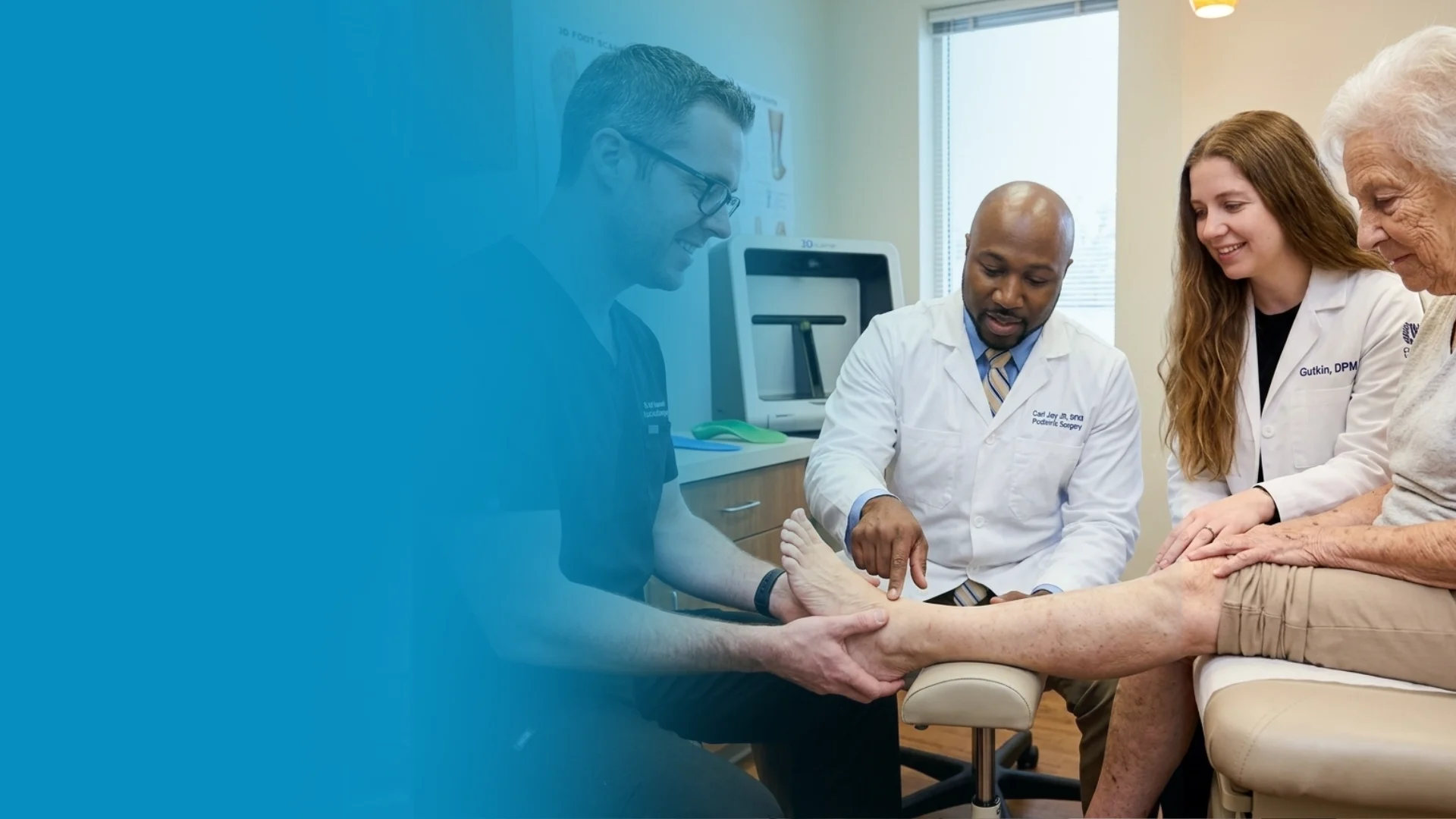
Foot care for elderly family members can be challenging. Our podiatrists provide expert guidance and in-home visits to support you and your loved one.
Clinical References
- Menz HB, Morris ME, Lord SR. Foot and ankle risk factors for falls in older people: a prospective study. J Gerontol A Biol Sci Med Sci. 2006;61(8):866-870.
- Dunn JE, Link CL, Felson DT, Crincoli MG, Keysor JJ, McKinlay JB. Prevalence of foot and ankle conditions in a multiethnic community sample of older adults. Am J Epidemiol. 2004;159(5):491-498.
- Benvenuti F, Ferrucci L, Guralnik JM, Gangemi S, Baroni A. Foot pain and disability in older persons. J Am Geriatr Soc. 1995;43(5):479-484.
Insurance Accepted
BCBS · Medicare · Aetna · Cigna · United Healthcare · HAP · Priority Health · Humana · View All →
Howell Office
3980 E Grand River Ave, Suite 140
Howell, MI 48843
Get Directions →
Bloomfield Hills Office
43700 Woodward Ave, Suite 207
Bloomfield Hills, MI 48302
Get Directions →
Your Board-Certified Podiatrists



Ready to Get Back on Your Feet?
Same-week appointments available at both locations.
Book Your AppointmentMore Podiatrist-Recommended Foot Health Essentials
Hoka Clifton 10

Max-cushion everyday shoe — podiatrist favorite for walking and running.
PowerStep Pinnacle Insole

- The Pinnacle Full length insoles for men & women provide maximum cushioning, from high activity to moderate support. The PowerStep arch support shape provides stability to the foot and ankle, helping to relieve foot pain.
- When you spend all day on your feet, every step counts. PowerStep insoles are a podiatrist-recommended orthotic to help relieve & prevent foot pain related to athletes, runners, Plantar Fasciitis, heel spurs & other common foot, ankle & knee injuries
- The Pinnacle plantar fasciitis insoles offer superior heel cushioning and arch support. The dual-layer cushioning is designed to reduce stress and fatigue, while PowerStep premium arch support is designed for plantar fasciitis relief.
- The PowerStep Pinnacle arch support inserts for men & women can be worn in a variety of shoe types such as; athletic, walking, running, work & some casual shoes. Orthotic Inserts are ordered by shoe size, no trimming required.
- Made in the USA & backed by a 30-day money-back guarantee. PowerStep orthotic inserts for men & women are designed for shoes where the factory insole can be removed. HSA & FSA Eligible
The podiatrist-recommended over-the-counter orthotic.
OOFOS Recovery Slide

- The Original Recovery Footwear.
- Finding Your Size - For your perfect fit, consult the “size chart” link above. Wear a half size? In general, we recommend that women who wear a ½ size size UP, and men who wear a ½ size size DOWN
- OOahh - An evolution of the OOriginal, the OOahh slide features our proven foundation of OOfoam technology + patented footbed design with a slide-style strap that has become a best-seller in the OOFOS line
- OOfoam Technology - Our revolutionary OOfoam technology absorbs 37% more impact than traditional footwear foams to reduce the stress on your feet, joints & back. Plus, the closed-cell foam is machine washable and designed to minimize odor
- Patented Footbed - Our patented footbed cradles and supports arches to reduce energy exertion in the ankles by up to 47% compared to competitors’ footwear. So walking is easier. Recovery is faster. And yOO feel better
Impact-absorbing recovery sandal — wear after long days on your feet.
As an Amazon Associate, Balance Foot & Ankle earns from qualifying purchases. Product recommendations are based on clinical experience; prices and availability shown above update live from Amazon.
When to See a Podiatrist
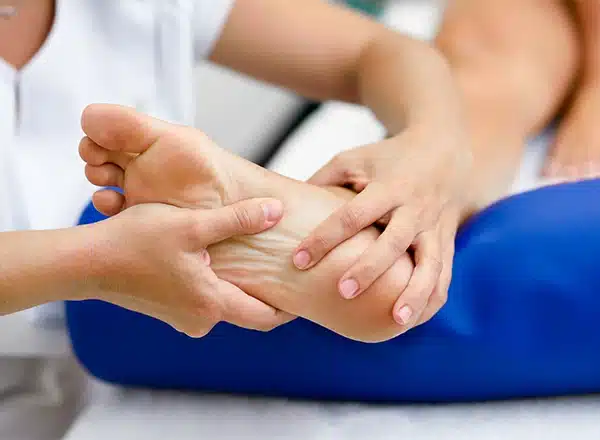
If foot or ankle pain has been bothering you for more than a few weeks, home care alone may not be enough. Balance Foot & Ankle offers same-week appointments at our Howell and Bloomfield Hills clinics — no referral needed in most cases. Bring your current shoes and a short list of symptoms and we’ll build you a treatment plan in one visit.
Call Balance Foot & Ankle: (810) 206-1402 · Book online · Offices in Howell & Bloomfield Hills
Pros & Cons of Conservative Care for foot care
Advantages
- ✓ Conservative care first
- ✓ Same-week appointments
- ✓ Multiple insurance accepted
Considerations
- ✗ Self-treatment can mask issues
- ✗ See a podiatrist if pain >2 weeks
Dr. Tom’s Recommended Products for foot care
Affiliate disclosure: As an Amazon Associate, Balance Foot & Ankle earns from qualifying purchases. We only recommend products we use with patients.


Footnanny Heel Cream Dr. Tom’s Pick
Best for: Daily moisturizer for cracked heels
Ready to Get Back on Your Feet?
Same-day appointments in Howell + Bloomfield Twp. Most insurance accepted. Dr. Tom Biernacki, DPM & team.
Book Today — Same-Day Appointments Available
Call Now: (810) 206-1402
About Your Care Team at Balance Foot & Ankle
Dr. Tom Biernacki, DPM · Board-Certified Foot & Ankle Surgeon. Specializes in conservative-first care, minimally invasive bunion surgery, and complex reconstruction.
Dr. Carl Jay, DPM · Accepting new patients. Specializes in sports medicine, athletic injuries, and routine podiatric care.
Dr. Daria Gutkin, DPM, AACFAS · Accepting new patients. Specializes in surgical reconstruction and pediatric podiatry.
Locations: 4330 E Grand River Ave, Howell, MI 48843 · 43494 Woodward Ave Suite 208, Bloomfield Twp, MI 48302
Hours: Mon–Fri 8:00 AM – 5:00 PM · (810) 206-1402

Dr. Tom Biernacki, DPM is a double board-certified podiatrist and foot & ankle surgeon at Balance Foot & Ankle Specialists in Southeast Michigan. With over a decade of clinical experience, he specializes in heel pain, bunions, diabetic foot care, sports injuries, and minimally invasive surgery. Dr. Biernacki is a member of the APMA and ACFAS, and his patient education content on MichiganFootDoctors.com and YouTube has reached over one million views.