

Quick answer: Cheilectomy Hallux Rigidus Bone Spur Removal Big Toe is a common foot/ankle topic that affects many patients. The 2026 evidence-based approach combines proper diagnosis, conservative-first treatment, and escalation only when needed. We treat this regularly at our Howell and Bloomfield Township practices. Call (810) 206-1402.
▶ Watch
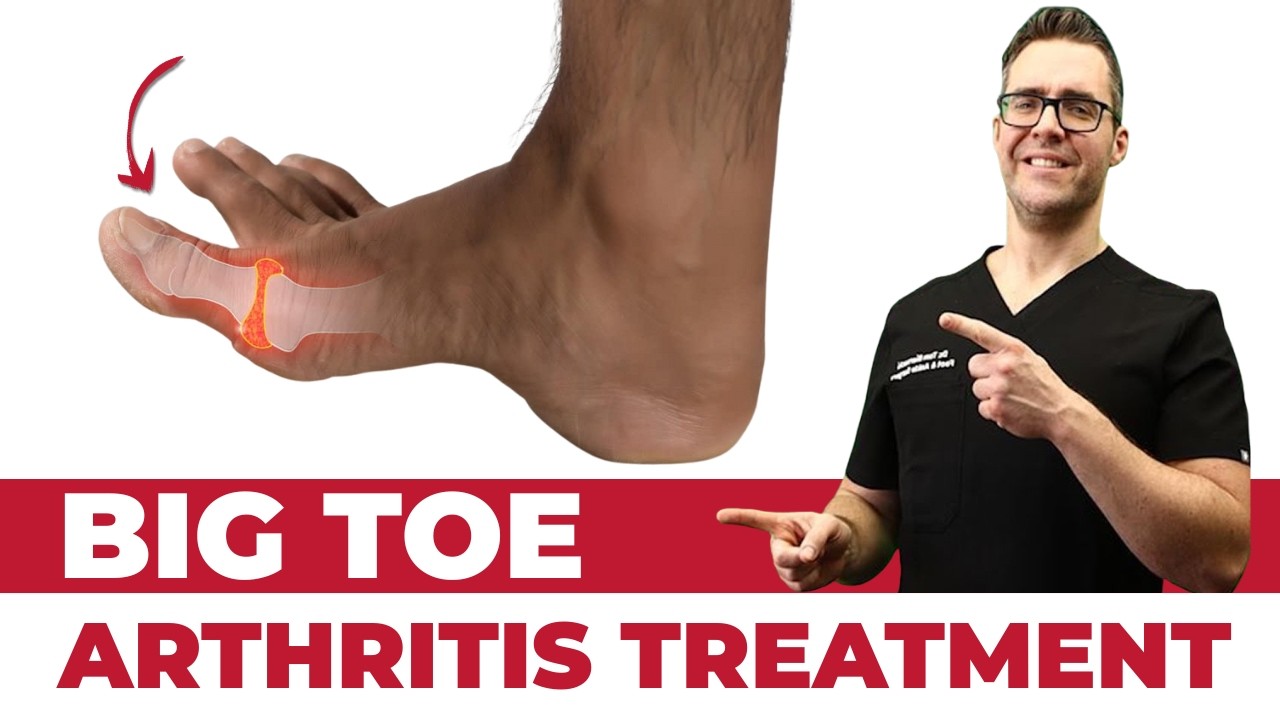
What Is a Cheilectomy?
Medically Reviewed by Dr. Tom Biernacki, DPM — Board-Certified Podiatrist, Balance Foot & Ankle Specialists, Michigan. Last updated April 2026.
A cheilectomy is a surgical procedure that removes bone spurs (osteophytes) from the top (dorsal surface) of the first metatarsophalangeal (MTP) joint — the big toe knuckle — to relieve pain and restore dorsiflexion motion limited by hallux rigidus. The procedure removes the prominent dorsal lip of bone that impinges against the base of the proximal phalanx when the toe bends upward, eliminating the painful bone-on-bone contact that limits push-off during walking and running.
At Balance Foot & Ankle, our foot surgeons perform cheilectomy as the preferred surgical treatment for mild to moderate hallux rigidus, preserving the joint and allowing patients to maintain natural big toe motion.
Who Is a Candidate for Cheilectomy?
Cheilectomy is most appropriate for patients with Grade 1 or Grade 2 hallux rigidus — significant dorsal bone spur formation with painful limitation of dorsiflexion but at least 50 percent of normal joint space preserved on X-ray. The presence of adequate remaining cartilage is the key indicator of suitability. Patients who retain reasonable cartilage but have pain and motion loss primarily from bone spur impingement are ideal cheilectomy candidates.
Patients with Grade 3 or 4 hallux rigidus — advanced joint space loss and circumferential arthritic change — are generally better served by joint fusion (arthrodesis) or total joint replacement rather than cheilectomy alone, as the remaining cartilage cannot support long-term function.
The Surgical Technique
A longitudinal incision is made over the dorsal surface of the first MTP joint. The joint is exposed and the dorsal bone spur is removed using an osteotome and rongeur. Typically 25 to 30 percent of the dorsal metatarsal head is resected. The joint is then taken through a range of motion intraoperatively to confirm adequate dorsiflexion has been achieved — a minimum of 70 degrees of dorsiflexion is the surgical goal. Any loose bodies within the joint are removed. The capsule and skin are closed in layers.
Recovery After Cheilectomy
Patients bear weight in a surgical shoe or postoperative sandal immediately after the procedure. Most patients transition to a wide athletic shoe within 2 to 3 weeks as swelling permits. Physical therapy beginning at 2 to 3 weeks focuses on regaining dorsiflexion range of motion and normalizing gait. Return to athletic activity typically occurs at 6 to 12 weeks depending on the activity demands. Swelling in the foot can persist for 3 to 6 months following any forefoot procedure.
Outcomes and Long-Term Considerations
Cheilectomy provides excellent pain relief and meaningful restoration of dorsiflexion in appropriately selected patients. Studies report satisfactory outcomes in 70 to 90 percent of patients with Grade 1 and 2 hallux rigidus at intermediate follow-up. The procedure does not address the underlying arthritic process, however, and some patients experience gradual progression of arthritis over years requiring additional treatment. Patients who require surgery again are candidates for joint fusion or arthroplasty at that time.
If you have big toe pain and stiffness that limits your activity, contact Balance Foot & Ankle for evaluation. Our foot surgeons serve patients throughout Southeast Michigan with same-week appointments available.
Ready to Relieve Your Foot Pain?
Board-certified podiatrists serving Southeast Michigan. Same-week appointments available.
Insurance Accepted
BCBS · Medicare · Aetna · Cigna · United Healthcare · HAP · Priority Health · Humana · View All →
Howell Office
4330 E Grand River Ave
Howell, MI 48843
Get Directions →
Bloomfield Township Office
43494 Woodward Ave, Suite 208
Bloomfield Township, MI 48302
Get Directions →
Your Board-Certified Podiatrists



Ready to Get Back on Your Feet?
Same-week appointments available at both locations.
Differential Diagnosis: What Else Could It Be?
Not every case of hallux rigidus (big-toe arthritis) is straightforward. In our clinic we routinely rule out three look-alike conditions before confirming the diagnosis. If your symptoms don’t match the classic presentation, one of these may explain the pain — which is why physical exam matters more than self-diagnosis.
| Condition | How It Differs |
|---|---|
| Bunion (hallux valgus) | Toe drifts laterally with a bump on the inside; ROM usually preserved early. |
| Gout attack | Sudden hot red swollen joint, often overnight; ROM restored once flare resolves. |
| Turf toe / hallux sprain | Acute hyperextension injury, not chronic stiffness; positive Lachman at 1st MTP. |
Red Flags — When to See a Podiatrist Now
Seek same-day evaluation at Balance Foot & Ankle if you notice any of the following:
- Progressive stiffness now limiting walking
- Dorsal bone prominence rubbing against shoes
- Unable to push off during gait
- Failed 8+ weeks of shoe modification and OTC NSAIDs
Call (810) 206-1402 or request an appointment. Our Howell and Bloomfield Township offices reserve same-day slots for urgent foot and ankle issues.
In Our Clinic: What We See
Clinical perspective from Dr. Tom Biernacki, DPM — Balance Foot & Ankle, Howell & Bloomfield Township, MI:
In our clinic we see hallux rigidus patients who have been told they have a bunion — but the joint is stiff rather than deviated. The first visit is usually for shoe frustration: rocker-bottom shoes, carbon-fiber inserts, and a Morton’s extension inside the shoe typically unload the joint and delay surgery by 2-5 years. When imaging shows dorsal spurring blocking motion, a cheilectomy addresses mechanical impingement without fusing the joint. Patients who still have cartilage after that are good candidates for joint-preserving procedures; end-stage arthritis benefits from arthrodesis. Dr. Biernacki has performed hundreds of first-MTP procedures and emphasizes preservation first.
More Podiatrist-Recommended Arthritis Essentials
Cushioned Running Shoe


![Stiff Big Toe Joint Pain(Hallux Rigidus) TREATMENT [Exercises, Taping]](https://www.michiganfootdoctors.com/wp-content/cache/flying-press/c5176884df3f62ec55c9a49e0ec09089.jpg)
Watch: Stiff Big Toe Joint Pain(Hallux Rigidus) TREATMENT [Exercises, Taping] — MichiganFootDoctors YouTube
Hoka Clifton 10 — max cushioning reduces joint impact for arthritic feet.
Wide Walking Shoe
New Balance 990v6 — wide toe box accommodates arthritic first-MTP (hallux rigidus).

As an Amazon Associate, Balance Foot & Ankle earns from qualifying purchases. Product recommendations are based on clinical experience; prices and availability shown above update live from Amazon.

When to See a Podiatrist
Foot and ankle arthritis progresses silently — cartilage doesn’t regrow, but joint fusion, cheilectomy, and biologic injections can restore function at every stage. Balance Foot & Ankle offers the full arthritis spectrum: bracing, injections, and reconstructive surgery. Start with a consult so we can image the joint and give you a realistic 5-year outlook.
Call Balance Foot & Ankle: (810) 206-1402 · Book online · Offices in Howell & Bloomfield Township
In-Office Treatment at Balance Foot & Ankle
If home treatment isn’t providing relief for your hallux rigidus, our podiatry team at Balance Foot & Ankle can help with same-week evaluations and advanced in-office care.
Same-week appointments available. (810) 206-1402
Doctor Hoy’s Natural Pain Relief Gel
Natural topical pain relief I use in our clinic. Arnica + camphor formula — apply directly to the area 3–4x daily. ($20–25)
Get Expert Care at Balance Foot & Ankle
Same-week appointments at our Howell and Bloomfield Township offices. Board-certified podiatric surgeons. Most insurance accepted.

Dr. Tom Biernacki, DPM is a board-certified foot & ankle surgeon (ABFAS & ABPM) at Balance Foot & Ankle Specialists in Southeast Michigan. With over a decade of clinical experience, he specializes in heel pain, bunions, diabetic foot care, sports injuries, and minimally invasive surgery. Dr. Biernacki is a member of the APMA and ACFAS, and his patient education content on MichiganFootDoctors.com and YouTube has made him one of the most-followed foot & ankle educators on YouTube.
More questions patients ask
What is a bunion?
A bunion (hallux valgus) is a progressive bony deformity where the big toe joint shifts outward, creating a visible bump. It results from an unstable metatarsal bone, not simply tight shoes. Bunions affect approximately 23% of adults and can cause significant pain, difficulty wearing shoes, and secondary problems like hammertoes. Dr. Biernacki specializes in both conservative management and advanced surgical correction including Lapiplasty 3D bunion correction.
Can bunions be corrected without surgery?
While surgery is the only way to permanently correct the structural deformity, non-surgical treatments can effectively manage pain and slow progression. Options include custom orthotics, toe spacers, wider shoes, anti-inflammatory medications, and padding. Dr. Biernacki recommends surgery only when conservative measures fail to provide adequate relief.
What is Lapiplasty bunion surgery?
Lapiplasty is an advanced 3D bunion correction procedure that addresses the root cause of bunions by correcting the unstable metatarsal bone in all three dimensions. Unlike traditional bunionectomy, Lapiplasty patients can bear weight within days and has a recurrence rate under 3% compared to 12-15% for traditional procedures. Dr. Biernacki is a fellowship-trained Lapiplasty surgeon serving SE Michigan.
Still have a question about coverage or cost? Book online and we will check your benefits before your visit: Book in Howell · Book in Bloomfield Township. Prefer to talk it through first? Call (810) 206-1402.