

Quick answer: Need a podiatrist’s opinion on this? Call Balance Foot & Ankle at (810) 206-1402 for same-week appointments in Howell or Bloomfield Township, Michigan. Most insurance accepted, including Medicare.
Foot or ankle pain that isn’t getting better? A podiatrist can diagnose it in one visit — pick a real appointment time online, 24/7: Howell or Bloomfield Township. Takes about a minute, 24/7.

Medically Reviewed by Dr. Tom Biernacki, DPM, FACFAS — Board-certified podiatric surgeon | Balance Foot & Ankle | Last updated: May 2026
Quick Answer: Chipped Bone in the Foot
A chipped bone in the foot (avulsion fracture) occurs when ligament or tendon tension pulls a small bone fragment free at its attachment point — most commonly at the base of the 5th metatarsal, the navicular, or the cuboid. These injuries cause localized pain, swelling, and bruising after a twist or impact. Most foot avulsion fractures heal in 4–8 weeks with a walking boot. However, the 5th metatarsal base fracture has a tendency toward non-union and requires careful management to avoid refracture.
The foot contains 26 bones and 33 joints, any of which can sustain a chipped or avulsion fracture under sufficient force. While ankle avulsion fractures get more attention, foot avulsions are equally common and equally misdiagnosed — often labeled as “soft tissue injuries” until persistent pain drives a patient back for additional imaging weeks later.
In our Howell and Bloomfield Township clinics, we evaluate foot chipped-bone injuries every week. The evaluation starts with identifying the exact pain location, mechanism of injury, and whether the Ottawa Foot Rules indicate imaging.
⚠️ When to see a podiatrist:
- Cannot bear weight after foot injury
- Visible deformity or significant swelling
- Multiple areas of tenderness suggesting more complex fracture
- No improvement in pain after 2 weeks of rest and protection
⭐ 4.4★ | 5K+ Sold
Protects chipped foot bones during recovery — reduces pressure on the fracture site while allowing controlled walking.
PowerStep Pinnacle Arch Support Insoles
⭐ 4.7★ | 50K+ Sold
Provides the arch support needed to offload chipped foot bones during recovery and prevent re-injury.
Ready to Get Relief? Same-Day Appointments Available
Board-certified podiatric surgeon | Howell & Bloomfield Township, MI | Most Insurance Accepted
4.9★ | 1,123 Reviews | 3,000+ Surgeries
Or call: (810) 206-1402
Most Common Sites for Chipped Bones in the Foot
| Location | How It Chips | Key Risk | Healing Time |
|---|---|---|---|
| 5th metatarsal base | Peroneus brevis avulsion | Non-union, zone 2 Jones fracture | 4–8 weeks |
| Navicular | Tibialis posterior avulsion | Flat foot deformity if missed | 6–10 weeks |
| Cuboid | Lateral ligament tension | Frequently missed on plain X-ray | 4–6 weeks |
| Styloid process (5th met) | Plantaris/peroneus chip | Confused with Jones fracture | 4–6 weeks |
| Sesamoid bones | Direct impact, hyperextension | Big toe push-off pain lasting months | 6–12 weeks |
The 5th Metatarsal Base Chip: Critical Distinctions
The most important clinical distinction with foot bone chips is differentiating a true avulsion fracture at the styloid process of the 5th metatarsal (Zone 1 — heals well) from a Jones fracture at the metaphyseal-diaphyseal junction (Zone 2 — high non-union risk) or a diaphyseal stress fracture (Zone 3 — often requires surgery). These three fracture types occur within centimeters of each other and look nearly identical clinically. X-ray with proper foot positioning — and sometimes CT — is needed to classify them correctly, because Zone 1 can be booted while Zone 2–3 may require surgical fixation with an intramedullary screw.
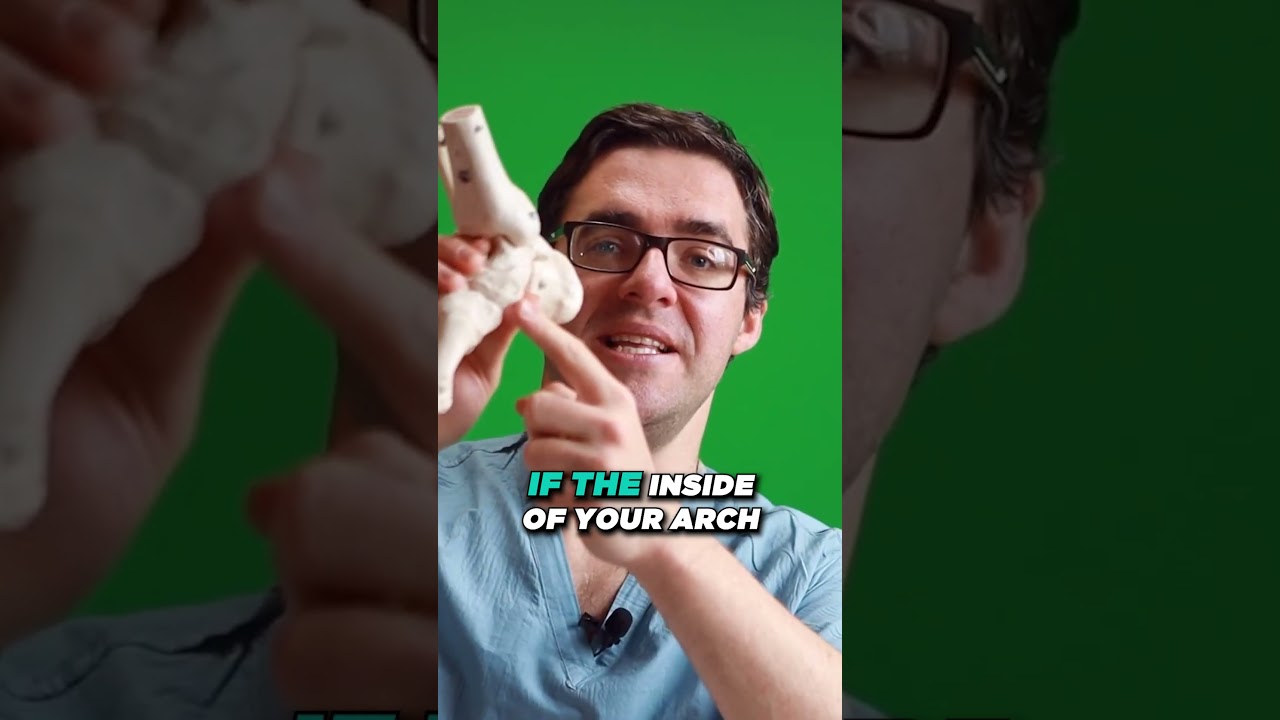
Watch: Navicular — Foot Bone Pain Explained
Dr. Tom covers mid-foot bone injuries including the navicular, which is a common site for chipping and stress fractures:
Book a same-day foot fracture evaluation → | (810) 206-1402
Frequently Asked Questions
How do you know if you chipped a bone in your foot?
Point tenderness directly over a specific bone (rather than a ligament), swelling, and bruising after a foot injury are the primary clinical signs. The Ottawa Foot Rules indicate X-ray when there is tenderness at the navicular or at the base of the 5th metatarsal. Many foot chips are missed on initial imaging — if pain persists at a specific bone location beyond 2–3 weeks despite normal X-rays, request an MRI or bone scan to detect occult fractures invisible on plain films.
Can you walk on a chipped bone in your foot?
For small, non-displaced chips at non-weight-bearing surfaces, limited walking in a stiff-soled walking boot may be tolerated. However, the 5th metatarsal base should be protected in a boot regardless of pain level — continued forefoot loading stresses the fracture site with every step. Sesamoid chips and navicular avulsions also benefit from boot immobilization even when weight-bearing is possible, because repetitive micromotion prevents healing.
How long does a chipped foot bone take to heal?
Most foot avulsion fractures heal in 4–8 weeks. Navicular avulsions and cuboid chips typically heal in 4–6 weeks in a boot. The 5th metatarsal styloid avulsion heals in 4–6 weeks with conservative management; Jones fractures take 6–8 weeks minimum, with higher non-union rates. Sesamoid fractures heal slowly — often 8–12 weeks — and occasionally require surgical removal if they become a persistent source of pain.
What happens if a chipped foot bone doesn’t heal?
Non-union of a foot bone chip results in a fibrous pseudoarthrosis — a false joint filled with scar tissue rather than bone. This typically causes chronic, activity-related pain that worsens with walking and is relieved by rest. Treatment options range from bone stimulator therapy to surgical excision or fixation with bone graft. Jones fracture non-union specifically may require intramedullary screw fixation with bone graft stimulation.
Do I need surgery for a chipped bone in my foot?
Most foot avulsion fractures do not require surgery. Surgical indications include: Jones fracture in an athlete (for faster return to sport), any fracture with >2mm displacement involving a joint surface, documented non-union after 12+ weeks of conservative care, or sesamoid fractures causing intractable pain after conservative exhaustion. A podiatrist can classify the fracture type and recommend the most appropriate management pathway.
Foot Pain After a Twist or Impact? Get Imaged Today.
Dr. Tom Biernacki, DPM provides same-day foot fracture evaluation and X-rays at both locations.
Related: Chipped Ankle Bone | Chipped Shin Bone | Signs of a Broken Ankle | Protruding Bone Outside Foot
Podiatrist-Recommended Products for Foot Fracture Recovery
- Doctor Hoy’s Natural Pain Relief Gel — topical pain relief for fracture site soreness during the healing and return-to-activity phases
- Plantar Fasciitis Compression Socks — graduated compression reduces swelling around the fracture site during recovery
- PowerStep Maxx — maximum-support insole for return to weight-bearing after bone healing is confirmed
These are the same products Dr. Biernacki recommends in clinic. Available through our partner Foundation Wellness.
In-Office Treatment at Balance Foot & Ankle
If home treatment isn’t providing relief for your foot fracture, our podiatry team at Balance Foot & Ankle can help with same-day evaluations and advanced in-office care.
When should I see a podiatrist?
If symptoms persist past 2 weeks, affect your normal activity, or are accompanied by red-flag symptoms (warmth, redness, swelling, inability to bear weight).
What does treatment cost?
Most diagnostic visits and conservative treatments are covered by Medicare and major insurers. Out-of-pocket costs vary by your specific plan.
How quickly can I get an appointment?
Most non-urgent cases see us within 5 business days. Urgent cases (sudden pain, possible fracture) typically same or next business day.

Dr. Tom Biernacki, DPM is a board-certified foot & ankle surgeon (ABFAS & ABPM) at Balance Foot & Ankle Specialists in Southeast Michigan. With over a decade of clinical experience, he specializes in heel pain, bunions, diabetic foot care, sports injuries, and minimally invasive surgery. Dr. Biernacki is a member of the APMA and ACFAS, and his patient education content on MichiganFootDoctors.com and YouTube has made him one of the most-followed foot & ankle educators on YouTube.