
Medically reviewed by Dr. Tom Biernacki, DPM
Board-certified podiatric surgeon | Balance Foot & Ankle, Howell & Bloomfield Hills, MI
Last reviewed: May 2026
Balance Foot & Ankle offers same-day appointments for urgent foot and ankle conditions across Southeast Michigan — but the most important factor in outcomes isn’t getting seen quickly. Our podiatrists explain what to do in the first 24-48 hours before your appointment that most patients skip entirely. Call (810) 206-1402 — expert podiatric care across Michigan.


| Instability Type | Anterior Drawer | Talar Tilt | Proprioception | First-Line Treatment |
|---|---|---|---|---|
| Functional Only | Normal (<10mm) | Normal (<5°) | Significantly impaired | Neuromuscular PT 12+ weeks |
| Mechanical Only | Increased (>10mm) | Increased (>5°) | Intact or mildly impaired | Brace + PT; surgery if unstable |
| Combined (most common) | Increased | Increased | Significantly impaired | PT 12 weeks → surgery if failed |
| With Peroneal Weakness | Increased | Variable | Impaired | PT (peroneal focus) + brace |
| With Osteochondral Lesion | Variable | Variable | Variable | MRI evaluation → targeted Tx |
| Conservative vs. Surgical Outcomes | Conservative (PT + Brace) | Modified Brostrom | Brostrom + Gould Augmentation |
|---|---|---|---|
| Success rate | 70–85% | 85–90% | 90–95% |
| Return to sport | Variable (weeks–months) | 4–6 months | 4–6 months |
| Re-sprain rate at 5 yrs | 25–40% | 10–15% | 8–12% |
| Patient satisfaction at 10 yrs | 65–75% | 80–85% | 85–92% |
| Best for | First-time CAI, non-athletes | Failed PT, athletes | Hyperlax patients, athletes |
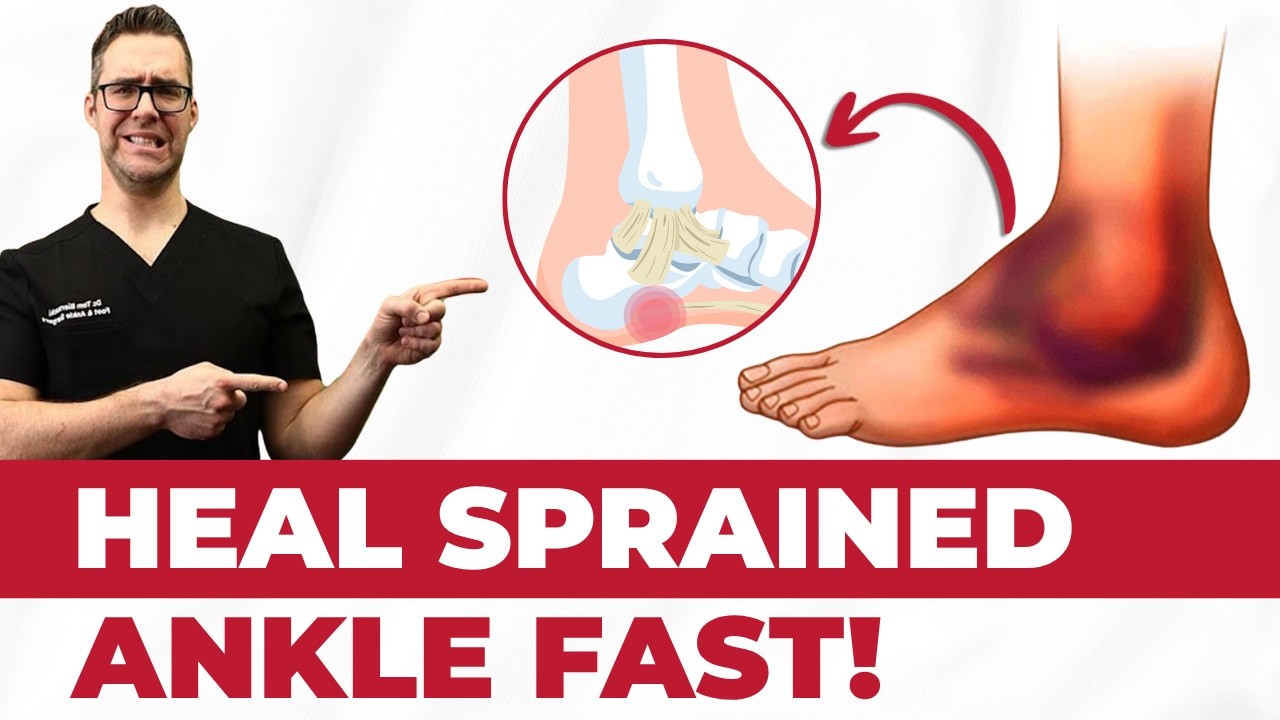
Watch: Fix TWISTED Ankle, ROLLED Ankle or SPRAINED Ankle Ligaments FASTER! — MichiganFootDoctors YouTube
Medically Reviewed | Dr. Tom Biernacki, DPM | Board-Certified Podiatric Surgeon | Balance Foot & Ankle, Michigan

The most important clinical decision with Chronic Ankle Instability Recurrent Sprains Lateral Ligament Michigan Podiatrist isn’t which treatment to start with — it’s identifying the correct subtype. That changes everything. Call (810) 206-1402.
Why Your Ankle Keeps Giving Way
A single ankle sprain is the most common sports injury in the world. But when the ankle continues to give way — during everyday walking, on uneven surfaces, or during sports — months or years after the initial injury, chronic lateral ankle instability has developed. The lateral ankle ligaments — primarily the anterior talofibular ligament (ATFL) and the calcaneofibular ligament (CFL) — have been stretched or torn so many times that they can no longer maintain normal ankle joint stability.
Chronic ankle instability develops in approximately 20–40% of patients after acute lateral ankle sprain — most often because the initial injury was inadequately rehabilitated, the patient returned to sport too soon, or because multiple repeat sprains produced cumulative ligament attenuation that overwhelmed the healing response.
The Hidden Danger: Progressive Joint Damage
Chronic ankle instability is not just inconvenient — it’s destructive. Each “giving way” episode creates abnormal joint loading that damages the ankle’s cartilage surface. Over time, recurrent microtrauma to the talus cartilage leads to osteochondral lesions — focal areas of cartilage and bone damage that cause deep ankle pain, clicking, and contribute to early ankle osteoarthritis.
Peroneal tendon damage is another consequence — the repetitive inversion stresses of instability can produce peroneal tendon tears and subluxation. Catching and treating chronic ankle instability before cartilage and tendon damage accumulates produces dramatically better long-term outcomes.
Non-Surgical Treatment: The Foundation
Mechanical ankle bracing — Lace-up braces (ASO-style) or rigid brace designs provide immediate mechanical support while the rehabilitation process proceeds. Bracing reduces re-injury risk during sports and daily activity.
Peroneal strengthening — The peroneal muscles on the outside of the ankle are the dynamic stabilizers of the lateral ankle — the muscle-tendon equivalent of the torn ligaments. Targeted peroneal strengthening with resistance bands and functional exercises rebuilds dynamic ankle stability.
Proprioceptive retraining — Ankle sprains damage the proprioceptive nerve endings in the ligaments — the sensors that detect joint position and coordinate reflexive ankle stabilization. Balance board training, single-leg stance exercises, and neuromuscular retraining restore the position sense that recurrent sprains have degraded.
Custom orthotics — Patients with cavus (high-arch) foot type are anatomically predisposed to lateral ankle instability because the foot’s resting position places the ankle in slight inversion. A lateral heel wedge orthotic corrects this positional bias and reduces re-injury stress.
When Surgery Is the Answer: Broström-Gould Repair
When 3–6 months of dedicated conservative rehabilitation fails to restore adequate ankle stability for the patient’s activity demands, surgical reconstruction is indicated. The Broström-Gould ligament repair is the gold-standard procedure — anatomically reconstructing the ATFL and CFL ligaments using the patient’s own retinacular tissue for reinforcement.
Modern arthroscopic-assisted techniques allow Dr. Biernacki to address intra-articular pathology (osteochondral lesions, loose bodies, synovitis) simultaneously through the same small incisions. Success rates exceed 90–95% with return to full sport participation by 4–6 months post-surgery.
Dr. Tom's Product Recommendations

ASO Ankle Stabilizing Orthosis
⭐ Highly Rated
The gold-standard lace-up ankle brace — used by athletic trainers and recommended by podiatric surgeons for chronic lateral ankle instability during rehabilitation and sport.
Dr. Tom says: “My first-line mechanical support recommendation for every chronic ankle instability patient.”
Chronic instability, high-risk sport activity, rehabilitation phase
Acute severe fracture-dislocation requiring rigid immobilization
Disclosure: We earn a commission at no extra cost to you.

BOSU Balance Trainer
⭐ Highly Rated
The essential proprioception training tool for chronic ankle instability rehabilitation — used by physical therapists and sports medicine professionals to rebuild neuromuscular ankle stability.
Dr. Tom says: “Rebuilds the ankle position sense that repeated sprains destroy — the foundation of non-surgical ankle instability treatment.”
Home proprioception rehab, post-surgical recovery, functional training
Acute post-surgical — wait for physical therapy clearance before using
Disclosure: We earn a commission at no extra cost to you.
✅ Pros / Benefits
- Most chronic ankle instability cases resolve with structured conservative rehabilitation
- Broström-Gould repair achieves 90–95% success with return to sport by 4–6 months
- Early treatment prevents cartilage damage and osteochondral lesion development
- Peroneal strengthening and proprioceptive retraining address the root neuromuscular deficit
❌ Cons / Risks
- Conservative rehab requires 3–6 months of dedicated effort — compliance is critical
- Surgery requires post-operative non-weight-bearing for 2–4 weeks
- Untreated instability progressively damages ankle cartilage — delays worsen long-term outcome
Dr. Tom Biernacki’s Recommendation
Chronic ankle instability is one of the conditions where I see the most treatment delay — patients assume an unstable ankle is something they just have to live with, or they keep getting the same ‘RICE and see a PT’ advice without addressing the structural problem. A structured rehabilitation program with true peroneal strengthening and proprioceptive work resolves most cases. For those who don’t respond — and there’s a clear surgical indication when conservative care fails — the Broström-Gould repair is one of the most satisfying procedures I perform. Patients go from constant ankle anxiety to competing in sports with full confidence in their ankle.
— Dr. Tom Biernacki, DPM | Board-Certified Podiatric Surgeon | Balance Foot & Ankle
Frequently Asked Questions
How many ankle sprains cause chronic instability?
Chronic instability develops in approximately 20–40% of patients after acute lateral ankle sprain. Risk factors include inadequate initial rehabilitation, premature return to sport, high-arch foot type, and cumulative multiple sprains. Even patients with a single significant sprain can develop instability if the initial healing is poor.
Is surgery necessary for chronic ankle instability?
No — surgery is not the first-line treatment. A structured 3–6 month rehabilitation program including peroneal strengthening and proprioceptive retraining resolves symptoms in the majority of patients. Broström-Gould repair is reserved for cases where conservative care has genuinely failed.
How long is recovery from Broström-Gould ankle surgery?
Recovery involves 2–4 weeks non-weight-bearing in a boot, followed by progressive physical therapy. Most patients return to light jogging by 3 months, sports-specific training by 4 months, and full unrestricted sport by 4–6 months. Results are highly durable — recurrence after successful Broström-Gould repair is uncommon.
Can ankle instability cause arthritis?
Yes. Each giving-way episode creates abnormal joint stress that gradually damages the ankle’s cartilage. Long-standing untreated instability accelerates ankle osteoarthritis and produces osteochondral lesions of the talus. Early treatment — before cartilage damage accumulates — produces dramatically better long-term joint health outcomes.
Michigan Foot Pain? See Dr. Biernacki In Person
4.9★ rated | 1,123 Reviews | 3,000+ Surgeries
Same-week appointments · Howell & Bloomfield Hills
📞 (810) 206-1402 Book Online →Frequently Asked Questions
When should I see a podiatrist?
If symptoms persist past 2 weeks, affect your normal activity, or are accompanied by red-flag symptoms (warmth, redness, swelling, inability to bear weight).
What does treatment cost?
Most diagnostic visits and conservative treatments are covered by Medicare and major insurers. Out-of-pocket costs vary by your specific plan.
How quickly can I get an appointment?
Most non-urgent cases see us within 5 business days. Urgent cases (sudden pain, possible fracture) typically same or next business day.
In-Office Treatment at Balance Foot & Ankle
If home treatment isn’t providing relief for your ankle sprains, our podiatry team at Balance Foot & Ankle can help with same-day evaluations and advanced in-office care.
AAOS: Chronic Ankle Instability
Ready to Get Relief?
Same-day appointments available in Howell & Bloomfield Hills, MI
4.9★ | 1,123 Reviews | 3,000+ Surgeries
Or call: (810) 206-1402

Dr. Tom Biernacki, DPM is a board-certified foot & ankle surgeon (ABFAS & ABPM) at Balance Foot & Ankle Specialists in Southeast Michigan. With over a decade of clinical experience, he specializes in heel pain, bunions, diabetic foot care, sports injuries, and minimally invasive surgery. Dr. Biernacki is a member of the APMA and ACFAS, and his patient education content on MichiganFootDoctors.com and YouTube has made him one of the most-followed foot & ankle educators on YouTube.