
Medically reviewed by Dr. Tom Biernacki, DPM — Board-Certified Podiatric Surgeon — Balance Foot & Ankle, Howell & Bloomfield Hills, MI. Last updated April 2026.
Medically Reviewed by Dr. Tom Biernacki, DPM — Board-Certified Podiatrist, Balance Foot & Ankle Specialists, Michigan. Last updated April 2026.
What Are Corns and Calluses?
Corns and calluses are areas of thickened, hardened skin that form in response to repeated friction, pressure, or irritation. They are among the most common foot conditions treated by podiatrists and, while not dangerous in most people, can cause significant discomfort—and pose serious risks in patients with diabetes or poor circulation. Understanding the difference between corns and calluses helps ensure appropriate treatment and prevents potentially harmful home remedies.
Calluses: What They Are and Where They Form
A callus (tyloma) is a diffuse area of thickened skin that develops over a broad area subjected to repeated pressure or friction. On the foot, calluses most commonly form on the ball of the foot (under the metatarsal heads), the heel, and the outer border of the big toe. They develop because the skin’s outer layer (stratum corneum) proliferates in response to mechanical stress as a protective adaptation. Calluses are generally not deeply painful but may cause a burning or aching sensation after prolonged standing or walking.
Corns: Deeper and More Painful
A corn (heloma) is a focused, conical plug of thickened skin with a central nucleated core that points inward and presses on underlying nerves and tissue. Hard corns (heloma durum) develop on bony prominences—most commonly the tops and sides of toes where they rub against shoe uppers—and produce sharp, localized pain with shoe pressure. Soft corns (heloma molle) develop between toes, where moisture from sweat keeps them soft and macerated; they appear whitish and are particularly painful because interdigital pressure between adjacent toe bones is constant during weight-bearing.
What Causes Corns and Calluses?
The underlying cause of virtually all corns and calluses is abnormal friction or pressure—either from ill-fitting footwear, foot deformities that create bony prominences (bunions, hammertoes, prominent metatarsal heads), or biomechanical abnormalities that concentrate excessive force on specific skin areas. Shoes that are too narrow, too tight, or too short force toes into unnatural positions against the shoe box. High heels shift body weight forward onto the ball of the foot, concentrating metatarsal head pressure. Barefoot walking on hard surfaces stimulates heel and lateral foot callus formation.
How Podiatrists Treat Corns and Calluses
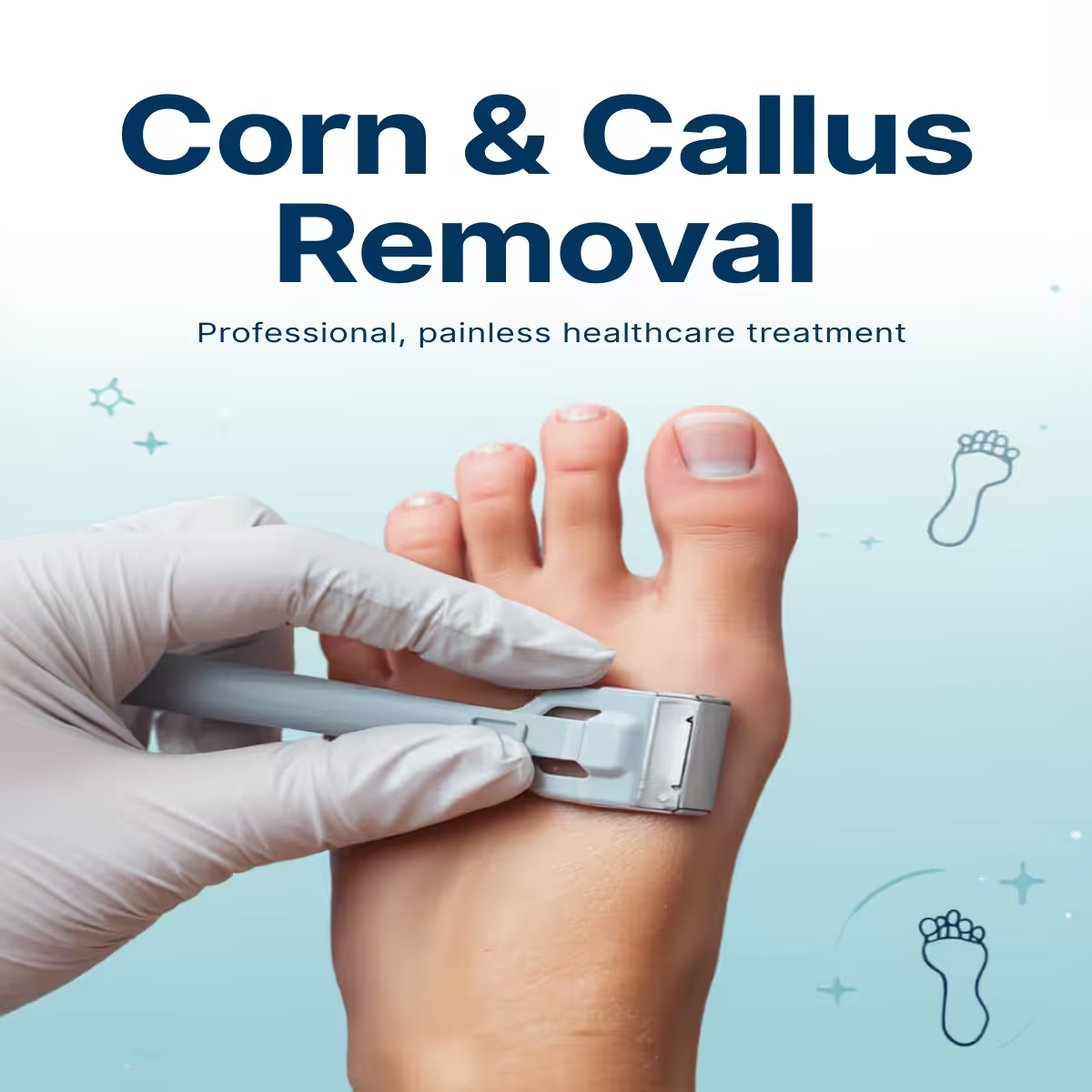
Professional podiatric treatment provides safe, effective, and immediate relief for corns and calluses. Debridement using a sterile scalpel blade removes the thickened skin and corn nucleus in a single comfortable procedure—providing instant pain relief that home pumice stones and over-the-counter corn removers cannot replicate safely. Salicylic acid preparations dissolve thickened skin gradually but must be used with extreme caution (or not at all) in patients with diabetes or reduced circulation.
Addressing the underlying cause is essential to prevent recurrence. Custom orthotics redistribute metatarsal head pressure for ball-of-foot calluses. Silicone toe separators and padding protect interdigital soft corns. Footwear modification—wider toe box, lower heel, appropriate length—eliminates the frictional forces driving corn development. When bony deformities (bunions, hammertoes) are the primary cause, surgical correction may be necessary for lasting resolution.
Important Warning for Diabetic and Vascular Patients
Patients with diabetes, peripheral neuropathy, or peripheral vascular disease should NEVER use over-the-counter corn removal products (medicated pads, liquids, or plasters) containing salicylic acid. These can cause chemical burns and ulceration in skin with impaired healing capacity, potentially leading to serious infection. All corn and callus care for high-risk patients should be performed by a podiatrist in a clinical setting where complications can be recognized and managed immediately.
Ready to Relieve Your Foot Pain?
Board-certified podiatrists serving Southeast Michigan. Same-week appointments available.
Expert Foot & Ankle Care in Michigan
Dr. Tom Biernacki provides comprehensive, evidence-based podiatric care at Balance Foot & Ankle in Howell and Bloomfield Hills, serving patients throughout Southeast Michigan.
View All Treatment Options | Book Your Appointment | Call (810) 206-1402
Clinical References
- Thomas MJ, et al. “The population prevalence of foot and ankle pain.” Pain. 2011;152(12):2870-2880.
- Hill CL, et al. “Prevalence and correlates of foot pain in a population-based study.” J Foot Ankle Res. 2008;1(1):2.
- Riskowski JL, et al. “Measures of foot function, foot health, and foot pain.” Arthritis Care Res. 2011;63(S11):S229-S236.
Insurance Accepted
BCBS · Medicare · Aetna · Cigna · United Healthcare · HAP · Priority Health · Humana · View All →
Howell Office
3980 E Grand River Ave, Suite 140
Howell, MI 48843
Get Directions →
Bloomfield Hills Office
43700 Woodward Ave, Suite 207
Bloomfield Hills, MI 48302
Get Directions →
Your Board-Certified Podiatrists



Ready to Get Back on Your Feet?
Same-week appointments available at both locations.
Book Your Appointment
Dr. Tom Biernacki, DPM is a double board-certified podiatrist and foot & ankle surgeon at Balance Foot & Ankle Specialists in Southeast Michigan. With over a decade of clinical experience, he specializes in heel pain, bunions, diabetic foot care, sports injuries, and minimally invasive surgery. Dr. Biernacki is a member of the APMA and ACFAS, and his patient education content on MichiganFootDoctors.com and YouTube has reached over one million views.
- Plantar Fasciitis: Diagnosis and Conservative Management (PubMed)
- Plantar Fasciitis (APMA)
- Diagnosis and Treatment of Plantar Fasciitis (PubMed / AAFP)
- Heel Pain (APMA)
Recommended Products from Dr. Tom