

Cuboid syndrome — pain on the outside of the midfoot from a partially-displaced cuboid bone — often gets misdiagnosed as a chronic ankle sprain. The right manipulation and taping resolves it within days.
You’re in the right place. Dr. Tom Biernacki, DPM, FACFAS — board-certified foot & ankle surgeon with 3,000+ surgeries — explains exactly what cuboid syndrome means and what works. Call (810) 206-1402 for same-day appointment at Howell or Bloomfield Township.
Quick Answer
Most foot and ankle problems respond to conservative care — proper footwear, supportive inserts, activity modification, and targeted stretching — within 4-8 weeks. Persistent pain beyond that window, or any symptom that prevents walking, warrants a podiatric evaluation to rule out fracture, tendon tear, or systemic cause.
Medically reviewed by Dr. Tom Biernacki, DPM — Board-Certified Podiatric Surgeon — Balance Foot & Ankle, Howell & Bloomfield Township, MI. Last updated April 2026.
Watch: Dr. Tom Biernacki, DPM
Medically reviewed by Dr. Tom Biernacki, DPM
Board-certified podiatric surgeon | Balance Foot & Ankle
Last reviewed: April 4, 2026
QUICK ANSWER
Cuboid syndrome is subluxation (partial dislocation) of the cuboid bone causing lateral midfoot pain with walking and running. It often follows ankle sprains or occurs in athletes with pronated feet. Treatment is usually successful with cuboid manipulation (cuboid whip) followed by orthotics, taping, and gradual return to activity.
What Is Cuboid Syndrome?
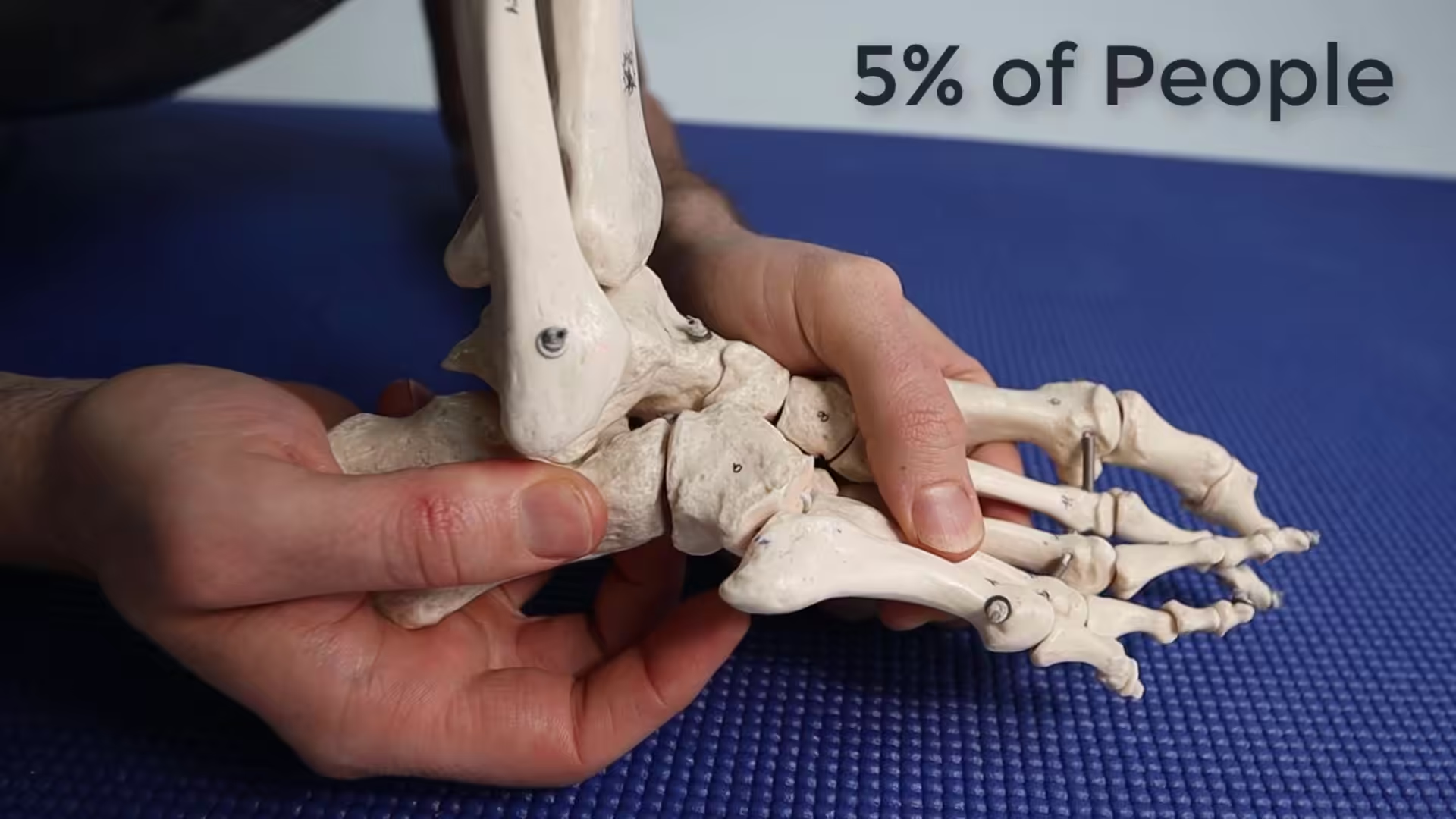
Cuboid syndrome is a condition characterized by lateral midfoot pain caused by minor subluxation or disruption of the cuboid bone at its articulations with the calcaneus proximally and the fourth and fifth metatarsals distally. The cuboid is the lateral column bone of the midfoot that serves as a pulley for the peroneus longus tendon as it courses across the plantar foot. Even minor disruption of the cuboid position causes pain and weakness that significantly affects walking and athletic performance.
At Balance Foot & Ankle, we diagnose and treat cuboid syndrome in athletes and active patients throughout Southeast Michigan — a condition that is frequently misdiagnosed or overlooked because standard imaging is often normal.
How Cuboid Syndrome Develops
Most cases of cuboid syndrome occur following an ankle inversion sprain. The inversion mechanism that primarily injures the lateral ankle ligaments also stresses the calcaneocuboid joint, potentially producing minor subluxation of the cuboid — most commonly in a plantar and medial direction. The peroneus longus tendon, which wraps around the cuboid at the cuboid notch, is placed under abnormal tension by the malaligned cuboid, contributing to pain and weakness of push-off.
Cuboid syndrome can also develop without a specific injury in ballet dancers and other athletes who perform repetitive peroneus longus loading and landing forces that gradually stress the calcaneocuboid joint. Hyperpronation that everts the calcaneus can place repetitive stress on the lateral calcaneocuboid joint, causing chronic cuboid instability.

Symptoms and Diagnosis
Lateral midfoot pain located over the cuboid — approximately at the midpoint of the outer foot between the ankle and the fifth metatarsal base — is the hallmark symptom. The pain worsens with weight bearing and may radiate into the fourth and fifth toes. Athletes describe weakness and pain with push-off that improves initially and worsens with continued activity. The midtarsal locking test — passive supination of the forefoot that stresses the calcaneocuboid joint — reproduces pain. Direct palpation over the plantar cuboid elicits tenderness.
X-rays are typically normal because the subluxation is too minor to appear on plain films. Bone scan or MRI may show increased signal at the cuboid, but diagnosis is primarily clinical.
The Cuboid Whip or Plantar Fascia Technique
The most specific treatment for cuboid syndrome is the cuboid manipulation technique — also called the cuboid whip or cuboid notch technique. The foot is held prone with the knee bent. The thumbs are placed on the plantar surface of the cuboid and a rapid dorsiflexion thrust is applied through the thumbs while the foot is simultaneously plantarflexed. This manipulation reduces the minor subluxation and often produces immediate pain relief. The technique is performed by podiatrists and physical therapists experienced with the maneuver.
After Manipulation: Orthotics and Taping
Cuboid padding applied to the plantar surface of the foot maintains the corrected cuboid position after manipulation. Low-Dye strapping or custom orthotics with a cuboid pad support the lateral column and prevent recurrent subluxation. Peroneal strengthening exercises reduce the dynamic stress on the calcaneocuboid joint. Most patients achieve significant improvement within 1 to 3 manipulations combined with orthotic support.
If you have lateral midfoot pain that has not been diagnosed or has not responded to generic treatment, contact Balance Foot & Ankle for evaluation. We serve Southeast Michigan with same-week appointments.
Ready to Relieve Your Foot Pain?
Board-certified podiatrists serving Southeast Michigan. Same-week appointments available.
Warning
Lateral midfoot pain can also indicate a cuboid stress fracture, peroneal tendon pathology, or os peroneum injury. If pain persists after attempted manipulation or imaging reveals a fracture, don’t continue manipulation—proper diagnosis is essential.
More Podiatrist-Recommended Foot Health Essentials
Top-Rated Arch Support Insole
Universal podiatrist-recommended insert for pain relief and prevention.
Foot Massage Ball
Daily 3-minute roll reduces most forms of foot and heel pain.
Moisture-Wicking Sock
Prevents fungus, blisters, and odor — the basics matter.
As an Amazon Associate, Balance Foot & Ankle earns from qualifying purchases. Product recommendations are based on clinical experience; prices and availability shown above update live from Amazon.
![How to Cure Plantar Fasciitis in One Week? [FAST Heel Pain Relief!]](https://www.michiganfootdoctors.com/wp-content/cache/flying-press/b5600c3bfb9845a6095da8266d8b5363.jpg)
Watch: How to Cure Plantar Fasciitis in One Week? [FAST Heel Pain Relief!] — MichiganFootDoctors YouTube
When to See a Podiatrist
If foot or ankle pain has been bothering you for more than a few weeks, home care alone may not be enough. Balance Foot & Ankle offers same-week appointments at our Howell and Bloomfield Township clinics — no referral needed in most cases. Bring your current shoes and a short list of symptoms and we’ll build you a treatment plan in one visit.
Call Balance Foot & Ankle: (810) 206-1402 · Book online · Offices in Howell & Bloomfield Township
Frequently Asked Questions
How do you diagnose cuboid syndrome?
Diagnosis is clinical: lateral midfoot pain, tenderness over the cuboid, pain with toe-off, history of ankle sprain or overuse, and relief with manipulation. X-rays are usually normal. MRI can rule out fractures or other pathology.
What is the cuboid whip?
The cuboid whip is a manipulation technique performed by trained providers: the foot is held, tension applied, and a quick thrust relocates the cuboid. Patients often feel immediate relief. It should only be done after ruling out fractures.
Can cuboid syndrome come back?
Yes. Recurrence is common without addressing underlying biomechanics. Custom orthotics that control pronation, peroneal strengthening, and proper footwear significantly reduce recurrence risk.
Lateral Midfoot Pain That Won’t Resolve?
Our foot specialists accurately diagnose cuboid syndrome, perform expert manipulation, and prescribe orthotics to prevent recurrence and return you to activity.
Book AppointmentCuboid Syndrome Treatment in Michigan
Cuboid syndrome can cause persistent lateral midfoot pain that mimics other conditions. Dr. Tom Biernacki at Balance Foot & Ankle provides expert diagnosis using advanced imaging and hands-on cuboid manipulation techniques at our Howell and Bloomfield Township offices.
Learn About Our Foot Pain Treatment Options | Book Your Appointment | Call (810) 206-1402
Clinical References
- Durall CJ. “Examination and treatment of cuboid syndrome: a literature review.” Sports Health. 2011;3(6):514-519.
- Jennings J, Davies GJ. “Treatment of cuboid syndrome secondary to lateral ankle sprains.” Journal of Orthopaedic & Sports Physical Therapy. 2005;35(7):409-415.
- Marshall P, Hamilton WG. “Cuboid subluxation in ballet dancers.” American Journal of Sports Medicine. 1992;20(2):169-175.
Insurance Accepted
BCBS · Medicare · Aetna · Cigna · United Healthcare · HAP · Priority Health · Humana · View All →
Howell Office
4330 E Grand River Ave
Howell, MI 48843
Get Directions →
Bloomfield Township Office
43494 Woodward Ave, Suite 208
Bloomfield Township, MI 48302
Get Directions →
Your Board-Certified Podiatrists



Ready to Get Back on Your Feet?
Same-week appointments available at both locations.
Book Your AppointmentMost Common Mistake We See
The most common mistake we see is: Waiting too long before seeking care. Fix: any foot pain lasting more than 4 weeks, or any sudden severe symptom, deserves a professional evaluation rather than more rest.
Warning Signs That Need Same-Day Care
Seek immediate evaluation at Balance Foot & Ankle if you experience any of the following:
- Unable to bear weight
- Severe swelling with skin colour change
- Fever with foot pain (possible infection)
- Diabetes plus any new foot symptom
Call (810) 206-1402 — same-day and next-day appointments at our Howell and Bloomfield Township offices.
Differential Diagnosis: What Else Could It Be?
Not every case of cuboid syndrome is straightforward. In our clinic we routinely rule out three look-alike conditions before confirming the diagnosis. If your symptoms don’t match the classic presentation, one of these may explain the pain — which is why physical exam matters more than self-diagnosis.
| Condition | How It Differs |
|---|---|
| Peroneal tendonitis | Pain proximal along the tendon course rather than deep at the cuboid. |
| Midfoot sprain | Diffuse dorsal pain, not lateral midfoot; tenderness varies by ligament involved. |
| Stress fracture of cuboid | Confirmed on MRI; mechanical symptoms do not respond to manipulation. |
Red Flags — When to See a Podiatrist Now
Seek same-day evaluation at Balance Foot & Ankle if you notice any of the following:
- Mechanical locking or popping in the lateral midfoot
- Inability to bear weight on lateral column
- Failure to respond to cuboid whip/squeeze manipulation
- History of frequent ankle sprains plus lateral midfoot pain
Call (810) 206-1402 or request an appointment. Our Howell and Bloomfield Township offices reserve same-day slots for urgent foot and ankle issues.
In Our Clinic: What We See
Clinical perspective from Dr. Tom Biernacki, DPM — Balance Foot & Ankle, Howell & Bloomfield Township, MI:
Cuboid syndrome is the lateral-midfoot pain that lingers after an ankle sprain. The patient says the pain moved from the outside of the ankle to the top or outside of the midfoot. In our clinic, cuboid whip or cuboid squeeze manipulation can relieve pain within a single visit when the diagnosis is correct. We tape the cuboid, add a cuboid pad inside the shoe, and progress to strengthening of the peroneus longus. Dr. Biernacki emphasizes: if lateral foot pain doesn’t respond within 2-3 visits, we image — sometimes what looks like cuboid syndrome is really a subtle Jones or cuboid stress fracture.
Frequently Asked Questions
When should I see a doctor?
See a podiatrist if pain persists past 2 weeks, prevents normal activity, or is accompanied by red-flag symptoms (warmth, swelling, numbness, inability to bear weight).
Can I treat this at home?
Mild cases respond to RICE protocol (rest, ice, compression, elevation), supportive shoes, and OTC anti-inflammatories. Persistent symptoms need professional evaluation.
How long does it take to heal?
Most soft tissue injuries resolve in 2-6 weeks with appropriate care. Bone injuries take 6-12 weeks. Chronic conditions need longer-term management.
In-Office Treatment at Balance Foot & Ankle
If home treatment isn’t providing relief for your foot and ankle conditions, our podiatry team at Balance Foot & Ankle can help with same-day evaluations and advanced in-office care.
Same-day appointments available. (810) 206-1402
Doctor Hoy’s Natural Pain Relief Gel
Natural topical pain relief I use in our clinic. Arnica + camphor formula — apply directly to the area 3–4x daily. ($20–25)
Shop Doctor Hoy’s →
Dr. Tom Biernacki, DPM is a board-certified foot & ankle surgeon (ABFAS & ABPM) at Balance Foot & Ankle Specialists in Southeast Michigan. With over a decade of clinical experience, he specializes in heel pain, bunions, diabetic foot care, sports injuries, and minimally invasive surgery. Dr. Biernacki is a member of the APMA and ACFAS, and his patient education content on MichiganFootDoctors.com and YouTube has made him one of the most-followed foot & ankle educators on YouTube.