

Quick answer: Treatment for cuboid syndrome lateral foot pain treatment 2 follows a stepwise approach: 1) conservative care first (rest, ice, supportive footwear, OTC anti-inflammatories), 2) physical therapy and targeted exercises, 3) in-office treatments (injections, custom orthotics) if conservative fails at 4-6 weeks, 4) surgery for refractory cases. Most patients resolve at step 1 or 2. Call (810) 206-1402.
Medically reviewed by Dr. Tom Biernacki, DPM — Board-Certified Podiatric Surgeon — Balance Foot & Ankle, Howell & Bloomfield Township, MI. Last updated April 2026.
▶ Watch
Medically Reviewed by Dr. Tom Biernacki, DPM — Board-Certified Podiatrist, Balance Foot & Ankle Specialists, Michigan. Last updated April 2026.
What Is Cuboid Syndrome?
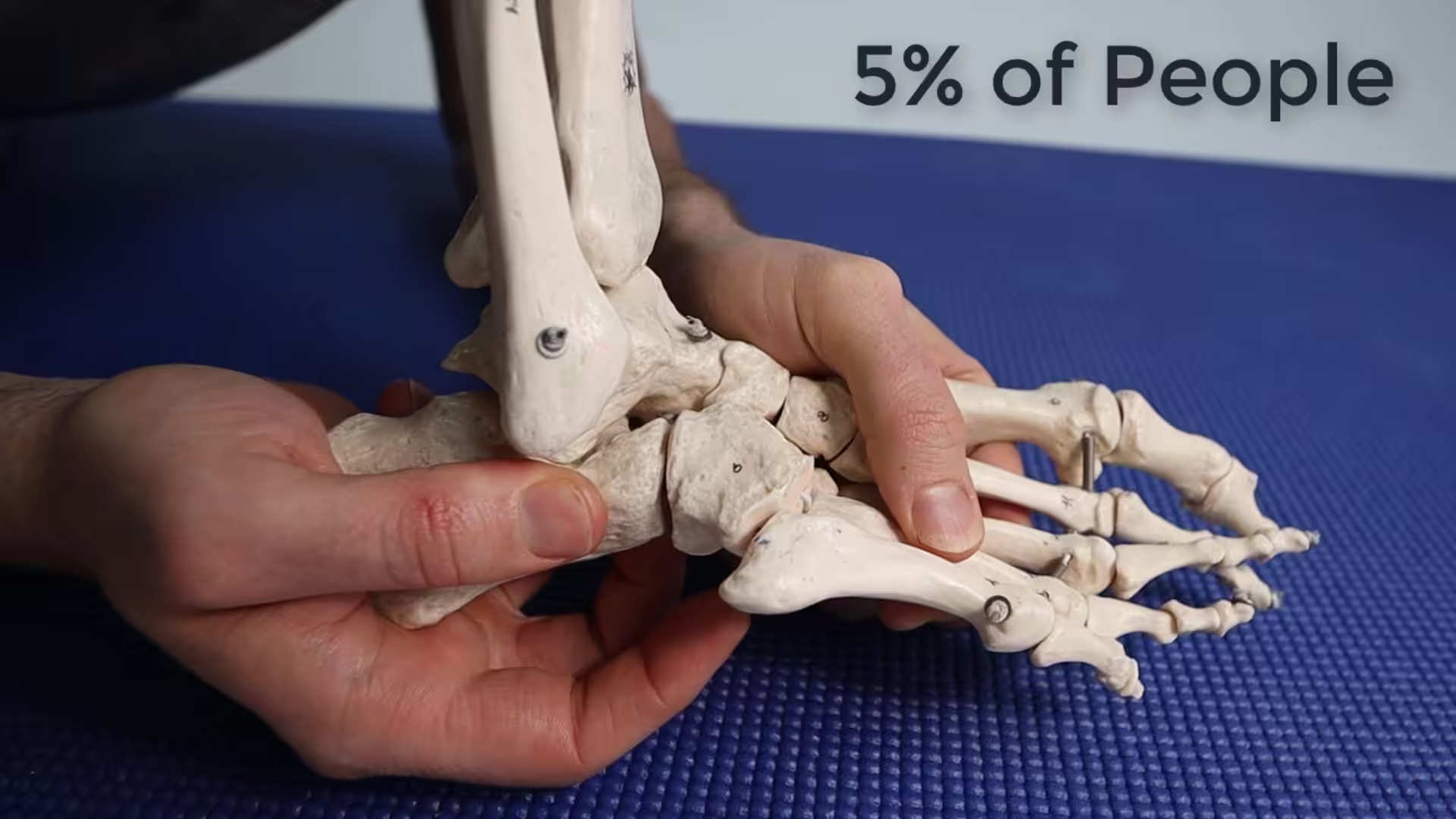
Cuboid syndrome is a subtle subluxation (partial displacement) of the cuboid bone—one of the tarsal bones on the outer midfoot—from its normal articulation with the calcaneus (heel bone) and the fourth and fifth metatarsals. It is a commonly missed diagnosis because its symptoms closely mimic lateral ankle sprain, and because even skilled clinicians may overlook a subtle plantar cuboid displacement on examination. It has been estimated to account for up to 4% of athletic foot injuries but is likely underdiagnosed due to lack of familiarity with the condition among non-specialist practitioners.
Causes and Mechanism
Cuboid syndrome develops when the peroneus longus tendon—which wraps around the plantar cuboid as it passes to its insertion on the first metatarsal and medial cuneiform—produces a tractional force that subluxes the cuboid in a plantar-medial direction. Mechanisms include acute inversion ankle sprains (the most common precipitant), repetitive loading in ballet dancers and distance runners (from repeated forced plantarflexion and pronation), and overuse loading in flat-footed individuals whose prolonged pronation produces chronic peroneus longus tension on the cuboid. The result is a subtle but painful cuboid displacement that impairs the smooth articulation of the lateral column of the foot.
Symptoms and Diagnosis
The classic presentation is lateral midfoot pain located specifically over the cuboid bone—more anterior and inferior than typical lateral ankle ligament pain. The pain worsens with weight-bearing and activity and may have an acute onset following an ankle sprain or insidious onset in overuse cases. A characteristic finding is detailed tenderness on direct plantar palpation of the cuboid, reproduced when the examiner presses upward on the plantar cuboid while the foot is stabilized. X-rays are typically normal (the subtle subluxation is below X-ray resolution), though MRI may demonstrate edema around the cuboid and calcaneocuboid joint.
The Cuboid Whip and Cuboid Squeeze Manipulation
The definitive treatment for acute cuboid syndrome is a specific manual manipulation technique performed by an experienced podiatrist, osteopath, or physical therapist. The “cuboid whip” manipulation applies a high-velocity, low-amplitude thrust to plantar-flex and evert the foot while applying dorsal pressure to the cuboid—relocating the subluxed bone to its normal position with a characteristic “pop.” Many patients experience immediate dramatic pain relief following successful manipulation. The “cuboid squeeze” technique uses bilateral thumb pressure on the plantar cuboid while the foot is plantarflexed and everted—an alternative for patients or practitioners who prefer a less forceful approach. Post-manipulation cuboid pad placement—a small felt pad beneath the cuboid—maintains the correction and prevents early recurrence.
Recurrence Prevention
Recurrent cuboid syndrome is common without addressing the underlying biomechanical cause. Custom orthotics with a cuboid pad or lateral column support prevent the excessive pronation that promotes recurrent subluxation. Peroneus longus strengthening exercises reduce the tractional force on the cuboid. Ankle sprain rehabilitation focusing on peroneal proprioception and strength addresses the most common acute precipitant. Most patients remain symptom-free with appropriate orthotic support and targeted rehabilitation following successful reduction.
Ready to Relieve Your Foot Pain?
Board-certified podiatrists serving Southeast Michigan. Same-week appointments available.
Expert Foot & Ankle Care in Michigan
Whether dealing with chronic pain or an acute injury, Dr. Tom Biernacki delivers evidence-based podiatric care at Balance Foot & Ankle, with offices in Howell and Bloomfield Township serving all of Southeast Michigan.
View All Treatment Options | Book Your Appointment | Call (810) 206-1402
Clinical References
- Dunn JE, et al. “Prevalence of foot and ankle conditions in a multiethnic community sample of older adults.” Am J Epidemiol. 2004;159(5):491-498.
- Garrow AP, et al. “The grading of hallux valgus: the Manchester Scale.” J Am Podiatr Med Assoc. 2001;91(2):74-78.
- Menz HB, et al. “Foot pain in community-dwelling older people: an evaluation of the Manchester Foot Pain and Disability Index.” Rheumatology. 2006;45(7):863-867.
Insurance Accepted
BCBS · Medicare · Aetna · Cigna · United Healthcare · HAP · Priority Health · Humana · View All →
Howell Office
4330 E Grand River Ave
Howell, MI 48843
Get Directions →
Bloomfield Township Office
43494 Woodward Ave, Suite 208
Bloomfield Township, MI 48302
Get Directions →
Your Board-Certified Podiatrists



Ready to Get Back on Your Feet?
Same-week appointments available at both locations.
Book Your AppointmentMore Podiatrist-Recommended Foot Health Essentials
Top-Rated Arch Support Insole
Universal podiatrist-recommended insert for pain relief and prevention.
Foot Massage Ball
Daily 3-minute roll reduces most forms of foot and heel pain.
Moisture-Wicking Sock
Prevents fungus, blisters, and odor — the basics matter.
As an Amazon Associate, Balance Foot & Ankle earns from qualifying purchases. Product recommendations are based on clinical experience; prices and availability shown above update live from Amazon.

Watch: How to Cure Plantar Fasciitis in One Week? [FAST Heel Pain Relief!] — MichiganFootDoctors YouTube
When to See a Podiatrist
If foot or ankle pain has been bothering you for more than a few weeks, home care alone may not be enough. Balance Foot & Ankle offers same-week appointments at our Howell and Bloomfield Township clinics — no referral needed in most cases. Bring your current shoes and a short list of symptoms and we’ll build you a treatment plan in one visit.
Call Balance Foot & Ankle: (810) 206-1402 · Book online · Offices in Howell & Bloomfield Township
Differential Diagnosis: What Else Could It Be?
Not every case of cuboid syndrome is straightforward. In our clinic we routinely rule out three look-alike conditions before confirming the diagnosis. If your symptoms don’t match the classic presentation, one of these may explain the pain — which is why physical exam matters more than self-diagnosis.
| Condition | How It Differs |
|---|---|
| Peroneal tendonitis | Pain proximal along the tendon course rather than deep at the cuboid. |
| Midfoot sprain | Diffuse dorsal pain, not lateral midfoot; tenderness varies by ligament involved. |
| Stress fracture of cuboid | Confirmed on MRI; mechanical symptoms do not respond to manipulation. |
Red Flags — When to See a Podiatrist Now
Seek same-day evaluation at Balance Foot & Ankle if you notice any of the following:
- Mechanical locking or popping in the lateral midfoot
- Inability to bear weight on lateral column
- Failure to respond to cuboid whip/squeeze manipulation
- History of frequent ankle sprains plus lateral midfoot pain
Call (810) 206-1402 or request an appointment. Our Howell and Bloomfield Township offices reserve same-day slots for urgent foot and ankle issues.
In Our Clinic: What We See
Clinical perspective from Dr. Tom Biernacki, DPM — Balance Foot & Ankle, Howell & Bloomfield Township, MI:
Cuboid syndrome is the lateral-midfoot pain that lingers after an ankle sprain. The patient says the pain moved from the outside of the ankle to the top or outside of the midfoot. In our clinic, cuboid whip or cuboid squeeze manipulation can relieve pain within a single visit when the diagnosis is correct. We tape the cuboid, add a cuboid pad inside the shoe, and progress to strengthening of the peroneus longus. Dr. Biernacki emphasizes: if lateral foot pain doesn’t respond within 2-3 visits, we image — sometimes what looks like cuboid syndrome is really a subtle Jones or cuboid stress fracture.
In-Office Treatment at Balance Foot & Ankle
If home treatment isn’t providing relief for your metatarsalgia, our podiatry team at Balance Foot & Ankle can help with same-week evaluations and advanced in-office care.
Same-week appointments available. (810) 206-1402
Doctor Hoy’s Natural Pain Relief Gel
Natural topical pain relief I use in our clinic. Arnica + camphor formula — apply directly to the area 3–4x daily. ($20–25)
Shop Doctor Hoy’s →Frequently Asked Questions
How long does treatment take to work?
Most patients see improvement in 4-8 weeks with consistent conservative care. Persistent symptoms after 8 weeks need imaging and escalation.
When is surgery needed?
Surgery is reserved for cases that fail 3-6 months of conservative care, structural deformities, or fractures requiring stabilization.
Is this covered by insurance?
Most diagnostic visits and conservative treatments are covered by Medicare and major insurers. Custom orthotics often require diabetic or post-surgical justification.
What is Foot pain?
Foot pain is a common foot/ankle condition that affects mobility and quality of life. Understanding the underlying cause is the first step in successful treatment. Our podiatrists at Balance Foot & Ankle perform a hands-on biomechanical exam, review your activity history, and use diagnostic imaging when appropriate to identify the root cause—not just treat the symptom. Many patients have been told to “rest and ice” without a deeper diagnostic workup; our approach is different.
Symptoms and warning signs
Common signs of foot pain include pain that worsens with activity, morning stiffness, swelling, tenderness when palpated, and difficulty bearing weight. If you experience sudden severe pain, inability to walk, visible deformity, numbness or color change, contact our office the same day or visit urgent care—these can signal a more serious injury such as a fracture, tendon rupture, or vascular compromise. Diabetics with any foot wound should seek same-day care.
Conservative treatment options
Most cases of foot pain respond to non-surgical care: structured rest, supportive footwear changes, custom orthotics, targeted stretching and strengthening protocols, anti-inflammatory medications when medically appropriate, and in-office procedures such as ultrasound-guided injections. We also offer advanced therapies including laser therapy, EPAT/shockwave, regenerative injections, and image-guided procedures. Treatment is sequenced from least invasive to most invasive, and we explain the rationale at every step.
When is surgery considered?
Surgery is reserved for cases that fail 3-6 months of well-structured conservative care, when there is structural pathology (severe deformity, complete tear, advanced arthritis), or when imaging shows damage that will not heal without intervention. Our surgeons have performed 3,000+ foot and ankle procedures and prioritize minimally-invasive techniques whenever appropriate. We discuss recovery timelines, return-to-activity milestones, and realistic outcome expectations before any procedure is scheduled.
Recovery timeline and prevention
Recovery from foot pain varies based on severity and chosen treatment path. Conservative cases often improve within 4-8 weeks with consistent adherence to the protocol. Post-procedural recovery may range from a few days (in-office procedures) to several months (reconstructive surgery). Long-term prevention involves footwear assessment, activity modification, structured strengthening, and regular check-ins with your podiatrist if you have a history of recurrence. We provide written home-exercise plans and digital follow-up support.
Ready to feel better?
Same-week appointments available in Howell and Bloomfield Township, Michigan.
Book Your Visit
Dr. Tom Biernacki, DPM is a board-certified foot & ankle surgeon (ABFAS & ABPM) at Balance Foot & Ankle Specialists in Southeast Michigan. With over a decade of clinical experience, he specializes in heel pain, bunions, diabetic foot care, sports injuries, and minimally invasive surgery. Dr. Biernacki is a member of the APMA and ACFAS, and his patient education content on MichiganFootDoctors.com and YouTube has made him one of the most-followed foot & ankle educators on YouTube.