
The most important clinical decision with Flip Flops Bad For Feet Podiatrist Advice isn't which treatment to start with — it's which subtype or underlying cause you actually have. Our podiatrists regularly see patients who've been treated for months for the wrong diagnosis. The correct identification changes the entire treatment path. Call (810) 206-1402 — Dr. Tom evaluates this condition at both Howell and Bloomfield Township locations.

Medically reviewed by Dr. Tom Biernacki, DPM · Board-Certified Podiatric Surgeon · Last reviewed: April 2026 · Editorial Policy
Medically reviewed by Dr. Tom Biernacki, DPM — Board-Certified Podiatric Surgeon — Balance Foot & Ankle, Howell & Bloomfield Township, MI. Last updated April 2026.
Medically Reviewed by Dr. Tom Biernacki, DPM — Board-Certified Podiatrist, Balance Foot & Ankle Specialists, Michigan. Last updated April 2026.
Flip flops are the most popular summer footwear in the United States — and one of the most common topics podiatrists discuss with patients. The short answer to “are flip flops bad for your feet?” is: it depends on the flip flop, how long you wear them, and what foot type you have. Here’s what the research and clinical experience show.
The most important clinical decision with Flip Flops Bad For Feet Podiatrist Advice isn’t which treatment to start with — it’s identifying the correct subtype. That changes everything. Call (810) 206-1402.
The most important clinical decision with Flip Flops Bad For Feet Podiatrist Advice isn’t which treatment to start with — it’s identifying the correct subtype. That changes everything. Call (810) 206-1402.
The Problems with Standard Flat Flip Flops
Medically reviewed by Dr. Tom Biernacki, DPM
Board-certified podiatric surgeon | Balance Foot & Ankle
Last reviewed: May 2026
Standard thin flat flip flops (the kind sold for $5 at drugstores) lack virtually every feature that protects the foot:
- Zero arch support — the flat platform provides no arch support, forcing plantar fascia and intrinsic foot muscles to work harder with every step
- No heel cushioning — direct ground impact without padding significantly increases heel loading forces
- Altered gait mechanics — to keep the flip flop from flying off, the toes grip and claw with each step, causing unnatural flexor muscle activation; this overuse pattern contributes to hammertoe progression and toe capsulitis
- No lateral stability — the open backless design provides no ankle support, increasing the risk of ankle sprains on uneven surfaces
- Forefoot overloading — EMG and pressure studies show significantly increased forefoot pressures in flat flip flops, contributing to metatarsalgia and plantar plate stress
Conditions Aggravated by Flip Flops
- Plantar fasciitis — the #1 flip flop complaint; flat, unsupported footwear dramatically worsens plantar fascia inflammation
- Achilles tendinopathy — reduced heel height in flip flops increases Achilles tendon tension
- Metatarsalgia — increased forefoot pressure loading
- Hammertoe progression — chronic toe gripping accelerates flexor contracture
- Ankle sprains — lateral instability on uneven ground
- Stress fractures — excessive impact without cushioning, especially in runners who transition to flip flops
Are All Sandals and Flip Flops Equally Bad?
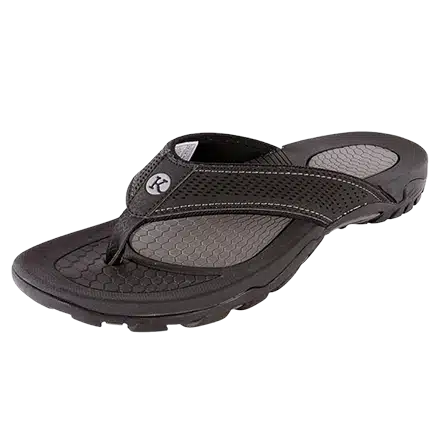
No — and this is the nuanced answer. Supportive sandals with contoured arch support, a cupped heel, and a firm midsole can be perfectly appropriate footwear for short-to-moderate duration wear, even for patients with foot conditions. The key features to look for in a healthy sandal include: a contoured footbed with arch support, heel cup for rear foot stability, firm (not floppy) midsole, and a backstrap that holds the heel securely.
How Long Is “Too Long” in Flip Flops?
Even supportive sandals become problematic with extended wear. For casual short-duration use (pool to lounge chair, beach walks), most people can wear good-quality sandals without consequence. Problems arise when flip flops are worn for extended walking (shopping, theme parks, travel), prolonged standing, or any athletic activity. A general guideline: over 30–45 minutes of active walking in flat flip flops will increase foot stress for most people, and people with flat feet, plantar fasciitis, or diabetes should avoid them entirely for extended wear.
What Should You Wear Instead?
For summer footwear, look for supportive sandals from brands known for podiatric support: Birkenstock (contoured cork footbed), OOFOS (OOahh or OOriginal for recovery), Vionic (built-in orthotic footbed), New Balance sandals, or custom orthotic-compatible sandals with a removable insole. If you have plantar fasciitis or other active foot conditions, discuss your summer footwear with Dr. Biernacki at Balance Foot & Ankle before the flip flop season starts.
Foot Pain After Summer? We Can Help.
Dr. Biernacki at Balance Foot & Ankle treats plantar fasciitis, Achilles tendinopathy, and other conditions aggravated by footwear choices. Serving Howell, Brighton, Bloomfield Township, and SE Michigan.
or call (810) 206-1402
📧 Get Dr. Tom’s Free Lab Test Guide
Discover the 5 lab tests every person over 35 should ask their doctor about — explained in plain English by a board-certified physician.
📍 Located in Michigan?
Our board-certified podiatrists treat this condition at two convenient locations. Same-day appointments often available.
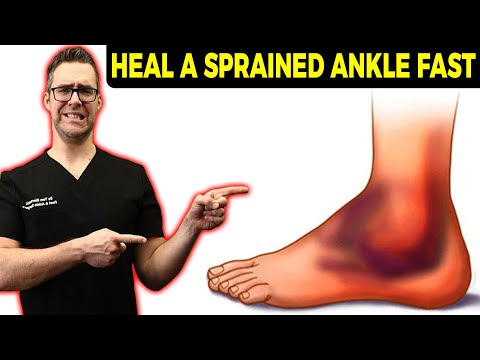
Watch: Dr. Tom explains
Podiatrist-recommended products
As an Amazon Associate, Dr. Tom earns from qualifying purchases.
Support alternative
Arch fatigue relief
PF recovery
Post-summer icing
Related resources
Ready to solve this? Book today.
Same-week appointments · Howell & Bloomfield Township · 4.9★ (1,123+ reviews)
More Podiatrist-Recommended Foot Health Essentials
Hoka Clifton 10

Max-cushion everyday shoe — podiatrist favorite for walking and running.

OOFOS Recovery Slide

Impact-absorbing recovery sandal — wear after long days on your feet.
As an Amazon Associate, Balance Foot & Ankle earns from qualifying purchases. Product recommendations are based on clinical experience; prices and availability shown above update live from Amazon.
When to See a Podiatrist
If foot or ankle pain has been bothering you for more than a few weeks, home care alone may not be enough. Balance Foot & Ankle offers same-week appointments at our Howell and Bloomfield Township clinics — no referral needed in most cases. Bring your current shoes and a short list of symptoms and we’ll build you a treatment plan in one visit.
Call Balance Foot & Ankle: (810) 206-1402 · Book online · Offices in Howell & Bloomfield Township
Pros & Cons of Conservative Care for foot care
Advantages
- ✓ Conservative care first
- ✓ Same-week appointments
- ✓ Multiple insurance accepted
Considerations
- ✗ Self-treatment can mask issues
- ✗ See a podiatrist if pain >2 weeks
Dr. Tom’s Recommended Products for foot care
Affiliate disclosure: As an Amazon Associate, Balance Foot & Ankle earns from qualifying purchases. We only recommend products we use with patients.
Footnanny Heel Cream Dr. Tom’s Pick
Best for: Daily moisturizer for cracked heels
Ready to Get Back on Your Feet?
Same-day appointments in Howell + Bloomfield Township. Most insurance accepted. Dr. Tom Biernacki, DPM & team.
Book Today — Same-Day Appointments Available
Call Now: (810) 206-1402
About Your Care Team at Balance Foot & Ankle
Dr. Tom Biernacki, DPM · Board-Certified Foot & Ankle Surgeon. Specializes in conservative-first care, minimally invasive bunion surgery, and complex reconstruction.
Dr. Carl Jay, DPM · Accepting new patients. Specializes in sports medicine, athletic injuries, and routine podiatric care.
Dr. Daria Gutkin, DPM, AACFAS · Accepting new patients. Specializes in surgical reconstruction and pediatric podiatry.
Locations: 4330 E Grand River Ave, Howell, MI 48843 · 43494 Woodward Ave Suite 208, Bloomfield Township, MI 48302
Hours: Mon–Fri 8:00 AM – 5:00 PM · (810) 206-1402
Visit Balance Foot & Ankle — Same-Day Appointments Available
Our podiatry team serves patients throughout Michigan including Howell, Brighton, and Bloomfield Township. If you’re dealing with heel pain, ingrown toenails, or a foot injury, we have same-day appointment availability.
Frequently Asked Questions
When should I see a podiatrist?
If symptoms persist past 2 weeks, affect your normal activity, or are accompanied by red-flag symptoms (warmth, redness, swelling, inability to bear weight).
What does treatment cost?
Most diagnostic visits and conservative treatments are covered by Medicare and major insurers. Out-of-pocket costs vary by your specific plan.
How quickly can I get an appointment?
Most non-urgent cases see us within 5 business days. Urgent cases (sudden pain, possible fracture) typically same or next business day.
Ready to Get Relief?
Same-day appointments available in Howell & Bloomfield Township, MI
4.9★ | 1,123 Reviews | 3,000+ Surgeries
Or call: (810) 206-1402

Dr. Tom Biernacki, DPM is a double board-certified podiatrist and foot & ankle surgeon at Balance Foot & Ankle Specialists in Southeast Michigan. With over a decade of clinical experience, he specializes in heel pain, bunions, diabetic foot care, sports injuries, and minimally invasive surgery. Dr. Biernacki is a member of the APMA and ACFAS, and his patient education content on MichiganFootDoctors.com and YouTube has reached over one million views.
- Plantar Fasciitis: Diagnosis and Conservative Management (PubMed)
- Plantar Fasciitis (APMA)
- Diagnosis and Treatment of Plantar Fasciitis (PubMed / AAFP)
- Heel Pain (APMA)
Dr. Tom Biernacki, DPM is a board-certified foot & ankle surgeon (ABFAS & ABPM) at Balance Foot & Ankle Specialists in Southeast Michigan. With over a decade of clinical experience, he specializes in heel pain, bunions, diabetic foot care, sports injuries, and minimally invasive surgery. Dr. Biernacki is a member of the APMA and ACFAS, and his patient education content on MichiganFootDoctors.com and YouTube has made him one of the most-followed foot & ankle educators on YouTube.