
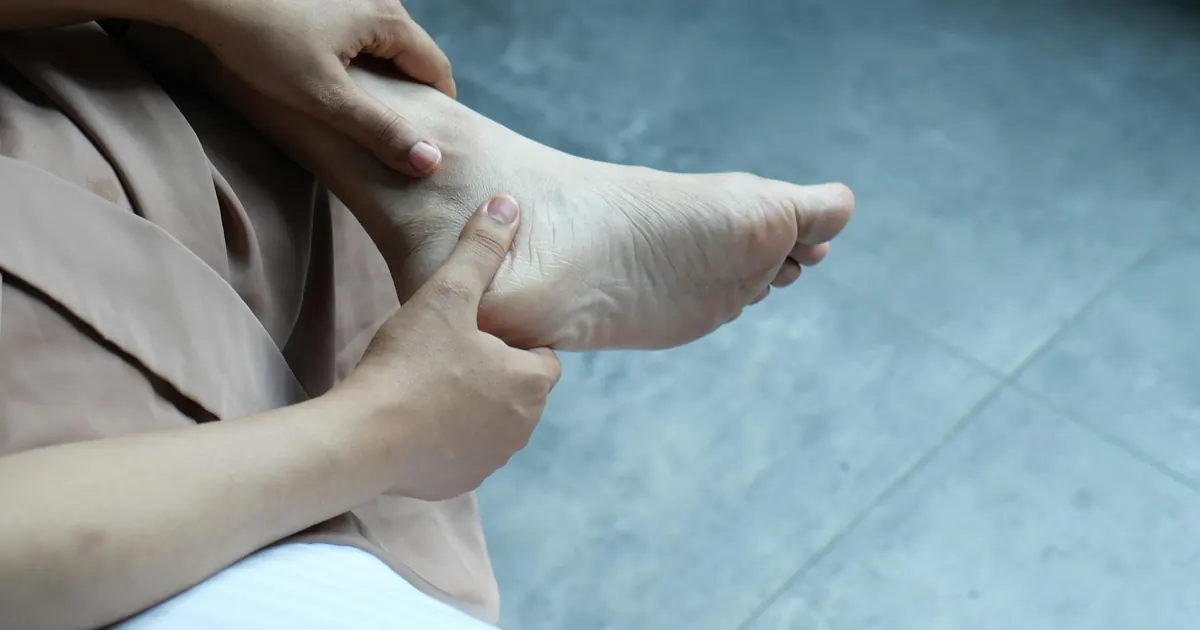
Quick Answer: Plantar fasciitis is the most common cause of heel pain, affecting 1 in 10 people. The plantar fascia — the thick band of tissue connecting your heel to your toes — develops microtears that cause sharp, stabbing pain, especially during your first steps in the morning. At Balance Foot & Ankle, 85%+ of patients resolve with conservative care within 6–12 weeks using custom orthotics, targeted stretching, and advanced therapies like MLS laser or shockwave. Call (810) 206-1402 for a same-week appointment in Howell or Bloomfield Hills.
Serving Oakland County: our Bloomfield Hills foot & ankle clinic offers same-week appointments for heel pain and plantar fasciitis.
In This Article
- What Is Plantar Fasciitis? Anatomy Explained
- Causes and Risk Factors for Plantar Fasciitis
- Plantar Fasciitis Symptoms and How We Diagnose It
- Conditions That Mimic Plantar Fasciitis
- Conservative Treatment for Plantar Fasciitis — Our Protocol
- When Surgery Is Considered — Plantar Fascia Release
- The Most Common Mistake: Resting and Waiting It Out
- Recovery Timeline and Long-Term Prevention
- Frequently Asked Questions — Plantar Fasciitis Michigan
- Sources & References

Board-Certified Podiatric Foot & Ankle Surgeon · Last reviewed: June 10, 2026
What Is Plantar Fasciitis? Anatomy Explained
Plantar fasciitis is inflammation of the plantar fascia — a thick, fibrous band of connective tissue that spans the entire bottom of your foot, from the heel bone (calcaneus) to the base of each toe. This structure acts as a dynamic shock absorber and tension cable that maintains your foot’s arch during every step. When repetitive stress exceeds the tissue’s ability to heal, microscopic tears accumulate at the fascial insertion on the heel, triggering the inflammatory cascade that causes plantar fasciitis.
The condition affects roughly 2 million Americans annually and accounts for over 10% of all running injuries. It’s the #1 reason patients visit our Michigan podiatry offices. Despite being extremely common, plantar fasciitis is frequently mismanaged — patients are told to “rest and ice” when the underlying biomechanical cause (overpronation, tight Achilles, poor arch support) is never addressed. That’s why 30% of untreated cases become chronic, lasting longer than 12 months.
Causes and Risk Factors for Plantar Fasciitis
Plantar fasciitis develops when the plantar fascia is placed under repeated tensile stress beyond its recovery capacity. Understanding your specific risk factors is what allows us to target treatment precisely rather than applying generic protocols. At Balance Foot & Ankle, every patient receives a hands-on biomechanical exam, gait analysis, and targeted history review to identify their root cause.
The most common causes and risk factors we identify in our Michigan patients include: flat feet or fallen arches (which redistribute load onto the plantar fascia), high arches (which create excessive tensile stress at the heel insertion), tight Achilles tendons and calf muscles (which mechanically overload the fascia through the kinetic chain), sudden increases in training volume or intensity (the most common trigger in runners and active patients), prolonged standing on hard surfaces (teachers, healthcare workers, and factory workers are high-risk groups), unsupportive footwear (flat dress shoes, flip-flops, worn-out sneakers), obesity or rapid weight gain (which dramatically increases fascial tensile load), and age-related fat pad atrophy (the heel’s natural cushioning thins after age 40).
Plantar Fasciitis Symptoms and How We Diagnose It
Quick Self-Check: Could This Be Plantar Fasciitis?
Plantar fasciitis follows a recognizable pattern. The more of these that sound like you, the more likely it is:
- Sharp, stabbing heel pain with your first steps in the morning
- Pain that eases after 5–10 minutes of walking, then returns after you stand a while
- Tenderness on the inner edge of the heel when you press it
- Worse after sitting, driving, or getting up from rest
- Started after a change in activity, footwear, weight, or long hours on your feet
Three or more sound familiar? That pattern is classic plantar fasciitis — and the earlier it is treated, the faster it resolves. Pain at rest or at night, numbness or tingling, or pain that worsens the longer you stand points to a different problem (see the look-alikes below) and deserves a hands-on exam.
Call (810) 206-1402 for a same-week evaluation in Howell or Bloomfield Hills.
The hallmark symptom of plantar fasciitis is a sharp, stabbing pain in the heel — most severe with the first few steps in the morning, after prolonged sitting, or at the start of exercise. This “post-static dyskinesia” pattern is pathognomonic: pain that’s worst after rest, improves with walking, then worsens again after extended activity. The pain is typically localized to the medial (inner) aspect of the heel, directly where the plantar fascia inserts onto the calcaneus.
At Balance Foot & Ankle, diagnosis begins with a detailed clinical examination. We palpate the medial calcaneal tubercle for point tenderness, perform the Windlass Test (dorsiflexing the big toe to tension the fascia), assess ankle dorsiflexion range to detect Achilles tightness, and evaluate your gait pattern and foot structure. For most patients, clinical diagnosis is straightforward. When the presentation is atypical or conservative treatment fails, we use diagnostic ultrasound in-office to measure fascial thickness (normal <4mm; plantar fasciitis >4-5mm) and identify tears. X-rays are obtained to rule out calcaneal stress fractures or evaluate for heel spurs — though heel spurs alone rarely cause pain and are present in 70% of plantar fasciitis patients and 15% of the asymptomatic population.
⚠️ When Heel Pain Is NOT Plantar Fasciitis — See Us Immediately
- Sudden severe heel pain after a “pop” sensation — may indicate plantar fascia rupture or Achilles tendon rupture requiring urgent imaging.
- Heel pain with swelling, warmth, and redness — red flags for infection, inflammatory arthritis (gout, psoriatic arthritis, reactive arthritis), or calcaneal stress fracture.
- Numbness, tingling, or burning radiating from heel to toes — suggests nerve entrapment (Baxter’s nerve, tarsal tunnel syndrome) rather than fasciitis — a different diagnosis requiring different treatment.
- Heel pain that doesn’t follow the post-static pattern (i.e., hurts even at rest or at night) — may indicate bone tumors, stress fractures, or systemic disease.
- Any heel wound or skin breakdown in a diabetic patient — requires same-day evaluation regardless of severity.
Call (810) 206-1402 for same-day urgent appointments at our Howell or Bloomfield Hills offices.
Conditions That Mimic Plantar Fasciitis
Not all heel pain is plantar fasciitis. Four look-alikes account for most misdiagnoses we correct at Balance Foot & Ankle: Baxter’s nerve entrapment, calcaneal stress fracture, tarsal tunnel syndrome, and heel fat pad atrophy. Each has a different cause and a different treatment — which is why heel pain that fails “standard” plantar fasciitis care deserves a re-examination, not more of the same.
Baxter’s nerve entrapment causes burning or numbness on the inner heel rather than sharp mechanical pain, and it does not improve with stretching. Calcaneal stress fracture is the reverse pattern of plantar fasciitis: pain gets worse the longer you are on the foot and does not ease after warming up — a positive heel squeeze test sends us straight to imaging. Tarsal tunnel syndrome produces tingling or electric pain radiating into the sole, often worse at night. Heel fat pad atrophy causes central heel pain that is worst barefoot on hard floors, typically after age 60 as the heel’s natural cushion thins. A focused exam separates these in minutes — the Windlass test, palpation pattern, and a 30-second neurologic screen tell us which one we are treating.
| Condition | Pain pattern | The tell-tale difference |
|---|---|---|
| Plantar fasciitis | Sharp first-step pain at the inner heel; eases as you warm up | Improves after 5–10 minutes of walking |
| Baxter’s nerve entrapment | Burning or numbness on the inner heel | Does not improve with stretching |
| Calcaneal stress fracture | Worsens the longer you are on the foot | Positive heel-squeeze test → straight to imaging |
| Tarsal tunnel syndrome | Tingling/electric pain into the sole | Often worse at night; neurologic, not mechanical |
| Heel fat pad atrophy | Central heel pain, worst barefoot on hard floors | Typically after age 60 as the cushion thins |
Conservative Treatment for Plantar Fasciitis — Our Protocol
At Balance Foot & Ankle, our conservative plantar fasciitis protocol is sequenced from the highest-efficacy, lowest-risk interventions first. We don’t apply a one-size-fits-all approach — your treatment is built around your biomechanical profile, activity level, occupation, and how long you’ve been symptomatic. Most patients with acute plantar fasciitis (<3 months) resolve within 6–12 weeks with consistent conservative care.
Plantar Fasciitis Treatment Options at a Glance
| Treatment | Best for | Typical course | What to expect |
|---|---|---|---|
| OTC orthotics (e.g., PowerStep) | Mild–moderate, first-line | Daily wear, 4–6 week trial | ~$25–40; a smart bridge before custom |
| Custom prescription orthotics | Structural causes (flat/high arch) | ~6 weeks to fabricate & break in | 60–70% pain reduction; often partially insured |
| Targeted stretching & strengthening | Every patient | 2×/day for 8 weeks | Level 1 evidence; consistency is the #1 success factor |
| MLS laser therapy | Those who want to avoid cortisone | 6–8 sessions over 3–4 weeks | 85–90% satisfaction; no downtime, no injections |
| EPAT / shockwave | Chronic (3+ months), treatment-resistant | 3 weekly sessions | 70–80% lasting relief when other care failed |
| Ultrasound-guided cortisone | Severe/acute, faster relief needed | 1–2 injections per course (max) | Precisely placed; used sparingly |
| Endoscopic plantar fasciotomy (surgery) | Failed 6–12 months of care (<5% of patients) | 20–30 min outpatient; 6–8 week recovery | 90%+ achieve significant or complete relief |
Custom prescription orthotics are the cornerstone of our protocol for structural causes. Unlike over-the-counter insoles, custom orthotics are cast from a 3D scan of your individual foot and fabricated to correct your specific biomechanical faults — redistributing load away from the fascial insertion. Studies show custom orthotics reduce pain by 60–70% in patients with structural causes. We use Foundation Wellness orthotics; many insurance plans provide partial coverage for eligible diagnoses — we verify your benefits before your visit.
Targeted stretching and strengthening is prescribed at every initial visit. The Windlass stretch (toe dorsiflexion against a wall), plantar fascia-specific stretch (cross-leg heel pull), and eccentric calf protocol all have Level 1 evidence for plantar fasciitis. We provide illustrated handouts and video links so patients can do this correctly at home. Three sets of each, twice daily, consistently performed for 8 weeks — compliance is the #1 predictor of conservative success.
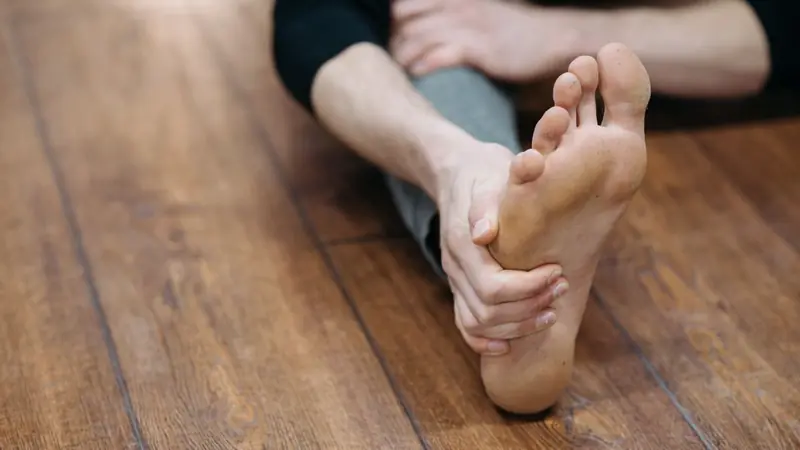
MLS laser therapy uses dual-wavelength laser energy to reduce inflammation, promote tissue repair, and provide analgesic effects at the cellular level. We offer the Class IV MLS M6 system — the most clinically studied laser for musculoskeletal conditions. Typical protocols: 6–8 sessions over 3–4 weeks. Studies show 85–90% patient satisfaction with significant pain reduction. No downtime, no injections. This is our preferred advanced therapy for patients who want to avoid cortisone.
EPAT/shockwave therapy (Extracorporeal Pulse Activation Technology) uses acoustic pressure waves to stimulate healing in chronic, recalcitrant plantar fasciitis. It’s FDA-cleared for plantar fasciitis and most effective for cases lasting 3+ months that haven’t responded to stretching or orthotics. Three weekly sessions typically produce lasting relief in 70–80% of previously treatment-resistant patients.
Ultrasound-guided cortisone injections are reserved for acute pain management in severe cases or when faster relief is needed. We use real-time ultrasound to place the injection precisely at the fascial insertion — avoiding blind injections, which carry higher risk of fat pad atrophy and fascia rupture with repeated use. We typically limit cortisone to 1–2 injections per course of care and combine them with the underlying biomechanical correction.
When Surgery Is Considered — Plantar Fascia Release
Surgery is reserved for cases that fail 6–12 months of well-structured, diversified conservative care. Less than 5% of plantar fasciitis patients require surgical intervention when properly managed. When surgery is indicated, Dr. Tom Biernacki, DPM, FACFAS performs endoscopic plantar fasciotomy — a minimally invasive procedure that partially releases the plantar fascia through two small portal incisions, under direct visualization via camera. The procedure is performed outpatient under local anesthesia, takes 20–30 minutes, and most patients are back in a surgical shoe the same day.
Recovery after endoscopic plantar fasciotomy typically follows a 6–8 week protocol: 2 weeks in a surgical shoe with limited weight-bearing, then progressive return to normal footwear and activity. Physical therapy is often incorporated at weeks 3–6 to restore calf strength and gait mechanics. Outcomes are excellent — 90%+ of surgical candidates achieve significant or complete pain relief. Dr. Biernacki has performed over 3,000 foot and ankle procedures and will explain realistic outcome expectations, activity restrictions, and return-to-sport timelines before any procedure is scheduled.
The Most Common Mistake: Resting and Waiting It Out
The single most common mistake we see in plantar fasciitis patients is complete rest — staying off the foot and waiting for the pain to pass. It feels logical, but it backfires: the fascia tightens during inactivity, so every return to standing re-tears the same fibers, and the underlying biomechanical cause keeps working against you the whole time. That cycle is how a 6-week problem becomes a 12-month one.
What works instead: keep moving in supportive shoes, stretch before your first steps out of bed, and address the root cause — arch mechanics, calf tightness, footwear — early. Patients who start structured treatment in the first three months resolve dramatically faster than those who arrive after a year of on-and-off resting. If your heel pain has already outlasted a month of “taking it easy,” that is the signal to stop waiting and get it examined.
Heel pain for more than a few weeks? That’s your cue.
Most plantar fasciitis improves with the right treatment plan — and the longer you wait, the longer recovery takes. Dr. Biernacki, Dr. Jay, and Dr. Gutkin treat it every day at Balance Foot & Ankle in Howell and Bloomfield Hills.
Recovery Timeline and Long-Term Prevention
Recovery from plantar fasciitis depends on duration, severity, and treatment path. For acute cases (<3 months): expect 80% pain reduction within 6–8 weeks with structured conservative care. For chronic cases (3–12 months): extended protocols of 12–16 weeks are typical, often incorporating shockwave or laser. For post-surgical patients: return to normal shoes at 4–6 weeks, light exercise at 6–8 weeks, unrestricted activity at 3–4 months.
| Your situation | Expected timeline | Typical approach |
|---|---|---|
| Acute (<3 months) | ~80% pain reduction in 6–8 weeks | Orthotics + daily stretching + activity adjustments |
| Chronic (3–12 months) | 12–16 weeks | Add shockwave (EPAT) or MLS laser |
| After surgery | Normal shoes 4–6 wks; light exercise 6–8 wks; full activity 3–4 months | Endoscopic release + physical therapy (weeks 3–6) |
Long-term prevention is the part most podiatrists skip — and the reason recurrence rates are high. At Balance Foot & Ankle, we provide every discharged plantar fasciitis patient with a written prevention plan covering: footwear guidelines by activity type (including the best dress shoes for plantar fasciitis for patients in business-dress workplaces), maintenance stretching protocol (2x/week lifelong), orthotic replacement schedule (every 2–3 years), and trigger avoidance (barefoot walking on hard floors, sudden training spikes, wearing worn-out shoes). Patients with structural causes (flat feet, high arches) are counseled that their risk is lifelong and managed, not cured — and that annual podiatric check-ins are part of smart foot health maintenance.
See also: Best Plantar Fasciitis Night Splint 2026 — podiatrist-ranked picks with clinical notes on who each splint fits.
Frequently Asked Questions — Plantar Fasciitis Michigan
How do I know if I have plantar fasciitis or just sore heels?
The signature pattern is sharp, stabbing heel pain with your first steps in the morning that improves after 5–10 minutes of walking, then worsens after prolonged activity. If your pain follows this post-static pattern and is localized to the inner heel, plantar fasciitis is the most likely diagnosis. Atypical presentations — pain at rest, at night, or radiating to the toes — warrant an in-person evaluation to rule out tarsal tunnel syndrome, stress fracture, or nerve entrapment.
How long does plantar fasciitis take to heal in Michigan weather?
Acute cases with proper treatment typically resolve in 6–12 weeks. Michigan’s colder months can slow recovery because cold temperatures increase tissue stiffness — we advise warm-up stretching before the first steps out of bed during winter. Chronic cases (>6 months) require more aggressive protocols and may take 4–6 months to fully resolve. Early treatment produces dramatically better outcomes than waiting.
Does walking on plantar fasciitis make it worse?
Complete rest is NOT recommended and often makes plantar fasciitis worse by allowing the fascia to tighten. Controlled, low-impact walking in supportive footwear helps maintain fascial extensibility. What worsens it: barefoot walking on hard surfaces, wearing flat shoes, walking on initial flare (first thing in the morning without warm-up stretches), and high-impact activities like running or jumping without correction. We tailor your activity modification to your occupation and lifestyle.
Does insurance cover plantar fasciitis treatment at Balance Foot & Ankle?
Yes — clinical evaluation, diagnostic imaging, injections, and most conservative treatments are covered by Medicare and major insurance plans we accept (BCBS, Aetna, Cigna, UHC, HAP, Priority Health). Custom orthotics have partial coverage for structural diagnoses. MLS laser and shockwave have varying coverage depending on your specific plan. We verify your benefits before your first appointment. Call (810) 206-1402 to confirm coverage.
Can plantar fasciitis come back after it heals?
Yes — recurrence rates are 30–50% within 5 years when the underlying structural cause isn’t corrected. Patients with flat feet, high arches, tight Achilles tendons, or demanding occupations are at highest lifetime risk. At Balance Foot & Ankle, we treat the root cause, not just the symptoms — and provide every patient with a personalized prevention plan to minimize recurrence risk long after discharge.
Where can I find plantar fasciitis treatment near me in Michigan?
Balance Foot & Ankle treats plantar fasciitis at 4330 E Grand River Ave, Howell, MI 48843 and 43494 Woodward Ave #208, Bloomfield Hills, MI 48302. First visits include a hands-on exam and, when indicated, in-office ultrasound — most patients start treatment the same day. Same-week appointments: (810) 206-1402, no referral needed.
Get Your Heel Pain Diagnosed — This Week
Dr. Tom Biernacki, DPM, FACFAS • Howell & Bloomfield Hills, MI • 4.9★ 1,123+ reviews • Most insurance accepted.
Heel pain is usually worst first thing in the morning — but the decision to finally fix it tends to happen at night. Online scheduling is open 24/7, so you can lock in a real appointment time the moment you decide.
Howell: 4330 E Grand River Ave · Bloomfield Hills: 43494 Woodward Ave #208
👟 Plantar Fasciitis Orthotics: My #1 OTC Recommendation
PowerStep Pinnacle orthotics are the most clinically effective OTC orthotics I’ve used in 15+ years of practice for plantar fasciitis. The semi-rigid shell controls rearfoot pronation (the primary mechanical driver of PF), the deep heel cup centralizes the fat pad, and the medial arch support reduces stress on the plantar fascia origin. Start with these before investing in custom orthotics — most mild-to-moderate PF cases respond well.
Shop PowerStep Pinnacle Orthotics → | ~$25–40
Affiliate disclosure: As an Amazon Associate and Foundation Wellness partner, we earn from qualifying purchases at no extra cost to you.
🧴 Topical Relief for Plantar Fascia Pain
Doctor Hoy’s Natural Pain Relief Gel applied to the heel and arch provides immediate relief for plantar fasciitis first-step pain — especially effective applied before bed and before morning activity. The menthol delivers cooling analgesia while arnica and MSM work topically on fascial inflammation. It’s a safe, non-systemic option for patients who can’t take oral NSAIDs or need additional pain management between EPAT sessions.
Shop Doctor Hoy’s Natural Pain Relief Gel → | ~$20–25
Affiliate disclosure: As an Amazon Associate and Foundation Wellness partner, we earn from qualifying purchases at no extra cost to you.
For footwear specifically, our podiatrists maintain a dedicated guide to the best shoes for plantar fasciitis, updated for 2026.
Keep Reading: Plantar Fasciitis Guides
- Plantar Fasciitis Causes: Why You Have Heel Pain
- Plantar Fasciitis Stretches: The Most Effective Exercises
- Best Shoes for Plantar Fasciitis
- Best Insoles for Plantar Fasciitis
- How to Tape Your Foot for Plantar Fasciitis
- Chronic Plantar Fasciitis: When It Won’t Go Away
- How to Prevent Plantar Fasciitis from Coming Back
- Will Plantar Fasciitis Heal on Its Own?
Sources & References
- Efficacy and tolerability of extracorporeal shock wave therapy in patients with plantar fasciopathy: a systematic review with meta-analysis and meta-regression — PMC, 2024.
- Role of Extracorporeal Shock Wave Therapy in Treatment of Plantar Fasciitis — PubMed, 2025.
- Management of Plantar Fasciitis in the Outpatient Setting — PMC / NIH.
Related reading: See how a foot roller can relieve plantar fasciitis, and our podiatrist’s picks for the best New Balance shoes for plantar fasciitis.
Looking for plantar fasciitis treatment near you? Balance Foot & Ankle treats plantar fasciitis and stubborn heel pain — custom orthotics, shockwave (EPAT) therapy, night splints, and regenerative injections — at our Bloomfield Hills office (Oakland County) and Howell office (Livingston County). Most patients improve without surgery. Book online or call (810) 206-1402.
Related foot & ankle guides
- High-arch foot: causes
- High-arch feet & pain
- Foot pronation explained
- Overpronation
- Foot bursitis
- Foot pain in cold weather
- Knee pain from your feet
- Frostbite toe treatment
Prefer we call you?
Leave your info and our team calls back within 2 hours, the same business day — to get you scheduled with a board-certified podiatrist at our Howell or Bloomfield Hills office. Same-week appointments; most insurance accepted, and we verify your benefits up front.
Plantar fasciitis slowing you down?
The right diagnosis and plan resolve most cases without surgery. In Michigan? our podiatrists build a plan that actually works. Same-week visits in Howell & Bloomfield Hills, most insurance accepted.
📅 Book Online — Howell → 📅 Book Online — Bloomfield Hills → 📞 (810) 206-1402★ 4.9 from 1,123+ Google reviews · Same-week visits · We verify your insurance free — most visits are just a copay.
Looking for plantar fasciitis treatment near me? Our board-certified podiatrists treat heel pain and plantar fasciitis every day at our Howell and Bloomfield Hills offices, serving Livingston and Oakland County. Same-week and same-day appointments are usually available — request an appointment here.
Plantar fasciitis & heel pain treatment across Metro Detroit & Livingston County: we care for patients from Howell, Brighton, Novi, Bloomfield Hills, Birmingham, Troy, Rochester Hills, and Auburn Hills.
Men who prefer open footwear in warm weather can review our picks for the best mens sandals for plantar fasciitis, which pair deep heel cups and arch support with an adjustable fit.
Related: Still training with plantar fasciitis? See a podiatrist’s picks for the best cross-training shoes for plantar fasciitis.
Get treated locally: Balance Foot & Ankle offers same-week plantar fasciitis care at our Howell and Bloomfield Hills offices. Most insurance accepted — call (810) 206-1402.