
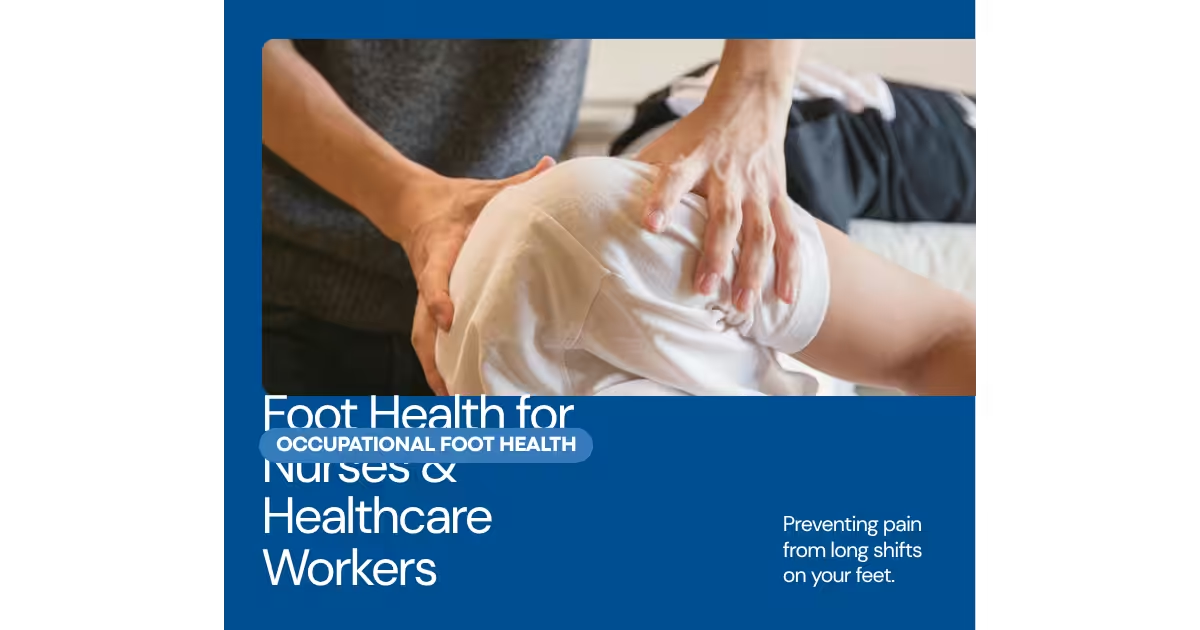

Quick answer: Foot Care Nurses Healthcare Workers 2 is a common foot/ankle topic that affects many patients. The 2026 evidence-based approach combines proper diagnosis, conservative-first treatment, and escalation only when needed. We treat this regularly at our Howell and Bloomfield Hills practices. Call (810) 206-1402.
Medically Reviewed by Dr. Tom Biernacki, DPM — Board-Certified Podiatrist, Balance Foot & Ankle Specialists, Michigan. Last updated April 2026.
The Healthcare Worker’s Foot Problem
Nurses, physicians, surgical technicians, and other healthcare workers spend 8–12 hours per shift on their feet, frequently on hard hospital floors with minimal sitting time. Research consistently documents that 40–80% of nurses report significant foot pain, with plantar fasciitis, metatarsalgia, and lower leg fatigue being the most prevalent conditions.
Foot pain in healthcare workers is not merely uncomfortable — it is a patient safety issue. Workers with foot pain demonstrate reduced attention, altered gait mechanics that increase fall risk, and higher rates of workday attrition and absenteeism. Addressing foot health in this population is a professional and occupational necessity.
Most Common Conditions in Healthcare Workers
Plantar Fasciitis
The combination of hard floors, long standing hours, and often inadequate footwear makes plantar fasciitis the leading foot complaint among nurses. Morning heel pain (worst with first steps after rest) is the hallmark, though healthcare workers often describe a second wave of pain that builds over a long shift as the fascia fatigues.
Metatarsalgia
Sustained standing loads the ball of the foot continuously. Hard linoleum and tile floors offer no cushioning. Healthcare workers frequently develop pain beneath the second and third metatarsal heads that progresses over the course of a shift and requires rest elevation to resolve.
Achilles Tendinopathy
Tight calves from sustained standing in flat or minimally elevated footwear, combined with high daily step counts, create cumulative Achilles stress. Healthcare workers may develop midportion Achilles pain that is worse at the start of shifts and eases with activity before returning as fatigue accumulates.
Edema and Venous Insufficiency
Prolonged standing reduces the calf muscle pump’s effectiveness, causing dependent edema (swelling) in the lower legs and feet. This is particularly pronounced in older workers or those with early venous insufficiency. Compression socks are among the most effective and accessible interventions available.
Footwear Recommendations
Footwear is the single highest-impact modifiable factor for healthcare worker foot health. Key features to prioritize:
- Cushioning midsole: Maximum forefoot and heel cushioning for all-day shock absorption on hard floors
- Arch support: Adequate medial arch structure to prevent fatigue flat foot during long shifts
- Wide toe box: Adequate toe room prevents forefoot compression and nerve irritation during prolonged wear
- Slip resistance: Hospital-grade slip-resistant outsole for safety on wet floors
- Lightweight construction: Heavier shoes increase muscle fatigue over a 12-hour shift
Brands commonly recommended by occupational health professionals for healthcare workers include Dansko, Clogs (Crocs Healthcare), Brooks, HOKA One One (Bondi and Clifton models), Nurse Mates, and Alegria. A trial period in new work shoes should occur on shorter shifts — don’t start a new shoe on a 12-hour shift.
Insoles and Custom Orthotics
Adding quality insoles to work shoes significantly improves foot comfort for most healthcare workers. OTC options like PowerStep Pinnacle and Powerstep provide meaningful arch support at low cost. Workers with plantar fasciitis, structural flat feet, or metatarsalgia that doesn’t respond to OTC insoles should consider custom orthotics — the investment pays for itself in reduced pain and fewer sick days within 6–12 months.
Recovery Strategies Between Shifts
Post-shift recovery matters as much as in-shift footwear. Effective recovery strategies include: elevation of the legs and feet for 20–30 minutes immediately after arriving home, plantar fascia and calf stretching before the first steps of each day, ice massage to the plantar fascia for 10 minutes if heel pain is present, and compression socks worn during the shift for edema management.
If foot pain persists despite optimized footwear and home strategies, a podiatric evaluation identifies the specific diagnosis and allows targeted treatment — rather than generic advice about better shoes.
Foot or Ankle Pain? We Can Help.
Balance Foot & Ankle — Howell & Bloomfield Township, MI
📅 Book Online
📞 (810) 206-1402
Insurance Accepted
BCBS · Medicare · Aetna · Cigna · United Healthcare · HAP · Priority Health · Humana · View All →
Howell Office
4330 E Grand River Ave
Howell, MI 48843
Get Directions →
Bloomfield Hills Office
43494 Woodward Ave, Suite 208
Bloomfield Hills, MI 48302
Get Directions →
Your Board-Certified Podiatrists



Ready to Get Back on Your Feet?
Same-week appointments available at both locations.
Book Your AppointmentMore Podiatrist-Recommended Foot Health Essentials
Hoka Clifton 10

Max-cushion everyday shoe — podiatrist favorite for walking and running.

OOFOS Recovery Slide

Impact-absorbing recovery sandal — wear after long days on your feet.
As an Amazon Associate, Balance Foot & Ankle earns from qualifying purchases. Product recommendations are based on clinical experience; prices and availability shown above update live from Amazon.
When to See a Podiatrist
If foot or ankle pain has been bothering you for more than a few weeks, home care alone may not be enough. Balance Foot & Ankle offers same-week appointments at our Howell and Bloomfield Hills clinics — no referral needed in most cases. Bring your current shoes and a short list of symptoms and we’ll build you a treatment plan in one visit.
Call Balance Foot & Ankle: (810) 206-1402 · Book online · Offices in Howell & Bloomfield Hills

Dr. Tom Biernacki, DPM is a board-certified foot & ankle surgeon (ABFAS & ABPM) at Balance Foot & Ankle Specialists in Southeast Michigan. With over a decade of clinical experience, he specializes in heel pain, bunions, diabetic foot care, sports injuries, and minimally invasive surgery. Dr. Biernacki is a member of the APMA and ACFAS, and his patient education content on MichiganFootDoctors.com and YouTube has made him one of the most-followed foot & ankle educators on YouTube.