
Quick answer: Foot Care Nurses Teachers Michigan has multiple potential causes including mechanical, neurological, vascular, and inflammatory. The patterns we see most often are overuse, poorly-fitted shoes, and biomechanical imbalance. Red flags requiring urgent evaluation: warmth/redness (infection), inability to bear weight (fracture), and unilateral swelling without injury (DVT). Book online, or call (810) 206-1402.
Medically reviewed by Dr. Tom Biernacki, DPM · Board-Certified Podiatric Surgeon · Last reviewed: April 2026 · Editorial Policy
Medically reviewed by Dr. Tom Biernacki, DPM — Board-Certified Podiatric Surgeon — Balance Foot & Ankle, Howell & Bloomfield Township, MI. Last updated April 2026.
▶ Watch
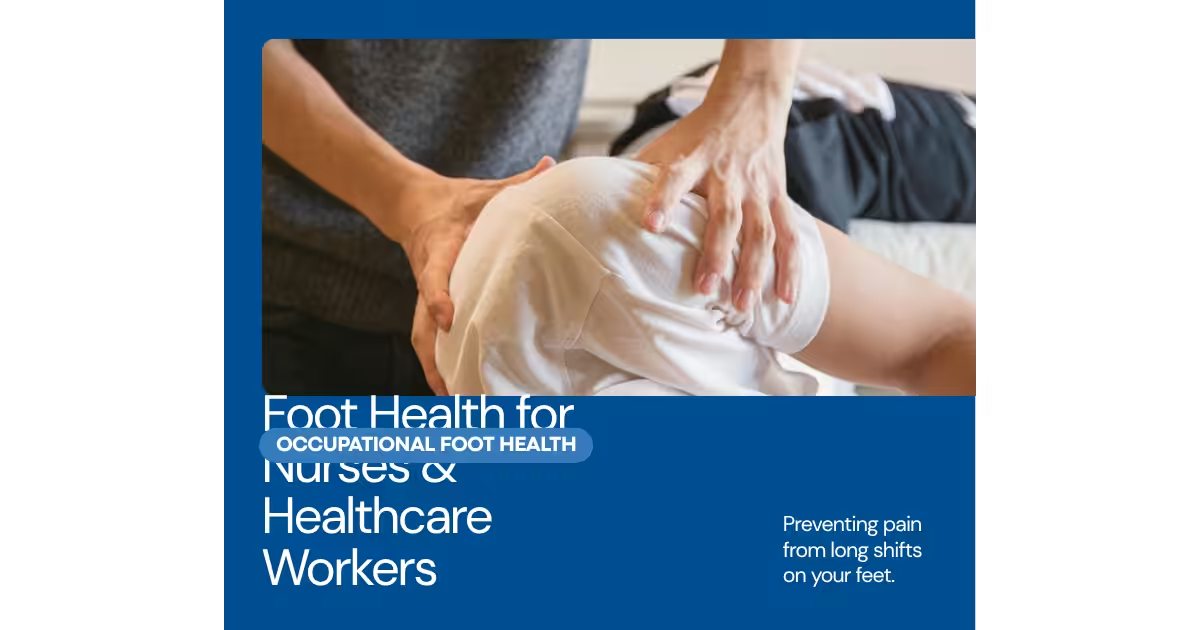
Nurses, teachers, retail workers, restaurant staff, factory workers, and many other professionals spend 8–12 hours daily on hard floors, often in footwear that prioritizes appearance or safety compliance over biomechanical support. This occupational loading significantly increases the risk of plantar fasciitis, metatarsalgia, Achilles tendinopathy, varicose veins, and ankle swelling. At Balance Foot & Ankle in Southeast Michigan, Dr. Tom Biernacki treats these profession-specific foot problems and helps working patients stay on their feet comfortably.
Common Foot Problems in People Who Stand All Day
Plantar fasciitis is by far the most common condition — the repetitive loading of extended standing inflames the plantar fascia, particularly at the heel. Ball-of-foot pain (metatarsalgia) develops from prolonged pressure over the metatarsal heads, especially in nurses and teachers who also wear low-cushioned shoes. Achilles tendinopathy results from the accumulated stress of long days without adequate rest or eccentric strengthening. Ankle swelling (dependent edema from prolonged standing and venous pooling) is extremely common in any standing profession and worsens throughout the workday. Bunions and hammertoes are aggravated by narrow work shoes and hours of forefoot loading. Stress fractures can develop in nurses and teachers who suddenly increase activity (e.g., covering extra shifts during staffing shortages).
Footwear for Working Professionals
The most impactful intervention for occupational foot pain is footwear optimization. Key features: a supportive midsole (EVA or polyurethane, not pure foam) that retains cushioning after a full shift; a wide toe box to prevent forefoot compression; a firm heel counter; removable insoles for custom orthotic insertion; and slip-resistant outsoles for hospital and restaurant environments. Top-performing work shoe brands include Dansko (clogs — excellent midfoot support, popular in nursing), New Balance work series, Brooks Addiction Walker, HOKA Bondi (maximum cushion), Skechers Work series, and Merrell Jungle Moc. Shoes should be replaced every 300–500 miles of walking or every 6–12 months in high-use professions.
Treatment & Prevention Strategies
Custom orthotics are one of the highest-yield interventions for professionals who stand all day. A prescription custom orthotic addresses the individual’s foot type, weight, and specific pressure points in a way that off-the-shelf insoles cannot. Graduated compression socks (15–20 mmHg for prevention, 20–30 mmHg for existing edema) dramatically reduce ankle swelling over a long shift. Morning plantar fascia and calf stretching before the first step of the day significantly reduces the startup pain characteristic of plantar fasciitis. Anti-fatigue mats at standing workstations reduce ground reaction forces. Alternating shoe styles throughout the week (different heel heights and flex points) reduces repetitive stress on a single anatomic location.
More Podiatrist-Recommended Foot Health Essentials
Hoka Clifton 10


Max-cushion everyday shoe — podiatrist favorite for walking and running.

OOFOS Recovery Slide

Impact-absorbing recovery sandal — wear after long days on your feet.
As an Amazon Associate, Balance Foot & Ankle earns from qualifying purchases. Product recommendations are based on clinical experience; prices and availability shown above update live from Amazon.
When to See a Podiatrist
If foot or ankle pain has been bothering you for more than a few weeks, home care alone may not be enough. Balance Foot & Ankle offers same-week appointments at our Howell and Bloomfield Township clinics — no referral needed in most cases. Bring your current shoes and a short list of symptoms and we’ll build you a treatment plan in one visit.
Call Balance Foot & Ankle: (810) 206-1402 · Book online · Offices in Howell & Bloomfield Township
Frequently Asked Questions
What are the best shoes for nurses with plantar fasciitis?
Nurses with plantar fasciitis do best in shoes with firm arch support, a slightly elevated heel (1–1.5 inches) to reduce plantar fascia tension, and good cushioning — combined with a custom orthotic. Top choices include Dansko Professional (removable footbed allows orthotic use), New Balance 990, HOKA Bondi, and Brooks Addiction Walker. A podiatrist’s prescription for a custom orthotic is often covered by insurance.
Can I get workers’ comp for foot pain from standing at work?
In Michigan, workers’ compensation covers occupational injuries and conditions caused or aggravated by work duties. Plantar fasciitis, stress fractures, and other conditions caused by the demands of a job may qualify. Dr. Biernacki is experienced in documenting occupational foot conditions for workers’ compensation claims. Consult with an occupational medicine physician or workers’ comp attorney for case-specific guidance.
Why do my feet swell after every shift?
Dependent edema from prolonged standing is caused by venous and lymphatic pooling in the lower legs and feet. Compression stockings (20–30 mmHg) worn from the start of the shift are the most effective preventive measure. Elevating the feet for 15–20 minutes after a shift accelerates fluid redistribution. Persistent or unilateral swelling that does not resolve overnight warrants a medical evaluation to rule out venous insufficiency, lymphedema, or other systemic causes.
You spend your career caring for others — let us care for your feet. Contact Balance Foot & Ankle to schedule with Dr. Biernacki in Southeast Michigan for occupation-specific foot care.
🧦 Dr. Tom’s Pick: DASS Medical Compression Socks
📍 Located in Michigan?
Our board-certified podiatrists treat this condition at two convenient locations. Most new patients are seen the same week.
Medical-grade 15-20 mmHg graduated compression. DASS socks are the brand I recommend most to patients with swollen feet, poor circulation, and post-surgery recovery. Graduated compression means tightest at the ankle, gradually releasing up the leg — promoting upward venous blood flow.
View DASS Compression Socks on Amazon →Affiliate disclosure: As an Amazon Associate, Balance Foot & Ankle earns from qualifying purchases.
Join 950,000+ Learning About Foot Health
Dr. Tom shares honest medical advice, supplement reviews, and treatment guides you won’t find anywhere else.
Subscribe on YouTube →Medically Reviewed by: Dr. Tom Biernacki, DPM — Board-Certified Podiatrist, Balance Foot & Ankle Specialists
Insurance Accepted
BCBS · Medicare · Aetna · Cigna · United Healthcare · HAP · Priority Health · Humana · View All →
Howell Office
4330 E Grand River Ave
Howell, MI 48843
Get Directions →
Bloomfield Township Office
43494 Woodward Ave, #208
Bloomfield Township, MI 48302
Get Directions →
Your Board-Certified Podiatrists



Ready to Get Back on Your Feet?
Same-week appointments available at both locations.
Book Your AppointmentPros & Cons of Conservative Care for foot care
Advantages
- ✓ Conservative care first
- ✓ Same-week appointments
- ✓ Multiple insurance accepted
Considerations
- ✗ Self-treatment can mask issues
- ✗ See a podiatrist if pain >2 weeks
Dr. Tom’s Recommended Products for foot care
Affiliate disclosure: As an Amazon Associate, Balance Foot & Ankle earns from qualifying purchases. We only recommend products we use with patients.
Footnanny Heel Cream Dr. Tom’s Pick
Best for: Daily moisturizer for cracked heels
Ready to Get Back on Your Feet?
Same-week appointments in Howell + Bloomfield Township. Most insurance accepted. Dr. Tom Biernacki, DPM & team.
Book Today — Same-Week Appointments Available
Call Now: (810) 206-1402
About Your Care Team at Balance Foot & Ankle
Dr. Tom Biernacki, DPM · Board-Certified Foot & Ankle Surgeon. Specializes in conservative-first care, minimally invasive bunion surgery, and complex reconstruction.
Dr. Carl Jay, DPM · Accepting new patients. Specializes in sports medicine, athletic injuries, and routine podiatric care.
Dr. Daria Gutkin, DPM, AACFAS · Accepting new patients. Specializes in surgical reconstruction and pediatric podiatry.
Locations: 4330 E Grand River Ave, Howell, MI 48843 · 43494 Woodward Ave Suite 208, Bloomfield Township, MI 48302
Hours: Mon–Fri 8:00 AM – 5:00 PM · (810) 206-1402
Visit Balance Foot & Ankle — Same-Week Appointments Available
Our podiatry team serves patients throughout Michigan including Howell, Brighton, and Bloomfield Township. If you’re dealing with heel pain, ingrown toenails, or a foot injury, we have same-week appointment availability.
Same-week appointments available. (810) 206-1402
Doctor Hoy’s Natural Pain Relief Gel
Natural topical pain relief I use in our clinic. Arnica + camphor formula — apply directly to the area 3–4x daily. ($20–25)
Shop Doctor Hoy’s →Frequently Asked Questions
When should I see a doctor?
See a podiatrist if pain persists past 2 weeks, prevents normal activity, or is accompanied by red-flag symptoms (warmth, swelling, numbness, inability to bear weight).
Can I treat this at home?
Mild cases respond to RICE protocol (rest, ice, compression, elevation), supportive shoes, and OTC anti-inflammatories. Persistent symptoms need professional evaluation.
How long does it take to heal?
Most soft tissue injuries resolve in 2-6 weeks with appropriate care. Bone injuries take 6-12 weeks. Chronic conditions need longer-term management.
Our podiatrists treat the underlying cause, not just the symptom. Same-week appointments at our Howell and Bloomfield Township, Michigan offices.
Ready for Expert Care?
Same-week appointments in Howell & Bloomfield Township, MI.
4.9★ | 1,123 Reviews | 3,000+ Surgeries
Or call: (810) 206-1402

Dr. Tom Biernacki, DPM is a board-certified foot & ankle surgeon (ABFAS & ABPM) at Balance Foot & Ankle Specialists in Southeast Michigan. With over a decade of clinical experience, he specializes in heel pain, bunions, diabetic foot care, sports injuries, and minimally invasive surgery. Dr. Biernacki is a member of the APMA and ACFAS, and his patient education content on MichiganFootDoctors.com and YouTube has made him one of the most-followed foot & ankle educators on YouTube.