


Quick answer: Foot Care Retail Workers Standing All Day Hard Floors is a common foot/ankle topic that affects many patients. The 2026 evidence-based approach combines proper diagnosis, conservative-first treatment, and escalation only when needed. We treat this regularly at our Howell and Bloomfield Hills practices. Call (810) 206-1402.

Medically Reviewed by Dr. Tom Biernacki, DPM, FACFAS
Board-certified podiatrist & foot surgeon | Balance Foot & Ankle, Howell & Bloomfield Hills, MI | Last updated: May 2026
Retail workers who stand 6–10 hours per day on hard floors are at significantly elevated risk for plantar fasciitis, metatarsalgia, venous insufficiency, and chronic knee and back pain. The most effective interventions are anti-fatigue floor mats, supportive footwear with cushioned midsoles, compression socks, and custom orthotics. Most retail foot problems are preventable with the right footwear and a 10-minute daily stretch routine. Persistent pain warrants evaluation by a podiatrist — many workers treat avoidable conditions as an occupational inevitability.
Most Common Foot Problems in Retail Workers
Years of standing on concrete and tile accumulates damage that most retail workers attribute to “just part of the job.” In our practice, we see these conditions repeatedly in cashiers, warehouse staff, nurses, and floor associates — and the majority are preventable.
| Condition | Primary Cause | Key Symptom | First Fix |
|---|---|---|---|
| Plantar Fasciitis | Hard floors, inadequate arch support | Heel pain first steps of the day | Supportive shoes + calf stretching |
| Metatarsalgia | Prolonged forefoot loading, thin soles | Burning ball-of-foot pain by end of shift | Metatarsal pad + cushioned insole |
| Varicose Veins / Edema | Prolonged static standing, poor venous return | Leg heaviness, ankle swelling end of shift | Compression socks 15–20 mmHg |
| Posterior Tibial Tendinitis | Overpronation, unsupportive footwear | Medial ankle pain, arch fatigue | Motion-control shoes + orthotics |
| Morton’s Neuroma | Narrow footwear, forefoot compression | Electric shock sensation between toes | Wide toe box shoes, metatarsal pad |
Prevention and Treatment for Retail Workers
Dr. Biernacki works with many healthcare and retail workers to build sustainable foot care routines that prevent injury and keep them working pain-free. The interventions that make the biggest difference don’t require time off work.
No products found.
- Footwear selection: Choose shoes with a cushioned EVA or polyurethane midsole, a wide toe box, and a firm heel counter. Replace work shoes every 6–8 months — midsoles compress and lose 40% of their shock absorption well before the upper shows visible wear.
- Compression socks: Graduated compression socks (15–20 mmHg for prevention, 20–30 mmHg for existing edema or varicosities) worn during shifts dramatically reduce end-of-day swelling, fatigue, and long-term venous damage. Knee-high length is most effective.
- Anti-fatigue mats: If you have any control over your workstation, anti-fatigue mats with a 3/4-inch compressed foam or gel layer reduce ground reaction forces by 25–35% compared to bare concrete or tile. A meaningful difference over a 40-hour week.
- Custom orthotics: Prescription orthotics redistribute plantar pressure, correct overpronation, and offload metatarsal heads — addressing multiple risk factors simultaneously. For retail workers with flat feet or high arches, orthotics are the highest-value single intervention available.
- Daily stretch routine: Three stretches — calf stretches (30 seconds × 3 per side), plantar fascia self-massage with a frozen water bottle, and toe spreads — performed before and after each shift prevent the majority of plantar fasciitis and metatarsalgia cases we see in this population.
- Shift break positioning: Whenever possible, use breaks to elevate feet above heart level for 5–10 minutes. This accelerates venous return and reduces the inflammatory edema that accumulates during prolonged standing. Even sitting with feet elevated on a low stool provides meaningful benefit.
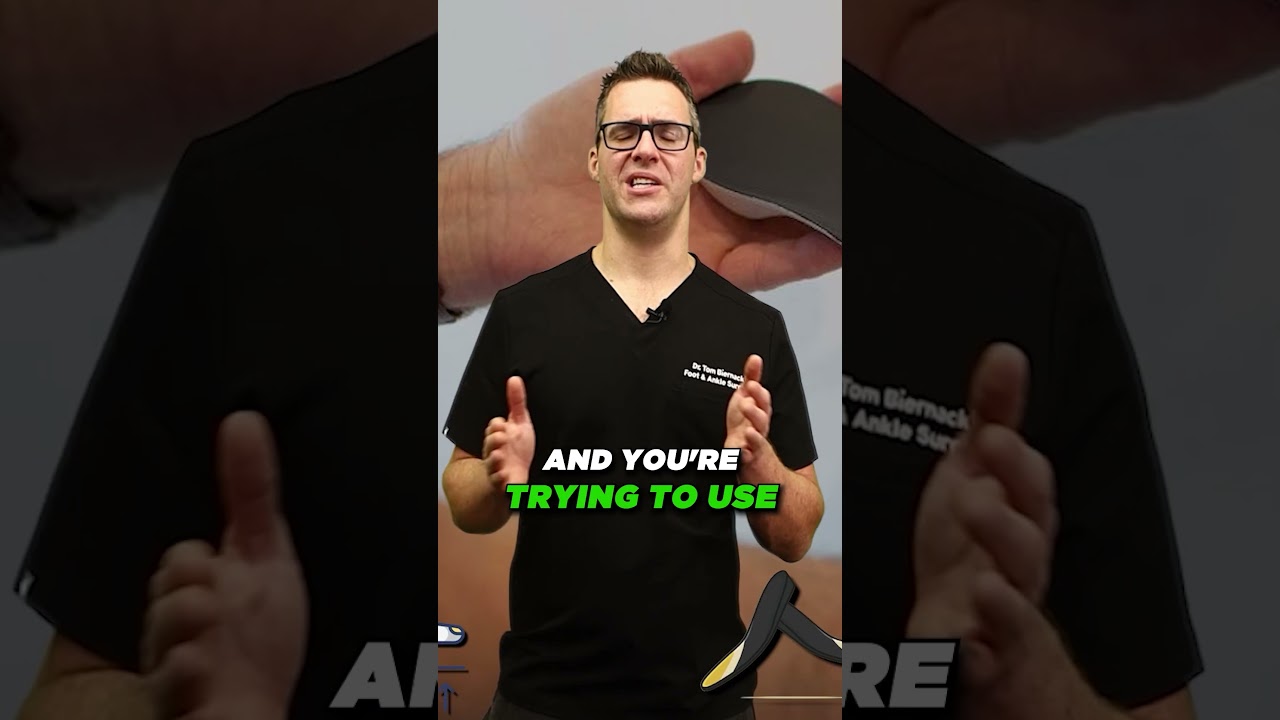
Watch: Best Shoes for Orthotics and All-Day Standing
Dr. Tom Biernacki reviews the best shoe features for people on their feet all day — including retail workers, healthcare staff, and anyone who needs all-day support:
Book a same-day evaluation → · (810) 206-1402
The most common mistake retail workers make is wearing the same work shoes past their effective lifespan. Most people replace shoes when the upper is visibly worn — but the midsole foam that provides shock absorption degrades much faster than the outer materials. A shoe that looks fine on the outside may have less than half of its original cushioning after 6 months of daily wear on hard floors. In our clinic, we routinely see retail workers presenting with plantar fasciitis who are wearing shoes they’ve had for 2–3 years. The rule of thumb: if you stand more than 6 hours daily, replace work shoes every 500–600 hours of use, or every 6 months, whichever comes first.
Frequently Asked Questions — Foot Care for Retail Workers
What are the best shoes for retail workers on hard floors?
The best work shoes for retail workers combine three features: a cushioned EVA or polyurethane midsole at least 1 inch thick, a firm heel counter for stability, and a wide toe box that doesn’t compress the forefoot during swelling that occurs naturally over a long shift. Brands like New Balance, Brooks, HOKA, and Dansko (for workers who prefer clogs) consistently perform well in our clinic. The “best” shoe is the one that fits your specific foot type — flat feet need motion control; high arches need cushioning. Bring your work shoes to your next podiatry visit for an assessment.
Do compression socks really help with foot and leg fatigue?
Yes — compression socks have strong evidence for reducing lower extremity fatigue, edema, and the risk of varicose veins in workers who stand for extended periods. Graduated compression (tighter at the ankle, looser at the calf) actively assists venous return, reducing the pooling of blood that causes the heavy, aching sensation at the end of a long shift. For prevention, 15–20 mmHg is appropriate for most healthy adults. Workers with existing varicose veins or significant edema benefit from 20–30 mmHg, ideally with guidance from a provider.
When should a retail worker see a podiatrist?
See a podiatrist if foot pain has persisted for more than 2 weeks despite changing footwear and adding insoles, if pain is severe enough to affect your gait or cause you to limp during or after shifts, if you notice visible swelling that doesn’t fully resolve overnight, or if you have diabetes — diabetic retail workers should have annual foot exams regardless of symptoms. Don’t wait until pain becomes disabling. Most occupational foot conditions are significantly easier to treat in early stages.
Are custom orthotics worth it for retail workers?
For retail workers with flat feet, high arches, plantar fasciitis, or metatarsalgia, custom orthotics consistently provide better outcomes than over-the-counter insoles — and they’re designed to last 3–5 years with proper care. Over-the-counter insoles use generic arch profiles that may not match your foot’s specific geometry. Custom orthotics are fabricated from a 3D scan or cast of your foot, incorporating your specific pressure distribution patterns. Most PPO insurance plans cover custom orthotics when medically indicated. Call (810) 206-1402 to verify your coverage before your visit.
Can foot problems from retail work lead to knee or back pain?
Yes — and this is one of the most under-recognized consequences of occupational foot problems. Abnormal foot mechanics (overpronation, excessive supination, shortened calf muscles) alter gait patterns that propagate up the kinetic chain. Overpronation in retail workers frequently manifests as medial knee pain, IT band syndrome, and low back pain from pelvic tilting. In our clinic, we routinely see retail and healthcare workers who sought knee or back care elsewhere without success — when the underlying foot mechanics are corrected with orthotics, the chain of pain above resolves.
Foot Pain Shouldn’t Be Part of Your Job Description
Dr. Biernacki helps retail workers, healthcare staff, and other on-their-feet professionals eliminate chronic foot pain and stay working comfortably. Same-day appointments available in Howell and Bloomfield Hills.
Book a Same-Day Visit (810) 206-1402Related Guides for Workers on Their Feet
- Plantar Fasciitis — Causes, Treatment & Prevention
- Compression Socks Guide — Finding the Right Level
- Podiatrist-Recommended Shoes for All-Day Standing
- Custom Orthotics in Michigan — What to Expect
- Metatarsalgia — Ball of Foot Pain Treatment
What is Foot pain?
Foot pain is a common foot/ankle condition that affects mobility and quality of life. Understanding the underlying cause is the first step in successful treatment. Our podiatrists at Balance Foot & Ankle perform a hands-on biomechanical exam, review your activity history, and use diagnostic imaging when appropriate to identify the root cause—not just treat the symptom. Many patients have been told to “rest and ice” without a deeper diagnostic workup; our approach is different.
Symptoms and warning signs
Common signs of foot pain include pain that worsens with activity, morning stiffness, swelling, tenderness when palpated, and difficulty bearing weight. If you experience sudden severe pain, inability to walk, visible deformity, numbness or color change, contact our office the same day or visit urgent care—these can signal a more serious injury such as a fracture, tendon rupture, or vascular compromise. Diabetics with any foot wound should seek same-day care.
Conservative treatment options
Most cases of foot pain respond to non-surgical care: structured rest, supportive footwear changes, custom orthotics, targeted stretching and strengthening protocols, anti-inflammatory medications when medically appropriate, and in-office procedures such as ultrasound-guided injections. We also offer advanced therapies including MLS laser therapy, EPAT/shockwave, regenerative injections, and image-guided procedures. Treatment is sequenced from least invasive to most invasive, and we explain the rationale at every step.
When is surgery considered?
Surgery is reserved for cases that fail 3-6 months of well-structured conservative care, when there is structural pathology (severe deformity, complete tear, advanced arthritis), or when imaging shows damage that will not heal without intervention. Our surgeons have performed 3,000+ foot and ankle procedures and prioritize minimally-invasive techniques whenever appropriate. We discuss recovery timelines, return-to-activity milestones, and realistic outcome expectations before any procedure is scheduled.
Recovery timeline and prevention
Recovery from foot pain varies based on severity and chosen treatment path. Conservative cases often improve within 4-8 weeks with consistent adherence to the protocol. Post-procedural recovery may range from a few days (in-office procedures) to several months (reconstructive surgery). Long-term prevention involves footwear assessment, activity modification, structured strengthening, and regular check-ins with your podiatrist if you have a history of recurrence. We provide written home-exercise plans and digital follow-up support.
Ready to feel better?
Same-week appointments available in Howell and Bloomfield Hills, Michigan.
Book Your VisitAPMA: Standing All Day Foot Pain
In-Office Treatment at Balance Foot & Ankle
If home treatment isn’t providing relief for your foot and ankle conditions, our podiatry team at Balance Foot & Ankle can help with same-day evaluations and advanced in-office care.
Same-day appointments available. (810) 206-1402
Doctor Hoy’s Natural Pain Relief Gel
Natural topical pain relief I use in our clinic. Arnica + camphor formula — apply directly to the area 3–4x daily. ($20–25)
Shop Doctor Hoy’s →Get Expert Care at Balance Foot & Ankle
Same-week appointments at our Howell and Bloomfield Hills offices. Board-certified podiatric surgeons. Most insurance accepted.

Dr. Tom Biernacki, DPM is a board-certified foot & ankle surgeon (ABFAS & ABPM) at Balance Foot & Ankle Specialists in Southeast Michigan. With over a decade of clinical experience, he specializes in heel pain, bunions, diabetic foot care, sports injuries, and minimally invasive surgery. Dr. Biernacki is a member of the APMA and ACFAS, and his patient education content on MichiganFootDoctors.com and YouTube has made him one of the most-followed foot & ankle educators on YouTube.