

Quick answer: Racquetball Squash Foot Injuries Ankle Sprains Indoor Courts is a common foot/ankle topic that affects many patients. The 2026 evidence-based approach combines proper diagnosis, conservative-first treatment, and escalation only when needed. We treat this regularly at our Howell and Bloomfield Township practices. Call (810) 206-1402.
Medically reviewed by Dr. Tom Biernacki, DPM — Board-Certified Podiatric Surgeon — Balance Foot & Ankle, Howell & Bloomfield Township, MI. Last updated April 2026.
Medically Reviewed by Dr. Tom Biernacki, DPM · Board-Certified Podiatrist · Balance Foot & Ankle Specialists
Last updated: April 2026 · This article reflects current evidence-based podiatric practice for preventing and treating racquetball and squash foot and ankle injuries.
Quick Answer: Racquetball and Squash Foot Injuries
Racquetball and squash are high-intensity indoor court sports that place extreme demands on the feet and ankles through explosive lateral movements, rapid direction changes, sudden stops, and lunging. The enclosed court environment means players must react to fast-moving balls in tight spaces, requiring the foot and ankle complex to absorb and redirect forces at speeds that push musculoskeletal structures to their limits. Ankle sprains are the most common acute injury, while plantar fasciitis, Achilles tendinopathy, and metatarsal stress fractures represent the most prevalent overuse conditions. Proper court shoes with lateral stability features, structured arch support, and appropriate conditioning programs prevent the majority of these injuries.
Table of Contents
- Court Sport Biomechanics and Foot Demands
- Ankle Sprains From Lateral Court Movement
- Achilles Tendon Injuries in Court Sports
- Plantar Fasciitis From Hard Court Surfaces
- Metatarsal Stress Fractures and Forefoot Injuries
- Toe Injuries: Turf Toe and Subungual Hematoma
- Court Shoe Selection and Fit
- Injury Prevention Strategies
- Treatment Approaches
- Recommended Products
- Most Common Mistake
- Warning Signs
- Watch: Podiatrist Product Recommendations
- Frequently Asked Questions
- Sources
- Book Your Appointment
Affiliate Disclosure: This article contains affiliate links to products we genuinely recommend. As an Amazon Associate and Foundation Wellness partner, we earn from qualifying purchases at no additional cost to you. Every product listed has been personally evaluated by Dr. Biernacki in clinical practice.
Court Sport Biomechanics: Why Racquetball and Squash Stress the Feet
If you play racquetball or squash and have developed foot or ankle pain, the sport’s unique biomechanical demands are almost certainly part of the equation. These indoor court sports require a movement profile that is fundamentally different from linear activities like running — the constant lateral shuffling, explosive lunging, sudden deceleration, and rapid pivoting create forces that challenge the foot and ankle in ways that straight-ahead activities simply do not. Understanding these specific demands explains why certain injuries are so prevalent in court sport athletes and guides effective prevention strategies.
The lateral movement pattern that defines racquetball and squash places enormous stress on the ankle’s lateral ligament complex and the peroneal tendons that stabilize the foot against inversion (rolling outward). During a lateral lunge to retrieve a ball, the foot must plant firmly while the body’s momentum continues sideways, creating substantial inversion force at the ankle. The medial forefoot simultaneously absorbs the deceleration force as the player changes direction. This combined lateral-to-medial force transfer happens dozens to hundreds of times per match, with each repetition loading the same anatomical structures.
The hard indoor court surface — typically hardwood, sport tile, or concrete with a synthetic coating — provides excellent traction for quick movements but offers minimal shock absorption. Every plant, pivot, and landing transmits impact forces directly through the shoe to the foot, without the give that softer surfaces like clay or grass provide. This unyielding surface accelerates the development of impact-related overuse injuries including plantar fasciitis, metatarsal stress reactions, and heel bruising. The enclosed court environment also means that playing surfaces are consistent and flat, which eliminates the natural terrain variation that helps distribute forces across different foot structures.
Ankle Sprains From Lateral Court Movement
Ankle sprains are the most common acute injury in racquetball and squash, accounting for the majority of time lost from play. The mechanism is typically a lateral lunge or rapid direction change that forces the foot into inversion (sole turning inward) beyond the lateral ligaments’ capacity to resist. The anterior talofibular ligament (ATFL) is the most frequently injured structure, followed by the calcaneofibular ligament (CFL). The confined court space means that players often plant their feet near the wall during lunges, creating awkward ankle positions when the foot contacts the wall base or the player’s weight shifts unexpectedly.
Court sport ankle sprains range from mild Grade I injuries (ligament stretching without significant tearing) to severe Grade III injuries (complete ligament rupture with gross instability). Initial treatment follows the RICE protocol — rest, ice, compression, and elevation — with early functional rehabilitation replacing prolonged immobilization for most sprains. Grade I sprains typically allow return to play within 1-2 weeks with appropriate bracing. Grade II sprains (partial tear) require 2-6 weeks of rehabilitation. Grade III sprains may require 6-12 weeks of recovery and, in some cases, surgical reconstruction if chronic instability develops.
Chronic ankle instability — the tendency toward recurrent sprains after an initial injury — is a particular concern for court sport athletes because the sport demands exactly the type of movement that challenges an unstable ankle. Up to 30-40% of patients who sustain a significant ankle sprain develop chronic instability if the initial injury is not properly rehabilitated. Proprioceptive training (balance exercises on unstable surfaces), peroneal tendon strengthening, and ankle bracing during play are essential for preventing recurrence. Players who have sustained multiple ankle sprains should consider a comprehensive ankle stability evaluation to determine if surgical ligament reconstruction is indicated to restore the mechanical stability needed for continued court sport participation.
Achilles Tendon Injuries in Racquetball and Squash
The Achilles tendon is under tremendous demand during racquetball and squash due to the explosive push-off, rapid acceleration, and sudden deceleration required by the sport. Achilles tendinopathy develops from the cumulative overload of repetitive high-force contractions, particularly during the lunging and pivoting movements that characterize court sport play. The mid-portion of the Achilles tendon (2-6 cm above the calcaneal insertion) is the most commonly affected area because this region has a relatively poor blood supply — the “watershed zone” — making it vulnerable to degenerative changes under repetitive loading.
Acute Achilles tendon rupture is the most feared injury in court sports, and racquetball and squash players are among the highest-risk populations for this devastating injury. The classic scenario involves a male player over 35 who plays recreationally (weekend warrior pattern), makes a sudden explosive movement — typically a lunge forward to retrieve a low shot — and feels a sudden “pop” or sensation of being kicked in the back of the ankle. The player immediately loses the ability to push off the affected foot. Achilles ruptures in recreational court sport athletes often occur in tendons that have underlying degenerative changes (tendinosis) from years of repetitive loading, creating a weakened tendon that fails during an explosive movement.
Prevention of Achilles injuries in court sports requires a multi-faceted approach. Dynamic calf stretching before play (not static stretching, which may temporarily weaken the tendon) warms the muscle-tendon unit and prepares it for explosive loading. Eccentric calf strengthening exercises — slowly lowering the heel below a step — builds the tendon’s capacity to handle the high eccentric forces of court sport deceleration. Adequate warm-up before competitive play (10-15 minutes of progressive-intensity movement) is essential. Players over 35 who play intermittently should be particularly vigilant about warm-up and should consider gradually increasing court time at the start of each season rather than jumping directly into competitive play.
Plantar Fasciitis From Hard Indoor Court Surfaces
Plantar fasciitis is the most common overuse foot condition in racquetball and squash players, driven by the combination of high-impact forces on an unyielding court surface, repetitive push-off demands, and the lateral movement pattern that loads the medial arch during direction changes. The plantar fascia must absorb and redistribute ground reaction forces during every step, lunge, and landing — on a hard court surface with minimal compliance, these forces are substantially higher than on softer athletic surfaces. The medial loading during lateral shuffles and direction changes places additional tensile stress on the medial band of the plantar fascia, the portion most commonly affected in plantar fasciitis.
Court sport plantar fasciitis often presents differently than typical plantar fasciitis because the loading pattern is so different from linear running. Players may experience pain during lateral movements rather than the classic first-step morning pain, or they may notice pain specifically during the push-off phase of a lunge rather than during straight walking. The classic morning pain may still be present, but the sport-specific symptoms help identify the activity as the driver. Many players initially attribute the pain to court surface hardness and try changing shoes, but without addressing the underlying biomechanical factors, shoe changes alone rarely resolve the condition.
Treatment for court sport plantar fasciitis must address both the general principles of plantar fasciitis management and the sport-specific factors. Orthotic insoles with firm medial arch support reduce the tensile strain on the plantar fascia during the lateral movements that characterize court play. Court shoes with a supportive midsole and adequate cushioning absorb impact forces before they reach the fascia. Calf stretching and plantar fascia-specific stretching maintain flexibility in the connected tissue chain. Activity modification during acute flares — reducing playing frequency to allow tissue recovery — prevents the progression from acute inflammation to chronic degeneration.
Metatarsal Stress Fractures and Forefoot Injuries
The repetitive high-impact forefoot loading of racquetball and squash places the metatarsal bones at risk for stress fractures, particularly the second and third metatarsals which bear the greatest proportion of forefoot forces during push-off and lateral movement. The hard court surface amplifies these forces, and the frequent explosive movements required by the sport create peak loads that far exceed those experienced during steady-state running. Players who increase their playing frequency rapidly — common when starting a new season or joining a league — are most vulnerable to metatarsal stress fractures.
Metatarsalgia — diffuse pain under the metatarsal heads without a fracture — is even more common than stress fractures and develops from the sustained forefoot loading during court play. The wide, stable stance used for court readiness concentrates weight on the forefoot, and the rapid forward lunges that characterize both racquetball and squash drives significant force through the metatarsal heads at impact. Players with high arches (cavus feet) are especially susceptible because their rigid foot architecture concentrates force at the metatarsal heads rather than distributing it through the midfoot. Forefoot padding, metatarsal pads positioned behind the metatarsal heads, and cushioned insoles help distribute these forces more evenly.
Toe Injuries: Turf Toe and Subungual Hematoma
Turf toe — a sprain of the first metatarsophalangeal joint plantar plate — occurs in court sports when the big toe is forcefully hyperextended during a push-off or lunge. The player plants the forefoot and pushes off aggressively, driving the big toe into excessive dorsiflexion against a resistant surface. The resulting injury to the plantar plate and joint capsule causes pain, swelling, and limited push-off ability that can sideline a player for weeks to months depending on severity. Taping the big toe to limit dorsiflexion during the return-to-play phase protects the healing plantar plate while allowing continued court activity.
Subungual hematoma — blood collection beneath the toenail — develops from repetitive impact of the toes against the front of the shoe during the sudden stops and direction changes that characterize court play. The big toe and second toe are most commonly affected. The enclosed toe box of court shoes, combined with the forward foot slide during rapid deceleration, creates repetitive microtrauma to the nail bed. Prevention requires proper shoe fit with adequate toe box length, secure lacing that prevents foot sliding within the shoe, and toenails trimmed to an appropriate length.
Court Shoe Selection: The Foundation of Injury Prevention
Proper court shoe selection is the single most important equipment decision for racquetball and squash players. Court shoes are specifically designed for the multi-directional movement demands of indoor court sports, with features that differ significantly from running shoes, cross-trainers, and other athletic footwear. The key features of a proper court shoe include a low-profile midsole for stability during lateral movements, reinforced lateral sidewalls for support during direction changes, a non-marking gum rubber outsole optimized for indoor court traction, a secure lacing system that prevents foot movement within the shoe, and adequate forefoot cushioning for impact absorption during lunges and landings.
Running shoes are a poor choice for court sports despite their superior cushioning because they have a higher midsole profile that increases ankle instability risk during lateral movements, narrower lateral support that cannot resist the forces of lateral shuffling, and outsole patterns designed for forward traction rather than multi-directional grip. Cross-training shoes are a better option than running shoes but still lack the low-profile stability and court-specific traction of dedicated court shoes. Investing in proper court shoes — even entry-level models from reputable brands — provides significantly better injury protection than wearing inappropriate footwear.
Shoe fit for court sports should prioritize secure heel lockdown (no slipping during lateral movements), adequate toe box width and depth to prevent toe compression during lunges, and a snug midfoot that prevents the foot from sliding within the shoe during direction changes. Court shoes should be replaced every 6-12 months of regular play or sooner if the outsole tread has worn smooth (reducing court traction) or the midsole has compressed (reducing cushioning and stability). Playing in worn-out court shoes is one of the most common contributing factors to court sport foot injuries.
Injury Prevention Strategies for Court Athletes
Preventing foot and ankle injuries in racquetball and squash requires attention to conditioning, warm-up, footwear, and playing habits. Ankle strengthening and proprioceptive training should be incorporated into the regular training routine of every court sport athlete, with emphasis on single-leg balance exercises, lateral agility drills, and peroneal tendon strengthening. These exercises build the neuromuscular control and structural stability that protect the ankle during the high-speed lateral movements of court play.
A thorough warm-up before play is non-negotiable for injury prevention, particularly for players over 30 whose connective tissues require more preparation time before tolerating explosive movements. An effective court sport warm-up includes 5 minutes of light jogging or movement, dynamic stretching of the calves, hamstrings, and hip flexors, progressive lateral shuffling drills that mimic court movement patterns, and light rallying that gradually increases intensity before competitive play. Players who skip warm-up and immediately begin competitive rallying are at significantly higher risk for Achilles tendon injuries, ankle sprains, and muscle strains.
Playing frequency management prevents the overuse injuries that develop from accumulated court time. Players transitioning from sedentary periods back into regular court play should increase frequency gradually — starting with 2 sessions per week and adding sessions every 2-3 weeks. Playing on consecutive days should be limited, particularly for older players or those with pre-existing foot conditions. Adequate recovery between sessions allows the connective tissues to adapt and repair, reducing the cumulative damage that leads to stress fractures, tendinopathy, and plantar fasciitis.
Treatment Approaches for Court Sport Foot Injuries
Treatment for court sport foot injuries follows the general principles of sports medicine — early intervention, appropriate activity modification (not necessarily complete rest), addressing biomechanical contributing factors, and progressive return to sport. Most overuse conditions respond to a combination of relative rest (reducing playing frequency and intensity), addressing footwear and biomechanical issues, targeted rehabilitation exercises, and anti-inflammatory management. Complete cessation of all physical activity is rarely necessary and can be counterproductive, as deconditioning increases injury risk upon return.
For acute injuries like ankle sprains, early functional rehabilitation has replaced prolonged immobilization as the standard of care. Protected weight bearing in a brace, early range-of-motion exercises, and progressive strengthening begin within days of injury. The goal is to maintain as much function as possible while protecting the healing structures. For overuse conditions, identifying and correcting the contributing factors — inadequate footwear, playing frequency, court surface hardness, biomechanical alignment — is essential for lasting resolution. Simply treating symptoms without addressing causes leads to recurrence when play resumes.
Recommended Products for Court Sport Foot Health
The right products protect your feet during the demanding movements of court sports and support recovery between sessions.
PowerStep Orthotic Insoles — Arch Support in Court Shoes
PowerStep orthotic insoles replace the factory insoles in your court shoes to provide the structured arch support and cushioning that most court shoes lack. While court shoes excel at lateral stability and traction, their factory insoles typically provide minimal arch support and limited shock absorption. PowerStep insoles address this gap — the firm arch platform controls pronation during the lateral-to-medial weight transfers of court movement, reducing the strain on the plantar fascia and posterior tibial tendon. The cushioned forefoot absorbs the impact of lunges and landings on hard court surfaces. I recommend PowerStep in court shoes for all my racquetball and squash patients, both as a preventive measure and as a first-line treatment for court-related foot pain.
Doctor Hoy’s Natural Pain Relief Gel — Post-Match Recovery
Doctor Hoy’s Natural Pain Relief Gel provides targeted recovery support after the intense demands of court play. Applied to the Achilles tendon, plantar fascia, ankle ligaments, and forefoot after matches and practice sessions, the arnica and menthol formula reduces post-activity inflammation and pain that would otherwise accumulate between sessions. For court athletes playing 2-3 times per week, consistent post-match application of Doctor Hoy’s manages the cumulative microtrauma that leads to overuse injuries. During active injury recovery, applying Doctor Hoy’s 2-3 times daily provides ongoing anti-inflammatory effects that support the healing process alongside rehabilitation exercises.
DASS Compression Sleeves — Ankle Support and Recovery
DASS compression sleeves serve dual purposes for court sport athletes — providing supportive compression during play and enhancing recovery afterward. During matches, the graduated compression supports the ankle and lower leg musculature during the high-speed lateral movements that stress these structures. For players with a history of ankle sprains, compression provides proprioceptive feedback that enhances ankle awareness and stability. After play, wearing compression for 1-2 hours reduces post-exercise swelling, enhances venous return, and accelerates recovery between sessions. The medical-grade compression is particularly valuable for older recreational players whose recovery between matches takes longer than it did in their competitive years.
PowerStep, Doctor Hoy’s, and DASS — Your Court Sport Kit
Complete Court Sport Foot Protection Kit
For racquetball and squash players, I recommend the complete Foundation Wellness court sport package. PowerStep insoles go inside your court shoes for biomechanical support and impact absorption during play. Doctor Hoy’s gel is applied post-match to the Achilles, plantar fascia, and ankles for targeted recovery. DASS compression supports the ankle during play and accelerates recovery afterward. This combination keeps you on the court longer and recovering faster between sessions.
Most Common Mistake in Court Sport Foot Care
Most Common Mistake
The most common mistake I see in racquetball and squash players is wearing running shoes on the court instead of proper court shoes. Running shoes are designed for linear forward motion — they have a high, cushioned midsole that makes them unstable during lateral movements, narrow lateral support that cannot resist side-to-side forces, and outsole traction patterns optimized for forward grip rather than multi-directional court movement. Playing court sports in running shoes dramatically increases ankle sprain risk and reduces the lateral stability needed for safe, explosive court movement. A dedicated pair of court shoes — even an affordable pair — provides far better injury protection than the most expensive running shoes.
Warning Signs That Require Professional Evaluation
Warning Signs — See Your Podiatrist
Seek professional evaluation if you experience: a sudden pop or snap in the back of your ankle followed by inability to push off (possible Achilles rupture — seek immediate evaluation), ankle swelling that does not significantly improve within 48-72 hours after a sprain (possible severe ligament tear or fracture), recurrent ankle sprains suggesting chronic instability requiring rehabilitation or surgery, focal bone pain in the forefoot that worsens with each playing session (possible stress fracture), persistent plantar heel pain that has not improved after 2-3 weeks of rest and home treatment, numbness or tingling in the toes during or after play, or a black toenail that is very painful (subungual hematoma may need drainage). Early treatment of court sport injuries prevents the complications that develop when athletes play through worsening symptoms.
Watch: Podiatrist Recommended Products for Court Athletes
In this video, I review the foot care products I recommend for active individuals, including products that support court sport performance and recovery.

More Podiatrist-Recommended Ankle Sprain Essentials
Stability Walking/Running Shoe
Brooks Adrenaline GTS 25 — lateral support during recovery walking.
KT Tape for Ankle Support
KT Tape — proprioceptive support for athletic return-to-play.
Supportive Insole


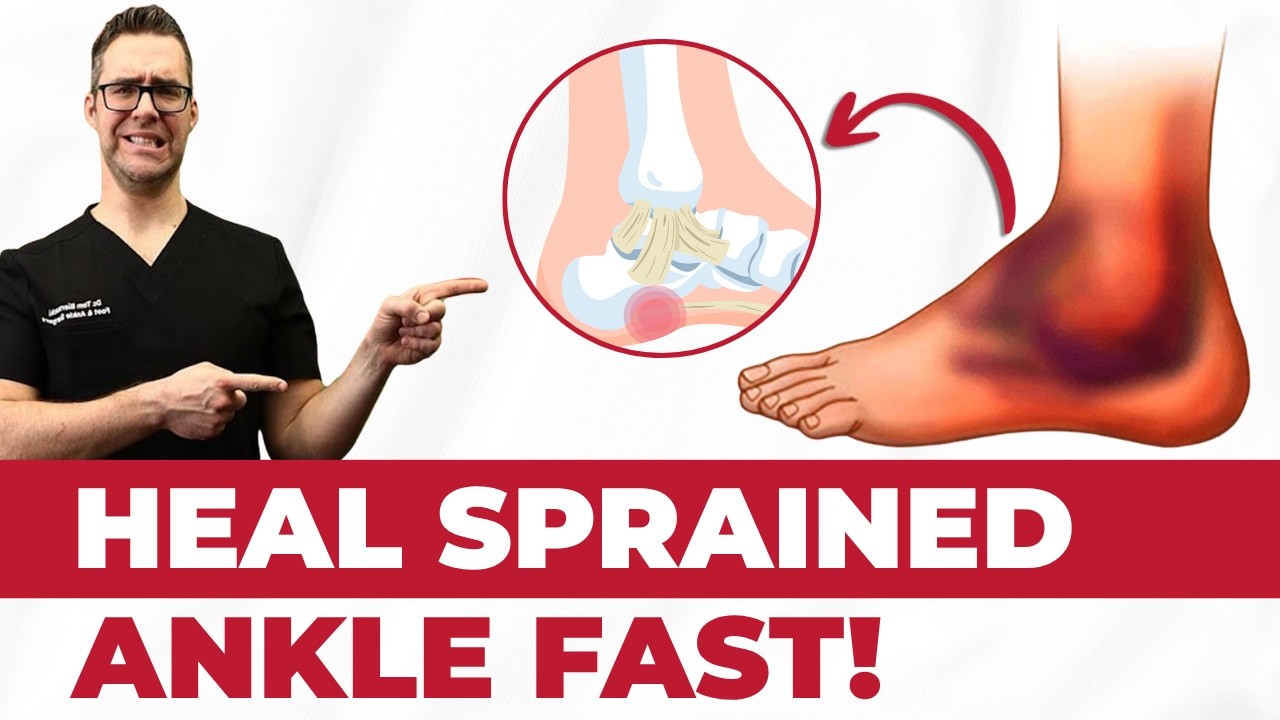
Watch: Fix TWISTED Ankle, ROLLED Ankle or SPRAINED Ankle Ligaments FASTER! — MichiganFootDoctors YouTube
PowerStep Pinnacle — arch support reduces re-injury risk during recovery.
As an Amazon Associate, Balance Foot & Ankle earns from qualifying purchases. Product recommendations are based on clinical experience; prices and availability shown above update live from Amazon.
When to See a Podiatrist
A sprain that hasn’t fully recovered after 6 weeks often has residual ligament laxity or occult fracture that keeps the ankle unstable. Balance Foot & Ankle X-rays and stress-tests every lingering sprain — if the ligament is torn, we offer bracing, PRP, and (for chronic instability) minimally-invasive repair. Don’t keep re-rolling the same ankle; let us stabilize it properly.
Call Balance Foot & Ankle: (810) 206-1402 · Book online · Offices in Howell & Bloomfield Township
Frequently Asked Questions About Court Sport Foot Injuries
Can I play racquetball or squash with plantar fasciitis?
You can often continue playing with plantar fasciitis if symptoms are mild and you take appropriate measures. Replace factory insoles with supportive orthotics, stretch thoroughly before play, apply ice after matches, and consider reducing playing frequency during active flares. If pain increases during play or is significantly worse the day after playing, temporary rest from court activity is needed while treatment addresses the underlying condition. Playing through worsening plantar fasciitis leads to chronic degeneration that is much harder to resolve.
How do I prevent ankle sprains in court sports?
Prevention requires proper court shoes with lateral stability features, ankle strengthening and proprioceptive training (single-leg balance exercises, lateral agility drills), thorough warm-up before play, and ankle bracing for players with a history of sprains. Court shoes should have a low-profile midsole and reinforced lateral sidewalls. Replace worn court shoes that have lost their supportive structure. If you have had multiple sprains, professional evaluation for chronic ankle instability is recommended.
Do I need special shoes for racquetball and squash?
Yes, dedicated indoor court shoes are strongly recommended. Court shoes provide the low-profile lateral stability, multi-directional traction, and reinforced support that running shoes and cross-trainers lack. The non-marking gum rubber outsole provides optimal grip on indoor court surfaces. Playing in running shoes significantly increases injury risk because their high, cushioned midsoles are unstable during lateral movements. Even entry-level court shoes from reputable brands provide meaningfully better protection than inappropriate footwear.
Is it safe to play racquetball or squash after an Achilles tendon injury?
Return to court sports after Achilles tendon injury requires careful progression. For tendinopathy, the tendon must be pain-free during daily activities and able to tolerate eccentric loading exercises before court play resumes. After surgical repair of a ruptured Achilles, return to court sports typically takes 9-12 months and requires sport-specific rehabilitation. Warm-up becomes even more critical after Achilles injury. Your treating physician and physical therapist should clear you for the specific demands of court sport — running clearance alone is not sufficient.
How often should I replace my court shoes?
Court shoes should be replaced every 6-12 months of regular play (2-3 sessions per week) or sooner if the outsole tread has worn smooth, the midsole feels flat or compressed, or the lateral support structure has broken down. Worn outsoles reduce court traction and increase slip risk. Compressed midsoles provide inadequate cushioning and stability. Unlike running shoes where mileage is the key metric, court shoe life depends more on playing hours and the intensity of lateral movement, which degrades the shoe structure faster than linear running.
In Our Clinic
Most of our ankle sprains are acute — a patient comes in the same day or within 48 hours after rolling the ankle. We apply the Ottawa Ankle Rules first: bone tenderness at the posterior malleolus, navicular, or base of the 5th metatarsal, or inability to bear weight for 4 steps, means we image immediately to rule out fracture. For a clean grade 1–2 lateral ligament sprain, we use a short period of boot immobilization if needed, then transition into an ankle brace + proprioception training. The mistake we often see: patients skip the rehab phase and re-sprain within a year.
Sources
- Fong DT, et al. “A systematic review on ankle injury and ankle sprain in sports.” Sports Medicine. 2007;37(1):73-94.
- Maffulli N, et al. “Achilles tendon ruptures in recreational athletes.” British Journal of Sports Medicine. 2020;54(16):957-963.
- Taunton JE, et al. “A retrospective case-control analysis of 2002 running injuries.” British Journal of Sports Medicine. 2002;36(2):95-101.
- Doherty C, et al. “The incidence and prevalence of ankle sprain injury.” Sports Medicine. 2014;44(1):123-140.
- Silbernagel KG, et al. “Current clinical concepts: eccentric rehabilitation of the Achilles tendon.” Journal of Athletic Training. 2020;55(7):658-664.
Book Your Appointment With Dr. Biernacki
Court Sport Foot or Ankle Injury?
Don’t let a foot or ankle injury keep you off the court. Dr. Biernacki provides expert sports injury evaluation, biomechanical analysis, and plan tailored to your foot types to get racquetball and squash players back to competitive play safely.
Schedule Your Evaluation Today
Balance Foot & Ankle Specialists · Southeast Michigan
Related Foot & Ankle Guides
- Podiatrist Recommended Foot Care Products 2026
- Sports Injury Guides
- Ankle Pain Treatment Hub
- Foot Pain Treatment Hub
When to See a Podiatrist for Racquetball or Squash Injuries
If you’re experiencing ankle sprains, plantar fasciitis, or Achilles pain from indoor court sports, a podiatrist can help you recover and prevent recurrence. At Balance Foot & Ankle, we treat racquet sport injuries at our Howell and Bloomfield Township offices.
Learn About Our Ankle & Foot Injury Treatment | Book Your Appointment | Call (810) 206-1402
Clinical References
- Berson BL, Rolnick AM, Ramos CG, Thornton J. “An epidemiologic study of squash injuries.” American Journal of Sports Medicine. 1981;9(2):103-106.
- Fong DT, Hong Y, Chan LK, Yung PS, Chan KM. “A systematic review on ankle injury and ankle sprain in sports.” Sports Medicine. 2007;37(1):73-94.
- Hootman JM, Dick R, Agel J. “Epidemiology of collegiate injuries for 15 sports.” Journal of Athletic Training. 2007;42(2):311-319.
Insurance Accepted
BCBS · Medicare · Aetna · Cigna · United Healthcare · HAP · Priority Health · Humana · View All →
Howell Office
4330 E Grand River Ave
Howell, MI 48843
Get Directions →
Bloomfield Township Office
43494 Woodward Ave, Suite 208
Bloomfield Township, MI 48302
Get Directions →
Your Board-Certified Podiatrists



Ready to Get Back on Your Feet?
Same-week appointments available at both locations.
Book Your AppointmentWatch: Dr. Tom explains
Podiatrist-recommended products
As an Amazon Associate, Dr. Tom earns from qualifying purchases.
Immobilization after acute court ankle sprains.
View on Amazon →Post-game cold therapy.
View on Amazon →Arch support for court sport side-to-side cutting.
View on Amazon →Menthol topical for post-match soreness.
View on Amazon →Related resources
Ready to solve this? Book today.
Same-week appointments · Howell & Bloomfield Township · 4.9★ (1,123+ reviews)
☎ (810) 206-1402Book Online →In-Office Treatment at Balance Foot & Ankle
If home treatment isn’t providing relief for your ankle sprains, our podiatry team at Balance Foot & Ankle can help with same-day evaluations and advanced in-office care.
Same-day appointments available. (810) 206-1402
Frequently Asked Questions
When should I see a podiatrist?
If symptoms persist past 2 weeks, affect your normal activity, or are accompanied by red-flag symptoms (warmth, redness, swelling, inability to bear weight).
What does treatment cost?
Most diagnostic visits and conservative treatments are covered by Medicare and major insurers. Out-of-pocket costs vary by your specific plan.
How quickly can I get an appointment?
Most non-urgent cases see us within 5 business days. Urgent cases (sudden pain, possible fracture) typically same or next business day.
What is Ankle sprain?
Ankle sprain is a common foot/ankle condition that affects mobility and quality of life. Understanding the underlying cause is the first step in successful treatment. Our podiatrists at Balance Foot & Ankle perform a hands-on biomechanical exam, review your activity history, and use diagnostic imaging when appropriate to identify the root cause—not just treat the symptom. Many patients have been told to “rest and ice” without a deeper diagnostic workup; our approach is different.
Symptoms and warning signs
Common signs of ankle sprain include pain that worsens with activity, morning stiffness, swelling, tenderness when palpated, and difficulty bearing weight. If you experience sudden severe pain, inability to walk, visible deformity, numbness or color change, contact our office the same day or visit urgent care—these can signal a more serious injury such as a fracture, tendon rupture, or vascular compromise. Diabetics with any foot wound should seek same-day care.
Conservative treatment options
Most cases of ankle sprain respond to non-surgical care: structured rest, supportive footwear changes, custom orthotics, targeted stretching and strengthening protocols, anti-inflammatory medications when medically appropriate, and in-office procedures such as ultrasound-guided injections. We also offer advanced therapies including MLS laser therapy, EPAT/shockwave, regenerative injections, and image-guided procedures. Treatment is sequenced from least invasive to most invasive, and we explain the rationale at every step.
When is surgery considered?
Surgery is reserved for cases that fail 3-6 months of well-structured conservative care, when there is structural pathology (severe deformity, complete tear, advanced arthritis), or when imaging shows damage that will not heal without intervention. Our surgeons have performed 3,000+ foot and ankle procedures and prioritize minimally-invasive techniques whenever appropriate. We discuss recovery timelines, return-to-activity milestones, and realistic outcome expectations before any procedure is scheduled.
OrthoInfo – AAOS: Sprained Ankle
Recovery timeline and prevention
Recovery from ankle sprain varies based on severity and chosen treatment path. Conservative cases often improve within 4-8 weeks with consistent adherence to the protocol. Post-procedural recovery may range from a few days (in-office procedures) to several months (reconstructive surgery). Long-term prevention involves footwear assessment, activity modification, structured strengthening, and regular check-ins with your podiatrist if you have a history of recurrence. We provide written home-exercise plans and digital follow-up support.
Ready to feel better?
Same-week appointments available in Howell and Bloomfield Township, Michigan.
Book Your Visit
Dr. Tom Biernacki, DPM is a board-certified foot & ankle surgeon (ABFAS & ABPM) at Balance Foot & Ankle Specialists in Southeast Michigan. With over a decade of clinical experience, he specializes in heel pain, bunions, diabetic foot care, sports injuries, and minimally invasive surgery. Dr. Biernacki is a member of the APMA and ACFAS, and his patient education content on MichiganFootDoctors.com and YouTube has made him one of the most-followed foot & ankle educators on YouTube.
More questions patients ask
Is it safe to play after an Achilles tendon injury?
Return requires careful progression. For tendinopathy, the tendon must be pain-free during daily activities and tolerate eccentric exercises before court play resumes. After surgical repair, return typically takes 9-12 months with sport-specific rehabilitation. Running clearance alone is not sufficient for court sports.
How long does an ankle sprain take to heal?
Recovery time depends on severity: Grade 1 (mild stretching) typically heals in 1-3 weeks, Grade 2 (partial tear) in 3-6 weeks, and Grade 3 (complete tear) in 6-12 weeks or longer. Proper rehabilitation is critical to prevent chronic ankle instability, which affects up to 40% of patients who don't receive adequate treatment. Dr. Biernacki creates customized recovery plans.
When should I see a doctor for a sprained ankle?
Seek professional evaluation if you can't bear weight, notice significant swelling or bruising, hear a pop at the time of injury, have numbness, or if pain hasn't improved after 5-7 days of RICE treatment. X-rays or MRI may be needed to rule out fractures. Dr. Biernacki offers same-day urgent evaluations at 810-206-1402.
Can a sprained ankle heal without treatment?
While mild sprains may heal with rest and home care, undiagnosed ligament tears and improperly rehabilitated sprains frequently lead to chronic ankle instability, recurrent sprains, and early-onset arthritis. A proper evaluation ensures appropriate treatment and reduces your risk of long-term complications significantly.
Still have a question about coverage or cost? Book online and we will check your benefits before your visit: Book in Howell · Book in Bloomfield Township. Prefer to talk it through first? Call (810) 206-1402.