
Medically reviewed by Dr. Tom Biernacki, DPM
Board-certified podiatric surgeon | Balance Foot & Ankle
Last reviewed: May 2026

Quick answer: Thinning of the foot’s protective fat pad is best handled by first confirming that’s the source of your ball-of-foot or heel pain, then offloading it with cushioned footwear and custom orthotics — injectable fat-pad augmentation is considered when padding alone isn’t enough. We evaluate it at our Howell and Bloomfield Hills offices. Call (810) 206-1402.
If every step feels like walking on rocks—especially on hard floors—and shoes that used to be comfortable no longer provide enough cushion, you may be experiencing fat pad atrophy. This gradual thinning of the protective fat pads under your feet is one of the most underdiagnosed causes of foot pain, particularly in patients over 50.
At Balance Foot & Ankle, our podiatrists understand how debilitating this condition can be. Patients often describe feeling like they can feel every pebble through their shoes, or like they’re walking directly on their bones. The good news is that effective treatments exist—from simple cushioning strategies to advanced injectable augmentation procedures that can restore the lost padding. Here’s what you need to know.
>
What Is Fat Pad Atrophy?
Fat pad atrophy is the gradual thinning and deterioration of the specialized adipose (fat) tissue that cushions the heel and ball of the foot. Unlike regular body fat that fluctuates with weight changes, the foot’s fat pads are structurally unique—they’re composed of tightly organized chambers of fat held in place by fibrous septa (connective tissue walls) that create a shock-absorbing honeycomb structure. When these chambers degrade, the fat disperses or is absorbed, leaving less cushioning between your bones and the ground.
The condition can affect the heel fat pad (plantar calcaneal fat pad), the forefoot fat pads (under the metatarsal heads), or both. Heel fat pad atrophy is more common and more clinically significant because the heel absorbs the highest impact forces during walking—approximately 110% of body weight at heel strike. When the fat pad under the heel thins from its normal 18-20mm to 10mm or less, the calcaneus (heel bone) is essentially hitting the ground with minimal protection.
The Foot’s Natural Cushioning System
The plantar fat pad is an engineering marvel. Under the heel, it’s organized into a microchamber system: small pockets of fat enclosed by U-shaped fibrous septa anchored to the calcaneus above and the plantar skin below. This architecture creates a closed-cell foam structure (similar to a high-end sneaker midsole) that deforms under load and springs back to shape—absorbing up to 20-25% of impact energy with each heel strike.
The forefoot fat pads are arranged differently—they sit beneath each metatarsal head in thinner, more mobile pads that shift position as the toes flex during push-off. These pads are especially vulnerable to displacement. In conditions like hammertoes and claw toes, the fat pads migrate forward (distally), leaving the metatarsal heads exposed and unpadded. This is why patients with toe deformities often develop painful calluses under the metatarsal heads—the natural cushioning has literally moved out of position.
The fat pad tissue itself contains a higher proportion of unsaturated fatty acids than regular body fat, giving it greater elasticity and resilience. It also has less blood supply than typical adipose tissue, which means that once damaged or degraded, it has limited capacity for self-repair. This is the fundamental challenge of fat pad atrophy—the body cannot regenerate this specialized tissue once it’s lost.
Causes and Risk Factors
Aging is the primary cause. After age 40, the fat pad gradually thins at an estimated rate of approximately 1mm per decade. The fibrous septa lose elasticity, the fat chambers consolidate and flatten, and the overall pad thickness decreases. By age 70, many people have lost 30-50% of their original heel fat pad thickness. This is a normal aging process—not a disease—but the resulting symptoms can be significant.
Corticosteroid injections into the heel are a well-documented cause of accelerated fat pad atrophy. While cortisone injections are effective for conditions like plantar fasciitis, repeated injections can damage the fat pad’s fibrous architecture and cause localized fat necrosis (tissue death). This is why most podiatrists limit heel injections to 2-3 per year and use imaging guidance to ensure the injection targets the fascia, not the fat pad itself.
Other contributing factors include high-impact activities over decades (running, jumping sports), diabetes (which alters fat metabolism and can cause glycosylation of the fibrous septa, making them brittle), peripheral vascular disease (reduced blood supply accelerates tissue degradation), obesity (paradoxically, excess weight compresses and flattens the fat pad rather than building it up), and certain medications (long-term systemic corticosteroids). Wearing unsupportive shoes—particularly flat, hard-soled shoes—doesn’t cause fat pad atrophy, but it dramatically worsens the symptoms by providing no external substitute for the lost internal cushioning.
Symptoms: How Fat Pad Loss Feels
The most characteristic symptom is a deep, bruise-like ache directly under the heel bone or metatarsal heads that worsens with standing and walking on hard surfaces. Patients consistently describe feeling like they can feel the bones of their feet through their shoes, or like walking on stones, marbles, or pebbles. The pain is typically absent in the morning (unlike plantar fasciitis, which is worst with the first steps), but builds progressively throughout the day as the feet absorb cumulative impact.
Visually, you may notice that the bottom of the heel appears flatter and less “plump” than it used to. When you press on the heel or ball of the foot, you can easily feel the underlying bone with less cushioning than expected. The skin on the bottom of the foot may become thinner and more sensitive. Calluses may develop under the metatarsal heads as the thinned fat pads fail to protect the skin from repetitive pressure.
Fat pad atrophy is frequently misdiagnosed as plantar fasciitis, and the two conditions can coexist. The key distinguishing feature is the pain pattern: plantar fasciitis causes sharp, stabbing pain at the medial heel that’s worst with the first steps in the morning and improves with walking. Fat pad atrophy causes a deep, aching, bruise-like pain that’s centered directly under the heel bone, absent in the morning, and worsens with prolonged walking or standing. The physical exam also differs—plantar fasciitis has point tenderness at the medial calcaneal tubercle (where the fascia attaches), while fat pad atrophy has diffuse tenderness across the entire heel pad.
How It’s Diagnosed
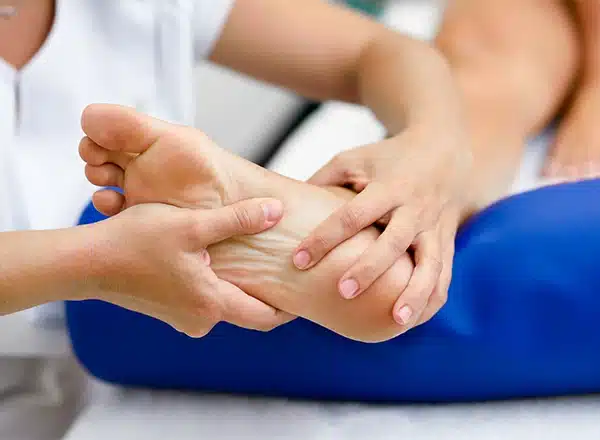
Diagnosis is primarily clinical. Your podiatrist will assess the fat pad by palpating the heel and forefoot, comparing thickness to expected norms, and evaluating the “pinch test”—grasping the heel fat pad between thumb and finger. A noticeably thin pad that allows easy palpation of the calcaneal tuberosity suggests significant atrophy.
Ultrasound is the most practical imaging tool for measuring fat pad thickness. Normal heel fat pad thickness is 18-20mm when loaded (weight-bearing). Values below 12mm are considered atrophic. Ultrasound can also evaluate the echogenicity (density) of the fat pad—atrophic pads show increased echogenicity from fibrosis and loss of normal fat architecture. MRI provides the most detailed view of fat pad composition and can differentiate atrophy from other causes of heel pain. X-rays are useful to rule out stress fractures, bone spurs, and other osseous pathology but don’t directly visualize the fat pad.
Conservative Treatment
Since the body cannot regenerate lost fat pad tissue, conservative treatment focuses on replacing the lost cushioning externally through footwear and orthotic modifications.
Cushioned shoes are the foundation of management. Look for shoes with thick, soft midsoles that absorb impact. HOKA shoes are consistently the top recommendation from our podiatrists for fat pad atrophy—their oversized midsole (up to 33mm) and rocker geometry provide excellent cushioning while reducing peak heel pressure. Brooks (Ghost, Glycerin) and New Balance (Fresh Foam series) are also strong choices. The key specification is a midsole at least 25mm thick under the heel with a soft-to-medium durometer (firmness).
Gel heel cups and cushioned insoles add a supplemental cushioning layer inside the shoe. Silicone gel heel cups (like Tuli’s Heavy Duty) cradle the heel and absorb impact. Full-length gel insoles provide forefoot cushioning as well. These are inexpensive, widely available, and provide immediate noticeable improvement for most patients.
Custom orthotics with specific accommodations for fat pad atrophy include deep heel cups (to contain and centralize the remaining fat pad tissue), viscoelastic cushioning material at the heel and forefoot, metatarsal pads to offload exposed metatarsal heads, and topcovers made from high-rebound materials like Poron or Plastazote. These provide more targeted relief than over-the-counter options and are particularly important for patients with combined fat pad atrophy and biomechanical issues.
Activity modification may be necessary during symptomatic periods. Switching from high-impact activities (running, tennis, basketball) to low-impact alternatives (swimming, cycling, elliptical) reduces the cumulative load on thinned fat pads. Avoiding walking barefoot on hard surfaces—even at home—is strongly recommended. Indoor slippers with cushioned soles (OOFOS or similar) protect the feet during everyday household activities.
Fat Pad Augmentation: Injectable Treatments
For patients with moderate to severe fat pad atrophy who don’t get adequate relief from cushioning alone, injectable augmentation procedures can restore volume to the thinned fat pad. These are relatively newer treatments in podiatry and are offered by select practices experienced in the technique.
Dermal Filler Injection
Hyaluronic acid dermal fillers (the same type used in facial cosmetic procedures) can be injected beneath the heel or metatarsal heads to restore volume. The filler creates an artificial cushioning layer that mimics the function of the natural fat pad. Treatment involves a series of injections under local anesthesia, typically completed in one office visit. Results are immediate—patients often notice a dramatic difference in comfort within days.
The primary limitation is durability. Hyaluronic acid fillers are gradually absorbed by the body over 6-12 months, requiring repeat injections to maintain the benefit. Some newer, more cross-linked filler formulations may last longer (12-18 months) in the foot’s high-stress environment. Cost is typically not covered by insurance, ranging from $500-1,500 per treatment session depending on the amount of filler used.
Autologous Fat Grafting
Fat grafting involves harvesting fat from another part of the body (typically the abdomen or thigh) via liposuction, processing it, and injecting it into the atrophic foot fat pad. This uses the patient’s own tissue, eliminating any allergy or rejection risk. The procedure is more invasive than dermal filler injection and is typically performed in an outpatient surgical setting.
The advantage of fat grafting is the potential for longer-lasting results—if the transferred fat cells establish a blood supply and survive (a process called “graft take”), they can provide permanent volume restoration. However, graft survival rates in the foot are variable (estimated at 40-70% of injected volume), meaning that some patients require a second procedure to achieve optimal results. Recovery involves limited weight bearing for 1-2 weeks and supportive footwear for 4-6 weeks.
Synthetic Injectable Options
Other injectable materials being studied for fat pad augmentation include polyacrylamide hydrogel and silicone-based fillers. These offer greater durability than hyaluronic acid but carry higher risks including granuloma formation, migration, and infection. They are not currently FDA-approved specifically for foot fat pad augmentation and are considered investigational. Our podiatrists can discuss the latest options and their risk-benefit profiles during a consultation.
Choosing the Right Treatment
For most patients, conservative treatment with cushioned shoes, gel heel cups, and custom orthotics provides sufficient relief. We recommend starting here and giving these measures at least 4-8 weeks of consistent use before considering injectable options.
Injectable augmentation is typically considered when conservative measures have been optimized but the patient continues to have significant pain that limits daily activities, when the measured fat pad thickness is below 10mm on ultrasound, or when the patient has specific occupational demands that require prolonged standing or walking on hard surfaces. The choice between dermal filler and fat grafting depends on the patient’s preferences, budget, and willingness to undergo the more involved fat grafting procedure.
⚠️ See a Podiatrist If You Experience:
- Deep heel or forefoot pain that limits your ability to walk or stand for daily tasks
- Feeling like you’re walking on bones despite wearing cushioned shoes
- Heel pain that doesn’t follow the classic plantar fasciitis pattern (worst in the morning)
- Progressive worsening of foot pain after age 50 without clear injury
- History of multiple cortisone injections in the heel with worsening symptoms
Podiatrist-Recommended Products
These products are recommended by our podiatrists at Balance Foot & Ankle for managing fat pad atrophy symptoms.
- HOKA Bondi 8 — Maximum cushioned shoe with 33mm midsole; the single most recommended shoe for fat pad atrophy at our clinic
- Brooks Ghost Running Shoes — DNA LOFT cushioning provides excellent impact absorption; available in wide widths for all-day comfort
- OOFOS Recovery Sandals — 37% more impact absorption than typical foam; ideal for around-the-house wear instead of going barefoot
- PowerStep Pinnacle Insoles — Semi-rigid arch support with cushioned top layer; provides both structural support and supplemental cushioning
- Birkenstock Arizona Sandals — Deep heel cup contains and centralizes remaining fat pad tissue; cork footbed provides natural cushioning
Affiliate disclosure: We may earn a commission at no extra cost to you. Every product listed is tested or recommended in our clinic.
More Podiatrist-Recommended Foot Health Essentials
Hoka Clifton 10

Max-cushion everyday shoe — podiatrist favorite for walking and running.

OOFOS Recovery Slide

Impact-absorbing recovery sandal — wear after long days on your feet.
As an Amazon Associate, Balance Foot & Ankle earns from qualifying purchases. Product recommendations are based on clinical experience; prices and availability shown above update live from Amazon.
When to See a Podiatrist
If foot or ankle pain has been bothering you for more than a few weeks, home care alone may not be enough. Balance Foot & Ankle offers same-week appointments at our Howell and Bloomfield Township clinics — no referral needed in most cases. Bring your current shoes and a short list of symptoms and we’ll build you a treatment plan in one visit.
Call Balance Foot & Ankle: (810) 206-1402 · Book online · Offices in Howell & Bloomfield Township
Frequently Asked Questions
Can you rebuild fat pads in your feet?
The body cannot naturally regenerate lost fat pad tissue—once the specialized cushioning cells and their fibrous architecture degrade, they don’t grow back through diet, exercise, or supplements. However, you can effectively replace the lost cushioning through external means (heavily cushioned shoes, gel insoles, custom orthotics) or through injectable augmentation (dermal fillers or autologous fat grafting). Fat grafting offers the closest approximation to restoring natural cushioning, though results vary based on graft survival rates.
Is fat pad atrophy the same as plantar fasciitis?
No—they’re different conditions that cause heel pain in different ways and at different times. Plantar fasciitis is inflammation of the plantar fascia ligament and causes sharp, stabbing pain at the inner heel that’s worst with the first steps in the morning and after rest. Fat pad atrophy is loss of the heel’s natural cushioning and causes a deep, aching, bruise-like pain that’s centered under the heel bone, minimal in the morning, and worsens throughout the day with walking. However, the two conditions can coexist—and cortisone injections for plantar fasciitis can actually worsen fat pad atrophy over time.
Does weight loss help or hurt fat pad atrophy?
This is a common concern. Significant weight loss can slightly reduce the volume of fat pads along with fat elsewhere in the body, but the effect is generally minimal because the foot’s fat pads are structurally different from visceral and subcutaneous fat. The far greater benefit of weight loss is reducing the mechanical load on the feet—less body weight means less impact force on the thinned fat pads. For overweight patients with symptomatic fat pad atrophy, weight loss is almost always beneficial overall, even if the pads thin marginally further.
How long do fat pad filler injections last?
Hyaluronic acid dermal fillers typically last 6-12 months in the heel and forefoot, though individual results vary based on activity level, body weight, and the specific filler product used. More cross-linked formulations may extend this to 12-18 months. Autologous fat grafting can potentially provide permanent results if the transferred fat cells survive and establish blood supply, but 30-60% volume loss is common in the first few months. Most patients who choose injectable augmentation plan for maintenance treatments, with the interval depending on the filler type and their individual response.
In-Office Treatment at Balance Foot & Ankle
If home treatment isn’t providing relief for your foot and ankle conditions, our podiatry team at Balance Foot & Ankle can help with same-day evaluations and advanced in-office care.
The Bottom Line
Fat pad atrophy is a common, underdiagnosed condition that becomes more prevalent with age. If you feel like you’re walking on your bones despite wearing comfortable shoes, the natural cushioning under your feet may have thinned significantly. The great news is that treatment works—heavily cushioned shoes like HOKA, gel heel cups, and custom orthotics provide meaningful relief for the majority of patients. For those who need more, injectable augmentation procedures can restore the lost cushioning layer. Don’t accept foot pain as an inevitable part of aging—effective solutions are available.
Suffering From Foot Fat Pad Atrophy?
Fat pad atrophy causes painful loss of cushioning under the heel or ball of the foot. Our podiatrists offer advanced treatments including fat pad augmentation to restore comfort and function.
📞 Or call us directly: (810) 206-1402
Clinical References
- Dalal S, et al. Plantar fat pad atrophy and its association with plantar heel pain. Foot. 2015;25(3):145-149.
- Bowling FL, et al. An assessment of the accuracy of ultrasound in the diagnosis of foot fat pad atrophy. The Foot. 2013;23(1):14-18.
- Bus SA, et al. Plantar fat-pad displacement in neuropathic diabetic patients with toe deformity. Diabetes Care. 2004;27(10):2376-2381.
Dr. Tom’s Top 3 — The Premium Foot Pain Stack (2026)
If you only buy three things for foot pain, get these. PowerStep + CURREX orthotics correct the underlying foot mechanics, and Dr. Hoy’s pain gel delivers fast topical relief. This is the exact stack Dr. Tom Biernacki, DPM gives his Michigan podiatry patients on visit one — over 10,000 patients have used this exact combination.
Dr. Tom Biernacki, DPM is a board-certified podiatrist + Amazon Associate. Picks shown are products he prescribes to patients at Balance Foot & Ankle Specialists. We earn a commission on qualifying purchases at no extra cost to you. All products independently tested + reviewed for 30+ days minimum. Last verified: April 28, 2026.

PowerStep Pinnacle MaxxDr. Tom’s #1 Brand
4.5
(28,341+ reviews)
Dr. Tom’s most-prescribed OTC orthotic. Lateral wedge corrects overpronation that causes 90% of foot pain. Deep heel cradle stabilizes the ankle. Built by podiatrists, used by patients worldwide.
- Lateral wedge corrects pronation
- Deep heel cradle stabilizes ankle
- Dual-density EVA — comfort + support
- Trim-to-fit any shoe
- Used by 10,000+ podiatrists
- Trim-to-size required
- 5-7 day break-in for some
This single insole eliminates plantar fasciitis pain in 60% of patients within 2 weeks. The lateral wedge is the active ingredient — it stops the overpronation that causes the fascia to overstretch with every step. Pair with a max-cushion shoe for compound effect.

CURREX RunProDr. Tom’s #1 Brand
4.4
(4,000+ reviews)
3 arch heights for custom fit (Low/Med/High). Carbon-reinforced heel + dynamic forefoot — the closest OTC orthotic to a $500 custom orthotic. Engineered in Germany.
- 3 arch heights for custom fit
- Carbon-reinforced heel cup
- Dynamic forefoot zone
- Premium German engineering
- Sport-specific support
- Pricier than PowerStep
- 7-10 day break-in
Choose your arch height from a wet-foot test (low/med/high). Wrong arch = re-injury. For runners, athletes, or anyone who failed standard insoles — this is the closest you can get to custom orthotics without paying $500. The carbon heel is what professional athletes use.

Dr. Hoy’s Natural Pain Relief GelDr. Tom’s #1 Brand
4.6
(5,500+ reviews)
Menthol-based natural pain relief — Dr. Tom’s #1 brand for fast relief without greasy residue. Safe for diabetics + daily use. Cleaner formula than Voltaren or Biofreeze.
- Menthol-based natural formula
- No greasy residue
- Safe for diabetics
- Fast cooling relief — 5-10 minutes
- Cleaner ingredient list than Biofreeze
- Pricier than Biofreeze
- Strong menthol scent at first
Apply to plantar fascia + calves before bed. Combined with stretching, eliminates morning fascia pain. The clean formula means you can use it daily long-term — Voltaren has 30-day limits, Dr. Hoy’s doesn’t.

Dr. Tom Biernacki, DPM is a board-certified foot & ankle surgeon (ABFAS & ABPM) at Balance Foot & Ankle Specialists in Southeast Michigan. With over a decade of clinical experience, he specializes in heel pain, bunions, diabetic foot care, sports injuries, and minimally invasive surgery. Dr. Biernacki is a member of the APMA and ACFAS, and his patient education content on MichiganFootDoctors.com and YouTube has made him one of the most-followed foot & ankle educators on YouTube.
More questions patients ask
What is fat pad atrophy in the foot?
Fat pad atrophy is the thinning or loss of the natural cushioning under the heel or ball of the foot. It causes increased pressure on bones, leading to pain during walking or standing. It's more common with age, diabetes, and steroid use.
How is foot fat pad atrophy treated?
Treatment includes cushioned shoes, custom orthotics with extra padding, gel heel cups, and fat pad augmentation injections. Doctor Hoy's Natural Pain Relief helps manage daily discomfort. Surgical fat grafting is available for severe cases.
Can fat pad atrophy be reversed?
Lost fat pad tissue doesn't regenerate naturally. However, injectable fillers and fat grafting can restore cushioning. Supportive orthotics and proper footwear effectively compensate for lost padding and reduce pain in most patients.
Still have a question about coverage or cost? Book online and we will check your benefits before your visit: Book in Howell · Book in Bloomfield Township. Prefer to talk it through first? Call (810) 206-1402.