

Medically reviewed by Dr. Tom Biernacki, DPM — Board-Certified Podiatric Surgeon — Balance Foot & Ankle, Howell & Bloomfield Hills, MI. Last updated April 2026.
▶ Watch

Medically Reviewed by Dr. Tom Biernacki, DPM — Board-Certified Podiatrist, Balance Foot & Ankle Specialists, Michigan. Last updated April 2026.
Children and Flat Feet: The Normal Story
Nearly all toddlers appear flat-footed — the arch is present but obscured by a fat pad in the foot that gradually reabsorbs as children develop. By age 6-8, most children develop a clearly visible medial arch. This physiologic flexible flat foot requires no treatment — it is a normal developmental stage, not a pathological condition. At Balance Foot & Ankle in Howell and Bloomfield Township, Michigan, we counsel parents clearly on when pediatric flat feet warrant intervention and when reassurance is appropriate.
When Pediatric Flat Feet Are Normal
Flexible flatfoot — where the arch is absent with standing but appears when the child is on tip-toes or the foot hangs freely — is physiologically normal until age 6-8 and remains a normal variant in many older children and adults. If the child has no pain, participates normally in sports and physical activities, and doesn’t avoid physical activity due to foot discomfort, treatment is not indicated regardless of the arch appearance on X-ray or when standing.
Signs That Warrant Evaluation and Possible Treatment
Podiatric evaluation is appropriate for: pain with walking, running, or sports (particularly at the arch, inner ankle, or under the ball of the foot), fatigue with walking that is disproportionate to peers, shoe wear that is asymmetric (inner heel worn down significantly faster), visible deformity progression, rigid flat foot (arch doesn’t appear on tip-toe — suggests tarsal coalition or congenital rigid flatfoot), or flatfoot associated with neurological conditions.
Treatment When Indicated
Symptomatic flexible flat foot in older children (8+) who have pain or activity limitation responds well to custom orthotics with medial arch support that redistribute loading and reduce strain on the posterior tibial tendon. Footwear recommendations — supportive, closed-toe shoes with firm heel counters and arch-supportive midsoles — complement orthotic management. Stretching tight calf muscles (which worsen pronation mechanics) is important. Physical therapy focusing on foot intrinsic strengthening helps in select cases. Surgery for pediatric flatfoot is rarely indicated and reserved for specific structural deformities (tarsal coalition, rigid vertical talus) that are not physiologic variants.
In Our Clinic
In our clinic, the flat-footed patient who actually needs intervention is the one whose arch is collapsing progressively in adulthood — not the person who was born flat-footed and has been running 5Ks pain-free for 20 years. We evaluate for posterior tibial tendon dysfunction (PTTD) with single-heel-rise testing, check for the “too many toes” sign from behind, and get weight-bearing X-rays. Early PTTD responds well to a custom orthotic with a medial heel skive + short course of boot immobilization. Stage 2+ PTTD is a different conversation — we discuss tendon transfers and calcaneal osteotomy candidates.
The Bottom Line
Don’t treat the X-ray or the appearance — treat the child. A child with a flat-looking foot who runs, jumps, and plays without pain needs no intervention. A child with arch pain, ankle fatigue, or activity limitations from flat feet deserves evaluation and targeted treatment. Contact Balance Foot & Ankle at (810) 206-1402 for pediatric foot evaluations — we provide clear, evidence-based guidance to parents navigating this common concern.
Foot or Ankle Pain? We Can Help.
Balance Foot & Ankle — Howell & Bloomfield Township, MI
📅 Book Online
📞 (810) 206-1402
When to See a Podiatrist for Flat Feet in Children
Determining whether a child flat feet are normal development or require treatment is one of the most common questions parents ask. At Balance Foot & Ankle, Dr. Tom Biernacki evaluates pediatric flat feet with clinical testing and guides families on when to treat and when to monitor.
Learn About Our Pediatric Foot Care Options | Book Your Appointment | Call (810) 206-1402
Clinical References
- Staheli LT, Chew DE, Corbett M. The longitudinal arch: a survey of eight hundred and eighty-two feet in normal children and adults. J Bone Joint Surg Am. 1987;69(3):426-428.
- Evans AM. The flat-footed child — to treat or not to treat: what is the clinician to do? J Am Podiatr Med Assoc. 2008;98(5):386-393.
- Pfeiffer M, Kotz R, Ledl T, et al. Prevalence of flat foot in preschool-aged children. Pediatrics. 2006;118(2):634-639.
Insurance Accepted
BCBS · Medicare · Aetna · Cigna · United Healthcare · HAP · Priority Health · Humana · View All →
Howell Office
3980 E Grand River Ave, Suite 140
Howell, MI 48843
Get Directions →
Bloomfield Hills Office
43700 Woodward Ave, Suite 207
Bloomfield Hills, MI 48302
Get Directions →
Your Board-Certified Podiatrists



Ready to Get Back on Your Feet?
Same-week appointments available at both locations.
Book Your AppointmentMore Podiatrist-Recommended Flat Feet Essentials
PowerStep Pinnacle Insole

- The Pinnacle Full length insoles for men & women provide maximum cushioning, from high activity to moderate support. The PowerStep arch support shape provides stability to the foot and ankle, helping to relieve foot pain.
- When you spend all day on your feet, every step counts. PowerStep insoles are a podiatrist-recommended orthotic to help relieve & prevent foot pain related to athletes, runners, Plantar Fasciitis, heel spurs & other common foot, ankle & knee injuries
- The Pinnacle plantar fasciitis insoles offer superior heel cushioning and arch support. The dual-layer cushioning is designed to reduce stress and fatigue, while PowerStep premium arch support is designed for plantar fasciitis relief.
- The PowerStep Pinnacle arch support inserts for men & women can be worn in a variety of shoe types such as; athletic, walking, running, work & some casual shoes. Orthotic Inserts are ordered by shoe size, no trimming required.
- Made in the USA & backed by a 30-day money-back guarantee. PowerStep orthotic inserts for men & women are designed for shoes where the factory insole can be removed. HSA & FSA Eligible
Top orthotic for flat feet — lifts the collapsed arch and controls pronation.
Stability Running Shoe

- Fresh Foam X midsole delivers our most cushioned Fresh Foam experience for incredible comfort
- Durable rubber outsole
- Lightweight synthetic material
- 8 mm drop; due to variances created during the development and manufacturing processes, all references to 8 mm drop are approximate
- Adjustable lace closure for a secure fit
New Balance Fresh Foam X 860 — designed for overpronators with flat feet.
Supportive Stability Shoe
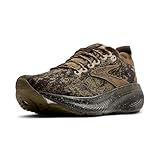
- THIS MEN’S SHOE IS FOR: The Adrenaline GTS 25 is perfect for runners and walkers seeking reliable support and a smooth ride. Featuring holistic GuideRails for Go-To Support and soft, dynamic premium nitrogen-infused DNA LOFT v3 cushioning, it delivers distraction-free comfort mile after mile. This Brooks Adrenaline GTS 25 is a certified PDAC A5500 Diabetic shoe and has been granted the APMA Seal of Acceptance. Predecessor: Adrenaline GTS 24.
- GUIDERAILS HOLISTIC SUPPORT SYSTEM: Our innovative technology - known as “GTS” for “Go-To Support” - supports your body in its natural motion path while keeping excess movement in check.
- SOFT & DYNAMIC CUSHIONING: Even more premium nitrogen-infused DNA Loft v3 cushioning delivers lightweight softness, and feel-good comfort mile after mile.
- TRUSTED FIT: The breathable engineered mesh upper and flat-knit collar offer a secure, comfortable fit, providing both structure and flexibility to accommodate natural movement during active use.
- SMOOTH TRANSITIONS: The specially designed outsole and midsole work together to promote seamless transitions, ensuring comfort and support for every step, so you can stay active longer.
Brooks Adrenaline GTS 25 — gold-standard stability shoe for flat feet.
As an Amazon Associate, Balance Foot & Ankle earns from qualifying purchases. Product recommendations are based on clinical experience; prices and availability shown above update live from Amazon.
When to See a Podiatrist
Painful flat feet in adults can signal posterior tibial tendon dysfunction — a progressive condition that needs early intervention to avoid surgery. Balance Foot & Ankle evaluates adult flatfoot with weight-bearing imaging and custom orthotic prescriptions. Catching PTTD at stage 1-2 makes the difference between a brace and a reconstruction.
Call Balance Foot & Ankle: (810) 206-1402 · Book online · Offices in Howell & Bloomfield Hills
In-Office Treatment at Balance Foot & Ankle
When conservative care isn’t enough, Dr. Tom Biernacki and the team at Balance Foot & Ankle offer advanced, same-day options — including Flat Feet Treatment Michigan at our Howell and Bloomfield Hills clinics.
Same-day appointments available. Call (810) 206-1402 or book online.

Dr. Tom Biernacki, DPM is a double board-certified podiatrist and foot & ankle surgeon at Balance Foot & Ankle Specialists in Southeast Michigan. With over a decade of clinical experience, he specializes in heel pain, bunions, diabetic foot care, sports injuries, and minimally invasive surgery. Dr. Biernacki is a member of the APMA and ACFAS, and his patient education content on MichiganFootDoctors.com and YouTube has reached over one million views.
Frequently Asked Questions
Do flat feet need to be treated?
What is the best insole for flat feet?
- Plantar Fasciitis: Diagnosis and Conservative Management (PubMed)
- Plantar Fasciitis (APMA)
- Diagnosis and Treatment of Plantar Fasciitis (PubMed / AAFP)
- Heel Pain (APMA)
Recommended Products from Dr. Tom