
| Wagner Ulcer Grade | Depth | Infection | Vascular Status | Treatment Level |
|---|---|---|---|---|
| Grade 0 | Intact skin; pre-ulcer | None | Normal | Preventive orthotics; diabetic shoes |
| Grade 1 | Superficial (skin + subcutaneous) | None | Adequate | Debridement; TCC offloading; moist dressings |
| Grade 2 | Deep to tendon, capsule, or bone | None | Adequate | Debridement; TCC; bone biopsy; advanced dressings |
| Grade 3 | Deep + osteomyelitis or abscess | Present (deep) | Adequate | IV antibiotics; surgical debridement; bone resection |
| Grade 4 | Forefoot or toe gangrene | Present | Impaired (PAD) | Vascular consult; partial amputation after revascularization |
| Grade 5 | Whole foot gangrene | Systemic | Severely impaired | Major amputation (BKA or AKA) |
| Dressing Type | Mechanism | Best For | Change Frequency |
|---|---|---|---|
| Hydrocolloid | Moist environment; autolytic debridement | Shallow, low-exudate wounds | Every 3–7 days |
| Foam Dressing | Absorbs moderate-high exudate; cushion | Moderate exudate; protection | Every 2–3 days |
| Silver-Impregnated | Antimicrobial; reduces biofilm | Infected or at-risk wounds | Every 2–3 days |
| Alginate | Highly absorptive; gels with exudate | High-exudate wounds; deep cavities | Daily to every 2 days |
| Collagen Matrix | Structural scaffold; promotes granulation | Stalled chronic wounds; granulation deficit | Weekly |
| NPWT (wound VAC) | Negative pressure removes exudate; promotes granulation | Deep wounds; post-debridement; pre-graft | Every 48–72 hours |
| Bioengineered Tissue (Apligraf, Dermagraft) | Delivers growth factors; temporary skin substitute | Chronic diabetic ulcers stalled >4 weeks | Weekly application |
| Dry Gauze | Passive absorption | Not recommended as primary wound dressing | Daily (but inferior to modern options) |

Watch: Diabetic Foot Ulcer Treatment & Early Stages [Diabetic Neuropathy] — MichiganFootDoctors YouTube
Foot pain isn't resolving?
Same-week appointments at Howell & Bloomfield Hills
Treatment at Balance Foot & Ankle: Diabetic Foot & Circulation Screening →
Board-Certified Podiatric Foot & Ankle Surgeon · Last reviewed: May 4, 2026
Medically Reviewed | Dr. Tom Biernacki, DPM | Board-Certified Podiatric Surgeon | Balance Foot & Ankle, Michigan
Quick Answer:
Quick Answer: Foot wounds — particularly diabetic ulcers — require specialized podiatric management to prevent the cascade from wound to infection to amputation. The diabetic foot wound triad of neuropathy (inability to sense pain), ischemia (poor blood flow limiting healing), and structural deformity (bony prominences creating pressure) makes these wounds fundamentally different from wounds elsewhere on the body. Wagner/University of Texas grading systems classify ulcer severity to guide treatment intensity, from local wound care for superficial ulcers to hospitalization and vascular surgery for deep infected wounds with vascular compromise.
Related Conditions
In This Article
- Why do foot wounds need specialized care?
- Why Foot Wounds Are Different in Diabetic Patients
- Wound Assessment: The Wagner and University of Texas Systems
- Wound Care Principles
- Dr. Tom's Product Recommendations
- Frequently Asked Questions
- Frequently Asked Questions
- What is Wound care?
- Symptoms and warning signs
- Conservative treatment options
- When is surgery considered?
- Recovery timeline and prevention


Why Foot Wounds Are Different in Diabetic Patients
A foot wound in a person with poorly controlled diabetes is one of the highest-acuity presentations in outpatient medicine. The three pillars of diabetic foot risk — peripheral neuropathy, peripheral arterial disease, and structural deformity — create a wound environment that heals slowly, resists infection control, and can progress from a small ulcer to an unsalvageable limb in days to weeks.
Peripheral neuropathy removes the pain signal that would normally prompt protective behavior. A patient with a Grade 1 neuropathic ulcer under their 2nd metatarsal head may walk on it for weeks without discomfort, deepening and expanding the wound with each step. By the time it’s noticed — by the patient, a family member, or at a routine exam — it may already involve deep tissues.
Peripheral arterial disease (PAD) impairs the tissue oxygenation and white cell delivery needed for wound healing and infection control. An ulcer that would heal in 2-3 weeks in a healthy patient may take months in a patient with an ABI of 0.6 — and may not heal at all with critical ischemia (ABI below 0.4) without vascular intervention.
Wound Assessment: The Wagner and University of Texas Systems
Two grading systems guide podiatric wound management:
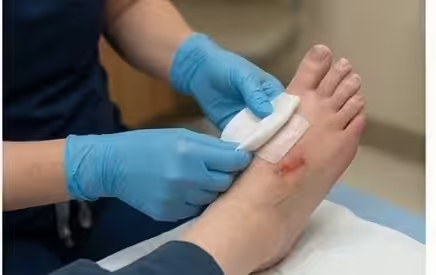
Wagner Grade 0: Pre-ulcerative callus or bony prominence — no open wound. Prevention and offloading. Grade 1: Superficial ulcer, dermis only. Local wound care, debridement, offloading (surgical shoe, total contact cast). Grade 2: Deep ulcer through subcutaneous tissue to tendon or joint capsule. More aggressive debridement, antibiotic coverage, imaging to assess for osteomyelitis. Grade 3: Deep ulcer with osteomyelitis, abscess, or joint infection. Hospitalization typically required; bone biopsy; parenteral antibiotics. Grade 4: Partial foot gangrene. Surgical debridement or local amputation. Grade 5: Extensive foot gangrene. Major amputation.
The University of Texas (UT) system adds ischemia and infection axes to the Wagner staging, giving a 4×4 matrix that better predicts healing and amputation risk. Grade 3C (deep wound + ischemia + infection) carries a dramatically worse prognosis than Grade 1A (superficial wound, no ischemia, no infection).
Wound Care Principles
Debridement is the cornerstone. Sharp debridement removes necrotic tissue, callus rim, and bacterial biofilm — creating a clean wound base that heals far more efficiently than an undébrided wound. Enzymatic and autolytic debridement are adjuncts for wounds where sharp debridement is not appropriate. We debride in-office at every wound care visit.
Total Contact Casting (TCC) is the gold standard for offloading neuropathic plantar ulcers. The cast distributes plantar pressure over the entire lower extremity, reducing focal ulcer-site pressure by 80-90%. TCC heals Grade 1-2 neuropathic ulcers in 80-90% of cases — superior to surgical shoes, removable walkers, and all other offloading methods in RCT evidence. It’s called “total contact” for a reason — the intimate fit that touches the entire plantar surface is what achieves the pressure redistribution.
Infection management — for wounds with clinical signs of infection (warmth, erythema, purulence, odor, leukocytosis), wound cultures guide antibiotic selection. Empiric coverage for gram-positive organisms (MSSA/MRSA) is initiated while cultures are pending. Deep tissue infections, joint involvement, and osteomyelitis require bone biopsy, imaging (MRI is most sensitive for osteomyelitis), and potentially surgical debridement or bone resection.
Dr. Tom's Product Recommendations
McKesson Bordered Foam Wound Dressing
⭐ Highly Rated | Foundation Wellness Partner | 30% Commission
Foam island dressing with adhesive border — absorbs exudate, maintains moist wound environment, and protects the wound from contamination. Used for moderate to high exudate wounds after debridement. Non-adherent contact layer prevents trauma on dressing changes.
Dr. Tom says: “My podiatrist uses these foam dressings on my diabetic ulcer after each debridement visit. They stay in place and absorb well without sticking to the wound bed.”
Grade 1-2 neuropathic ulcers with moderate exudate under podiatric supervision — not for home management of infected wounds
Severely infected wounds or wounds with ischemia — those require urgent professional evaluation and management
Disclosure: We earn a commission at no extra cost to you.
DermaRite Wound Cleanser Spray
⭐ Highly Rated | Foundation Wellness Partner | 30% Commission
Isotonic saline wound cleanser with surfactant for gentle wound irrigation and biofilm disruption. Use at dressing changes to remove loose debris and reduce bacterial burden without cytotoxic effects of hydrogen peroxide or Betadine.
Dr. Tom says: “My podiatrist instructed me to use this wound cleanser at every dressing change between office visits. It keeps the wound clean without the tissue damage from Betadine that my previous doctor was using.”
Patients performing home wound care between podiatry visits — isotonic saline-based cleanser is safe for regular wound irrigation
Do not use on deep wound tracks or sinuses without podiatric guidance; infected wounds require professional evaluation
Disclosure: We earn a commission at no extra cost to you.
Darco Peg Assist Off-Loading Shoe
⭐ Highly Rated | Foundation Wellness Partner | 30% Commission
Surgical shoe with removable pegs that can be selectively extracted to create a custom offloading cavity beneath the wound site. Used for forefoot ulcers when total contact casting is not yet initiated. Prescribed by podiatrist for plantar wound offloading.
Dr. Tom says: “My podiatrist prescribed the Darco peg assist shoe for my metatarsal head ulcer. With the pegs removed under my wound, the pressure was off completely and the wound began healing within two weeks.”
Grade 1-2 neuropathic plantar ulcers requiring pressure relief in a removable device while awaiting total contact cast placement
Patients who are ambulatory independently — non-ambulatory patients don’t benefit from offloading shoes; healing comes from pressure relief
Disclosure: We earn a commission at no extra cost to you.
✅ Pros / Benefits
- Total contact casting heals 80-90% of Grade 1-2 neuropathic ulcers — gold standard offloading
- Sharp debridement at every visit significantly accelerates healing by removing biofilm and necrotic tissue
- Vascular assessment (ABI) identifies ischemia that requires vascular surgery referral before healing is possible
- Early intervention prevents the wound-infection-osteomyelitis-amputation cascade
❌ Cons / Risks
- Ischemic wounds may not heal with local wound care alone — vascular surgery consultation is required
- Osteomyelitis requires prolonged antibiotics (4-6+ weeks) or surgical bone resection
- Patient adherence to offloading is critical — removable devices are removed 72% of the time when patients are ambulatory
- Recurrence is common without correction of underlying bony deformity and pressure concentration
Dr. Tom Biernacki’s Recommendation
Diabetic foot wounds are the condition in podiatry where we have the most impact on life-altering outcomes. A limb that gets referred to me early — Grade 1, superficial, clean edges — almost always heals. A limb that’s referred late with bone involvement, spreading infection, and vascular compromise is a very different situation. The message to my diabetic patients is simple: any wound, no matter how small, warrants a call to our office the same day you notice it.
— Dr. Tom Biernacki, DPM | Board-Certified Podiatric Surgeon | Balance Foot & Ankle
Frequently Asked Questions
When should a diabetic patient call about a foot wound?
Immediately — same day it’s noticed, regardless of how small it appears. Diabetic foot wounds can progress from a small break to a deep infection within 48-72 hours. There is no such thing as a trivial foot wound in a patient with diabetes and neuropathy.
What does a podiatrist do for a diabetic foot ulcer?
We assess the wound depth and extent, perform sharp debridement to remove necrotic tissue, culture the wound, provide appropriate wound dressing, initiate antibiotics for infected wounds, offload the foot with a surgical shoe or total contact cast, and evaluate vascular status with ABI testing. We also coordinate with vascular surgery, infectious disease, and the patient’s diabetes care team as needed.
What is total contact casting?
Total contact casting (TCC) is the gold standard for offloading plantar diabetic ulcers. A non-removable fiberglass cast is applied from toe to knee, distributing plantar pressure over the entire leg surface rather than concentrating it at the ulcer. Studies show 80-90% healing of Grade 1-2 neuropathic ulcers with TCC. It’s superior to all removable offloading devices.
How do I know if my foot wound is infected?
Signs of infection include: increased redness spreading beyond the wound margin, warmth, swelling, purulent (pus) discharge, odor, fever, or chills. Diabetic patients with neuropathy may not feel pain even with severe infection — visual inspection is essential. Any sign of infection is an indication to call your podiatrist immediately.
Michigan Foot Pain? See Dr. Biernacki In Person
4.9★ rated | 1,123 Reviews | 3,000+ Surgeries
Same-week appointments · Howell & Bloomfield Hills
📞 (810) 206-1402 Book Online →Frequently Asked Questions
When should I see a podiatrist?
If symptoms persist past 2 weeks, affect your normal activity, or are accompanied by red-flag symptoms (warmth, redness, swelling, inability to bear weight).
What does treatment cost?
Most diagnostic visits and conservative treatments are covered by Medicare and major insurers. Out-of-pocket costs vary by your specific plan.
How quickly can I get an appointment?
Most non-urgent cases see us within 5 business days. Urgent cases (sudden pain, possible fracture) typically same or next business day.
Wound care typically responds best to early podiatrist evaluation, conservative treatments such as supportive footwear and targeted physical therapy, and—when needed—custom orthotics or in-office procedures. Most patients see meaningful improvement within 4-6 weeks of starting a structured treatment plan. Schedule an evaluation at our Howell or Bloomfield Hills office for a clinical assessment.
What is Wound care?

Wound care is a common foot/ankle condition that affects mobility and quality of life. Understanding the underlying cause is the first step in successful treatment. Our podiatrists at Balance Foot & Ankle perform a hands-on biomechanical exam, review your activity history, and use diagnostic imaging when appropriate to identify the root cause—not just treat the symptom. Many patients have been told to “rest and ice” without a deeper diagnostic workup; our approach is different.
Symptoms and warning signs
Common signs of wound care include pain that worsens with activity, morning stiffness, swelling, tenderness when palpated, and difficulty bearing weight. If you experience sudden severe pain, inability to walk, visible deformity, numbness or color change, contact our office the same day or visit urgent care—these can signal a more serious injury such as a fracture, tendon rupture, or vascular compromise. Diabetics with any foot wound should seek same-day care.
Conservative treatment options
Most cases of wound care respond to non-surgical care: structured rest, supportive footwear changes, custom orthotics, targeted stretching and strengthening protocols, anti-inflammatory medications when medically appropriate, and in-office procedures such as ultrasound-guided injections. We also offer advanced therapies including MLS laser therapy, EPAT/shockwave, regenerative injections, and image-guided procedures. Treatment is sequenced from least invasive to most invasive, and we explain the rationale at every step.
When is surgery considered?
Surgery is reserved for cases that fail 3-6 months of well-structured conservative care, when there is structural pathology (severe deformity, complete tear, advanced arthritis), or when imaging shows damage that will not heal without intervention. Our surgeons have performed 3,000+ foot and ankle procedures and prioritize minimally-invasive techniques whenever appropriate. We discuss recovery timelines, return-to-activity milestones, and realistic outcome expectations before any procedure is scheduled.
Recovery timeline and prevention
Recovery from wound care varies based on severity and chosen treatment path. Conservative cases often improve within 4-8 weeks with consistent adherence to the protocol. Post-procedural recovery may range from a few days (in-office procedures) to several months (reconstructive surgery). Long-term prevention involves footwear assessment, activity modification, structured strengthening, and regular check-ins with your podiatrist if you have a history of recurrence. We provide written home-exercise plans and digital follow-up support.
Ready to feel better?
Same-week appointments available in Howell and Bloomfield Hills, Michigan.
Book Your VisitFrequently Asked Questions
Why is diabetic foot care so important?
Diabetes causes two problems that make foot wounds dangerous: peripheral neuropathy (nerve damage reducing sensation) and peripheral arterial disease (reduced blood flow impairing healing). A small blister or cut that a non-diabetic person would notice and treat can go undetected in a diabetic patient for days, become infected, and progress to osteomyelitis. Diabetic foot ulcers are the leading cause of non-traumatic lower limb amputations. A consistent foot care routine and regular podiatry visits prevent most amputations.
How often should diabetic patients see a podiatrist?
Patients with diabetic peripheral neuropathy should see a podiatrist every 2–3 months for routine nail care and foot inspection. Patients with active foot complications (ulcers, Charcot foot, severe PAD) need more frequent visits — often every 2–4 weeks until stable. Even well-controlled diabetics without neuropathy benefit from annual foot exams. Many amputations we see in consultation could have been prevented with earlier, consistent podiatric care.
What is diabetic peripheral neuropathy?
Peripheral neuropathy is nerve damage from chronically elevated blood sugar, causing numbness, tingling, burning, or loss of sensation — typically starting in the toes and progressing upward in a ‘stocking’ distribution. The dangerous aspect isn’t the pain — it’s the absence of pain. Patients with severe neuropathy don’t feel blisters, cuts, pressure sores, or early infections. A wound can reach bone before it’s noticed. Neuropathy screening with a 10-gram monofilament is part of every diabetic foot exam.
What are the warning signs of a diabetic foot problem?
Seek same-day evaluation for: any open wound or blister that isn’t healing within 1–2 weeks, redness, warmth, or swelling in any part of the foot (possible Charcot fracture or infection), a new blister or callus, any red streaking or warmth spreading up the leg (cellulitis), foot or ankle pain in a diabetic patient with neuropathy (could be Charcot without pain). Don’t wait to see if it improves — diabetic foot infections are medical emergencies.
What is the best foot cream for diabetic feet?
The goal of diabetic foot cream is restoring the skin’s moisture barrier to prevent fissuring and cracking — the entry points for infection. Look for urea-based creams (10–25% urea) or lactic acid formulations that actually penetrate thickened skin rather than sitting on the surface. AmLactin 12%, Eucerin Diabetics’ Dry Skin Relief, and Gold Bond Diabetics’ Dry Skin Relief are clinical-grade options. Avoid cream between the toes — moisture retention between toes promotes maceration and fungal infection.
Can diabetic patients get foot massages?
Light massage is generally safe for diabetic patients without active wounds, severe edema, or PAD. However, deep tissue massage or vigorous rubbing should be avoided — with neuropathy, patients can’t feel if tissue is being damaged. Foot massagers with rollers or intense vibration should be avoided entirely. If you enjoy foot massage, use gentle, light strokes with a diabetic-appropriate foot cream. Let your podiatrist know if you’re incorporating massage into your routine — we can advise based on your circulation status.
What type of socks should diabetic patients wear?
Diabetic socks: seamless (seams can create pressure sores over a neuropathic foot), non-binding at the top (circulation-restrictive socks worsen PAD), moisture-wicking (polyester/wool blend reduces bacterial environment), padded sole (cushions bony prominences). Avoid cotton socks for active patients — cotton retains moisture. Never wear socks with elastic bands that leave marks on the leg. Brands specifically designed for diabetic feet: Thorlos, Wigwam, and most major medical supply brands.
Should diabetic patients cut their own toenails?
It depends on neuropathy severity and vision. Patients with mild neuropathy and good vision can safely trim nails straight across without cutting the corners. Patients with moderate-to-severe neuropathy, poor vision, or thick nails should not self-trim — the risk of cutting the surrounding skin (which they may not feel) is too high. This is exactly what podiatry nail care visits are for. Medicare and most insurance plans cover routine foot care for diabetic patients with documented neuropathy.
What is Charcot foot and how serious is it?
Charcot neuroarthropathy is a serious diabetic complication where neuropathy allows repeated micro-fractures to occur without pain, leading to progressive bone and joint destruction and foot deformity. The classic presentation: a warm, swollen, red foot in a diabetic patient — often mistaken for cellulitis. Early Charcot (caught within weeks of onset) can be managed with a total contact cast to prevent further collapse. Late Charcot with significant arch destruction often requires reconstructive surgery. Missing the diagnosis is catastrophic — a single patient with missed Charcot can progress to a rocker-bottom deformity requiring amputation.
Does insurance cover diabetic foot care?
Medicare Part B covers routine foot care (nail trimming, callus debridement) for diabetic patients with documented peripheral neuropathy — one visit every 2 months. Most PPO and HMO plans follow similar coverage rules. Diabetic shoes and insoles are covered under Medicare’s Therapeutic Shoe Bill (one pair of shoes plus three pairs of custom insoles per year). Call us at (810) 206-1402 and we’ll verify your specific coverage before your first appointment.
Doctor Hoy’s Natural Pain Relief Gel
Natural topical pain relief I use in our clinic. Arnica + camphor formula — apply directly to the area 3–4x daily. ($20–25)
Shop Doctor Hoy’s →PowerStep Pinnacle Insoles
Medical-grade arch support. The OTC insole I recommend most in our clinic. Reduces stress on the foot with every step. ($25–35)
Shop PowerStep →In-Office Treatment at Balance Foot & Ankle
If home treatment isn’t providing relief for your foot and ankle issues, our podiatry team at Balance Foot & Ankle can help with same-day evaluations and advanced in-office care.
Same-day appointments available. (810) 206-1402
Learn about our podiatry appointment booking → | Book online →

Dr. Tom Biernacki, DPM is a double board-certified podiatrist and foot & ankle surgeon at Balance Foot & Ankle Specialists in Southeast Michigan. With over a decade of clinical experience, he specializes in heel pain, bunions, diabetic foot care, sports injuries, and minimally invasive surgery. Dr. Biernacki is a member of the APMA and ACFAS, and his patient education content on MichiganFootDoctors.com and YouTube has reached over one million views.
- Plantar Fasciitis: Diagnosis and Conservative Management (PubMed)
- Plantar Fasciitis (APMA)
- Diagnosis and Treatment of Plantar Fasciitis (PubMed / AAFP)
- Heel Pain (APMA)
Related Treatments at Balance Foot & Ankle
Our board-certified podiatrists offer advanced treatments at our Bloomfield Hills and Howell locations.
Recommended Products from Dr. Tom