
Medically reviewed by Dr. Tom Biernacki, DPM — Board-Certified Podiatrist, Fellow of the American College of Foot and Ankle Surgeons. Updated April 2026.
What Makes an Ingrown Toenail Become Infected?
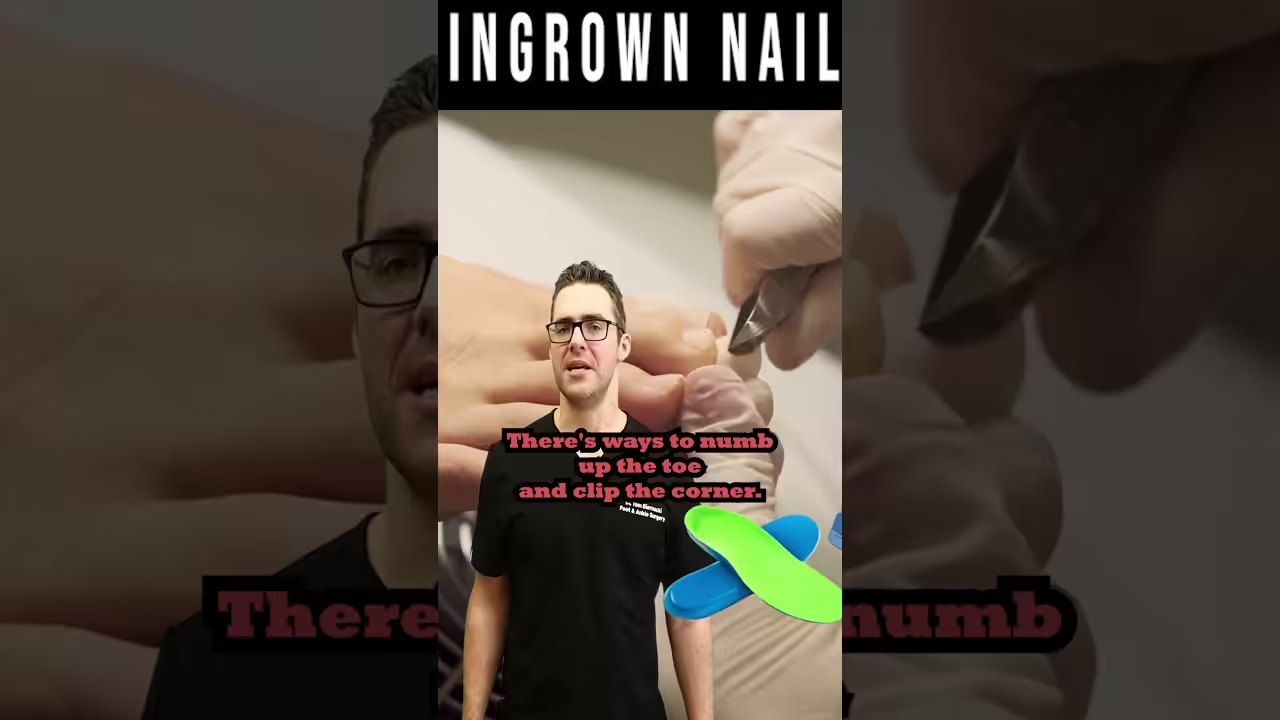
An ingrown toenail (onychocryptosis) occurs when the nail edge—most commonly the big toenail—curves downward and grows into the surrounding skin, creating a puncture wound at the nail groove. The break in skin integrity allows bacteria (most commonly Staphylococcus aureus and Streptococcus species) to enter, triggering an infection. Signs of infection include: increasing redness that spreads beyond the immediate nail area, warmth, swelling, throbbing pain, and drainage of pus or cloudy fluid from the nail groove. An infected ingrown nail requires prompt treatment and should not be left untreated, particularly in diabetic patients or those with poor circulation.
Ingrown toenails develop for several reasons: improper nail trimming (rounding the corners rather than cutting straight across), tight footwear compressing the toe, trauma, genetic nail curvature, and hyperhidrosis (excessive sweating that softens the skin). Recurrent ingrown nails—regardless of how carefully the nail is trimmed—suggest an underlying nail width or curvature problem that may require definitive surgical correction.
Home Care: What Actually Helps
For early-stage ingrown toenails without significant infection (mild redness and tenderness without pus), home care can be effective. Soak the foot in warm water with Epsom salt for 15–20 minutes, 2–3 times daily—this softens the skin and reduces inflammation. After soaking, gently lift the nail edge with a small piece of cotton or dental floss placed under the ingrown edge to redirect nail growth away from the skin. Wear open-toed shoes or sandals to relieve pressure. Avoid attempting to dig out the nail or cutting a “V” in the center—these maneuvers do not help and often worsen the situation.
Topical antibiotic ointment (bacitracin or triple antibiotic) applied to the nail groove can reduce surface bacterial load, but will not treat a true infection that has penetrated the tissue. Over-the-counter ingrown toenail products containing sodium sulfide or urea work to soften the nail fold, which may provide mild relief but are not adequate treatment for infected nails. Home care is only appropriate for early, non-infected ingrown nails—once infection signs develop, professional treatment is needed.
When to See a Podiatrist
See a podiatrist promptly if: there is pus draining from the nail groove, the redness is spreading up the toe or foot, you have significant pain that limits activity, you are diabetic or have peripheral vascular disease (any foot infection warrants same-day evaluation), the ingrown nail has been present for more than 2–3 weeks without improvement, or this is a recurrent problem. Diabetic patients and those with compromised circulation are at risk for rapid progression to serious infection—a seemingly minor ingrown toenail can lead to cellulitis, osteomyelitis (bone infection), or in severe cases, toe amputation if not treated promptly.
Office Treatment: Partial Nail Avulsion
The standard office treatment for an infected or recurrently ingrown toenail is a partial nail avulsion—removal of the ingrown nail border under local anesthesia. After a digital nerve block numbs the toe, the offending nail border is cut longitudinally and removed. For a first occurrence, the nail is removed without destroying the nail matrix, allowing the nail to regrow normally. For recurrent ingrown nails, a chemical matrixectomy is performed: phenol (a chemical) or sodium hydroxide is applied to the nail matrix (the growth center at the base of the nail) after removing the nail border. This permanently destroys the matrix cells responsible for growing the offending nail edge, preventing regrowth of that portion. The procedure takes 15–20 minutes in-office under local anesthesia.
Chemical matrixectomy (phenol-alcohol procedure) has a success rate of approximately 95–98% for permanent resolution of the ingrown nail edge—it is highly effective and the preferred treatment for recurrent ingrown nails. The treated nail border does not regrow, but the remaining nail looks cosmetically near-normal in most cases. After the procedure, the toe is bandaged and dressed daily at home for 2–4 weeks. Some drainage is expected during healing. Patients can walk immediately but should wear open-toed shoes for several weeks.
Frequently Asked Questions
Should I go to the ER for an infected ingrown toenail?
Most infected ingrown toenails can be treated at a podiatrist’s office or urgent care clinic rather than an emergency room. Go to the ER or seek immediate care if: you have red streaks extending up the foot or leg (indicating spreading infection/lymphangitis), fever or chills, significant swelling beyond the toe, or you are diabetic or immunocompromised with any signs of infection. A podiatrist’s office is the most efficient option for routine infected ingrown toenails—they have the instruments and expertise for immediate nail avulsion, which is the definitive treatment. Urgent care can provide antibiotics and temporary relief but typically cannot perform the definitive nail procedure.
Do I need antibiotics for an infected ingrown toenail?
Antibiotics alone are not effective treatment for an infected ingrown toenail—the nail border acting as a foreign body must be removed for the infection to resolve. Antibiotics may be prescribed alongside nail avulsion when there is significant surrounding cellulitis (infection spreading into the skin), but the primary treatment is removing the offending nail edge. In mild infections without spreading cellulitis, nail avulsion alone is often sufficient without antibiotics. Patients with diabetes, poor circulation, or immune suppression are more likely to require antibiotics in addition to the procedure. A podiatrist can assess whether antibiotics are needed based on the extent of infection.
Will the toenail grow back after ingrown toenail removal?
It depends on whether a chemical matrixectomy was performed. If only the nail border was removed without matrix destruction (temporary nail avulsion), the nail will regrow in 3–6 months and may become ingrown again. If a chemical matrixectomy was performed with phenol or sodium hydroxide, the treated portion of the nail matrix is permanently destroyed and that nail edge will not regrow. The remaining nail looks cosmetically acceptable—slightly narrower than before but natural in appearance. For patients who want permanent resolution of recurrent ingrown nails, matrixectomy is the appropriate treatment. The procedure is highly effective with a 95–98% success rate for preventing nail regrowth in the treated area.
Medical References & Sources
- American Podiatric Medical Association — Ingrown Toenails
- PubMed Research — Phenol Matrixectomy Outcomes and Recurrence Rates
- PubMed Research — Ingrown Toenail Treatment and Infection Management
Dr. Tom Biernacki, DPM is a board-certified podiatric surgeon at Balance Foot & Ankle in Howell and Bloomfield Hills, Michigan. He treats ingrown toenails with in-office nail avulsion and permanent chemical matrixectomy procedures, including same-day evaluation for infected nails.
Dr. Tom’s Recommended Products for Ingrown Toenails
📍 Located in Michigan?
Our board-certified podiatrists treat this condition at two convenient locations. Same-day appointments often available.
These are products I personally use and recommend to my patients at Balance Foot & Ankle.
- PowerStep Ingrown Toenail Pain Reliever — Sodium sulfide solution softens nail edge for painless removal — reduces redness and swelling within 24 hours
- Onyfix Nail Correction System — Composite strip guides nail growth away from skin — non-invasive correction without any cutting
- Proper Nail File and Nipper Set — Professional-grade stainless steel nippers and sapphire file — correct nail trimming prevents future ingrowth
📧 Get Dr. Tom’s Free Lab Test Guide
Discover the 5 lab tests every person over 35 should ask their doctor about — explained in plain English by a board-certified physician.
Affiliate disclosure: As an Amazon Associate, Balance Foot & Ankle earns from qualifying purchases. We only recommend products we trust for our own patients.
Join 950,000+ Learning About Foot Health
Dr. Tom shares honest medical advice, supplement reviews, and treatment guides you won’t find anywhere else.
Subscribe on YouTube →Medically Reviewed by: Dr. Tom Biernacki, DPM — Board-Certified Podiatrist, Balance Foot & Ankle Specialists
Infected Ingrown Toenail? Get Relief Today.
An infected ingrown toenail needs professional treatment to prevent the infection from spreading. Our podiatrists provide same-week appointments for quick, comfortable in-office procedures.
Clinical References
- Eekhof JA, et al. Interventions for Ingrowing Toenails. Cochrane Database Syst Rev. 2012;(4):CD001541.
- Heidelbaugh JJ, Lee H. Management of the Ingrown Toenail. Am Fam Physician. 2009;79(4):303-308.
- Zuber TJ. Ingrown Toenail Removal. Am Fam Physician. 2002;65(12):2547-2552.

Dr. Tom Biernacki, DPM is a double board-certified podiatrist and foot & ankle surgeon at Balance Foot & Ankle Specialists in Southeast Michigan. With over a decade of clinical experience, he specializes in heel pain, bunions, diabetic foot care, sports injuries, and minimally invasive surgery. Dr. Biernacki is a member of the APMA and ACFAS, and his patient education content on MichiganFootDoctors.com and YouTube has reached over one million views.
Recommended Products from Dr. Tom