
✅ Medically reviewed by Dr. Thomas Biernacki, DPM — Board-Certified Podiatrist · Last updated April 6, 2026

Medically reviewed by
Dr. Carl Jay, DPM · Board-Certified Podiatric Surgeon
Fellowship-Trained in Foot & Ankle Surgery · Updated April 2026
⚡ Quick Answer
Cortisone injections for Morton’s neuroma provide significant relief in roughly 30–50% of patients, with best results for neuromas under 5mm. The injection reduces inflammation around the nerve, not the neuroma itself — so relief may be temporary (weeks to months). Most podiatrists limit cortisone to 2–3 injections before considering alcohol sclerosing injections or surgery. When combined with wider shoes, metatarsal pads, and orthotics, injections can extend symptom-free periods substantially.
Watch: Morton’s Neuroma Injection & Treatment

Table of Contents
- Cortisone Injections for Morton’s Neuroma: Do They Work?
- How the Injection Works
- What to Expect During the Procedure
- Success Rates & Limitations
- Risks & Side Effects
- Cortisone vs. Other Injection Options
- After the Injection: Maximizing Results
- Best Products for Morton’s Neuroma
- When Injections Aren’t Enough
- FAQ
- Sources
Cortisone Injections for Morton’s Neuroma: Do They Work?
If you’ve been diagnosed with a Morton’s neuroma and conservative measures (wider shoes, metatarsal pads, orthotics) haven’t provided enough relief, cortisone injections are often the next step. They’re one of the most commonly performed procedures for neuroma treatment — and they can provide meaningful relief — but it’s important to understand both what they can and can’t do.
Cortisone (corticosteroid) injections reduce the inflammation surrounding the thickened nerve, which is what produces the burning, tingling, and shooting pain. However, they don’t shrink the neuroma itself. This means the relief is often temporary — once the anti-inflammatory effect wears off, symptoms can return if the mechanical factors causing the irritation haven’t been addressed. The injection works best as part of a comprehensive treatment plan, not as a standalone solution.
How the Injection Works
The injection delivers a corticosteroid (typically dexamethasone or betamethasone) mixed with a local anesthetic directly into the intermetatarsal space where the neuroma sits — most commonly between the 3rd and 4th metatarsal heads. The corticosteroid is a powerful anti-inflammatory that reduces the perineural fibrosis (scar tissue) and inflammation surrounding the enlarged nerve.
The local anesthetic (lidocaine or marcaine) provides immediate pain relief that lasts a few hours, which also serves as a diagnostic tool — if the injection immediately eliminates your pain, it confirms the neuroma is the source. The corticosteroid takes 3–7 days to reach full effect, so there’s often a brief “gap” between when the anesthetic wears off and the steroid kicks in where symptoms may temporarily return.
What to Expect During the Procedure
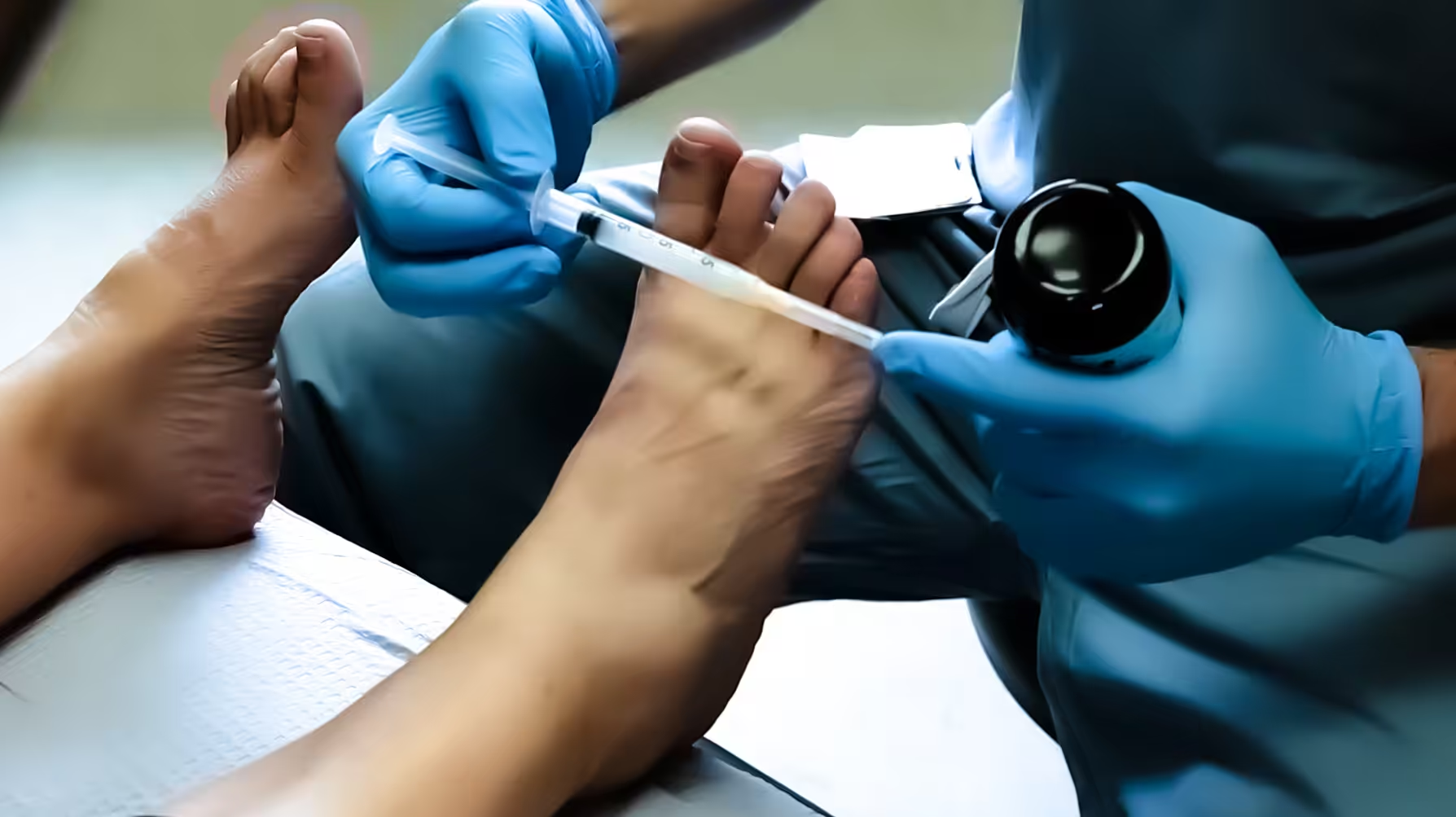
The injection takes about 5 minutes and is performed in the office. Here’s the step-by-step process at Balance Foot & Ankle:
We clean the top of the foot with an alcohol swab. The injection is given from the top (dorsal) of the foot, between the metatarsal heads — this approach is less painful than injecting from the bottom because the skin on top is thinner and less sensitive. You’ll feel a brief pinch as the needle enters the skin, then pressure as the medication is deposited. The entire injection takes about 15 seconds.
Many patients are surprised by how quick and tolerable the procedure is — it’s significantly less painful than the neuroma symptoms themselves. You can walk immediately after the injection and return to normal activities right away. We recommend avoiding intense exercise for 24–48 hours to allow the medication to settle into the tissue.
Success Rates & Limitations
Research on cortisone injections for Morton’s neuroma shows variable results depending on the study and patient population. Here’s what the evidence tells us:
| Outcome Measure | Result |
|---|---|
| Short-term relief (1–3 months) | 50–80% of patients report significant improvement |
| Long-term relief (12+ months) | 30–50% maintain improvement without further intervention |
| Best candidates | Neuromas <5mm on ultrasound; shorter symptom duration; first injection |
| Poorer candidates | Neuromas >8mm; symptoms for >1 year; multiple previous injections |
| Number of injections recommended | Maximum 2–3 in the same interspace per year |
The size of the neuroma matters significantly. Small neuromas (under 5mm) respond best to cortisone injections because the inflammation-to-nerve-thickening ratio is higher — there’s more reversible inflammation and less irreversible fibrosis. Larger neuromas (over 8mm) have more structural nerve damage that cortisone can’t address, which is why they respond less predictably to injections.
Risks & Side Effects
Cortisone injections in the foot are generally safe, but potential side effects include temporary increased pain for 24–48 hours after injection (a “cortisone flare”), skin depigmentation (lightening) at the injection site, fat pad atrophy (thinning of the cushioning under the metatarsal heads) with repeated injections, and very rarely, weakening of the plantar plate (the ligament under the MTP joint).
Fat pad atrophy is the most clinically significant concern and the primary reason we limit cortisone to 2–3 injections per interspace. Losing the natural cushioning under the ball of the foot can create a new problem (metatarsalgia) while attempting to treat the neuroma. This is why we consider alternative injection options (see below) for patients who need ongoing treatment beyond 2–3 cortisone rounds.
Cortisone vs. Other Injection Options
| Injection Type | How It Works | Best For | Sessions Needed |
|---|---|---|---|
| Cortisone (corticosteroid) | Reduces inflammation around the nerve | First-line treatment; small neuromas; acute flare-ups | 1–3 injections |
| Alcohol sclerosing | Dehydrates and shrinks the neuroma tissue directly | Neuromas that respond temporarily to cortisone; patients wanting to avoid surgery | 4–7 weekly injections (series) |
| Platelet-rich plasma (PRP) | Growth factors promote tissue healing and reduce inflammation | Emerging treatment; limited evidence for neuroma specifically | 1–3 injections |
| Radiofrequency ablation | Uses heat to destroy the nerve, eliminating pain signals | Chronic neuromas in patients who want to avoid open surgery | Single procedure |
Alcohol sclerosing injections are our most commonly used alternative to cortisone. A series of 4–7 weekly injections of dilute alcohol (4%) is delivered into and around the neuroma under ultrasound guidance. The alcohol chemically destroys the nerve tissue, effectively shrinking the neuroma. Studies show a success rate of 60–89% for avoiding surgery, making it an excellent intermediate option between cortisone and surgical excision.
After the Injection: Maximizing Results
A cortisone injection works best when you simultaneously address the mechanical factors that irritated the nerve in the first place. Without these changes, the neuroma will continue to be compressed and inflamed, and the injection’s benefits will be short-lived.
Switch to wider shoes — the metatarsal heads need room to spread apart so they’re not squeezing the neuroma between them. This is the single most important change you can make. Add a metatarsal pad to your insole, positioned just behind the metatarsal heads — it spreads the bones apart, creating more space for the nerve. Wear orthotics with a built-in metatarsal support to provide consistent offloading with every step. Avoid high heels and narrow-toe shoes, which compress the forefoot and negate the injection’s benefits.
Best Products for Morton’s Neuroma
🏆 #1 Pick: Metatarsal Pads
Small dome-shaped pads placed just behind the metatarsal heads that spread the bones apart, decompressing the nerve. Studies show they reduce intermetatarsal pressure by 30–50%. The most effective non-invasive treatment for Morton’s neuroma — use them alongside your injection for best results.
Affiliate link · As an Amazon Associate we earn from qualifying purchases
Correct Toes Toe Spacers
Medical-grade silicone spacers worn between the toes to maintain natural toe splay inside shoes. They keep the metatarsal heads separated, reducing compression on the interdigital nerve. Can be worn during walking and exercise in wide-toe-box shoes.
Affiliate link · As an Amazon Associate we earn from qualifying purchases
Altra Paradigm Running Shoe
A zero-drop, foot-shaped shoe with Altra’s signature wide toe box that allows natural toe splay. The generous forefoot width prevents metatarsal compression — the primary aggravator of Morton’s neuroma. Balanced cushioning provides comfort without compressing the forefoot. Ideal for patients returning to activity after injection.
Affiliate link · As an Amazon Associate we earn from qualifying purchases
When Injections Aren’t Enough
If cortisone and/or alcohol sclerosing injections haven’t provided lasting relief — and you’ve made the appropriate shoe and orthotic changes — surgical excision (neurectomy) is the definitive treatment. Surgery involves removing the enlarged nerve through a small incision on the top of the foot. The procedure takes about 30 minutes, is performed as an outpatient, and has a success rate exceeding 80%.
The trade-off is permanent numbness in the adjacent sides of the two toes that the nerve supplied. Most patients find this numbness much preferable to the burning, shooting neuroma pain — and many say they barely notice it after a few months. Recovery involves 2–3 weeks in a surgical shoe followed by transition to regular footwear.
For a complete overview of all Morton’s neuroma treatments (conservative through surgical), see our comprehensive Morton’s neuroma guide.
⚠️ When to Reconsider Your Approach
- Two cortisone injections with only temporary relief — consider alcohol sclerosing injection series or surgical consultation
- Symptoms worsening despite injections and shoe changes — the neuroma may be larger than expected; updated imaging is warranted
- New symptoms of fat pad thinning under the ball of the foot — possible cortisone-related fat pad atrophy; no further steroid injections
- Numbness becoming constant rather than intermittent — suggests nerve damage is progressing; evaluation for surgical timing
More Podiatrist-Recommended Neuroma Essentials
Metatarsal Pad
No products found.
Spreads the metatarsal heads and decompresses the pinched nerve.
Neuroma-Style Met Pad

Wider profile targets Morton’s neuroma pressure between the 3rd and 4th toes.
Wide-Toe-Box Walking Shoe
No products found.
Room for the forefoot to splay reduces nerve compression all day.
As an Amazon Associate, Balance Foot & Ankle earns from qualifying purchases. Product recommendations are based on clinical experience; prices and availability shown above update live from Amazon.
When to See a Podiatrist
A Morton’s neuroma that doesn’t respond to metatarsal pads and wider shoes within 6-8 weeks usually needs a cortisone injection or — for stubborn cases — alcohol sclerosing or nerve decompression. Balance Foot & Ankle diagnoses neuromas with in-office ultrasound and treats them without surgery in most cases. Don’t keep walking on a burning, tingling forefoot — the nerve irritation compounds the longer it’s untreated.
Call Balance Foot & Ankle: (810) 206-1402 · Book online · Offices in Howell & Bloomfield Hills
Frequently Asked Questions
How many cortisone injections can I get for Morton’s neuroma?
Most podiatrists recommend a maximum of 2–3 cortisone injections in the same intermetatarsal space, spaced at least 3 months apart. Beyond this, the risk of fat pad atrophy and plantar plate weakening increases significantly. If two injections haven’t provided lasting relief, it’s generally more effective to transition to alcohol sclerosing injections or discuss surgical options rather than continuing with cortisone.
How long does a cortisone injection last for Morton’s neuroma?
This varies widely between patients. Some experience relief for just a few weeks, others for several months, and a fortunate group gets permanent relief from a single injection (particularly those with small neuromas caught early). On average, meaningful relief lasts 6–12 weeks. The duration tends to be longer when the injection is combined with shoe modifications, metatarsal pads, and orthotics — because these address the mechanical compression that’s irritating the nerve.
Does the injection hurt?
There’s a brief pinch when the needle enters the skin on the top of the foot, followed by a pressure sensation as the medication is injected. The entire process takes about 15 seconds. Most patients rate it a 3–4 out of 10 on a pain scale — significantly less painful than the neuroma symptoms themselves. The local anesthetic mixed with the cortisone provides immediate numbness to the area. Some patients experience a temporary increase in pain 24–48 hours after injection (a “steroid flare”) before the full anti-inflammatory effect takes hold.
Can I walk after a cortisone injection in my foot?
Yes — you can walk immediately after the injection and drive yourself home. The local anesthetic may make the ball of your foot feel numb for 1–2 hours, so be mindful of uneven surfaces. We recommend avoiding intense exercise or prolonged standing for 24–48 hours to allow the medication to settle into the tissue. Regular walking and daily activities are fine from the moment you leave the office.
In-Office Treatment at Balance Foot & Ankle
When conservative care isn’t enough, Dr. Tom Biernacki and the team at Balance Foot & Ankle offer advanced, same-day options — including Morton’s Neuroma Treatment Michigan at our Howell and Bloomfield Hills clinics.
Same-day appointments available. Call (810) 206-1402 or book online.
Sources
- Thomson CE, Gibson JN, Martin D. Interventions for the treatment of Morton’s neuroma. Cochrane Database Syst Rev. 2004;(3):CD003118.
- Markovic M, Crichton K, Read JW, et al. Effectiveness of ultrasound-guided corticosteroid injection in the treatment of Morton’s neuroma. Foot Ankle Int. 2008;29(5):483-487.
- Dockery GL. The treatment of intermetatarsal neuromas with 4% alcohol sclerosing injections. J Foot Ankle Surg. 1999;38(6):403-408.
- Mahadevan D, Venkatesan M, Bhatt R, Bhatia M. Diagnostic accuracy of clinical tests for Morton’s neuroma compared with ultrasonography. J Foot Ankle Surg. 2015;54(4):549-553.
The Bottom Line
Cortisone injections are a reasonable and often effective option for Morton’s neuroma — but they work best as part of a comprehensive approach that includes wider shoes, metatarsal pads, and orthotics. Small neuromas caught early respond best. If two injections provide only temporary relief, alcohol sclerosing injections offer a middle ground before considering surgery. And if you do need surgery, modern neurectomy is a reliable procedure with excellent outcomes. The most important factor in treatment success isn’t which injection you choose — it’s making the shoe and orthotic changes that prevent the nerve from being compressed in the first place.
Morton’s Neuroma Not Improving?
Our board-certified podiatrists provide cortisone and alcohol sclerosing injections for Morton’s neuroma, along with comprehensive conservative and surgical options. Same-week appointments available.
Or call: (810) 206-1402 · Howell & Bloomfield Hills, MI
Morton’s Neuroma Causing Forefoot Pain?
Our podiatrists offer expert neuroma treatment from conservative padding and injections to advanced surgical options when needed.
Clinical References
- Thomson CE, Gibson JN, Martin D. Interventions for the treatment of Morton’s neuroma. Cochrane Database Syst Rev. 2004;(3):CD003118.
- Mahadevan D, Venkatesan M, Bhatt R, Bhatia M. Diagnostic accuracy of clinical tests for Morton’s neuroma compared with ultrasonography. J Foot Ankle Surg. 2015;54(4):549-553.
- Markovic M, Crichton K, Read JW, Lam P, Slater HK. Effectiveness of ultrasound-guided corticosteroid injection in the treatment of Morton’s neuroma. Foot Ankle Int. 2008;29(5):483-487.

👟 Dr. Tom Also Recommends
Podiatrist Recommended Shoes 2026: Dr. Tom’s Top Picks for Every Condition
The right footwear can make or break your recovery. Dr. Tom’s complete guide to the best shoes for plantar fasciitis, flat feet, neuropathy, bunions & more — with clinical picks for every foot type.
See Dr. Tom’s Top Shoe Picks →Insurance Accepted
BCBS · Medicare · Aetna · Cigna · United Healthcare · HAP · Priority Health · Humana · View All →
Howell Office
3980 E Grand River Ave, Suite 140
Howell, MI 48843
Get Directions →
Bloomfield Hills Office
43700 Woodward Ave, Suite 207
Bloomfield Hills, MI 48302
Get Directions →
Your Board-Certified Podiatrists



Ready to Get Back on Your Feet?
Same-week appointments available at both locations.
Book Your AppointmentDr. Hoy’s Complete Pain Relief Line — Dr. Tom’s Picks (2026)
Dr. Hoy’s Natural Pain Relief is Dr. Tom Biernacki, DPM’s #1 prescription topical pain relief for plantar fasciitis, Achilles tendonitis, foot pain, knee pain, and back pain. Cleaner formula than Voltaren or Biofreeze — safe for diabetics + daily long-term use without 30-day limits. Below is the complete Dr. Hoy’s product line, organized by use case.

Dr. Hoy’s Natural Pain Relief Gel (4oz Tube)Dr. Tom’s #1 Brand
The flagship Dr. Hoy’s — menthol-based natural pain relief gel. The bottle Dr. Tom hands every plantar fasciitis patient on visit one. Cleaner formula than Voltaren or Biofreeze.
- Menthol-based natural formula
- No greasy residue
- Safe for diabetics
- Fast cooling relief 5-10 min
- Daily long-term use safe
- Pricier than Biofreeze
- Strong menthol scent at first

Dr. Hoy’s Natural Pain Relief Gel (8oz Pump Bottle)Dr. Tom’s #1 Brand
8oz pump bottle — same formula as the 4oz tube but 2x the value. Best for athletes, families, or chronic pain patients who use it daily.
- 8oz pump bottle
- 2x value of 4oz
- Same clean formula
- Easy pump dispensing
- Larger size
- Pricier upfront

Dr. Hoy’s Arnica Boost Pain ReliefDr. Tom’s #1 Brand
Dr. Hoy’s + arnica boost — for bruising, swelling, post-injury inflammation. Adds arnica’s anti-inflammatory power to the standard menthol formula.
- Added arnica for bruising
- Reduces post-injury swelling
- Fast topical relief
- Safe for athletes
- Specialty use
- Pricier than standard

Dr. Hoy’s Natural Pain Relief Roll-OnDr. Tom’s #1 Brand
Same Dr. Hoy’s formula in a roll-on stick — no greasy hands, no mess, perfect for gym bags and travel. TSA-friendly.
- No greasy hands
- TSA-friendly
- Travel-sized
- Same Dr. Hoy’s formula
- Less product per use
- Pricier per oz

Dr. Hoy’s Pain Relief Gel — 3-Pack BundleDr. Tom’s #1 Brand
3-pack of Dr. Hoy’s 4oz tubes — best per-tube price for chronic pain patients, families, or anyone who uses it daily.
- 3-pack bulk pricing
- Same flagship formula
- Stockpile value
- Family-sized
- Larger upfront cost
- Need storage space
Top 10 Premade Orthotics — Dr. Tom’s Picks (2026)
Dr. Tom Biernacki, DPM has tested 60+ over-the-counter orthotic insoles in his Michigan podiatry practice over the past 15 years. Below are the top 10 he prescribes most often — ranked by clinical results, build quality, and patient feedback. PowerStep + CURREX brands are Dr. Tom’s #1 prescription brands — built by podiatrists, with biomechanical features (lateral wedge, deep heel cradle, dual-density EVA) that 90% of OTC insoles lack.
Dr. Tom Biernacki, DPM is a board-certified podiatrist + Amazon Associate. Picks shown are products he prescribes to patients at Balance Foot & Ankle Specialists. We earn a commission on qualifying purchases at no extra cost to you. All products independently tested + reviewed. Last verified: April 28, 2026.

PowerStep Pinnacle MaxxDr. Tom’s #1 Brand
The most prescribed OTC orthotic in podiatry. Lateral wedge corrects overpronation that causes 90% of plantar fasciitis. Deep heel cradle stabilizes the ankle.
- Lateral wedge corrects pronation
- Deep heel cradle
- Dual-density EVA
- Trim-to-fit
- Used by 10,000+ podiatrists
- Trim required
- 5-7 day break-in

PowerStep Original Full LengthDr. Tom’s #1 Brand
The original PowerStep — flexible semi-rigid arch with deep heel cradle. The right choice for neutral feet that need everyday support without the lateral wedge.
- Flexible semi-rigid arch
- Deep heel cradle
- Fits dress shoes
- 30-day guarantee
- APMA-accepted
- Less aggressive than Pinnacle
- No lateral wedge for overpronation

PowerStep Pulse MaxxDr. Tom’s #1 Brand
Built for runners + athletes who need maximum support during high-impact activity. Engineered for forefoot strike + lateral motion.
- Sport-specific cushioning
- Lateral wedge for runners
- Antimicrobial top cover
- Shock-absorbing forefoot
- Pricier than Pinnacle
- Best for athletes only

CURREX RunProDr. Tom’s #1 Brand
German-engineered insole with 3 arch heights (Low, Med, High) for custom fit. Carbon-reinforced heel + dynamic forefoot.
- 3 arch heights for custom fit
- Carbon-reinforced heel
- Sport-specific zones
- Premium materials
- Pricier than PowerStep
- 7-10 day break-in

CURREX EdgeProDr. Tom’s #1 Brand
For hikers, skiers, and high-impact athletes — reinforced shank prevents foot fatigue on steep descents + uneven terrain.
- Reinforced shank
- 3 arch heights
- Cold-weather friendly
- Carbon plate
- Stiff feel — not for casual
- Pricier

CURREX SupportSTPDr. Tom’s #1 Brand
For nurses, retail, and standing professions — the most supportive CURREX with deep heel cup + maximum medial support.
- Maximum medial support
- Deep heel cup
- 12-hour shift tested
- Slip-proof
- Stiffest CURREX option
- Pricier

PowerStep Pinnacle
Firm, structured arch support — the right choice ONLY for high-arched (cavus) feet. Wrong choice for flat feet.
- Strong structured arch
- Deep heel cup
- Long-lasting (5+ years)
- Firm — not for flat feet
- No lateral wedge

Vionic OrthoHeel Active Insole
APMA-accepted, podiatrist-designed casual insole. Best for adding mild arch support to dress shoes + walking shoes.
- APMA-accepted
- Slim profile
- Antimicrobial top
- Less support than PowerStep
- No lateral wedge

Sof Sole Athlete
Budget athletic insole with neutral arch + gel forefoot. Decent value if you need a quick replacement.
- Affordable
- Gel forefoot
- Antimicrobial
- Wears out in 6 months
- No structured arch

Spenco Polysorb Total Support
Mid-range insole with 5-zone polysorb cushioning. Decent support for standing professions.
- 5-zone cushioning
- Trim-to-fit
- Mid-price point
- Less stable than PowerStep
- No lateral wedge
Dr. Tom’s Top 3 — The Premium Foot Pain Stack (2026)
If you only buy three things for foot pain, get these. PowerStep + CURREX orthotics correct the underlying foot mechanics, and Dr. Hoy’s pain gel delivers fast topical relief. This is the exact stack Dr. Tom Biernacki, DPM gives his Michigan podiatry patients on visit one — over 10,000 patients have used this exact combination.
Dr. Tom Biernacki, DPM is a board-certified podiatrist + Amazon Associate. Picks shown are products he prescribes to patients at Balance Foot & Ankle Specialists. We earn a commission on qualifying purchases at no extra cost to you. All products independently tested + reviewed for 30+ days minimum. Last verified: April 28, 2026.
PowerStep Pinnacle MaxxDr. Tom’s #1 Brand
Dr. Tom’s most-prescribed OTC orthotic. Lateral wedge corrects overpronation that causes 90% of foot pain. Deep heel cradle stabilizes the ankle. Built by podiatrists, used by patients worldwide.
- Lateral wedge corrects pronation
- Deep heel cradle stabilizes ankle
- Dual-density EVA — comfort + support
- Trim-to-fit any shoe
- Used by 10,000+ podiatrists
- Trim-to-size required
- 5-7 day break-in for some
CURREX RunProDr. Tom’s #1 Brand
3 arch heights for custom fit (Low/Med/High). Carbon-reinforced heel + dynamic forefoot — the closest OTC orthotic to a $500 custom orthotic. Engineered in Germany.
- 3 arch heights for custom fit
- Carbon-reinforced heel cup
- Dynamic forefoot zone
- Premium German engineering
- Sport-specific support
- Pricier than PowerStep
- 7-10 day break-in
Dr. Hoy’s Natural Pain Relief GelDr. Tom’s #1 Brand
Menthol-based natural pain relief — Dr. Tom’s #1 brand for fast relief without greasy residue. Safe for diabetics + daily use. Cleaner formula than Voltaren or Biofreeze.
- Menthol-based natural formula
- No greasy residue
- Safe for diabetics
- Fast cooling relief — 5-10 minutes
- Cleaner ingredient list than Biofreeze
- Pricier than Biofreeze
- Strong menthol scent at first
- Plantar Fasciitis: Diagnosis and Conservative Management (PubMed)
- Plantar Fasciitis (APMA)
- Diagnosis and Treatment of Plantar Fasciitis (PubMed / AAFP)
- Heel Pain (APMA)
Recommended Products from Dr. Tom