

Medically reviewed by Dr. Tom Biernacki, DPM, FACFAS
Board-certified podiatric surgeon | Balance Foot & Ankle | Last reviewed: May 2026
Quick answer: Morton's neuroma is not a true tumor — it is perineural fibrosis (scar tissue thickening) around the interdigital nerve, almost always in the third interspace. The hallmark is burning, electric-shock forefoot pain that immediately improves when you remove your shoe and massage the ball of your foot. Conservative treatment (wide shoes, metatarsal pad, corticosteroid injection) resolves symptoms in 50–80% of patients. Surgery — neurectomy — achieves 85–90% success when conservative care fails.
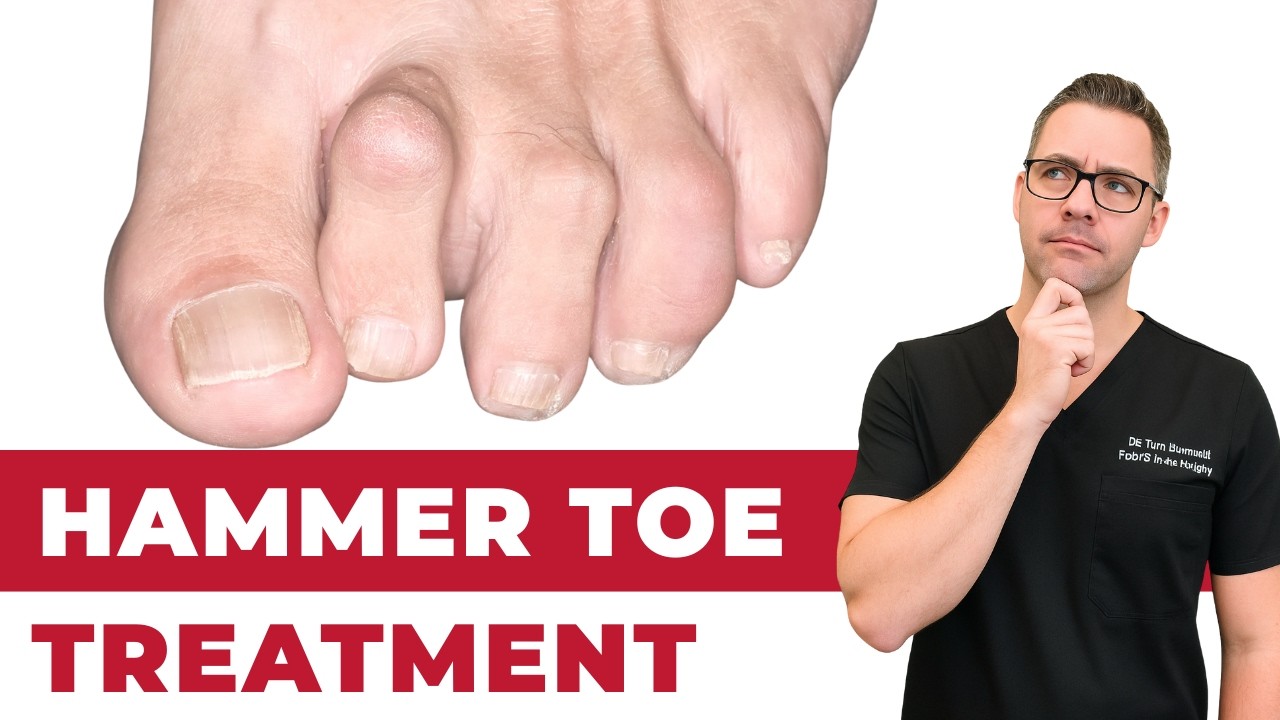
Watch Dr. Tom Biernacki DPM explain Morton’s neuroma — causes, diagnosis, and treatment — MichiganFootDoctors YouTube
What Is Morton’s Neuroma? (The Real Pathophysiology)
Despite its name, Morton’s neuroma is not a neoplasm. It is more accurately called interdigital neuritis or perineural fibrosis — a reactive thickening of the epineural (outer nerve sheath) and perineural tissue surrounding the common digital nerve as it passes beneath the deep transverse intermetatarsal ligament.
The mechanism: the digital nerve traveling to the 3rd and 4th toes passes through the 3rd intermetatarsal space, which is the narrowest of the four interspaces. The nerve runs beneath the deep transverse intermetatarsal ligament, a rigid band connecting the metatarsal heads. With each weight-bearing step, the metatarsal heads spread slightly and the nerve is compressed upward against this ligament. Over thousands of repetitions in tight footwear, this mechanical irritation triggers an inflammatory cascade. The nerve responds with fibroblast proliferation and collagen deposition — thickening the perineural sheath. This thickened sheath then occupies more space in an already crowded canal, creating a self-perpetuating cycle of compression and fibrosis.
The result is a fusiform, firm mass — typically 5–10mm in diameter — that produces the characteristic neuritic pain pattern. Histologically, the tissue shows hyalinization of perineural vessels, Renaut body formation, and demyelination of axons — consistent with chronic entrapment neuropathy, not neoplastic growth.
Why the 3rd interspace? The 3rd interspace is affected in approximately 75–80% of cases (versus 15–20% in the 2nd interspace). Two anatomical factors explain this: the communicating branch between the medial and lateral plantar nerves occurs at the 3rd interspace in ~27% of people (creating a larger, bulkier nerve trunk), and the 3rd interspace is the narrowest of the four. Bilateral involvement and multiple neuromas in the same foot occur in a minority of patients and warrant additional workup.
Who Gets Morton’s Neuroma?
- Sex: Women outnumber men 4:1 — almost certainly due to constrictive, elevated footwear rather than anatomical differences alone
- Age: Most common in the 4th–6th decades; uncommon under 30
- Footwear: High-heeled shoes with a narrow toe box are the strongest modifiable risk factor. Heels load the forefoot, forcing the metatarsal heads together; a narrow toe box laterally compresses the interspaces simultaneously
- Activity: Running, court sports, and cycling with clipless pedals — any activity with repetitive forefoot loading
- Foot structure: Hypermobile or flatfoot mechanics increase metatarsal spread under loading; second metatarsal length excess (Morton’s foot) places abnormal load on the 2nd–3rd interspace
- Prior forefoot injury: Metatarsal stress fractures, intermetatarsal bursitis, or inflammatory arthritis can initiate the perineural fibrosis cascade
Symptoms of Morton’s Neuroma
The clinical presentation is highly characteristic — most patients describe their symptoms immediately and accurately, which itself is diagnostically useful:
- Burning, electric-shock, or shooting pain originating between the 3rd and 4th toes (occasionally 2nd and 3rd) and radiating distally into the toes
- The “marble” or “bunched sock” sensation — feeling of a foreign body under the ball of the foot that persists whether or not there is an actual object there
- Immediate relief on shoe removal and forefoot massage — this is highly specific; nearly all patients with Morton’s neuroma report this pattern
- Digital numbness or tingling in the affected web space and adjacent toe surfaces
- Symptom onset pattern: typically absent in the morning, develops with prolonged walking or shoe wear, occasionally awakens patients from sleep after a long day
- High heel aggravation: pain is dramatically worse in heels and narrows shoes; often completely absent in sandals or wide athletic shoes
Pattern to remember: If pain improves within seconds to minutes of removing the shoe, the source is almost certainly in the forefoot soft tissue (neuroma, bursitis, or stress fracture). Arthritic pain does not improve this quickly with unloading.
Diagnosing Morton’s Neuroma
Clinical Examination
Morton’s test (transverse compression test): The examiner applies firm medial-lateral (side-to-side) compression across all metatarsal heads simultaneously. This narrows the interspaces and compresses the neuroma. A positive test reproduces the patient’s burning pain in the affected interspace. Sensitivity approximately 85%, specificity 75%.
Mulder’s click: The examiner compresses the foot transversely (as in Morton’s test) while simultaneously applying upward thumb pressure directly beneath the 3rd interspace. A palpable or audible “click” — produced by the neuroma mass displacing under the ligament — combined with reproduction of the burning pain is pathognomonic for Morton’s neuroma. Sensitivity approximately 60–70%, but specificity is very high when the full triad (click + pain + characteristic location) is present.
Web space palpation: Direct palpation into the web space from the dorsal aspect will reproduce pain and occasionally reveal the firm, tender mass.
Imaging
Diagnostic ultrasound is our preferred imaging modality. It visualizes the neuroma as a hypoechoic (dark) oval mass within the interspace, confirms its location relative to the intermetatarsal ligament, and allows real-time size measurement (critical for prognosis — neuromas under 5mm respond better to conservative care; over 8mm predict surgical need). Ultrasound also guides injections directly into the pathologic tissue, substantially increasing accuracy versus landmark-only injection. Sensitivity 95%, specificity 90% in experienced hands.
MRI is the alternative when ultrasound is equivocal. It provides better visualization of surrounding structures and helps identify intermetatarsal bursitis, stress fractures, and soft-tissue masses that can mimic neuroma.
X-ray is not diagnostic for neuroma but is used to rule out metatarsal stress fracture, metatarsophalangeal joint arthritis, and bony abnormalities that may contribute to symptoms.
Morton’s Neuroma vs. Similar Conditions
Morton’s neuroma is commonly confused with several other forefoot conditions that produce overlapping symptoms:
- Intermetatarsal bursitis: The bursa between the metatarsal heads can enlarge and become painful, mimicking neuroma. Key difference: bursal pain is more diffuse, located at the metatarsal heads rather than between them, and ultrasound shows an anechoic fluid-filled sac rather than a solid hypoechoic mass. The two conditions frequently coexist and can be difficult to separate clinically.
- Metatarsal stress fracture: Presents with forefoot pain but is typically insidious-onset aching that is tender along the metatarsal shaft, worse with activity, and does not produce the neuritic burning or marble sensation. Point tenderness over the bone (not the web space) is the key finding. MRI is diagnostic before X-ray changes appear.
- Plantar plate tear (2nd MTP instability): Tears of the plantar plate at the 2nd MTP joint cause forefoot pain often confused with 2nd interspace neuroma. The key differential: a positive drawer test at the 2nd MTP (dorsal laxity of the toe), progressive 2nd toe crossover deformity, and pain localized to the joint rather than the interspace. No Mulder’s click.
- Freiberg’s infraction: Avascular necrosis of the 2nd (or occasionally 3rd) metatarsal head, most common in adolescent girls. Presents with forefoot pain and stiffness at the MTP joint, not burning neuritic pain. X-ray shows characteristic flattening and fragmentation of the metatarsal head.
- Tarsal tunnel syndrome: Entrapment of the posterior tibial nerve at the medial ankle produces burning, tingling pain in the plantar foot — but the pain is distributed across the entire plantar surface, not localized to a single interspace, and is reproducible with Tinel’s percussion at the medial malleolus.
Treatment Options for Morton’s Neuroma
Treatment follows a clear stepwise ladder from least invasive to most invasive, with evidence-based decision points at each stage.
Step 1: Footwear Modification (Start Immediately)
The single most important first intervention. Switch to shoes with a wide, rounded toe box that allows all five toes to spread without lateral compression. The shoe should have a firm, supportive midsole (not a thin-soled flat) and a heel drop of no more than 8mm. Narrow, pointed toe boxes and high heels must be eliminated completely — not just reduced — during the active treatment phase. Wide athletic shoes (HOKA Bondi/Clifton, New Balance wide-width options, Brooks Adrenaline Wide) consistently perform best. Many patients experience 50–60% pain reduction within days of this change alone.
Step 2: Metatarsal Pad
A teardrop-shaped metatarsal pad positioned proximal to (just behind) the metatarsal heads elevates and separates the metatarsals during weight-bearing, mechanically reducing interspace compression. Placement is critical and often done incorrectly: the pad must be behind the metatarsal heads, not under them (which increases rather than decreases pressure). In the office we apply the pad, have the patient walk, confirm symptom improvement, then mark the correct position for home replication. Combined with footwear modification, this resolves approximately 30% of cases without further treatment.
Step 3: Custom Orthotics
A custom or well-fitted semi-rigid orthotic with an integrated metatarsal support corrects the underlying foot mechanics contributing to interspace overload and provides consistent, session-long symptom relief. OTC insoles with a metatarsal raise (Superfeet, Powerstep) are a reasonable starting point for patients with normal arch structure. Custom orthotics add meaningful benefit when significant flatfoot pronation or high-arch supination is contributing to forefoot loading patterns.
Step 4: Ultrasound-Guided Corticosteroid Injection
Ultrasound-guided injection of corticosteroid into the intermetatarsal bursa surrounding the neuroma is the most effective single conservative intervention. Under ultrasound visualization we confirm needle tip placement adjacent to the hypoechoic mass before injecting — studies show blind injections miss the target in 30–40% of cases. Relief typically begins within 48–72 hours and lasts 2–6 months per injection. A series of 2–3 injections achieves sustained relief in 50–80% of patients. We generally limit to 3 lifetime cortisone injections per interspace to avoid plantar fat pad atrophy, which can itself become a source of pain.
Step 5: Alcohol Sclerosing Injection Series
For neuromas that have partially responded to cortisone but not resolved — particularly those 5–8mm in diameter — a series of 4–7 weekly 4% ethanol sclerosing injections achieves lasting resolution without surgery in 60–80% of appropriately selected patients. The dilute alcohol progressively denatures the perineural fibrotic tissue, shrinking the mass over weeks. This approach requires patient commitment to the full series but avoids surgical recovery and preserves sensation in the web space. We perform these under ultrasound guidance for precise delivery.
Step 6: Surgical Neurectomy
Surgery is considered when 6–12 months of conservative care — including at minimum footwear modification, metatarsal pad, and at least one cortisone injection — has failed to provide adequate relief. The standard procedure is neurectomy: excision of the affected nerve segment 1–2cm proximal to the bifurcation, performed through either a dorsal (top of foot) or plantar (bottom of foot) incision.
Outcomes are excellent: 85–90% of patients report significant improvement or complete pain resolution. The expected trade-off is permanent numbness in the web space between the affected toes — most patients consider this a highly acceptable outcome given the preceding pain. The primary surgical complication is stump neuroma (painful regrowth at the resection site) occurring in approximately 5–10% of cases, which may require repeat excision with the nerve buried in muscle to prevent re-exposure.
Dorsal approach: weight-bearing in a surgical shoe on the day of surgery; return to athletic shoe at 3–4 weeks; full activity at 6–8 weeks. Plantar approach: non-weight-bearing for 2–3 weeks but superior visualization of the neuroma mass.
Most Common Mistakes
- Misplacing the metatarsal pad: Placing the pad directly under the metatarsal heads (rather than proximal to them) increases local pressure and worsens symptoms. This is the most common reason conservative care is incorrectly declared to have failed before it was actually given a proper trial. The pad goes behind the ball of the foot, not under it.
- Performing blind injections: Without ultrasound guidance, cortisone injections miss the intermetatarsal space in up to 40% of cases — leading to fat pad atrophy and continued symptoms while the neuroma remains untreated. Ultrasound-guided injection is the standard of care and substantially improves outcomes versus landmark-based injection.
Red Flags — When to See a Podiatrist Immediately
- Acute severe forefoot pain with swelling and bruising — may indicate metatarsal stress fracture requiring immediate imaging and protected weight-bearing
- Progressive toe deviation or crossover toe — suggests plantar plate rupture, a structural injury requiring different treatment than neuroma
- Burning, tingling pain extending to the heel or ankle — the distribution suggests tarsal tunnel syndrome or lumbar radiculopathy rather than interdigital neuritis
- Symptoms not relieved by shoe removal — Morton’s neuroma pain relieves quickly with unloading; persistent rest pain suggests a vascular, inflammatory, or systemic cause requiring broader evaluation
- Diabetic patients with any forefoot numbness or skin breakdown — peripheral neuropathy from diabetes masks the early warning signals; any new foot symptoms warrant same-day evaluation
- Rapid enlargement of a forefoot mass — while rare, soft-tissue tumors (lipoma, fibroma, ganglion) can occur in the forefoot and should be distinguished from neuroma before proceeding with injection therapy
In-Office Treatment at Balance Foot & Ankle
At our Howell and Bloomfield Hills clinics, every Morton’s neuroma evaluation includes a focused clinical exam (Morton’s test, Mulder’s click, web space palpation), in-office diagnostic ultrasound to confirm the diagnosis and measure neuroma size, and a same-day treatment plan. When injection therapy is appropriate, we perform it under real-time ultrasound guidance in the same visit. We accept most major Michigan insurance plans. Same-week appointments are available at both locations.
Howell: 4330 E Grand River Ave, Howell MI 48843
Bloomfield Hills: 43494 Woodward Ave #208, Bloomfield Hills MI 48302
Phone: (810) 206-1402 | Book online →
Sources
- Thomson CE, Gibson JN, Martin D. Interventions for the treatment of Morton’s neuroma. Cochrane Database Syst Rev. 2004;(3):CD003118.
- Hassouna H, Singh D. Morton’s metatarsalgia: pathogenesis, aetiology and current management. Acta Orthop Belg. 2005;71(6):646–655.
- Mahadevan D, Venkatesan M, Bhatt R, Bhatia M. Diagnostic accuracy of clinical tests for Morton’s neuroma compared with ultrasonography. J Foot Ankle Surg. 2015;54(4):549–553.
- Musson RE, Sawhney JS, Lamb L, et al. Ultrasound guided alcohol ablation of Morton’s neuroma. Foot Ankle Int. 2012;33(3):196–201.
- Hughes RJ, Ali K, Jones H, et al. Treatment of Morton’s neuroma with alcohol injection under sonographic guidance. AJR Am J Roentgenol. 2007;188(6):1535–1539.
- Bignotti B, et al. Ultrasound versus magnetic resonance imaging for Morton neuroma: systematic review and meta-analysis. Eur Radiol. 2015;25(8):2254–2262.
Burning Forefoot Pain? Get an Ultrasound Diagnosis Today.
Same-day ultrasound-guided diagnosis & treatment — Howell & Bloomfield Hills, MI
4.9★ | 1,123 Reviews | 3,000+ Surgeries
Or call: (810) 206-1402
👟 Metatarsal Support Insoles for Morton’s Neuroma
The key mechanical fix for Morton’s neuroma is separating and offloading the metatarsal heads that are compressing the nerve. CURREX RunPro and WorkPro insoles feature a dynamic metatarsal arch that spreads the forefoot during push-off — naturally decompressing the nerve space. For patients who work on their feet, the CURREX WorkPro is particularly effective. Pair with a wider toe-box shoe for best results.
Shop CURREX WorkPro / RunPro Insoles → | ~$50–60 | 30% commission via Foundation Wellness
Affiliate disclosure: As an Amazon Associate and Foundation Wellness partner, we earn from qualifying purchases at no extra cost to you.
🧴 Topical Relief Between Neuroma Injections
Between corticosteroid injection series or alcohol sclerosing treatments, Morton’s neuroma patients often experience flare-ups — especially after long periods of standing or wearing narrow shoes. Doctor Hoy’s Natural Pain Relief Gel provides immediate topical analgesia to the interspace area without systemic effects. Apply to the ball of foot directly over the tender area before activity or before bed.
Shop Doctor Hoy’s Natural Pain Relief Gel → | ~$20–25 | 30% commission via Foundation Wellness
Affiliate disclosure: As an Amazon Associate and Foundation Wellness partner, we earn from qualifying purchases at no extra cost to you.