
Medically reviewed by Dr. Tom Biernacki, DPM
Board-certified podiatric surgeon | Balance Foot & Ankle, Howell & Bloomfield Hills, MI
Last reviewed: May 2026
Most patients underestimate how much the post-operative phase determines Osteochondral Lesion of the Talus 2026 | Podiatrist outcomes — not the surgery itself. Our podiatric surgeons identify the single recovery variable that separates patients who return to full activity on schedule from those who experience setbacks. Call (810) 206-1402 — expert podiatric care across Michigan.

| Classification | Grade | Description | MRI Finding | Treatment |
|---|---|---|---|---|
| Berndt-Harty (X-ray) | I | Subchondral compression; no fragment | Bone marrow edema; intact cartilage | Conservative; protected WB 6–8 weeks |
| Berndt-Harty | II | Partially detached fragment | Fluid partially surrounding fragment | Arthroscopic fixation if in situ; excision if displaced |
| Berndt-Harty | III | Completely detached but non-displaced | Full fluid rim around fragment; intact overlying cartilage | Arthroscopic excision + marrow stimulation; fixation if large |
| Berndt-Harty | IV | Displaced osteochondral fragment | Fragment displaced into joint space; loose body | Fragment excision; microfracture or cartilage restoration |
| Hepple MRI | V | Subchondral cyst (±stable fragment) | Subchondral cyst; viable-appearing cartilage above | Retrograde drilling + bone grafting; or osteochondral transfer (OATS) |
| Cartilage Repair Technique | Lesion Size | Mechanism | Success Rate | Recovery |
|---|---|---|---|---|
| Microfracture (marrow stimulation) | <150 mm² (<1.5cm²) | Perforates subchondral plate; allows marrow cells to form fibrocartilage repair tissue | 75–85% at 5 years; fibrocartilage (inferior to hyaline) | 6–8 weeks NWB; 4–6 months sport |
| OATS (Osteochondral Autograft Transfer) | 150–400 mm² | Harvests cylindrical hyaline cartilage + bone plug from non-weight-bearing knee; press-fit into talar defect | 80–90% at 5 years; true hyaline repair tissue | 6–8 weeks NWB; 6 months sport |
| MACI (Matrix-Induced ACI) | >250 mm²; failed microfracture | Autologous chondrocytes grown on collagen scaffold; implanted into defect | 75–85%; hyaline-like repair; better for large lesions | 6–8 weeks NWB; 12 months sport |
| Retrograde Drilling + Bone Graft | Subchondral cyst (Hepple V) | Drill through intact cartilage from distal tibia; fill cyst with bone graft; preserve overlying cartilage | 80–90% if cartilage intact above cyst | 6–8 weeks NWB; 4–5 months sport |
Medically Reviewed | Dr. Tom Biernacki, DPM | Board-Certified Podiatric Surgeon | Balance Foot & Ankle, Michigan
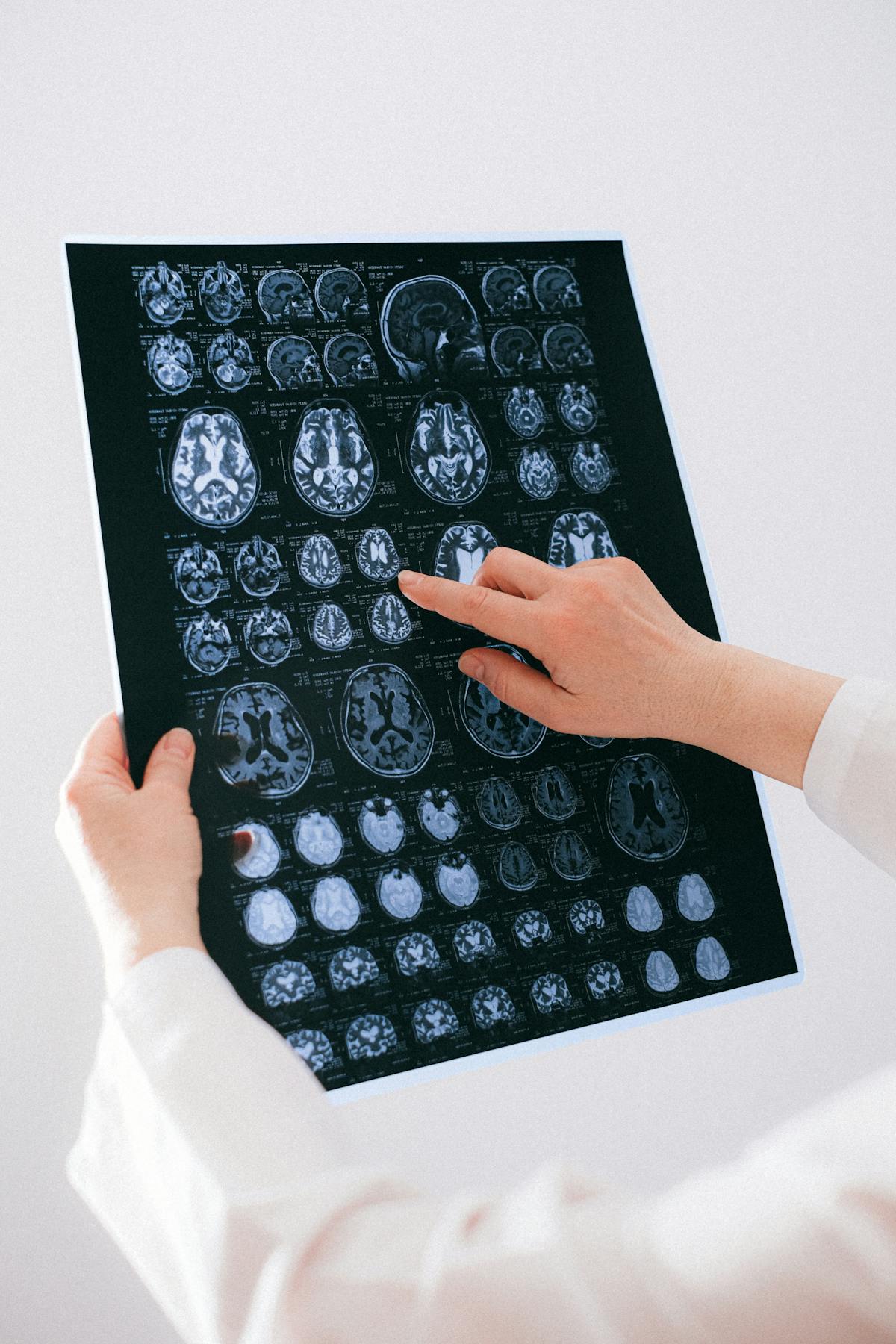
The most important clinical decision with Osteochondral Lesion Talus Ankle Cartilage Repair Michigan isn’t which treatment to start with — it’s identifying the correct subtype. That changes everything. Call (810) 206-1402.
Osteochondral Lesions of the Talus: Ankle Cartilage Injuries
The talus — the weight-bearing dome of the ankle joint — is covered by hyaline articular cartilage that allows smooth, low-friction ankle motion. Osteochondral lesions (OLTs) represent focal areas of damage to this cartilage and its underlying subchondral bone, creating a defect that disrupts the articular surface. OLTs are classified by their anatomical location on the talar dome (medial versus lateral), the stability of the fragment (stable versus unstable/displaced), and the depth of involvement. Unstable or displaced fragments — loose bodies within the joint — cause mechanical clicking, catching, and locking that significantly impairs ankle function.
Causes and Presentation
Lateral talar dome OLTs are almost universally post-traumatic, typically resulting from acute inversion ankle sprain with concurrent talar dome impaction against the fibula. Medial OLTs have a more complex etiology — some are post-traumatic, others represent osteochondrosis (vascular compromise of the subchondral bone) — and tend to be deeper, more cystic, and more challenging to treat. Patients present with persistent deep ankle pain and swelling following an ankle sprain that “won’t heal normally,” often accompanied by mechanical symptoms (clicking, giving way) and pain with prolonged activity. The diagnosis is frequently delayed because initial ankle X-rays after sprains may not reveal the lesion — OLTs are visible on X-ray only when the defect is large or the fragment is displaced.
Diagnostic Imaging
MRI is the gold standard for OLT diagnosis and classification — it visualizes the cartilage surface, subchondral bone edema, cyst formation, and fragment stability with excellent sensitivity. The Hepple MRI classification guides treatment decision-making: Stages 1–2 (cartilage signal abnormality without fragmentation) may be treated conservatively; Stages 3–5 (displaced fragments, subchondral cysts, loose bodies) typically require surgical intervention. CT scan provides superior detail of subchondral bone cyst size and morphology — essential for pre-surgical planning in medial cystic lesions requiring bone grafting.
Treatment
Conservative treatment is appropriate for small, stable, asymptomatic or minimally symptomatic Stage 1–2 lesions — particularly in skeletally immature patients where healing potential is higher. Six to twelve weeks of non-weight-bearing or protected weight-bearing in a CAM boot, combined with physical therapy for periarticular strengthening, allows some lesions to heal or become asymptomatic. Surgical treatment is indicated for unstable or displaced lesions, large cystic lesions, persistent symptoms despite conservative care, and loose bodies causing mechanical symptoms. Arthroscopic debridement and microfracture — creating channels in the subchondral bone to stimulate fibrocartilage repair — is the most common first-line surgical procedure for lesions smaller than 1.5cm. Larger defects may benefit from osteochondral autograft transplantation (OATS), allograft transplantation, or matrix-induced autologous chondrocyte implantation (MACI) — procedures Dr. Biernacki coordinates with orthopedic ankle specialists for definitive surgical care.
Dr. Tom's Product Recommendations
Breg Everyday Ankle Brace
⭐ Highly Rated
Semi-rigid ankle brace providing medial and lateral stability during OLT conservative management — reduces ankle inversion/eversion forces that stress the talar dome lesion during protected return to activity.
Dr. Tom says: “Ankle stability support reduces talar dome stress during OLT conservative management.”
OLT patients during conservative management and early return to activity phase
Acute OLT with loose body or severe mechanical symptoms requiring surgical consultation
Disclosure: We earn a commission at no extra cost to you.
Theraband FlexBar Resistance Bar
⭐ Highly Rated
Resistance bar for ankle proprioception and periarticular strengthening exercises — strengthening the peroneal and dorsiflexor muscles around an OLT-affected ankle reduces mechanical stress on the articular cartilage.
Dr. Tom says: “Periarticular strengthening is a key component of OLT conservative management.”
OLT patients during physical therapy rehabilitation, ankle proprioception training
Patients in acute post-operative immobilization phase
Disclosure: We earn a commission at no extra cost to you.
✅ Pros / Benefits
- MRI and CT evaluation for complete OLT characterization and staging
- Conservative management for stable early-stage lesions with close monitoring
- Surgical referral coordination to ankle arthroplasty and cartilage specialists
- Arthroscopic evaluation for mechanical symptoms and loose body identification
❌ Cons / Risks
- Fibrocartilage repair after microfracture does not replicate native hyaline cartilage quality
- Large medial cystic OLTs have more challenging treatment pathways and less predictable outcomes
Dr. Tom Biernacki’s Recommendation
OLTs are one of the most common reasons ankle sprains ‘don’t heal.’ If you’re three months out from an ankle sprain and still having persistent deep ankle pain and swelling, you need an MRI — not more rest and ibuprofen. The sooner we identify the lesion, the more treatment options are available and the better the likely outcome.
— Dr. Tom Biernacki, DPM | Board-Certified Podiatric Surgeon | Balance Foot & Ankle
Frequently Asked Questions
Can an ankle sprain cause an OLT?
Yes — lateral ankle sprains with acute inversion mechanism can impact the lateral talar dome against the fibula, creating cartilage damage at the time of injury. OLT symptoms may initially be masked by the sprain and become apparent only as the sprain heals and a persistent deep pain pattern remains.
Does an OLT always need surgery?
No — small, stable, minimally symptomatic lesions in patients with adequate bone healing potential (particularly adolescents and young adults) may respond to conservative management. Unstable, large, or persistently symptomatic lesions despite conservative care require surgical treatment.
How long does OLT surgery recovery take?
Arthroscopic microfracture recovery requires 6–8 weeks non-weight-bearing followed by progressive return to activity over 4–6 months. Larger reconstructive procedures (OATS, allograft, MACI) have longer recoveries of 9–12 months to full return to sport.
Michigan Foot Pain? See Dr. Biernacki In Person
4.9★ rated | 1,123 Reviews | 3,000+ Surgeries
Same-week appointments · Howell & Bloomfield Hills
📞 (810) 206-1402 Book Online →Visit Balance Foot & Ankle — Same-Day Appointments Available
Our podiatry team serves patients throughout Michigan including Howell, Brighton, and Bloomfield Hills. If you’re dealing with heel pain, ingrown toenails, or a foot injury, we have same-day appointment availability.
American Academy of Orthopaedic Surgeons: Osteochondral Lesions / Cartilage Repair
Ready to Get Relief?
Same-day appointments available in Howell & Bloomfield Hills, MI
4.9★ | 1,123 Reviews | 3,000+ Surgeries
Or call: (810) 206-1402

Dr. Tom Biernacki, DPM is a board-certified foot & ankle surgeon (ABFAS & ABPM) at Balance Foot & Ankle Specialists in Southeast Michigan. With over a decade of clinical experience, he specializes in heel pain, bunions, diabetic foot care, sports injuries, and minimally invasive surgery. Dr. Biernacki is a member of the APMA and ACFAS, and his patient education content on MichiganFootDoctors.com and YouTube has made him one of the most-followed foot & ankle educators on YouTube.