
What Causes Pain in Back of Heel When Walking?[Best HOME Treatment]
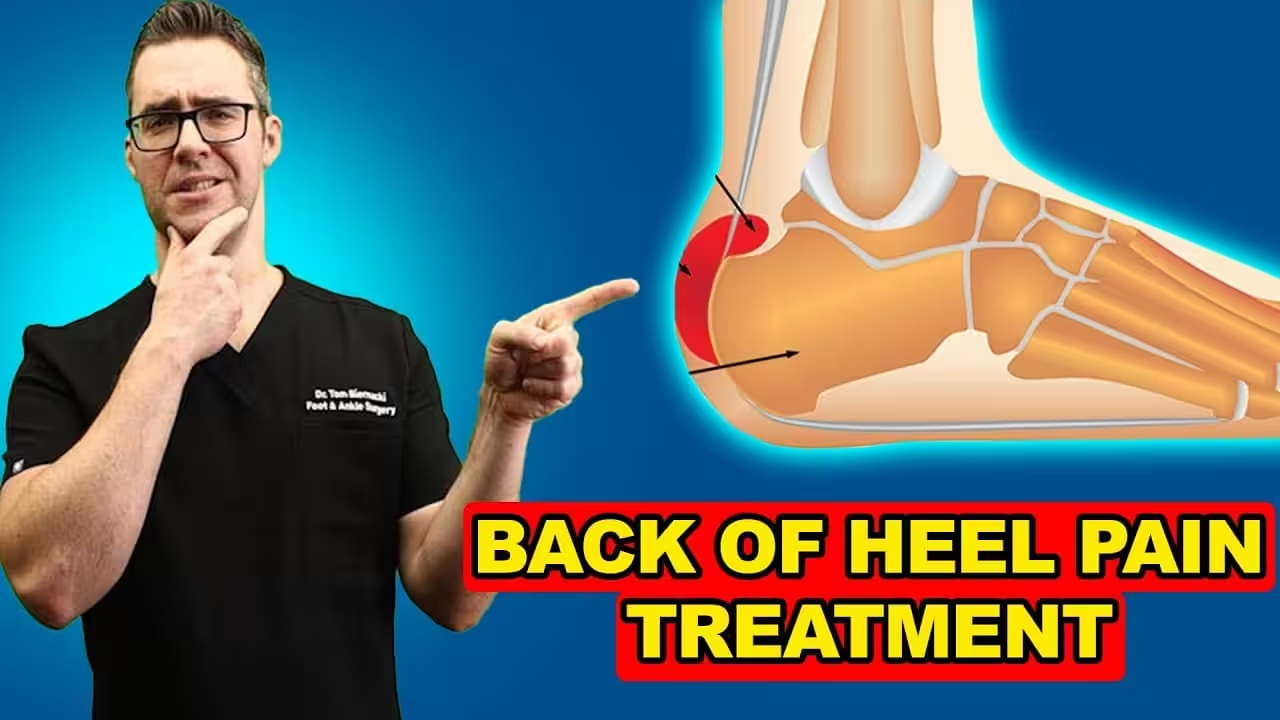
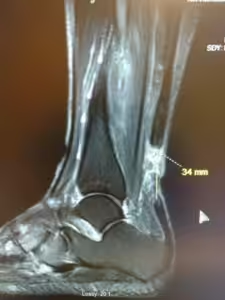
The most common causes for pain in the back of your heel when walking is #1) retrocalcaneal heel bursitis, #2) Achilles tendinitis and #3) heel spurs. Pain in Back of Heel When Walking Overview:- Your Achilles tendon connects your calf muscle to your heel bone.
- The Achilles tendon allows you to push off with the front of your foot, making us able to run and walk.
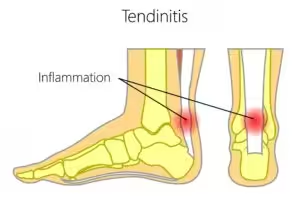
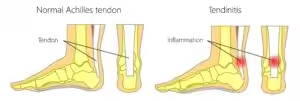
- As we perform activities such as running and walking, it can cause this tendon to become inflamed and swollen.
- Not only does your Achillies tendon become inflamed, it also pulls on the heel bone causing tiny cracks.
- These cracks heal and are not usually painful. That being said, this process happens over and over the years creating a heel spur.
- This heel spur is a spike on the end of your heel bone that digs into your Achillies tendon as you’re walking, creating pain in the back of your heel when you walk.
- Of course injury is another common cause to experience pain.
- You could simply over extend your foot or ankle causing strain your tendon and heel bone.
Causes:
- Achilles Tendonitis
- Heel Spurs
- Injury
Symptoms:
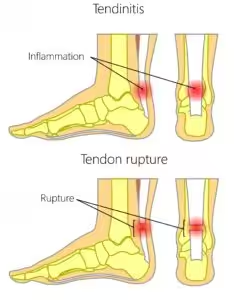
If you feel along the Achillies tendon it will be painful! The pain is usually accompanied with swelling and redness. A simple way to tell if you have achillies tendinitis is to stand on the ball of your foot, and see if you experience pain or discomfort in the back of your heel. Every time you take a step your achillies tendon absorbs most of the force. As you pull up on the Achillies tendon this also pulls on the band that runs along the bottom of your foot called the plantar fascia.- Pain – Heel/Achillies tendon.
- Redness – Heel/Achillies tendon.
- Swelling – Heel/Achillies tendon.
Treatment:
When you first wake up, start by massaging out your foot. After massaging your foot, follow with simple gentle walking for fifteen minutes. Doing this helps blood flow, decreasing inflammation. Icing fifteen to twenty minutes, up to three times a day, also helps relieve inflammation. This dramatically speeds up the healing process, as you can not begin to heal until the inflammation has gone away. One of the best things you can do to help is stretch your muscles and tendons. Start with Hamstring stretches, stretching both legs for thirty seconds two to three times. You will want to do the same with your calf muscles and plantar fascia. Doing this after a couple of weeks you will start to notice you will be able to stand, walk, run and stretch with less pain. There are tools that can stretch out your plantar fascia and calf muscles, called night splints that you can discuses with your podiatrist. After this, you want to get a nice supportive shoe, along with some over the counter inserts for great arch support. You want to stick with a more ridged support and not a gel insert.- Massage your foot
- Icing
- Anti inflammatory
- Stretching
- Night splints
- Arch supports
- Good foot wear
See your Podiatrist!
- It is very important to see your podiatrist with any foot or ankle concerns.
- In doing so you will ensure the fastest route to recovery!
Heel Pain and Heel Spur Treatment in Michigan: Clinical Care at Balance Foot & Ankle
Related Treatment Guides
- Achilles Tendinopathy Treatment
- Plantar Fasciitis & Heel Pain Treatment
- Custom 3D Orthotics
- Sports Foot & Ankle Injury Treatment
Michigan patients with heel pain — whether at the plantar heel (plantar fasciitis, heel spurs, Baxter’s nerve entrapment), posterior heel (Haglund’s deformity, retrocalcaneal bursitis, insertional Achilles tendinopathy), or medial heel (tarsal tunnel syndrome) — benefit from a clinical diagnosis that identifies the specific cause and directs appropriate treatment. At Balance Foot & Ankle, heel pain evaluation includes weight-bearing X-rays to assess for heel spurs, calcaneal stress fractures, and bony pathology; musculoskeletal ultrasound to characterize plantar fascia thickness and integrity; and clinical testing for nerve entrapment. Treatment is targeted to the confirmed diagnosis: plantar fasciitis responds to custom orthotics, stretching, cortisone injection, and EPAT; insertional Achilles tendinopathy responds to heel lifts, footwear modification, and EPAT; nerve entrapment may require surgical decompression. Michigan heel pain patients can call Balance Foot & Ankle at (810) 206-1402 for evaluation at our Howell or Bloomfield Hills office.
Medical References & Sources
- American Podiatric Medical Association — Patient Education
- American Orthopaedic Foot & Ankle Society — Foot Conditions
📧 Get Dr. Tom’s Free Lab Test Guide
Discover the 5 lab tests every person over 35 should ask their doctor about — explained in plain English by a board-certified physician.
📍 Located in Michigan?
Our board-certified podiatrists treat this condition at two convenient locations. Same-day appointments often available.

Dr. Tom Biernacki, DPM is a double board-certified podiatrist and foot & ankle surgeon at Balance Foot & Ankle Specialists in Southeast Michigan. With over a decade of clinical experience, he specializes in heel pain, bunions, diabetic foot care, sports injuries, and minimally invasive surgery. Dr. Biernacki is a member of the APMA and ACFAS, and his patient education content on MichiganFootDoctors.com and YouTube has reached over one million views.